


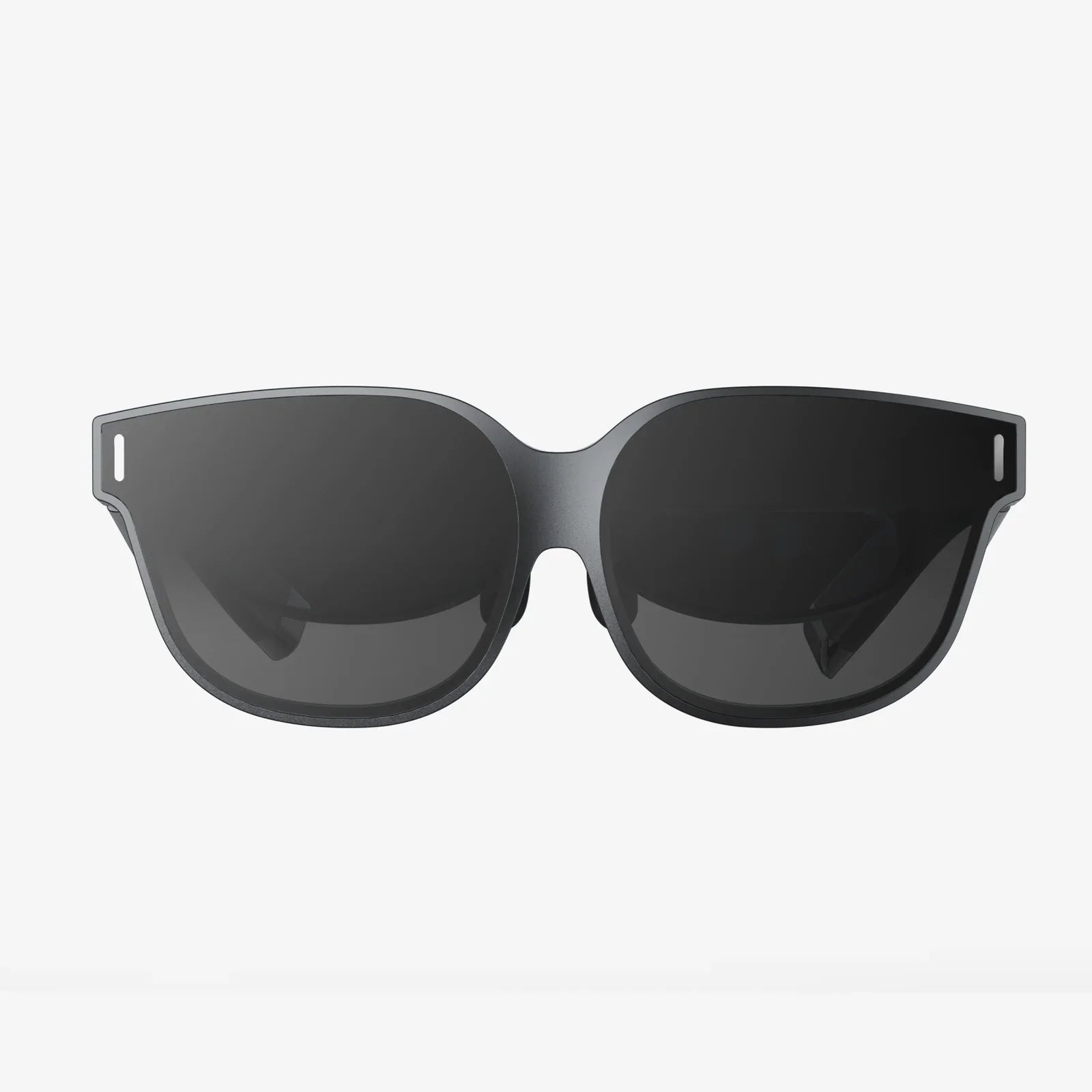
Imagine stepping into your morning meeting not through a flat screen, but by walking into a sun-drenched virtual boardroom perched atop a skyscraper, greeting colleagues from across the globe with a handshake and direct eye contact, and manipulating 3D prototypes as if they were physically in front of you. This is not a scene from a distant science fiction future; it is the rapidly approaching reality of VR meetings, a technological leap poised to irrevocably change the landscape of work, collaboration, and human interaction. The era of the two-dimensional video call, with its frozen screens, awkward silences, and profound sense of disconnection, is finally meeting its successor.
Beyond the Grid: Escaping the Tyranny of the Video Call
For years, video conferencing has been the best available tool for remote collaboration. Yet, its limitations are glaringly apparent to anyone who has spent a day hopping between calls. The experience is inherently fatiguing, a phenomenon so well-documented it has earned its own name: Zoom fatigue. This exhaustion stems from a multitude of factors absent in natural interaction. The constant, unblinking gaze of multiple faces on a screen creates a perceived pressure to perform. The lack of spatial audio forces us to work harder to decipher who is speaking. Most critically, the complete absence of non-verbal cues—the subtle lean-in of agreement, the shift in posture that signals dissent, the casual glance between colleagues—creates a canyon of miscommunication and emotional disconnect. We are communicating, but we are not truly connecting.
VR meetings promise to shatter this flat paradigm. Instead of being a talking head in a grid, you become an embodied presence in a shared digital space. This shift from watching a meeting to inhabiting it is fundamental. It reintroduces the human dimension that video strips away, fostering a sense of co-presence that is remarkably close to being in the same physical room.
The Pillars of Presence: What Makes a VR Meeting Different?
The magic of an effective VR meeting lies in its ability to generate a psychological state known as presence—the undeniable feeling of "being there." This is achieved through a confluence of technological and design elements that work in harmony to trick the brain into accepting the virtual experience as real.
Spatial Audio
In the real world, sound doesn’t emanate uniformly from a single speaker; it comes from a specific location. VR meeting platforms utilize spatial audio technology, which means a colleague’s voice will sound like it's coming from their avatar’s position. If someone to your left speaks, you hear them from your left. This allows for the natural, overlapping flow of conversation found in physical meetings, making discussions more dynamic and easier to follow, and eliminating the frustrating "you go, no you go" pauses of video calls.
Avatars and Embodiment
Your digital representation is your passport to this new world. Early avatars were simplistic, but modern systems use sophisticated tracking—often from the headset and controllers, and increasingly from eye and face tracking—to create remarkably expressive proxies. When you nod, your avatar nods. When you smile, your avatar’s face reflects that smile. This embodiment is crucial for non-verbal communication. It allows for gestures, posture, and eye contact, rebuilding the rich subtext of human interaction that is vital for building trust and rapport.
Shared Digital Workspaces
This is where VR meetings transition from a novel communication tool to a powerful collaborative engine. Participants can conjure and interact with shared assets in a way that is impossible on a 2D screen:
- 3D Model Review: Architects, engineers, and product designers can walk around a full-scale 3D model of a new building or product prototype, examining it from every angle, making annotations in mid-air, and even disassembling it virtually to inspect internal components.
- Infinite Whiteboards: Teams can brainstorm on massive, persistent whiteboards that surround them, using virtual markers to sketch ideas, post sticky notes, and import images and documents, creating an immersive and limitless ideation environment.
- Data Visualization: Data scientists can step inside a complex data set, watching information flow and evolve in three dimensions, identifying patterns and correlations that would be invisible on a traditional monitor.
This shared manipulation of objects creates a powerful collective focus, aligning teams and accelerating understanding and decision-making.
Transforming Industries: The Practical Applications
The potential applications for VR meetings extend far beyond the corporate boardroom, poised to revolutionize a myriad of sectors.
Remote Work and Distributed Teams
For the growing legion of remote workers, VR offers an antidote to isolation. Regular team meetings in VR can rebuild the watercooler moments and casual social interactions that foster company culture and spark innovation. It allows distributed teams to feel like a unified whole, mitigating the "out of sight, out of mind" dilemma and creating a more equitable experience for all employees, regardless of their physical location.
Education and Training
Imagine medical students from around the world gathering in a virtual operating theater to observe a complex surgical procedure from the surgeon’s perspective. Or apprentice mechanics practicing repairs on a virtual engine, able to make mistakes without real-world consequences. VR meetings enable experiential learning at scale, providing safe, repeatable, and deeply immersive training scenarios that dramatically improve knowledge retention and skill acquisition.
Design and Engineering
The design review process is transformed. Instead of sending CAD files back and forth, global teams can meet inside the design itself. They can point out flaws, test ergonomics at human scale, and iterate on the fly, compressing weeks of email chains into a single, productive collaborative session. This accelerates time-to-market and ensures a higher quality final product.
Healthcare and Therapy
Therapists can use the controlled, safe environments of VR to conduct exposure therapy with patients, guiding them through anxiety-inducing scenarios. Specialists can virtually "scrub in" with surgeons in other countries to consult on rare procedures. The ability to share a space and interact naturally, despite physical separation, opens up new frontiers in patient care and medical collaboration.
Navigating the Virtual Frontier: Challenges and Considerations
For all its promise, the path to widespread VR meeting adoption is not without its obstacles. Acknowledging and addressing these challenges is critical for the technology's maturation.
Technical and Financial Barriers
The cost of high-quality hardware, while decreasing, remains a significant investment for individuals and enterprises. Furthermore, a robust and reliable internet connection is a non-negotiable prerequisite. Technical glitches, latency, and the learning curve associated with new interfaces can disrupt the sense of presence and create frustration, hindering adoption.
User Experience and Accessibility
Not everyone can comfortably use a VR headset. Issues like simulator sickness, similar to motion sickness, can affect a portion of the population. The headsets themselves can be cumbersome, and extended use can lead to physical discomfort and eye strain. Ensuring the technology is accessible and comfortable for extended periods is a key focus for developers.
The Human Element: Etiquette and Social Dynamics
We are still writing the rulebook for social interaction in VR. What is the appropriate virtual personal space? How do we handle distractions in our physical environment while immersed? New forms of etiquette need to be established to ensure these meetings remain productive and respectful. Furthermore, the long-term psychological effects of frequent immersion and the nature of digital embodiment are areas that require ongoing study.
The Future is Presence: What Lies Ahead?
The trajectory of VR meeting technology points toward a future of even greater seamlessness and immersion. We are moving toward photorealistic avatars driven by real-time facial expression capture, eliminating the uncanny valley and making interactions truly lifelike. Haptic feedback technology will evolve to allow us to feel virtual handshakes and the texture of digital objects. The hardware will become lighter, more comfortable, and eventually, indistinguishable from a pair of everyday glasses. This evolution will further blur the line between physical and digital presence, making VR meetings not just an alternative, but often the preferred method of connection.
The ultimate goal is not to replace all in-person human interaction, but to provide a far superior alternative when geography is a barrier. It’s about giving distributed teams the tools to collaborate with the same synergy, creativity, and trust as if they were sharing an office. It’s about making "remote" feel less remote.
The click of a video call link is about to be replaced by the act of stepping into another world—a world where distance dissolves, ideas take tangible shape, and colleagues separated by continents can share a moment of genuine connection. The virtual door is now open, and the future of work is waiting on the other side, ready to be built together.
Share:
AI Generated AR: The Invisible Revolution Reshaping Our Reality
White Board Touch Screen: The Ultimate Guide to Modern Collaboration