


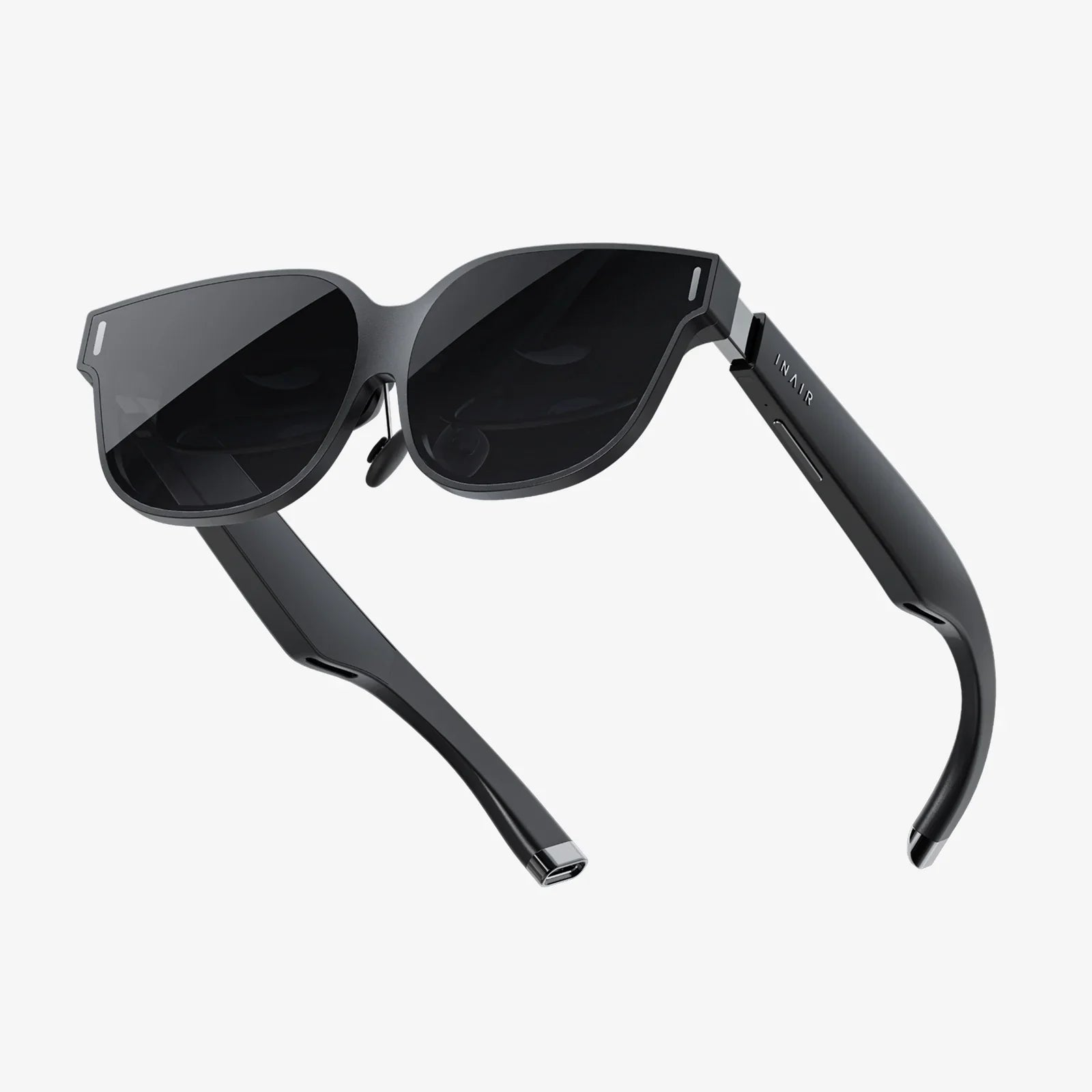
Imagine stepping through your screen into a world limited only by imagination, where the boundaries between the digital and the physical dissolve into pure, unadulterated experience. This is the promise, the siren call, of the VR monitor—a technological leap that is rapidly evolving from science fiction fantasy into a tangible, awe-inspiring reality. It represents more than just an upgrade to a higher resolution or a faster refresh rate; it is a fundamental reimagining of the very canvas upon which we project our digital lives. This isn't about watching a world anymore; it's about stepping inside it, and the implications are nothing short of revolutionary for how we work, play, and connect.
Beyond the Screen: Defining the VR Monitor Experience
At its core, a VR monitor is not a physical panel you mount on your desk. Instead, it is a dynamic, immersive visual environment generated by a virtual reality headset. It functions by creating a vast, virtual screen—or multiple screens—that appears to hover in a three-dimensional space around the user. Unlike traditional monitors constrained by their bezels and fixed dimensions, a VR monitor can be as large as an IMAX theater screen, as intimate as a personal display, or anything in between, all customizable at the user's whim. The experience is powered by two key components: the headset itself, which contains high-resolution displays and precise motion-tracking sensors, and the computing hardware, which renders the complex environments in real-time.
The magic lies in the perceptual shift. Instead of looking at a window into a digital world, you feel present within it. This sensation, known as presence, is the holy grail of VR. It is achieved through a combination of high field-of-view (FOV) lenses, ultra-low latency tracking that matches your head movements perfectly to the on-screen motion, and high-resolution displays that minimize the "screen door effect"—the visible gaps between pixels that can shatter the illusion. The result is a seamless, convincing digital reality that feels less like using a tool and more like inhabiting a space.
The Engine Room: Key Technologies Powering the Illusion
The creation of a convincing VR monitor environment is a technological ballet, requiring several advanced systems to work in perfect harmony.
High-Resolution Displays and Optics
The journey begins with the micro-displays inside the headset. Early VR was plagued by low resolution, making text blurry and details indistinct. Modern systems utilize fast-switching LCD or vibrant OLED panels with resolutions that are rapidly approaching and even surpassing the perceptual limits of the human eye. These panels are viewed through sophisticated, multi-element lenses that focus the image correctly for each eye, creating a stereoscopic 3D effect that provides crucial depth cues. The quality of these lenses is paramount, affecting everything from clarity and sharpness to the size of the "sweet spot"—the area where the image is perfectly in focus.
Precision Inside-Out Tracking
For the virtual screen to feel locked in place in the real world, the headset must know its position and orientation with incredible accuracy and speed. This is accomplished through inside-out tracking, where cameras and sensors on the headset itself constantly map the surrounding environment. By tracking subtle features in the room, the system can understand your movements down to the millimeter and update the perspective of the virtual display instantaneously. This sub-20-millisecond latency is critical; any delay between your head movement and the visual update can cause disorientation or simulator sickness, completely breaking the sense of presence.
Performance and Rendering
Rendering a convincing, high-resolution environment for each eye simultaneously is an immense computational task. It requires powerful graphics processors capable of maintaining high, stable frame rates—typically 90Hz or higher. To alleviate this burden, advanced rendering techniques like foveated rendering are employed. This technology uses eye-tracking sensors to determine where the user is looking and renders only the center of their gaze in full detail, while subtly reducing the rendering quality in the peripheral vision. Since the human eye cannot perceive detail in the periphery anyway, this provides a massive performance boost with no perceptible loss in visual fidelity.
A Universe of Applications: More Than Just Games
While gaming is the most famous application for VR, the concept of a VR monitor unlocks a far broader spectrum of uses that extend deep into professional and personal computing.
The Ultimate Productivity Setup
For knowledge workers, developers, and creatives, the VR monitor offers the dream of an infinite desktop. Imagine having three, five, or even ten full-sized monitors arrayed around you in a virtual sphere, accessible with a simple turn of your head. You could have your code editor centered, documentation to your left, communication tools to your right, and a video conference happening in the space above—all without the physical constraints and cost of multiple physical displays. This setup is portable, private, and can be summoned in any environment, from a coffee shop to a airplane seat, transforming any space into a maximally productive command center.
Revolutionizing Design and Visualization
Architects, engineers, and product designers are using VR monitors to step inside their creations long before they are built. Instead of looking at a 3D model on a 2D screen, they can walk around a life-sized virtual building, inspecting sightlines and spatial relationships, or examine a full-scale prototype of a new engine, peering into its components from any angle. This immersive review process catches errors and sparks insights that are impossible to gain from a traditional monitor, saving vast amounts of time and resources in the development cycle.
The Future of Entertainment and Social Connection
Entertainment is transformed from a passive viewing experience into an active one. A VR monitor can become a personal movie theater with a screen that dwarfs any home television, complete with virtual companions. Social platforms are evolving into shared virtual spaces where you and friends from across the globe can watch a movie, play a game, or simply hang out as expressive avatars, feeling a genuine sense of shared presence that video calls cannot replicate. The screen is no longer a barrier but a portal to shared experiences.
Navigating the Virtual Frontier: Challenges and Considerations
Despite the incredible potential, the path to mainstream adoption of VR monitors is not without its obstacles. The technology, while advancing rapidly, still faces hurdles that users must consider.
Comfort and Form Factor: Current headsets, though improving, can still be bulky and heavy. Extended wearing can lead to facial pressure, heat buildup, and general fatigue. The industry is aggressively pursuing smaller, lighter, more ergonomic designs, often dubbed "ski-goggle" style, to make all-day wear a comfortable reality.
Visual Fidelity and Eye Strain: Even with high resolutions, the act of focusing on a virtual screen that appears meters away but is physically only centimeters from the eyes can cause vergence-accommodation conflict for some users, leading to eye strain. New technologies like varifocal lenses, which dynamically adjust focus, are being developed to solve this fundamental biological challenge.
The Cost of Entry: A high-quality VR monitor experience requires a significant investment, not only in the headset but also in the powerful computing hardware needed to drive it. As technology matures and becomes more efficient, these costs are expected to decrease, opening the door to a wider audience.
Gazing Into the Crystal Ball: The Future of Virtual Displays
The trajectory of VR monitor technology points toward a future where the distinction between our physical and digital workspaces becomes increasingly blurred. We are moving toward devices that are indistinguishable from regular eyeglasses, yet capable of overlaying infinite, crystal-clear virtual displays onto the real world through Augmented Reality (AR) and Mixed Reality (MR). This will eventually eliminate the need for physical screens altogether, allowing us to summon and dismiss interfaces with a gesture or a thought.
Advancements in brain-computer interfaces (BCIs) hint at a even more profound future, where the virtual monitor could be projected directly into our visual cortex, bypassing physical hardware entirely. The potential for seamless, intuitive, and limitless interaction with information is staggering. We are at the very beginning of a transition away from screens as objects we own and toward visual computing as an environment we inhabit.
The VR monitor is not merely a new type of display; it is the first step into a new paradigm of computing. It challenges our most fundamental assumptions about how we interact with digital information, promising a future where our workspace is as boundless as our ideas, our entertainment is as immersive as our dreams, and our connections are as palpable as a handshake. The door to this new reality is now open, inviting us to step through and leave the confines of the traditional screen behind forever.
Share:
AR Glasses 2025 Review: A Transparent Revolution in Daily Life
Best Artificial Intelligence Tools: A Comprehensive Guide to Elevating Your Workflow