


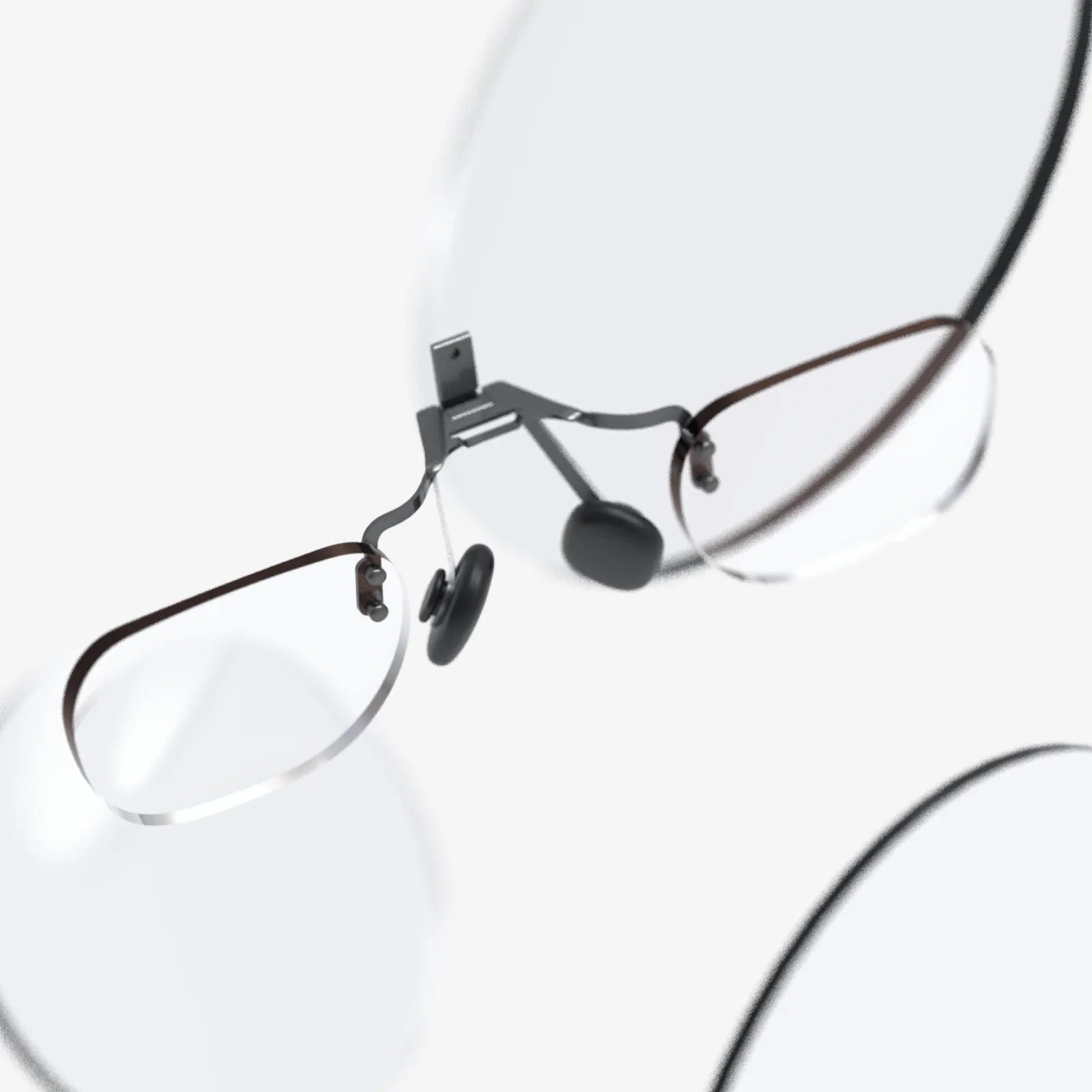
Imagine stepping through your living room and into a fantastical digital world, or having a life-sized holographic chart appear on your desk for a presentation. This isn't science fiction anymore; it's the rapidly evolving reality of immersive technologies. The terms Virtual Reality (VR) and Mixed Reality (MR) are often thrown around, but their true VR MR meaning represents a fundamental shift in how we interact with information and with each other. Understanding this spectrum is key to grasping the next wave of technological transformation.
The Foundational Layer: What is Virtual Reality (VR)?
At its core, Virtual Reality is the technology of complete immersion. The primary goal of a VR system is to isolate the user from the physical world and transport their senses into a fully digital, computer-generated environment. This is achieved through a combination of hardware and software designed to trick the human brain into accepting the virtual as real, a phenomenon known as presence.
The Technology Behind the Illusion
Creating a convincing VR experience relies on several key technological pillars:
- Head-Mounted Displays (HMDs): These are the goggles or helmets that serve as the primary window into the virtual world. They contain high-resolution displays for each eye, creating a stereoscopic 3D effect. Lenses focus and reshape the image for each eye across a wide field of view, filling the user's peripheral vision to enhance immersion.
- Tracking Systems: For the illusion to hold, the virtual world must respond naturally to the user's movements. This is accomplished through precise tracking of the headset and, often, handheld controllers. Systems use internal sensors like gyroscopes and accelerometers (Inside-Out Tracking) or external cameras/lasers (Outside-In Tracking) to monitor position and orientation in real-time.
- Audio: Spatial or 3D audio is a critical, yet often overlooked, component. Sounds in VR come from specific directions and distances, changing dynamically as the user moves their head. This auditory cue is incredibly powerful for selling the reality of the experience.
- Input Devices: These allow users to interact with the virtual environment. This can range from simple handheld controllers with buttons and triggers to more advanced gloves that track finger movements, enabling natural gestures like grabbing, pushing, and pointing.
The User Experience: Total Immersion and Its Applications
The result of this technology is a sense of "being there" that is unparalleled by any other medium. This makes VR exceptionally powerful for applications where complete focus and a controlled environment are necessary.
- Gaming and Entertainment: This is the most well-known application. VR games place you directly inside the action, whether you're piloting a starship, exploring a dungeon, or creating 3D art in a virtual space.
- Training and Simulation: From training surgeons for complex procedures without risk to a patient, to preparing soldiers for combat scenarios or teaching mechanics to repair complex machinery, VR provides a safe, repeatable, and cost-effective training ground.
- Architectural Visualization and Design: Architects and clients can "walk through" a building long before the foundation is poured. Designers can prototype and interact with 3D models at full scale, identifying potential issues early in the process.
- Therapy and Rehabilitation: VR is used for exposure therapy to treat phobias (like fear of heights or flying), for pain distraction in burn victims, and for physical rehabilitation by making exercises more engaging through gamification.
The defining characteristic of VR is its nature as a closed loop. The user's visual and auditory reality is entirely synthetic. While immensely powerful, this total separation from the physical environment can be isolating and limits its utility for tasks that require interaction with the real world.
Blending Realities: What is Mixed Reality (MR)?
If VR is about replacing reality, Mixed Reality is about augmenting it. MR sits on the spectrum between the completely real environment and the completely virtual one, blending digital content with the physical world in a way that allows both to coexist and interact in real-time. This is the deeper layer of the VR MR meaning.
It's crucial to distinguish MR from the related concept of Augmented Reality (AR). AR overlays digital information onto the real world, typically viewed through a smartphone screen or simple glasses. The digital content does not intelligently interact with the physical environment—it's like a heads-up display (HUD) projected onto reality. MR is the evolution of AR; it requires an understanding of the geometry, lighting, and objects in the physical space to allow digital objects to behave like real ones.
The Magic of Meshing: How MR Works
Mixed Reality devices are technological marvels that must perform several complex tasks simultaneously:
- Spatial Mapping: Using cameras and sensors, the device continuously scans the surrounding environment to create a precise 3D map, or "mesh," of the room. It understands where the floors, walls, tables, and chairs are.
- World-Locked Holograms: Digital objects—holograms—are anchored to specific points in the physical space. This means a virtual robot can sit on your real coffee table, and if you walk around the table, you can see the robot from different angles. If you move the table, the robot moves with it.
- Occlusion: This is a key differentiator from simple AR. The MR device understands that if a real-world object moves in front of a hologram, the hologram should be partially hidden or "occluded," just as a real object would be. This is a powerful visual cue that reinforces the illusion that the digital object is actually present.
- Gesture and Eye Tracking: Advanced MR systems often use cameras to track the user's hands and fingers, allowing for intuitive interaction with holograms through natural gestures like pinching, dragging, and tapping. Eye tracking can be used for focus and control.
The User Experience: A Seamless Blend and Its Potential
The promise of MR is a seamless fusion of our digital and physical lives, transforming how we work, learn, and play.
- Remote Collaboration: Imagine a mechanic wearing MR glasses getting real-time remote assistance from an expert. The expert can see the mechanic's view and draw holographic arrows and instructions directly onto the machinery in front of the mechanic.
- Design and Prototyping: Industrial designers can place a full-scale, holographic model of a new engine prototype on a real workbench, examining how its digital parts fit with physical components.
- Data Visualization: A surgeon could have a patient's vital signs and 3D scan data visually overlaid on their body during a procedure. A stock trader could have multiple live data streams and charts arranged around their physical monitors.
- Interactive Learning: Students studying astronomy could have the solar system appear on their desk, able to rotate planets and see their orbits. History students could witness historical events unfold in their classroom.
MR doesn't seek to replace the world but to enhance it with a persistent digital layer, making information and collaboration more contextual and intuitive.
The Spectrum of Reality: Understanding the Continuum
The terms VR and MR are not binary opposites; they exist on a continuum often referred to as the "Virtuality Continuum," first proposed by Paul Milgram and Fumio Kishino in 1994. This spectrum ranges from the completely real environment to the completely virtual environment, with Mixed Reality encompassing everything in between.
On one end, you have the un-augmented Real Environment. A step inward, you find Augmented Reality (AR), which adds digital overlays to the real world. Further along is Augmented Virtuality (AV), where a primarily virtual world is augmented with real-world elements (e.g., seeing your real hands in a virtual game). At the far end is the completely Virtual Environment. Mixed Reality is the broad term for the entire spectrum between the two extremes, though it is most commonly used to describe experiences closer to the AR end that feature advanced environmental interaction.
Challenges and the Road Ahead
Despite the incredible potential, both VR and MR face significant hurdles on the path to mass adoption.
- Hardware Limitations: For VR, achieving perfect visual fidelity, wide field of view, and eliminating motion sickness remains a challenge. For MR, creating powerful, self-contained processing units that are also small, lightweight, and socially acceptable to wear for long periods is the holy grail. The "goggles" form factor is a barrier for some.
- Content and Ecosystem: A platform is only as valuable as its software. There is a need for more compelling, professional-grade "killer apps" that demonstrate clear value beyond gaming and novelty, especially for MR.
- Social and Ethical Considerations: These technologies raise important questions about data privacy (they require constant scanning of your environment), psychological effects, the digital divide, and how we will manage our time between physical and digital realities.
The future lies in the convergence of these technologies. We are already seeing VR headsets incorporating high-resolution passthrough cameras, effectively allowing them to function as MR devices. This blurring of the lines will continue, with future devices likely being adaptable across the spectrum.
The true VR MR meaning is more than just definitions; it's about a fundamental new paradigm for human-computer interaction. It's the shift from looking at a screen to being inside the information, or having that information integrated seamlessly into your life. As the technology matures, becomes more accessible, and overcomes its current limitations, it has the potential to revolutionize every industry from healthcare and manufacturing to education and social connection, ultimately changing the fabric of our daily reality.
We stand at the precipice of a new era where the line between our physical existence and digital creation will become increasingly fluid. The journey from passive observer to active participant within our digital realms is just beginning, and understanding the tools that will take us there is the first step into a future limited only by our imagination.
Share:
Cheap VR Headset Germany: Your Ultimate Guide to Affordable Virtual Reality
VR Headset Growth: The Unstoppable Rise of Immersive Reality