


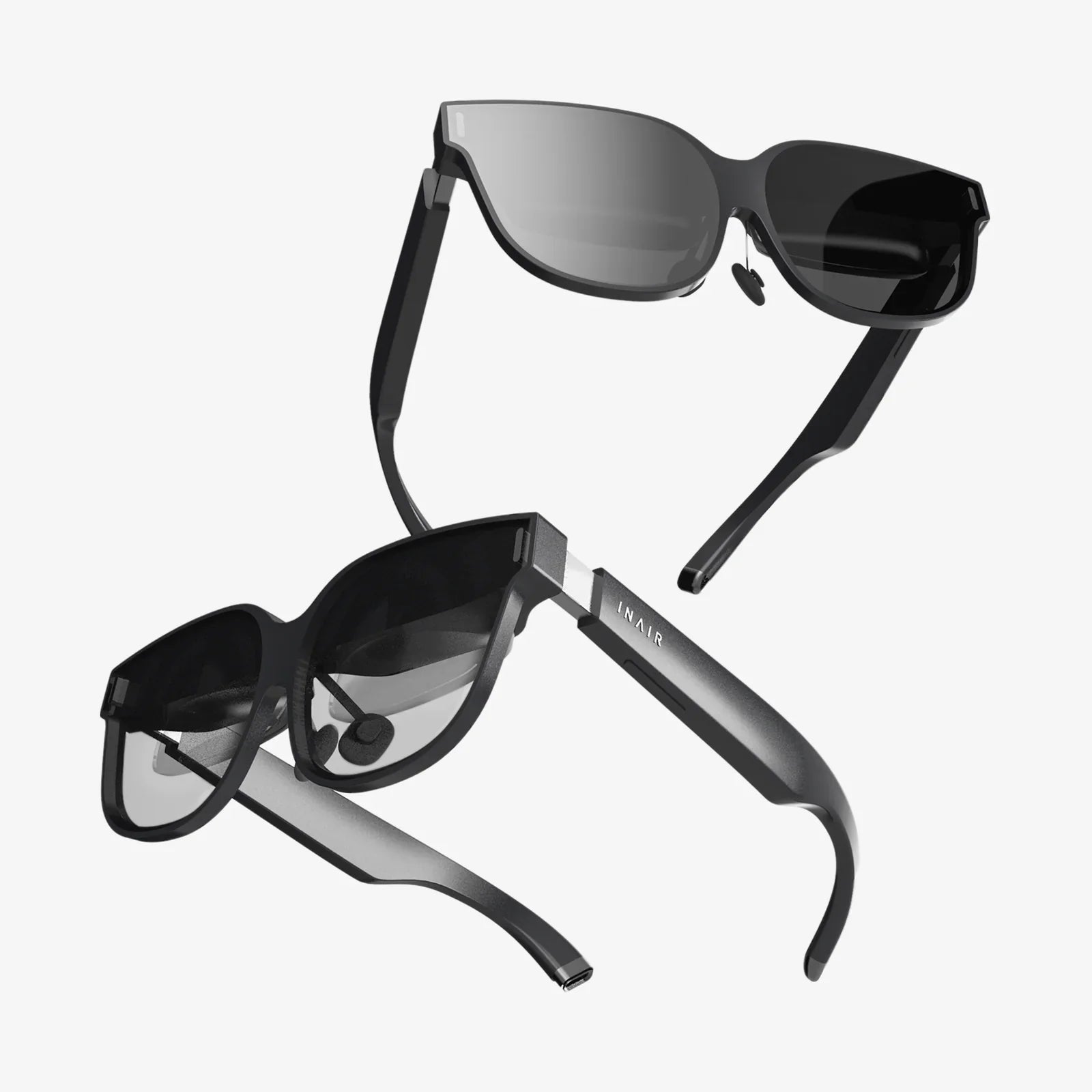
Imagine a world where the line between the digital and the physical isn't just blurred—it's artistically smudged, creating a canvas of infinite possibilities. This is no longer the realm of science fiction; it's the burgeoning reality being crafted by a spectrum of immersive technologies. For the uninitiated, the acronyms VR, MR, and XR can seem like a confusing alphabet soup, often used interchangeably but representing distinct and powerful concepts. Understanding this spectrum is the first step toward grasping one of the most significant technological shifts of our time, a shift that promises to redefine how we work, learn, play, and connect. The journey from complete virtual worlds to digitally augmented realities is not just about better graphics; it's about fundamentally expanding human experience and capability.
Demystifying the Acronyms: A Spectrum of Experience
Before we can appreciate the profound implications of these technologies, we must first build a clear and foundational understanding of what each term truly means. They exist on a continuum, each offering a different point on the scale between total immersion and simple augmentation.
Virtual Reality (VR): The Total Escape
Virtual Reality is the most well-known of the three. VR's primary goal is immersion—to transport the user completely into a simulated, digital environment. This is achieved by blocking out the physical world entirely, typically through a head-mounted display that covers the user's field of vision. Sophisticated headsets track head movements, allowing the user to look around the virtual world naturally, creating a powerful sense of "presence"—the feeling of actually being there.
The experience is often enhanced with spatial audio, which makes sounds seem to come from specific locations in the virtual space, and handheld controllers that allow for interaction with the digital environment. From exploring the surface of Mars to practicing a complex surgical procedure, VR creates a safe, controllable, and limitless space for simulation and experimentation. It is a digital reality, separate and distinct from our own.
Augmented Reality (AR): The Overlaid Layer
If VR replaces reality, Augmented Reality enhances it. AR overlays digital information—images, text, animations, or 3D models—onto the user's view of the real world. The key differentiator is that the user remains grounded in their physical environment; the digital elements are simply added as a layer on top of it. This technology is most commonly experienced today through smartphone screens, where apps use the camera to display digital content onto the physical world.
Think of popular mobile games that placed fantastical creatures in your local park or furniture store apps that allow you to see how a new sofa would look in your living room before you buy it. AR is about context and information, providing relevant data exactly when and where you need it. It aims to be a seamless supplement to reality, not a replacement for it.
Mixed Reality (MR): The Seamless Blend
Mixed Reality is the most complex and often misunderstood member of the family. It sits on the spectrum between VR and AR but represents a significant leap in capability. MR doesn't just overlay digital content; it anchors it to the real world, allowing for genuine interaction between the physical and the digital. In a true MR experience, a virtual object can be occluded by a real-world physical object, like a digital character hiding behind your actual sofa.
This requires advanced sensors and cameras to constantly map and understand the geometry, lighting, and physics of the surrounding environment. This allows digital objects to behave as if they have real presence: they can sit on tables, bounce off walls, and cast shadows. MR is the pinnacle of blending, creating experiences where the virtual and real coexist and interact in real-time. It is the foundation for the vision of persistent digital worlds layered over our own.
Extended Reality (XR): The Umbrella Term
Extended Reality is the catch-all term that encompasses VR, AR, and MR, along with any other technologies that combine the real and virtual worlds. It is not a specific type of experience but rather a category. When someone refers to the "XR industry," they are talking about the entire ecosystem of companies, developers, and technologies working in immersive computing. XR acknowledges that these technologies are not isolated silos but part of a continuous spectrum of human-computer interaction.
The Engine Room: Core Technologies Powering the Revolution
The magic of immersive experiences is powered by a sophisticated convergence of hardware and software technologies, each pushing the boundaries of what's possible.
Display and Optics: The Windows to New Worlds
At the heart of any headset are its displays and lenses. Modern headsets use high-resolution, fast-switching displays to create a crisp image. The optics—the complex array of lenses—are then responsible for projecting this image in a way that is comfortable for the human eye to focus on, typically by creating a "virtual" image that appears meters away, even though the screen is just centimeters from the face. Advancements like pancake lenses are making headsets slimmer and lighter, while varifocal displays aim to solve the vergence-accommodation conflict, a major source of eye strain where your eyes struggle to focus on virtual objects at different depths.
Tracking and Sensing: Knowing Where You Are
For an experience to feel real, the technology must understand the user's position and movements with incredible precision. Inside-out tracking uses cameras and sensors on the headset itself to map the environment and track its own position within it, eliminating the need for external base stations. This is complemented by hand-tracking technology, which uses computer vision to allow users to interact with digital content using their bare hands, and eye-tracking, which not only enables more intuitive interfaces but also allows for foveated rendering—a technique that dramatically boosts performance by rendering only the area the user is directly looking at in full detail.
Computational Power and Haptics: Feeling the Virtual
Rendering complex, interactive worlds in real-time requires immense computational power. While high-end headsets are often tethered to powerful computers, the industry is racing towards standalone devices with all the necessary processing built-in, powered by specialized chipsets. Beyond visual and auditory immersion, haptic feedback is crucial for selling the illusion. Advanced controllers provide rumble and force feedback, while vests and gloves can simulate the feeling of touch, impact, and even temperature, closing the loop between seeing a virtual object and "feeling" it.
Transforming Industries: The Practical Applications of XR
The value of XR extends far beyond entertainment. It is becoming a critical tool for innovation, training, and efficiency across the global economy.
Healthcare: Practicing on Digital Patients
In medicine, the stakes are incredibly high, and XR is proving to be a lifesaver. Surgeons use VR simulations to practice complex procedures risk-free, reducing errors in the operating room. MR is used during actual surgeries, overlaying critical patient data like MRI scans directly onto the surgeon's field of view, allowing them to "see inside" the patient without looking away. AR is also being used for medical training, patient education, and physical therapy, providing interactive guides and motivation for recovery.
Manufacturing and Design: Prototyping in the Digital Realm
The automotive and aerospace industries have embraced XR to revolutionize their design and assembly processes. Engineers and designers can collaborate in a shared virtual space to examine and interact with full-scale 3D models of a new vehicle or aircraft engine long before a physical prototype is built, saving millions of dollars and months of development time. On the factory floor, assembly line workers use AR glasses that project schematics, instructions, and torque settings directly onto the components they are assembling, drastically reducing errors and improving efficiency.
Education and Training: Learning by Doing
XR offers an unparalleled "learning by doing" platform. Instead of reading about ancient Rome, history students can take a VR field trip to walk its streets. Medical students can dissect a virtual cadaver from every angle. Trainee mechanics can practice repairing a complex engine in AR, with digital arrows and instructions guiding their every move. This experiential learning leads to significantly higher retention rates and deeper understanding compared to traditional methods.
Remote Collaboration and the Future of Work
The concept of the "metaverse" is deeply tied to MR and VR. These technologies promise the next evolution of remote work and collaboration. Instead of a grid of faces on a video call, teams from around the world can meet as lifelike avatars in a virtual boardroom or around a holographic 3D model. They can manipulate digital assets together in real-time as if they were in the same physical room. This has the potential to dissolve geographical barriers and create a new, more natural paradigm for distributed work.
Retail and Real Estate: Try Before You Buy
Both sectors are using AR to bridge the gap between online and physical shopping. Customers can use their smartphones to see how a new pair of glasses looks on their face or how a new couch fits and matches the decor of their living room. Real estate agents offer virtual tours of properties, allowing potential buyers to walk through a home from anywhere in the world. This reduces uncertainty, increases consumer confidence, and drives sales.
Navigating the Challenges: The Path to Mass Adoption
Despite its immense potential, the widespread adoption of XR faces significant hurdles that must be overcome.
The Hardware Conundrum: Comfort, Cost, and Capability
For true immersion, hardware must be comfortable enough to wear for extended periods, powerful enough to render convincing worlds, and affordable enough for the average consumer. This is a difficult balancing act. High-end headsets offer incredible experiences but often come with a high price tag and may require a tether to an expensive computer. Standalone devices are more accessible but have traditionally made compromises on graphical fidelity and processing power. The industry is steadily chipping away at these issues, but the "perfect" headset that ticks all boxes remains the holy grail.
The Social and Psychological Dimension
As we spend more time in digital spaces, questions about social impact arise. Will pervasive XR lead to greater isolation, or will it foster new forms of community and connection? Prolonged use can also cause cybersickness—a form of motion sickness—in some users, though improvements in hardware and software are mitigating this. Furthermore, the concept of digital identity and avatar representation raises complex questions about how we present ourselves and interact with others in these new realms.
Privacy and Security in a Mapped World
XR devices, especially those designed for MR, are essentially data collection machines. They have cameras and sensors that are constantly scanning and mapping the user's environment, which could include their home, office, and other private spaces. This raises profound privacy concerns. Who has access to this data? How is it stored and used? Furthermore, as these platforms become more social and economic hubs, they will become targets for cybersecurity threats, from identity theft to entirely new forms of digital crime and harassment. Establishing robust ethical frameworks and security protocols is not an option; it is a necessity for the survival of the industry.
The Future is Blended: What Lies on the Horizon
The trajectory of XR points towards a future where the technology becomes increasingly invisible and integrated into our daily lives.
The ultimate goal for many in the field is the development of true, all-day wearable devices. Imagine a pair of stylish glasses, indistinguishable from regular eyewear, that can seamlessly switch between AR transparency and VR immersion. This would require breakthroughs in display technology, like holographic waveguides, and a massive reduction in power consumption.
As artificial intelligence continues to advance, it will become the intelligent engine behind XR. AI will power more realistic and responsive virtual characters, enable real-time language translation overlayed on conversations, and intelligently manage the digital information presented to us, filtering out noise and providing only what is contextually relevant. The line between human and computer intelligence will blur, with AI acting as an ever-present assistant in our blended reality.
Perhaps the most profound long-term vision is the concept of the "metaverse"—a persistent network of interconnected virtual spaces. While today's XR experiences are often siloed applications, the future may hold an open standard where digital assets and identities can move seamlessly between different experiences and platforms, much like we move between websites today. This would create a new layer of reality, an internet of places and experiences that we can step into, fundamentally changing the nature of the web and human interaction.
The spectrum of VR, MR, and XR represents more than a collection of gadgets; it is a fundamental shift in the paradigm of human-computer interaction. We are moving from looking at screens to stepping inside them, from using tools to wearing them. This transition will unlock unprecedented potential for creativity, productivity, and connection, but it also demands careful consideration of the societal and ethical implications. The journey into this blended future has already begun, and it promises to be one of the most transformative and fascinating chapters in the story of technology. The door between realities is now open, and there's no turning back.
Share:
When Did The First VR Headset Come Out? The Surprising 1960s Origin Story
Highest Quality VR Headset - The Definitive Guide to Unmatched Immersion