


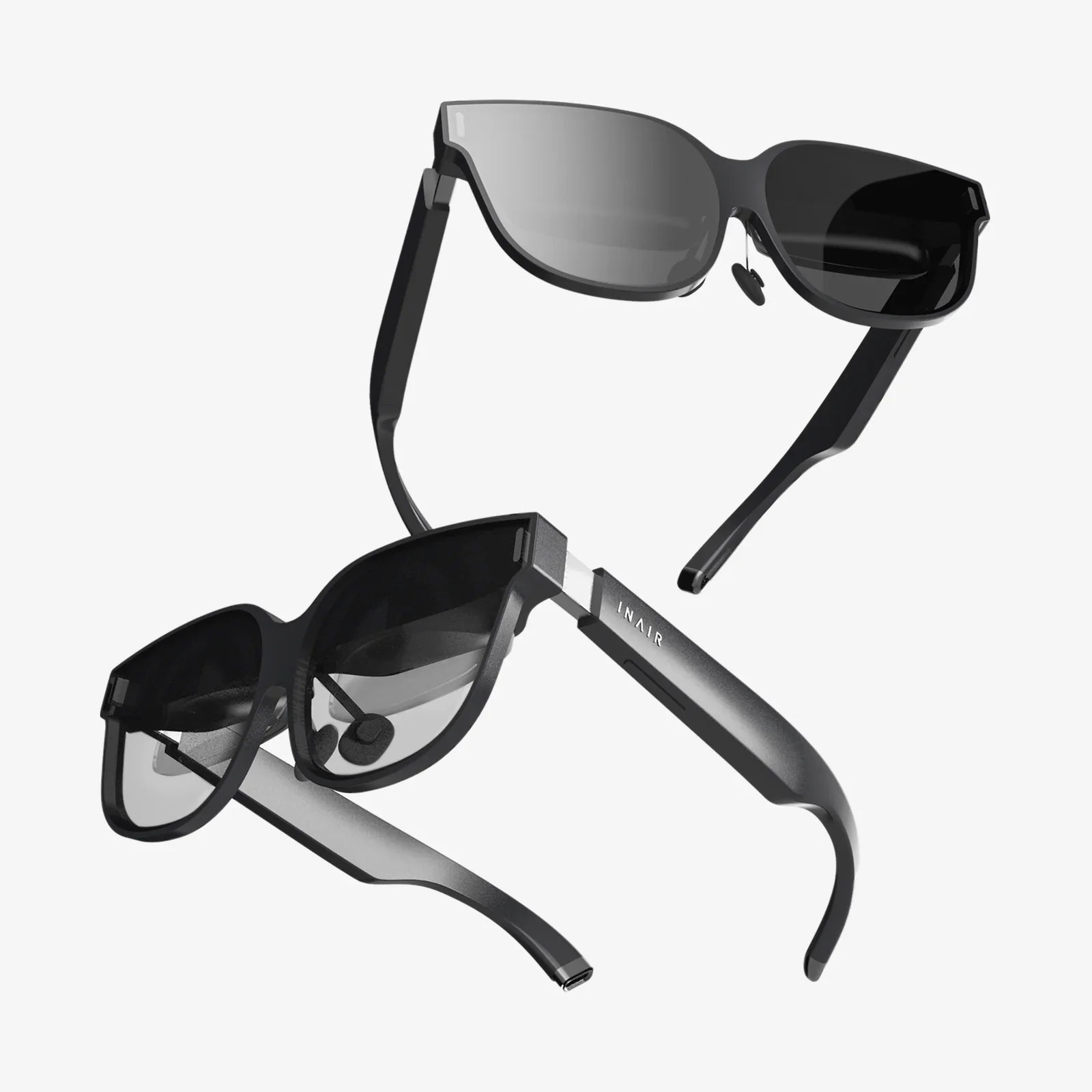
Imagine a screen that stretches beyond the walls of your room, a cinema-sized display for private movie nights, or a multi-monitor workstation that materializes anywhere you go. This isn't a glimpse into a distant future; it's the present-day reality powered by the revolutionary concept of VR screen size. Forget the physical inches measured diagonally on a plastic bezel. In the realm of virtual reality, the screen is not a object you hold, but a universe you inhabit, and its size is a fluid, dynamic property limited only by imagination and processing power. This fundamental shift from a fixed panel to an infinite canvas is not just an upgrade; it's a complete redefinition of how we consume media, work, and play.
Deconstructing the Illusion: What Exactly is a "Screen" in VR?
To understand VR screen size, we must first dismantle our traditional understanding of a screen. In the physical world, a screen is a discrete object with a fixed resolution (e.g., 1920x1080 pixels) and a fixed physical size (e.g., 27 inches). These two properties are intrinsically linked; the pixel density, or Pixels Per Inch (PPI), is determined by their relationship. A 4K resolution on a 27-inch screen appears much sharper than on a 55-inch screen because the pixels are packed more tightly.
Virtual reality shatters this model. Inside a headset, there are two physical micro-displays, one for each eye. Their size and resolution are fixed. However, these micro-displays do not function as traditional "screens" in the way we perceive content. Instead, they are windows into a fully rendered 3D world. The virtual "screen" you are looking at—be it a movie theater screen, a web browser, or a video game interface—is a flat, textured plane positioned at a specific distance within that 3D space. Its perceived size is a function of its scale within the virtual environment and its distance from your virtual eyes.
This decoupling of the physical display from the perceived content is the core of the VR screen size revolution. The headset's lenses and software work in concert to create a stereoscopic image that tricks your brain into perceiving depth and scale. Therefore, when we talk about a "200-inch VR screen," we are describing the perceived angular size of that virtual plane, not a physical object. It feels like a 200-inch screen because it occupies the same field of view as a real 200-inch screen would from a specific, optimized seating distance.
The Metrics That Truly Matter: Beyond Diagonal Inches
Since diagonal measurements are rendered almost meaningless, what are the actual metrics that define the quality and immersion of a virtual screen? Three factors are paramount: Field of View (FoV), Angular Resolution, and Render Resolution.
Field of View (FoV): The Canvas of Your Vision
Field of View is the extent of the observable world seen at any given moment, measured in degrees. Human vision has a horizontal FoV of roughly 210 degrees. Most consumer headsets offer a FoV between 90 and 120 degrees. This metric is the absolute ceiling for your virtual screen size. A virtual screen can be rendered to fill 100% of your headset's FoV, making it feel immense and all-encompassing. A narrower FoV can make even a large virtual screen feel like you're looking through a binocular or a scuba mask, breaking immersion. Advancements in lens design and display technology are continuously pushing FoV boundaries, which directly enables the feeling of larger, more natural screen sizes.
Angular Resolution: The Sharpness of the Illusion
If FoV is the size of the canvas, angular resolution is the fineness of the brush. Measured in pixels per degree (PPD), it calculates how many pixels are packed into each degree of your field of view. This is the true measure of clarity in VR. A high PPD means text will be sharper, distant details in games will be clearer, and the dreaded "screen door effect" (seeing the gaps between pixels) is minimized.
It's a delicate balancing act. For a given physical display resolution, a wider FoV will result in a lower PPD, as the same number of pixels are spread across a wider angular area. This is why increasing both raw resolution and FoV is the holy grail for headset manufacturers. A high angular resolution ensures that even a screen designed to fill your entire vision remains crisp and legible, not a blurry, pixelated mess.
Render Resolution and Supersampling: Forcing a Clearer Picture
The graphics processing unit (GPU) renders the virtual environment at a specific resolution, known as the render target. Often, to achieve the highest possible clarity, the render target is set higher than the physical display's native resolution. This technique, called supersampling, effectively creates a very high-resolution image and then downscales it to fit the physical panels. This process smooths out jagged edges (aliasing) and provides a significant boost to perceived detail and text clarity, making the virtual screen appear much sharper and more solid. A powerful GPU is essential for supersampling, making it a key component in maximizing the potential of your VR screen size.
The User in Control: A New Era of Personalized Display
The most empowering aspect of virtual screen size is user agency. In the real world, you buy a 32-inch monitor and you are stuck with it. In VR, you are the master of your visual domain.
- Size on Demand: You can instantly switch from a modest 40-inch monitor for coding to a 100-foot IMAX-style screen for watching a blockbuster film. The screen is a software object, its scale dictated by a slider in a menu or even by how you physically grab and resize it with your motion controllers.
- Curvature and Placement: Screens don't have to be flat. A wraparound curved screen can place all content comfortably within your central vision, reducing the need to constantly turn your head. You can pin a screen to your virtual cockpit, place it high on a virtual wall, or even have it follow you around a virtual space.
- The Multi-Monitor Dream, Realized: Physical multi-monitor setups are expensive, cable-ridden, and space-consuming. In VR, you can conjure three, four, or even more high-resolution screens arranged in a perfect arc around you. This is a transformative experience for productivity, allowing for unparalleled multitasking and information management without any physical constraints.
Challenges on the Path to Perfection
While the potential is staggering, the technology is still maturing, and several challenges remain before virtual screens can truly replace their physical counterparts for all use cases.
The primary hurdle is visual fidelity. Despite high-end headsets offering impressive specs, the angular resolution of even the best consumer devices is still significantly lower than that of a modern smartphone or monitor viewed at a normal distance. This can make reading very small text for extended periods more taxing on the eyes, a significant concern for productivity. Furthermore, issues like motion blur during head movement, latency, and optical imperfections (like chromatic aberration and god rays) can further detract from the experience.
Comfort is another major factor. Today's headsets are becoming lighter and more balanced, but wearing a device on your face for an entire eight-hour workday is still less comfortable than simply looking at a physical monitor. The evolution of headset form factors towards smaller, lighter, and more glasses-like designs is crucial for the long-term adoption of VR as a primary display medium.
Finally, there is the question of social isolation. A physical screen is a shared object; colleagues can look over your shoulder at your monitor. While social VR platforms are developing ways to share virtual screens and collaborate, it lacks the effortless, immediate shared experience of a physical display in a meeting room.
The Future is Big, Sharp, and Virtual
The trajectory of VR display technology points toward a future where these challenges are systematically overcome. We are moving toward headsets with vastly higher PPD, wider FoV, and varifocal lenses that dynamically adjust to where you are looking, providing a natural sense of focus and eliminating eye strain. The integration of eye-tracking will allow for foveated rendering, where only the center of your gaze is rendered in full detail, drastically reducing the computational power required to drive these immense, high-resolution virtual displays.
This technological evolution will unlock applications we are only beginning to imagine. Architects will walk clients through life-sized, photorealistic renders of unbuilt homes. Medical students will practice surgeries on virtual organs displayed with perfect scale and detail. The concept of a "television" or "computer monitor" as a distinct piece of furniture may fade away, replaced by a single, elegant headset that can conjure any display, of any size, in any context.
The journey beyond the bezel has already begun. VR screen size isn't about measuring a piece of glass; it's about measuring the bounds of our imagination. It represents a fundamental shift from displays as hardware to displays as software—malleable, customizable, and infinite. While the technology continues to refine itself, the promise is clear: the largest, most personal, and most immersive screen you will ever own won't be on your desk or your wall. It will be the one you wear.
Share:
Top 10 Best Selling Digital Products: The Definitive Guide to What's Hot Now
Smart Glasses Prescription Support: The Future of Vision is Clear and Connected