


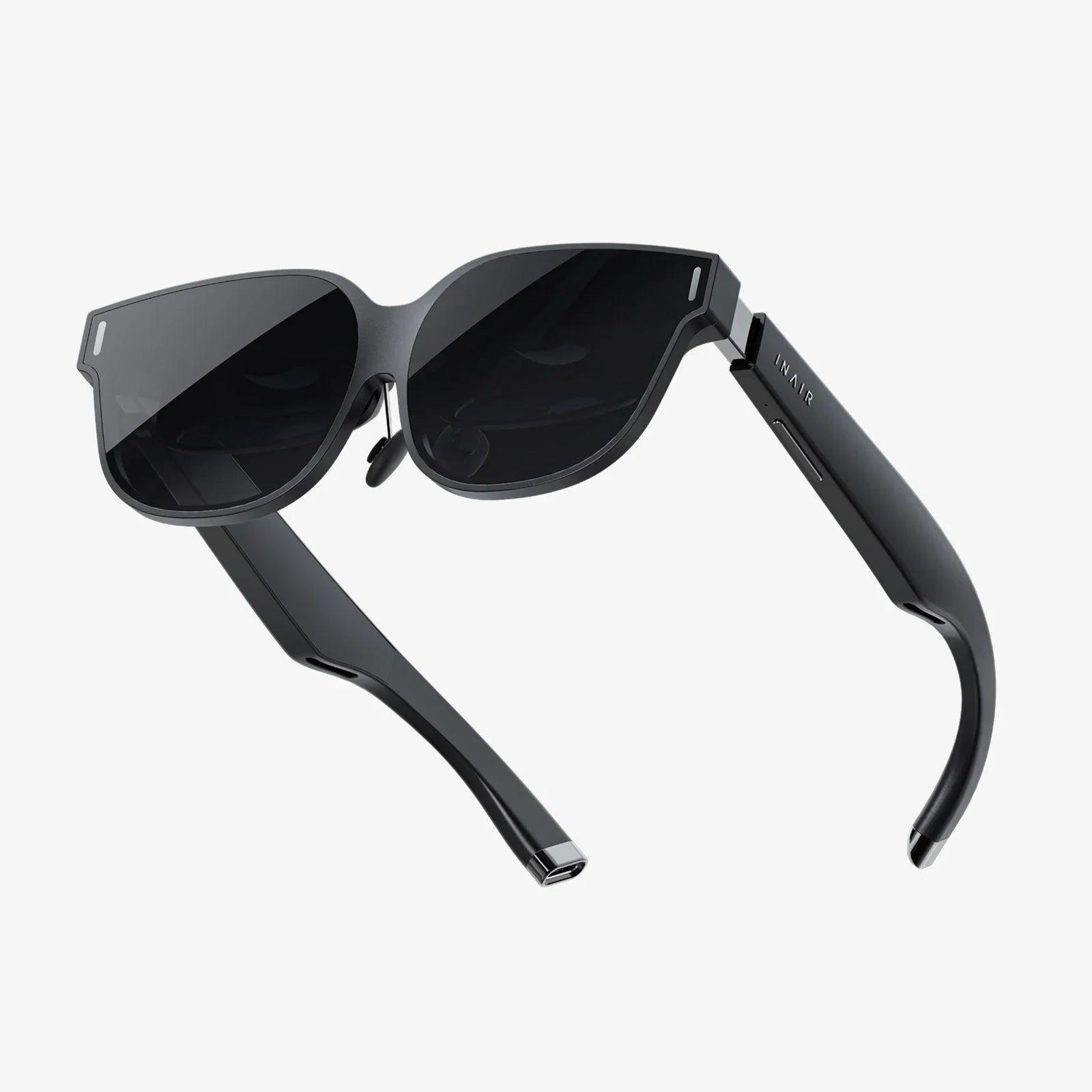
You slip on the headset, and for a moment, the physical world dissolves. A vast alien landscape stretches before you, a city of impossible scale towers overhead, or you find yourself standing on the surface of Mars. This act of transportation, this magic trick on the senses, is the ultimate promise of virtual reality. Yet, few users stop to consider the singular, critical component that makes this entire illusion possible: the screen technology housed mere centimeters from their eyes. This is the unsung hero, the digital retina through which entire universes are born. The relentless pursuit of better, faster, and more vivid VR screen tech is not just an incremental upgrade path; it is the fundamental engine driving the entire industry toward a future of seamless immersion.
The Gateway to Presence: Why Screens Are Everything in VR
Unlike a television or a monitor, a screen in a VR headset is not a window to another world; it is the world. Its job is not merely to display an image but to convincingly simulate reality for our most dominant sense: vision. The quality of this simulation directly dictates the user's sense of "presence"—the elusive and powerful feeling of actually "being there." Any flaw in the screen's performance acts as a crack in the facade, instantly shattering the illusion and reminding the user they are simply looking at a screen. Therefore, the specifications of VR screen tech are not just numbers on a datasheet; they are the very parameters that define the boundaries of the virtual experience.
The core challenges are immense. These displays must achieve unprecedented pixel densities to avoid the "screen door effect," where users perceive the gaps between pixels. They must refresh at blistering speeds to eliminate motion blur and the latency that causes simulation sickness. They must deliver perfect blacks and a vast color gamut to create believable worlds. They must manage heat and power consumption within a compact, wearable form factor. Every advancement in this field is a hard-fought victory over the limitations of physics and human perception.
Deconstructing the Image: Key Specifications of VR Displays
To understand the evolution of VR screen tech, one must first speak its language. Several key metrics define the performance and quality of a VR display.
Resolution and Pixels Per Degree (PPD)
While manufacturers often tout the total resolution of a panel (e.g., 1920x2160 per eye), a more meaningful metric is Pixels Per Degree (PPD). This measures the angular density of pixels from the user's perspective. The human eye can discern approximately 60 PPD. Early VR headsets struggled with PPD values in the single digits, making text blurry and distant objects a pixelated mess. Modern high-end headsets are now pushing past 25 PPD, a massive leap that brings us closer to the clarity of real-world vision. Achieving a "retina" level in VR, where the individual pixels are indistinguishable, is the holy grail, requiring PPD values that demand incredibly high total resolutions and advanced optics.
Refresh Rate and Persistence
Measured in Hertz (Hz), the refresh rate is how many times per second the image on the screen is updated. A higher refresh rate (90Hz, 120Hz, and now up to 144Hz or beyond) is critical for smooth motion and low latency. It allows virtual objects to move naturally and enables users to make quick, precise head movements without the world smearing or juddering. This is directly tied to "persistence," or how long each frame is illuminated. Low-persistence display techniques flash each frame for a fraction of the refresh cycle instead of leaving it on continuously. This eliminates the motion blur that occurs when your eye tracks a moving object across a constantly lit screen, a major contributor to VR-induced nausea.
Field of View (FoV)
The Field of View is the extent of the observable world seen at any given moment, measured as an angle. A natural human FoV is roughly 220 degrees horizontally. Most VR headsets offer between 90 and 120 degrees. A wider FoV is crucial for deepening immersion, making the virtual world feel expansive and limitless rather than like looking through a pair of binoculars. However, widening the FoV presents a monumental challenge for VR screen tech: it either requires a massive increase in total resolution to maintain the same PPD, or it leads to a drop in perceived sharpness. It also introduces complex optical hurdles in designing lenses that can project a wide, distortion-free image.
The Battle of the Panels: LCD vs. OLED and the Rise of Micro-LED
The heart of any display is its underlying panel technology. The VR industry has been a battleground for two dominant technologies, each with distinct advantages and trade-offs.
LCD (Liquid Crystal Display)
LCDs have become the workhorse for many modern VR headsets. Their primary advantage is their ability to achieve very high resolutions and high refresh rates at a lower manufacturing cost than their counterparts. They use a backlight (often a full array of LEDs) to illuminate liquid crystals that act as shutters for each pixel. However, this technology has a critical weakness: contrast ratio. Because the backlight is always on, even when a pixel is meant to be "black," it results in blacks that appear as a dim, washed-out gray. This can significantly hamper immersion in dark scenes, making space feel less infinite and dark corridors less intimidating.
OLED (Organic Light-Emitting Diode)
OLED technology was the darling of the first generation of consumer VR. Its key strength is its perfect per-pixel illumination. Each pixel is its own tiny light source and can be turned completely off to achieve true, perfect blacks and an infinite contrast ratio. This makes colors pop and dark scenes incredibly convincing. OLEDs also boast superior response times, virtually eliminating ghosting. Their historical drawbacks have been "mura" (slight visual imperfections and unevenness), a risk of burn-in over time, and the difficulty in achieving the very high resolutions and pixel densities of advanced LCDs without resorting to complex Pentile subpixel layouts that can reduce sharpness.
Micro-LED: The Future contender
Widely seen as the potential ultimate solution for VR screen tech, micro-LED promises to combine the best of both worlds. Like OLED, it is an emissive technology—each microscopic LED is a self-illuminating pixel, capable of perfect blacks, incredible brightness, and a wide color gamut. Crucially, it avoids OLED's weaknesses: it is more power-efficient, has a longer lifespan with no risk of burn-in, and can achieve stunning brightness levels without degradation. The hurdle is purely one of manufacturing. Creating and transferring millions of microscopic inorganic LEDs onto a panel with perfect yield is currently prohibitively expensive and complex. Yet, as the technology matures, it is poised to become the gold standard, enabling incredibly compact, bright, and visually flawless headsets.
Beyond the Panel: The Critical Role of Optics and Software
A perfect panel is useless if the image cannot be delivered correctly to the user's eye. The optics are just as vital a part of the visual pipeline as the screen itself.
Traditional Fresnel lenses, with their concentric circular ridges, have been widely used because they are thin and lightweight. However, they introduce artifacts like "god rays"—glare and scattering around high-contrast elements—which can be distracting. The industry is now rapidly shifting to pancake lenses. These complex, multi-element folded optics allow for a much shorter distance between the screen and the eye, dramatically slimming down the overall form factor of headsets. They provide a much larger "sweet spot" (the area of perfect focus) and significantly reduce visual artifacts like god rays. The trade-off is that they absorb more light, requiring brighter displays to compensate, which is another reason high-brightness technologies like micro-LED are so important.
Furthermore, the screen's output is heavily processed by sophisticated software. Techniques like Fixed Foveated Rendering (FFR) and its more advanced cousin, Eye-Tracked Foveated Rendering (ETFR), are integral to modern VR screen tech. ETFR uses internal cameras to track the user's gaze in real-time. It then renders only the tiny central foveal region of the vision at full resolution, while dynamically reducing the rendering detail in the peripheral vision where the eye cannot perceive the difference. This can reduce the GPU workload by over 5x, making it possible to drive these incredibly high-resolution displays without requiring a supercomputer. This is a perfect example of the screen, the optics, and intelligent software working in concert to overcome a fundamental performance barrier.
Peering into the Crystal Ball: The Future of VR Visuals
The trajectory of VR screen tech points toward a future of ever-greater realism and accessibility. We can expect several key developments to define the next decade.
Resolution and PPD will continue to climb, pushing toward and eventually surpassing the "retina" threshold, making virtual displays indistinguishable from real-world vision. This will finally make VR a viable platform for reading text and performing detailed work. Micro-LED will likely mature and become commercially viable, enabling these high-PPD displays with unparalleled brightness, contrast, and efficiency.
We will also see the integration of revolutionary technologies like varifocal displays. Current VR headsets have a fixed focal plane, causing a conflict between vergence (where your eyes point) and accommodation (where your eyes focus), which leads to eye strain and can break immersion. Varifocal systems use eye-tracking and mechanically or electronically moving display elements to dynamically adjust the focal distance, matching it to the virtual object the user is looking at. This will finally resolve the accommodation conflict, making long-term VR use far more comfortable and the illusion of depth utterly convincing.
Furthermore, the pursuit of photorealistic rendering will be supercharged by advancements in HDR (High Dynamic Range) for VR. Future screens will need to handle a vastly wider range of luminance, from the deepest shadows to the brilliant glare of a virtual sun, mimicking the incredible dynamic range of human sight. This, combined with wider color gamuts, will make virtual worlds feel not just real, but hyper-real—more vivid and intense than reality itself.
The journey of a pixel, from a data point in a graphics engine to a photon entering a user's eye, is a complex symphony of engineering and innovation. It's a relentless push against blur, latency, and artifice, all in service of one goal: complete belief. The next time you find yourself lost in a virtual world, take a moment to appreciate the millions of tiny suns and the intricate lenses that built it all for you. The future of these digital realities is being written, one brilliant pixel at a time.
Share:
Your Smart Virtual Office: The Future of Work is Here and It's Intelligent
Your Smart Virtual Office: The Future of Work is Here and It's Intelligent