


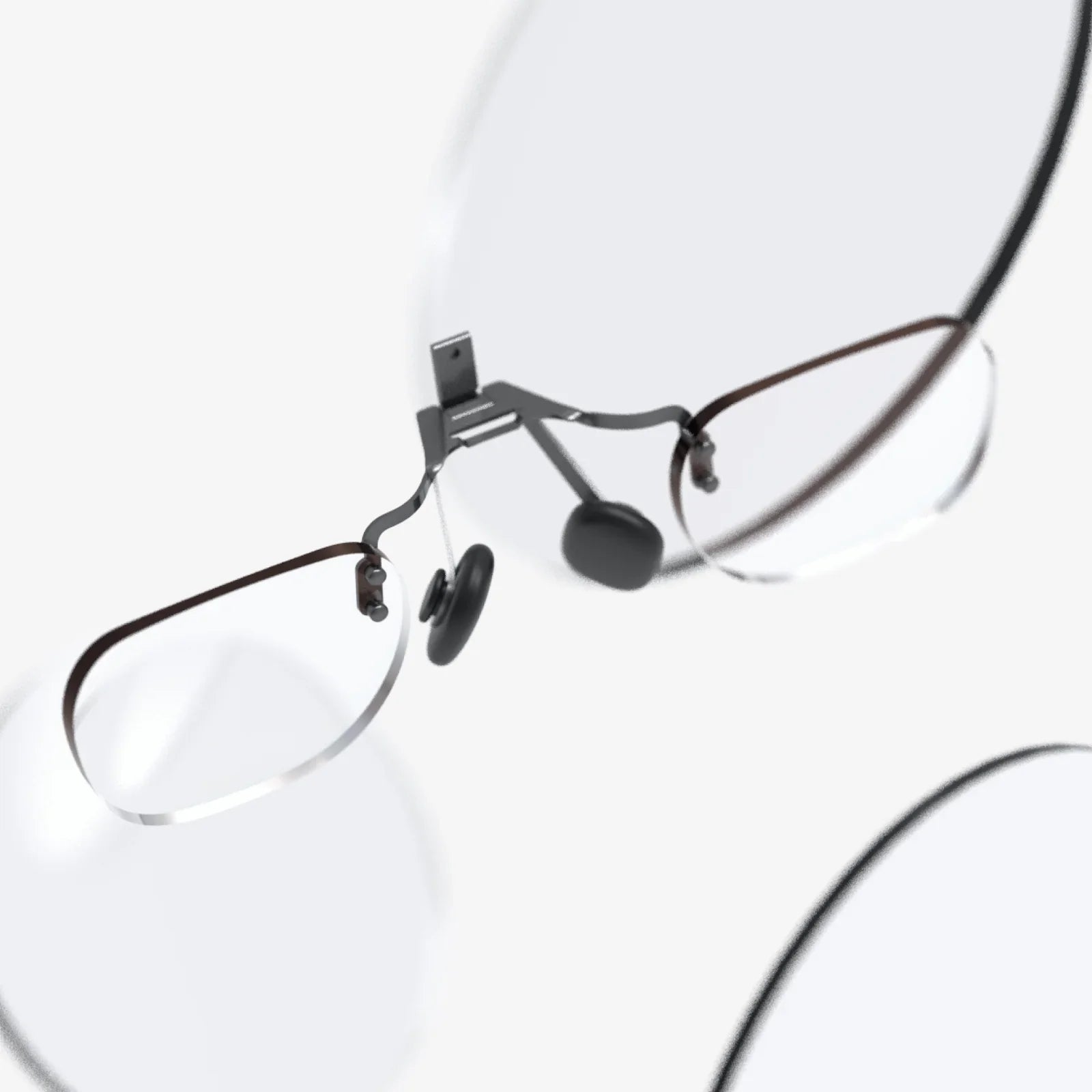
The world is on the cusp of a visual computing revolution, and it’s being viewed through a new lens. Forget the clunky, tethered headsets of yesteryear; the future is sleek, portable, and intelligent. The VR smartglasses market represents not just an evolution of technology, but a fundamental shift in how we interact with information, with each other, and with reality itself. This isn't about escaping our world; it's about augmenting it, enhancing it, and unlocking possibilities we've only ever dreamed of in science fiction. The race to dominate your field of view is on, and the stakes have never been higher.
The Architectural Shift: From Bulky Headsets to Everyday Eyewear
The most immediate and impactful driver of the burgeoning VR smartglasses market is the dramatic miniaturization of core technologies. Early virtual reality systems were monumental feats of engineering that often required a dedicated room, a powerful external computer, and a web of cables. They were incredible for immersive experiences but were fundamentally anchored and isolating.
VR smartglasses shatter this paradigm. Their design philosophy is rooted in wearability and social acceptability. This has been made possible by several key technological advancements:
- Micro-OLED and Pancake Lenses: Traditional displays and optics took up significant space. The advent of incredibly high-resolution Micro-OLED displays, which are minuscule yet stunningly sharp, combined with compact pancake lens assemblies, has allowed engineers to drastically reduce the volume and weight of the optical engine, fitting it into a form factor resembling traditional eyeglasses.
- On-Device AI and Processing: While some devices still leverage smartphone or computer processing, the trend is decisively toward standalone units. Powerful, energy-efficient systems-on-a-chip (SoCs) with dedicated AI processors now enable inside-out tracking, gesture recognition, and complex environmental understanding without any external sensors. This untethers the user completely, enabling true freedom of movement.
- Advanced Sensor Fusion: A typical pair of advanced VR smartglasses is a sensor-packed powerhouse. High-resolution cameras, depth sensors, inertial measurement units (IMUs), microphones, and eye-tracking modules work in concert to understand the user's environment, movements, and intentions. This sensor data is fused in real-time by the onboard AI to create a seamless blend of the physical and digital worlds.
This architectural shift is the bedrock of the entire market. By moving from a stationary console model to a mobile, wearable computer model, VR smartglasses have transitioned from a niche peripheral to a potential platform for all-day computing.
Beyond the Hype: The Expansive Application Ecosystem
The promise of VR smartglasses is not confined to any single use case. Their versatility is their greatest strength, with transformative potential rippling across nearly every sector of the global economy.
Enterprise and Industrial Applications
This is arguably the most mature and immediately lucrative segment of the market. Enterprises are adopting VR smartglasses for their tangible return on investment and operational efficiency gains.
- Remote Assistance and Collaboration: A field technician facing a complex repair can stream their first-person view to an expert located anywhere in the world. The expert can then annotate the technician's real-world view with arrows, diagrams, and instructions, effectively guiding their hands. This slashes travel costs, reduces equipment downtime, and empowers less experienced workers.
- Design and Prototyping: Architects and engineers can place full-scale 3D models of their designs into a physical space. Teams can collaboratively walk through a virtual building before a single brick is laid, identifying design flaws and making changes in real-time, saving millions in costly post-construction modifications.
- Training and Simulation: From surgeons practicing complex procedures to warehouse workers learning safety protocols, VR smartglasses provide a risk-free, highly realistic training environment. Trainees can learn by doing, making mistakes without real-world consequences, and retaining information more effectively through immersive experience.
Healthcare: A New Vision for Medicine
The healthcare industry stands to be profoundly transformed. Surgeons are beginning to use smartglasses to overlay critical patient data, such as vital signs and MRI scans, directly into their field of view during operations, keeping their focus on the patient. They can also stream procedures for remote teaching. For patients, applications range from phobia treatment through controlled exposure to cognitive assistance for individuals with memory impairments, who could receive contextual reminders and prompts about their environment.
The Future of Social Connection and Telepresence
While current video calls are a poor substitute for physical presence, VR smartglasses offer a path toward true telepresence. Imagine attending a family gathering or a business meeting as a photorealistic, spatially-aware avatar that maintains eye contact and uses natural gestures. This technology could dissolve geographical barriers, making human connection richer and more nuanced from afar.
Gaming and Entertainment Reimagined
Of course, the entertainment angle remains potent. The idea of playing a game that seamlessly blends with your living room, turning your sofa into a fortress and your coffee table into a terrain map, is the stuff of fantasy. Watching a movie on a virtual, cinema-sized screen while on an airplane exemplifies the personal theater potential. This mixed-reality approach makes entertainment a social, active experience within one's own space.
Formidable Challenges on the Path to Mass Adoption
Despite the exciting potential, the VR smartglasses market faces significant hurdles that must be overcome to achieve mainstream, consumer-level adoption.
- Battery Life and Thermal Management: Packing immense computing power into a tiny form factor creates a fundamental conflict with battery life and heat dissipation. Consumers will not adopt a device that requires charging every two hours or becomes uncomfortably warm on the face. Breakthroughs in battery technology and low-power chip design are critical.
- The Verge of the Uncanny Valley: For true social acceptance, the digital avatars and overlays must be near-perfect. Clunky, cartoonish, or laggy graphics break immersion and feel inauthentic. Achieving photorealistic, low-latency passthrough and avatar representation is a monumental software and hardware challenge.
- Privacy and the Ethical Minefield: A device with always-on cameras and microphones worn in public and private spaces is a privacy advocate's nightmare. The industry must establish ironclad data protocols, transparent user controls, and clear ethical guidelines. Questions about data ownership, advertising, and continuous surveillance are paramount and will require societal and regulatory dialogue.
- Defining the Killer App: While enterprise use cases are clear, the must-have consumer application remains elusive. Is it immersive social media? Revolutionary gaming? Indispensable productivity tools? The market needs a definitive, everyday application that justifies the investment for the average person.
- Cost and Accessibility: Currently, advanced VR smartglasses are premium-priced gadgets. For them to become as ubiquitous as smartphones, the cost must come down dramatically without sacrificing core capabilities.
The Competitive Landscape: A Battle of Titans and Visionaries
The market is currently a fascinating battleground. It is not just a competition between products, but between philosophies and ecosystems. Major technology giants are investing billions, betting that this will be the next major computing platform after the mobile phone. Their immense resources are driving rapid innovation. Alongside them, a vibrant ecosystem of agile startups is pushing the boundaries with niche applications and disruptive ideas, particularly in enterprise software and developer tools. This combination of top-down investment and bottom-up innovation is creating a fertile ground for rapid advancement. The key to winning will not be hardware alone, but cultivating a robust ecosystem of developers, creators, and applications that lock users into a particular platform.
Gazing into the Crystal Ball: The Long-Term Vision
Looking a decade or more ahead, the trajectory points toward a future where VR smartglasses evolve into something even more integrated. The ultimate goal is a device that is indistinguishable from regular eyeglasses—lightweight, all-day wearable, and socially invisible. They could replace all other screens in our lives—phones, monitors, and televisions—projecting high-fidelity virtual displays anywhere we look. Interaction will move beyond controllers to advanced eye-tracking, subtle hand gestures, and eventually, neural interfaces. In this future, the device becomes a true extension of our cognition, an always-available assistant that enhances our perception and capabilities without isolating us from the physical world.
The journey of the VR smartglasses market is just beginning. It is a story of incredible technological prowess crashing into complex human and societal questions. It’s a narrative filled with both dazzling potential and sobering challenges. One thing, however, is certain: the way we see and interact with our world is changing forever. The companies, developers, and policymakers who navigate this complex landscape wisely will not only profit but will also play a role in defining the next chapter of human-computer interaction. The view through this new lens is undoubtedly the future, and it is arriving faster than anyone anticipated.
Share:
Augmented Reality 2025: The Invisible Layer Reshaping Our Daily Lives
Tools for Augmented Reality: The Complete Developer's Guide to Building the Future