


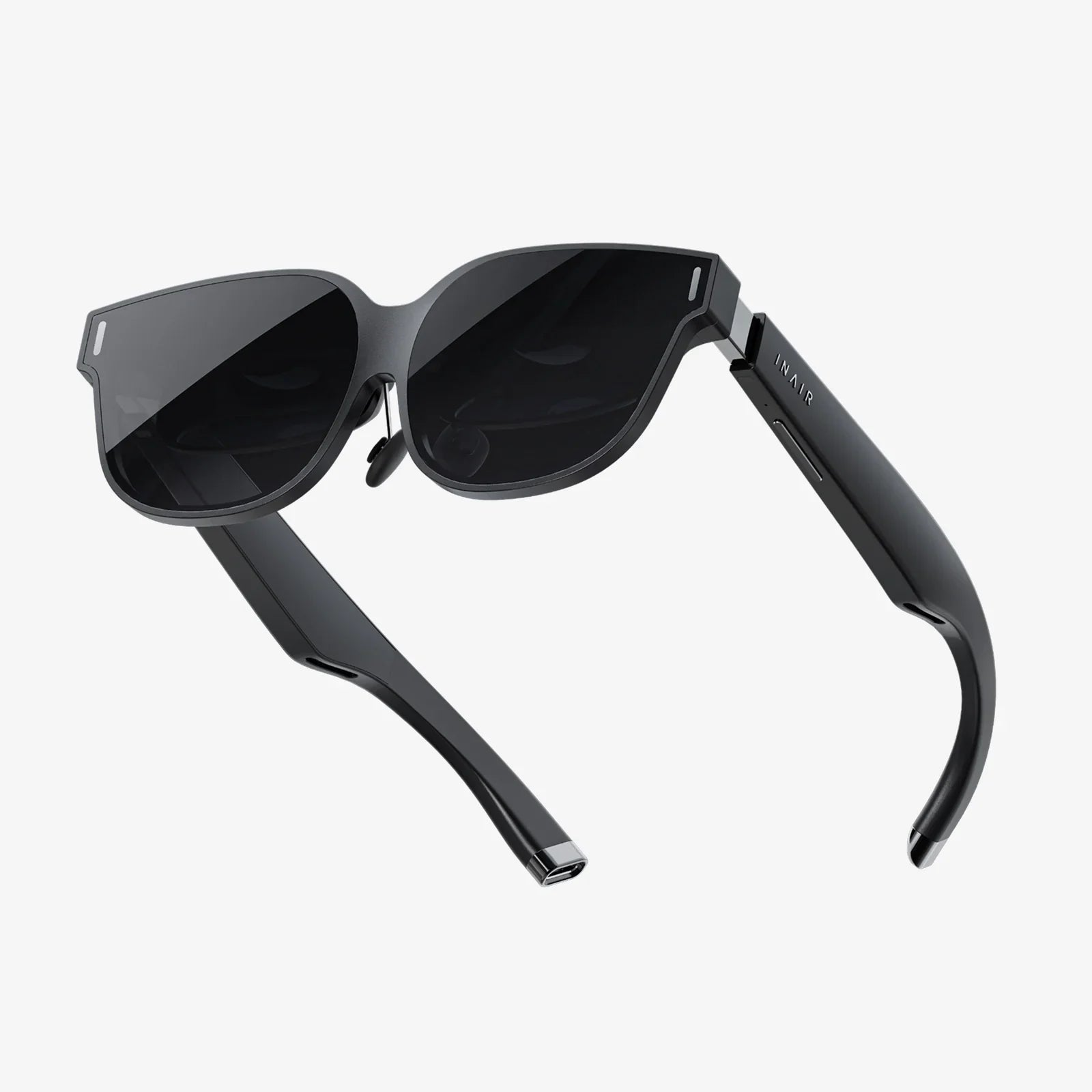
Imagine a world where your digital and physical realities are no longer separate realms but a seamless, interactive tapestry. This is the promise of immersive technology, a frontier dominated by two powerful contenders: Virtual Reality and Augmented Reality. The question on everyone's mind isn't just about their specs; it's a deeper inquiry into how we will work, play, and connect in the coming decades. Which of these technologies holds the key to a better future? The answer is far more nuanced than a simple declaration of a winner.
Defining the Realms: A Fundamental Philosophical Divide
At their core, VR and AR represent two fundamentally different approaches to blending the digital with the real. Understanding this philosophical split is the first step in evaluating which is "better" for any given purpose.
Virtual Reality (VR) is the technology of complete immersion. It operates on a principle of substitution. By wearing a headset, you are visually and audibly transported to a computer-generated environment, effectively replacing your physical surroundings. The goal of VR is to create a convincing sense of presence—the undeniable feeling that you are "there," whether "there" is a space station, a medieval castle, or the human bloodstream. It is an exclusive, all-encompassing experience that demands your full attention and deliberately isolates you from the world around you.
Augmented Reality (AR), in stark contrast, is the technology of enhancement. Its philosophy is one of addition, not substitution. AR overlays digital information—images, data, animations—onto your view of the real world. This is achieved through transparent lenses or a camera feed. Instead of taking you to a new world, AR brings the digital into your world. It aims to add a layer of useful or entertaining context to your existing environment, allowing you to interact with both simultaneously. It is an inclusive technology designed to be used while you remain engaged with your physical space and the people in it.
The Hardware and Experience Divide
The differing goals of VR and AR necessitate distinct hardware approaches, which directly shape the user experience, comfort, and accessibility.
Virtual Reality: The Power of Isolation
VR systems are typically characterized by their high-performance requirements. They feature high-resolution displays mounted inside a fully opaque headset, blocking out all ambient light. This is crucial for achieving immersion but also contributes to a phenomenon known as simulator sickness for some users, caused by a disconnect between visual motion and physical stillness.
To track your movements and translate them into the virtual space, VR relies on sophisticated external sensors or internal-outside-in tracking using cameras. This allows for precise, room-scale experiences where you can walk around, duck, and interact with your hands. The result is a powerful, often physically engaging experience, but one that is inherently tethered to a specific, cleared-out space and requires a significant time commitment to setup and use.
Augmented Reality: The Quest for Transparency
AR hardware prioritizes mobility and situational awareness. The ideal AR device is a pair of stylish glasses that you can wear all day. Current technology spans a spectrum from powerful, standalone headsets to smartphone-based experiences that use the device's camera and screen.
The greatest challenge for AR is achieving convincing occlusion and understanding the environment. The device must continuously map the room to understand surfaces, depths, and lighting so that digital objects can convincingly sit on a real table or hide behind a real chair. This requires immense processing power and advanced computer vision algorithms. The user experience is one of seamless integration, intended for use on-the-go, in public spaces, or while performing tasks in the real world.
The Battle of Applications: Where Each Technology Excels
The question of "which is better" is ultimately answered not by technology, but by application. Each platform has carved out domains where it is undeniably superior.
Where Virtual Reality Reigns Supreme
- Gaming and Entertainment: This is VR's undisputed kingdom. The ability to be fully immersed in a game world, to look around in 360 degrees, and to use motion-controlled hands is a transformative experience that flat screens cannot match. From heart-pounding horror games to intricate puzzle worlds, VR offers escapism at its finest.
- Training and Simulation: Industries like aviation, medicine, and the military use VR to create safe, repeatable, and cost-effective training scenarios. Surgeons can practice complex procedures, pilots can crash a virtual plane, and soldiers can navigate combat zones—all without any real-world risk.
- Architectural Visualization and Design: Architects and clients can don a headset and walk through a building long before the foundation is poured. This provides an unparalleled sense of scale, space, and design, allowing for changes to be made at a fraction of the cost of physical models.
Where Augmented Reality Holds the Advantage
- Industrial and Field Service: AR is revolutionizing maintenance and repair. A technician can look at a complex machine and see digital arrows pointing to components, text instructions overlaid on the real world, or a remote expert able to draw directly into their field of view. This drastically reduces errors and training time.
- Retail and E-Commerce: A major hurdle of online shopping is the inability to try before you buy. AR solves this by allowing you to see how a piece of furniture would look in your living room at scale or how a pair of glasses fits your face, all through your phone or future AR glasses.
- Navigation and Information: Imagine walking through a foreign city and seeing directional arrows on the sidewalk or historical information popping up about the building you're looking at. AR has the potential to become an invisible guide, layering a useful data blanket over our everyday reality.
The Social and Ethical Dimension
The choice between these technologies also carries social weight. VR, by its isolating nature, has been criticized for potentially encouraging escapism and disconnection. However, it has also given birth to vibrant social VR platforms where people from across the globe can meet, talk, and share experiences as avatars in virtual spaces, fostering a unique form of connection.
AR, while more social by design, raises significant privacy concerns. A world where everyone is wearing always-on cameras and facial recognition software presents a nightmare scenario for surveillance and data collection. The ethical implications of who controls the AR layer of reality and what information is displayed are profound and remain largely unanswered.
The Future: Convergence, Not Competition
Framing the debate as a strict "VR vs. AR" is becoming increasingly outdated. The future likely lies in a spectrum of experiences often referred to as Mixed Reality (MR) or Extended Reality (XR). We are already seeing the lines blur.
Modern VR headsets often include high-resolution, passthrough cameras. This allows them to function like AR headsets, overlaying digital content onto a black-and-white or color video feed of the real world. This passthrough AR capability means a single device can offer both full virtual immersion and context-aware augmentation.
Conversely, advanced AR headsets are gaining the graphical fidelity and processing power to handle more immersive, near-VR experiences when needed. The ultimate device may be a single pair of glasses that can dynamically adjust its opacity, switching from a transparent AR mode to an opaque VR mode seamlessly, based on the task at hand.
So, Which is Truly Better? The Contextual Verdict
The final verdict is entirely contextual. It depends on the goal.
Choose Virtual Reality if you seek total escape, deep immersion, and experiences that are untethered from the constraints of the physical world. It is better for dedicated gaming, high-fidelity simulation, and any application where replacing your environment is the desired outcome.
Choose Augmented Reality if you want to enhance your reality, not escape it. It is better for practical, on-the-job applications, social interaction in a shared physical space, and overlaying useful information onto your daily life. Its strength is in its connection to the world, not its separation from it.
VR is a destination; AR is a tool. One is not inherently superior to the other. They are different instruments for different songs. The better technology is the one that most effectively solves the problem in front of you, whether that problem is training a surgeon, selling a sofa, or slaying a dragon.
The real winner in the VR vs. AR debate is us—the users. The rapid evolution of both fields is pushing the boundaries of what's possible, driving innovation, and lowering costs. This competition ensures that both technologies will become more powerful, more comfortable, and more accessible. Rather than picking a side, the most exciting position is to watch these two incredible technologies evolve, converge, and collectively redefine our relationship with the digital universe, offering new ways to perceive, interact with, and ultimately improve our world.
Share:
Mixed Reality Developer News: The Next Frontier in Digital Interaction Unveiled
Augmented Reality Sustainability: A New Lens for a Greener Future