


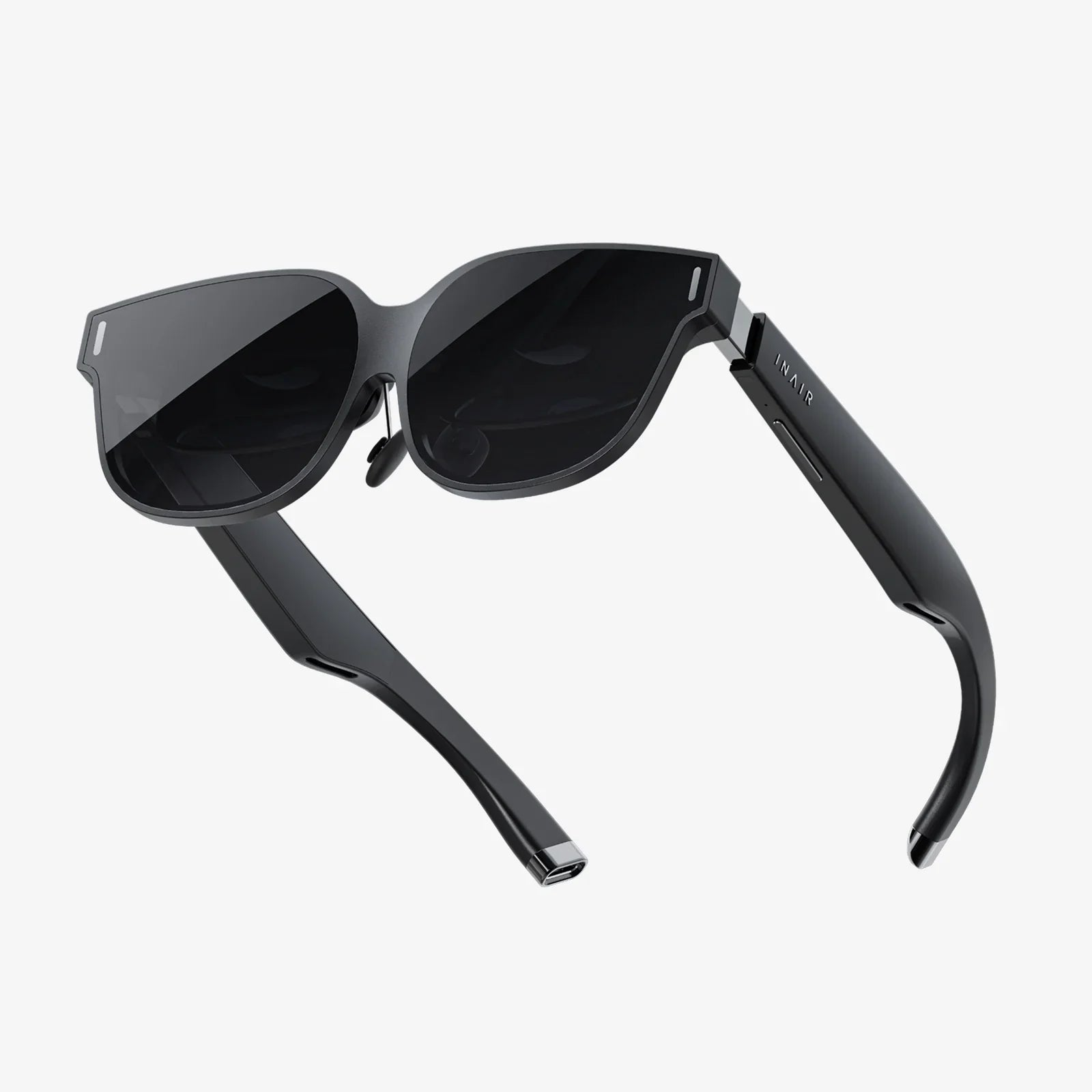
Imagine the lights of a cinema the size of a planetarium dimming around you, not in a room with sticky floors and chatter from the row behind, but from the perfect comfort of your own home. You’re not just watching a story unfold on a flat screen; you are standing within it, the world building itself around you in 360 degrees of breathtaking detail. This is the promise, the magic, and the revolution of VR watching. It’s an experience that transcends traditional viewing, offering a portal not just to watch content, but to live inside it. The era of passive consumption is over; welcome to the age of immersive presence.
The Technological Marvel Behind the Headset
To understand the magic of VR watching, one must first appreciate the sophisticated technology that makes it possible. It's a symphony of hardware and software working in perfect harmony to trick the human brain into accepting a digital reality.
At its core, the experience is delivered through a head-mounted display (HMD). These devices are feats of miniaturization, packing high-resolution displays mere centimeters from the user's eyes. Special lenses focus and reshape the picture for each eye, creating a stereoscopic 3D effect that provides depth and scale. But visual fidelity is only one piece of the puzzle.
True immersion is achieved through a critical feature known as six degrees of freedom (6DoF). This means the headset not only tracks the rotational movement of your head (yaw, pitch, and roll) but also its translational movement through space (forward/backward, up/down, left/right). This is typically accomplished through a combination of internal sensors like gyroscopes and accelerometers and external cameras or lasers that map the physical room. The result is the ability to lean in to examine a virtual object, peer around a corner in a virtual environment, or simply nod along with a character as if they were right in front of you.
Furthermore, spatial audio is the unsung hero of the experience. Unlike traditional stereo sound, spatial audio uses head-related transfer functions (HRTF) to simulate how sound waves interact with the human head and ears. In a VR watching scenario, this means if a character speaks to your left, the sound genuinely comes from the left. The rustle of leaves, the distant roar of a spaceship, or the subtle score of a film can be placed anywhere in the 3D space around you, completing the illusion of being there.
Beyond the Screen: A New Language for Cinema
VR watching is not merely about placing a rectangular film inside a headset. It represents a fundamental shift in storytelling grammar. Traditional cinema is built on the language of the edit, the close-up, and the controlled frame. The director guides your attention with absolute authority. In VR, that authority is handed, at least partially, to the viewer.
This presents a thrilling challenge for creators. How do you tell a compelling story when the audience can look anywhere they want? The answer has been the development of new narrative techniques. Directors now use diegetic guidance—using elements within the story world, like a character's gaze, a sound cue, or a moving object, to naturally draw the viewer's attention to where the action is occurring. The environment itself becomes a character and a narrative device.
Genres are being reborn in this medium. Documentaries become profound exercises in empathy. Instead of watching a film about refugees, you can stand in their shoes in a camp, hearing the stories from the people themselves, surrounded by the reality of their situation. Nature documentaries transform into exhilarating adventures, allowing you to stand on the edge of an active volcano or swim alongside majestic whales. Horror, perhaps the genre most transformed by VR, evolves from being scary to watch to being terrifying to experience. The monster isn't on a screen; it's in your space, and you cannot look away.
The Social Dimension: Virtual Theaters and Shared Experiences
One of the most persistent misconceptions about VR watching is that it is an isolating activity. In reality, the opposite is proving true. A robust social layer is one of the most compelling aspects of the technology. Virtual reality platforms have given rise to sophisticated social hubs and virtual cinemas.
Users can create avatars that represent them and enter a virtual movie theater with friends or strangers from across the globe. You can sit in a digital replica of a grand cinema, complete with plush seats and a giant screen. Before the film, you can chat, laugh, and interact with the people around you, seeing their avatars' gestures and hearing their spatialized voices as if they were in the same room. The shared experience of watching a film, reacting to jump scares, or laughing at a comedy together is preserved and often enhanced by the playful, boundary-less nature of the virtual world. It replicates the communal magic of the cinema while removing the geographical barriers that often separate us.
The Practicalities: Comfort, Content, and Accessibility
For all its wonders, the path to mainstream adoption for VR watching is not without its hurdles. The industry is in a constant battle with the issue of user comfort. Simulator sickness, a form of motion sickness caused by a disconnect between what the eyes see and what the body feels, can affect some users, particularly with content that involves a lot of artificial movement. Thankfully, advancements like higher refresh rates, better lenses, and more sophisticated movement-compensation techniques are steadily reducing this problem.
The availability of content, while growing exponentially, is another consideration. The ecosystem features dedicated platforms that offer a vast library of immersive experiences, from short films and documentaries to recorded concerts and sporting events. Major streaming services are also increasingly offering VR applications, allowing users to access their vast 2D libraries on a giant virtual screen—a compelling use case for those living in small spaces or without a large television.
Furthermore, the act of VR watching is becoming more accessible and user-friendly. Modern headsets are increasingly wireless, untethering the user from a computer and allowing for greater freedom of movement. The setup process is becoming simpler, and the user interfaces within these virtual spaces are becoming more intuitive, making it easier than ever to find, select, and enjoy content.
Glimpsing the Future: The Next Frontier of Immersion
The technology behind VR watching is not static; it is accelerating at a breathtaking pace. We are already seeing glimpses of the future that will make today's experiences seem primitive. The pursuit of photorealistic graphics in real-time, driven by evermore powerful processors and foveated rendering (which focuses processing power only where the user is looking), will soon make virtual environments indistinguishable from reality.
Even more transformative is the development of haptic feedback technology. This goes beyond simple controller vibrations to full-body suits and gloves that can simulate touch, temperature, pressure, and even impact. Imagine feeling the warmth of a virtual sun on your skin, the rumble of a spaceship's engine through your feet, or the tactile feedback of pushing a button in a virtual control room. This sensory addition will shatter the final barrier between the virtual and the physical.
Looking further ahead, the convergence of VR with augmented reality (AR) promises a world where virtual screens and content can be seamlessly pinned to our physical living rooms. The line between our digital and physical entertainment will blur into a unified, persistent experience, forever changing our relationship with media.
The curtain is rising on a new act in human storytelling, and the audience has been invited onto the stage. VR watching is more than a novel gadget; it is the beginning of a fundamental shift from observation to experience. It challenges creators to dream bigger, it empowers viewers with agency, and it rekindles the communal joy of shared narrative in a digitally connected world. The screen that once contained entire worlds has finally dissolved, leaving you not as a viewer, but as a participant in the infinite theater of the imagination. The only question that remains is not if you will step inside, but what you will choose to experience first.
Share:
Spatial Reality Display: The Unseen Dimension Reshaping Our Digital Future
Cool VR: The Ultimate Guide to the Virtual Revolution Reshaping Our Reality