


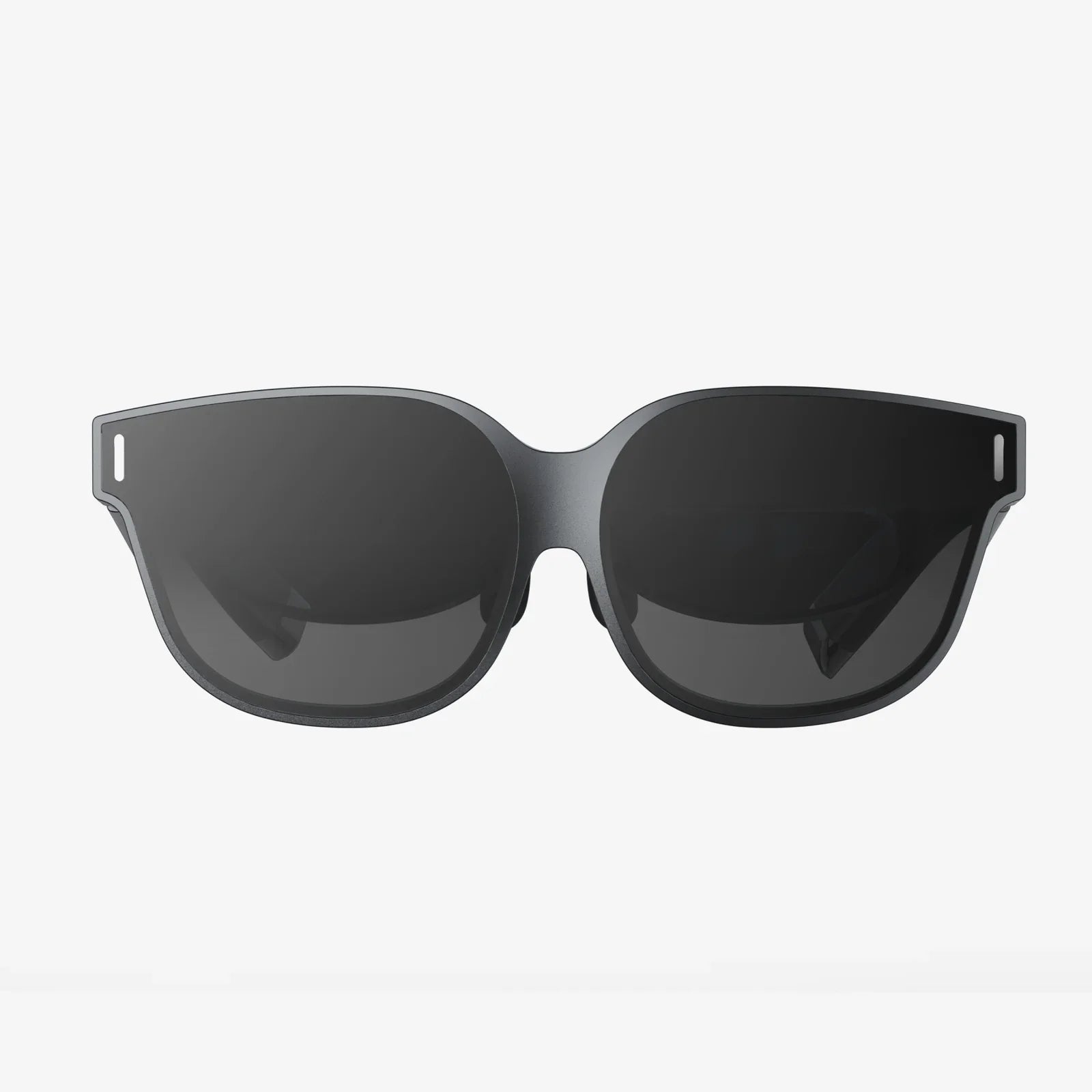
Imagine slipping on a headset and being instantly transported. Not to a pixelated approximation of a world, but to a place so vivid, so seamless, and so startlingly real that the boundaries between the digital and the physical begin to blur. This is no longer the stuff of science fiction; it is the promise and the reality of modern virtual reality systems, a promise being fulfilled by a critical technological evolution happening not in some distant server farm, but mere millimeters from your eyes: the advent of the advanced VR with inbuilt screen. This is the silent, high-resolution heart of a revolution, and it's changing everything we thought we knew about immersive technology.
The Core of the Experience: More Than Just a Display
To understand why the shift to sophisticated inbuilt screens is so pivotal, we must first look past the headset's exterior. Early VR often relied on inserting a smartphone to act as the display. This was a clever stopgap, leveraging a screen users already owned. However, it came with significant compromises. The experience was tethered to the phone's capabilities, its resolution, its refresh rate, and its processing power, leading to a fragmented and often underwhelming journey into virtual spaces.
The dedicated inbuilt screen changes the entire calculus. It is not merely a component; it is the foundational sensory organ of the device, engineered from the ground up for a single purpose: to create perfect digital worlds. Unlike a multi-purpose smartphone display, these screens are optimized for the unique demands of VR. They are designed to be viewed through complex lens systems, to manage persistence and black-frame insertion to reduce motion blur, and to operate at refresh rates that standard mobile screens never need to achieve.
This dedicated engineering allows for a level of precision that was previously impossible. Manufacturers can perfectly calibrate the screen to the optics, ensuring every pixel is used to its maximum potential with minimal distortion at the edges. This harmony between panel and lens is what transforms a good VR experience into a great one, eliminating the screen-door effect—that faint grid-like pattern that reminds you you're looking at a screen—and pulling you deeper into the illusion.
A Deep Dive into the Technology: Resolution, Refresh, and Response
The magic of a high-fidelity VR with inbuilt screen is defined by a holy trinity of technical specifications: resolution, refresh rate, and response time. Each plays a crucial role in selling the dream of reality.
Resolution and Pixels Per Degree (PPD)
While manufacturers tout "4K" or "5K" resolutions, the more critical metric is Pixels Per Degree (PPD). This measures how many pixels are packed into each degree of your field of view. A high-resolution screen that is stretched across a wide field of view can still look pixelated if the PPD is low. Modern inbuilt screens are pushing PPD to new heights, often exceeding 25 PPD, a figure once considered the threshold for "retina" quality in VR, where the human eye can no longer distinguish individual pixels. This incredible pixel density is what creates the sharp text essential for productivity, the fine details in a game environment, and the lifelike rendering of a human face in a social application.
Refresh Rate: The Engine of Smoothness
If resolution defines clarity, the refresh rate—measured in Hertz (Hz)—defines smoothness. A standard monitor might run at 60Hz, but VR demands more. As you turn your head, the world must update instantly and fluidly. A low refresh rate introduces lag and stutter, which is not just immersion-breaking but can also be a primary cause of motion sickness. High-end VR with inbuilt screen now commonly operates at 90Hz, 120Hz, and even 144Hz. This blazing speed ensures that motion is buttery smooth, tracking is 1:1 with your movements, and the virtual environment feels stable and solid underfoot, drastically improving comfort and allowing for longer, more enjoyable sessions.
Response Time and Low Persistence
Closely tied to refresh rate is pixel response time—how quickly a pixel can change from one color to another. Slow response times create ghosting or smearing in fast-moving scenes. Inbuilt screens use advanced display technologies like Fast LCD and OLED to achieve sub-millisecond response times. Furthermore, they employ a technique called "low persistence." Instead of leaving an image static on the screen until the next refresh (which causes blur when you move your eyes), the screen flashes the image for a very brief moment and then goes black. This tricks your brain into perceiving a continuous, clear image, dramatically reducing motion blur and elevating the overall visual fidelity.
Beyond Gaming: The Expansive Universe of Applications
While gaming remains a flagship application, the clarity and comfort provided by advanced inbuilt screens are unlocking VR's potential far beyond entertainment. The technology is becoming a transformative tool across numerous sectors.
Revolutionizing Professional Design and Architecture
Architects and engineers are using high-resolution VR to walk clients through unbuilt designs. The sharpness of modern inbuilt screens allows them to see true-to-life textures, accurate lighting, and precise spatial relationships, making a digital blueprint feel like a finished structure. This enables better decision-making, identifies potential design flaws early, and creates a powerful emotional connection to a project long before ground is broken.
The Future of Remote Work and Collaboration
Imagine a virtual meeting room where colleagues from across the globe appear as lifelike avatars or even photorealistic holograms. The visual clarity needed to read subtle facial expressions and body language is dependent on the high PPD of these new screens. Virtual monitors can be placed anywhere in a digital space, and with sufficient resolution, they are as easy to read as their physical counterparts, creating the ultimate portable office and a true sense of "presence" with remote teams.
Education and Training in Immersive Detail
From medical students performing virtual dissections to mechanics training on the internal systems of a jet engine, the educational potential is staggering. Trainees can make mistakes in a consequence-free environment, and the high visual fidelity ensures they are learning from accurate, detailed models. History students can explore ancient Rome, and astronomy students can stand on the surface of Mars—all made more believable and impactful by a screen that makes the virtual indistinguishable from the real.
Therapeutic and Healthcare Breakthroughs
In healthcare, VR is used for exposure therapy, pain management, and physical rehabilitation. The effectiveness of these treatments is deeply linked to immersion. A patient managing anxiety through a serene virtual environment needs that world to be visually perfect to be effective. Similarly, a patient undergoing painful physical therapy can be distracted by a compelling, high-fidelity game, making the process more tolerable. The quality of the inbuilt screen is, therefore, directly tied to therapeutic outcomes.
Challenges and Considerations on the Horizon
Despite the incredible progress, the pursuit of the perfect visual experience is not without its challenges. Pushing the boundaries of display technology creates new hurdles.
The primary challenge is the immense computational power required to drive these ultra-high-resolution screens at high frame rates. Rendering two distinct images (one for each eye) at 4K+ resolution and 90Hz or faster is a monumental task for even the most powerful computing hardware. This creates a tension between visual fidelity and accessibility, often requiring a tether to a high-end computer or sophisticated onboard processing that impacts the device's form factor, battery life, and cost.
Furthermore, as resolution increases, so does the demand on content. Creating assets detailed enough to look good on these advanced screens requires more time, skill, and resources from developers. The industry must evolve its content creation pipelines to keep pace with the rapid hardware advancements.
Finally, there is the human factor. As visuals become more real, other sensory limitations become more apparent. The mismatch between what our eyes see and what our body feels can still trigger discomfort in some users. The industry continues to research better tracking, haptic feedback, and locomotion solutions to solve these last barriers to total immersion.
Gazing into the Crystal Ball: The Future is Bright and Hyper-Real
The evolution of the VR with inbuilt screen is far from over. We are on a clear trajectory towards even more astonishing visual experiences. The next frontier includes varifocal displays that dynamically adjust focus based on where you are looking, mimicking the human eye to reduce eye strain. MicroLED technology promises even higher brightness, better contrast, and improved power efficiency, potentially enabling all-day wearable devices. Foveated rendering, which uses eye-tracking to render only the center of your vision in full detail while subtly reducing the quality in your peripheral vision, will drastically reduce the computational load, making high-fidelity VR more accessible.
We are moving towards a future where a VR headset is not just a gaming peripheral but a universal window to digital spaces—for work, social connection, creativity, and exploration. The inbuilt screen is the lens through which we will view this new layer of reality, and its progress is determining how quickly and how profoundly that future arrives.
The journey into virtual reality is no longer about just putting on a headset; it's about what you see when you look inside. With every leap in resolution, every fraction of a millisecond shaved off the response time, and every boost in refresh rate, the line between our world and the digital ones we create continues to dissolve. The next time you step into a virtual landscape, remember that the portal to that experience, the VR with inbuilt screen, is a masterpiece of modern engineering, and it’s only just beginning to show us what’s possible.
Share:
Human-Computer Interaction Introduction: Bridging the Gap Between Man and Machine
Smart Mobile Devices: The Unseen Revolution Reshaping Our Daily Lives