


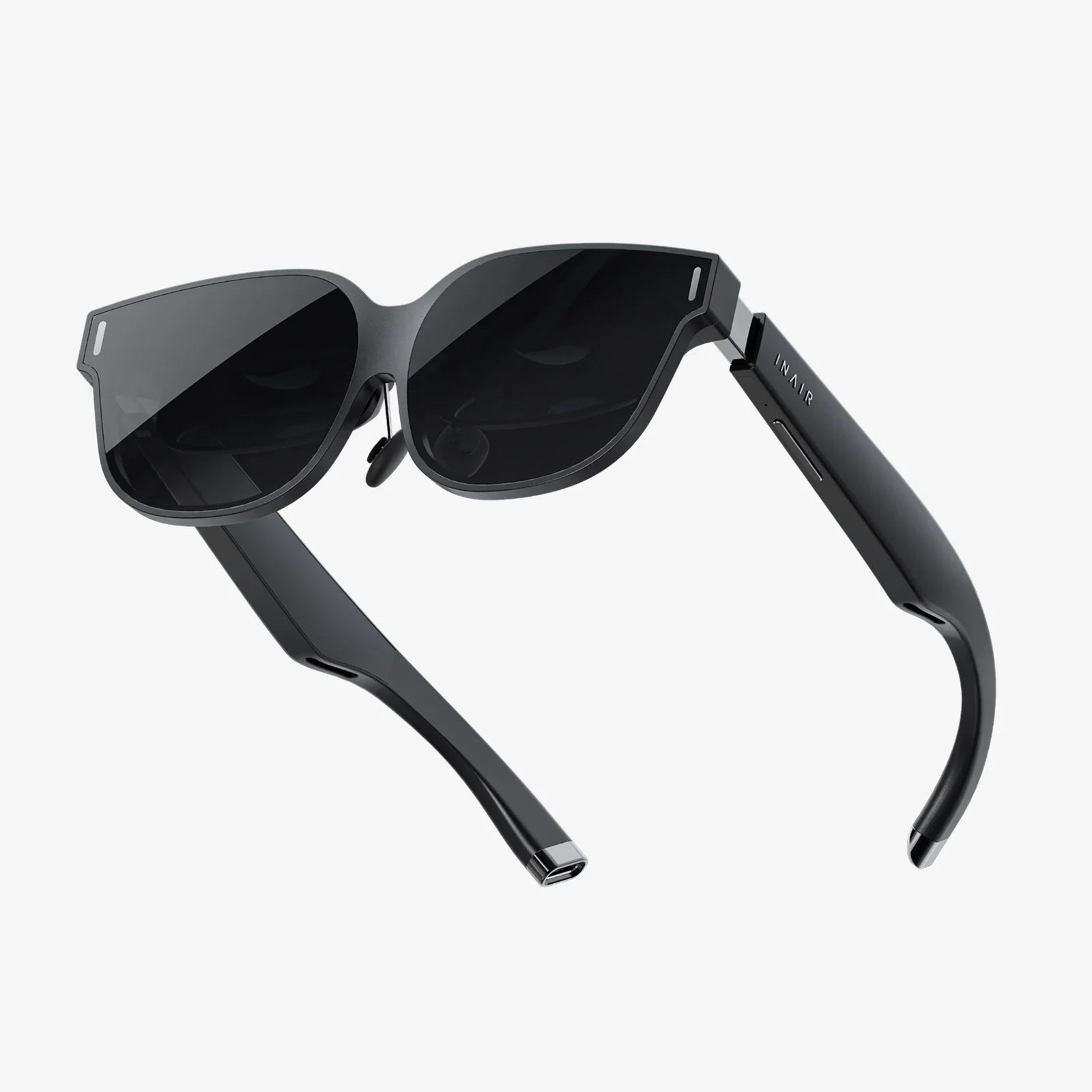
- by wangfred
VR X Headset: The Unseen Revolution Reshaping Reality
- by wangfred
Imagine a device not of plastic and glass, but of pure potential—a portal that collapses the infinite expanse of human experience into a frame you wear on your face. This is the promise, the allure, and the profound revolution of the modern VR X headset. It’s a siren’s call to explorers, creators, and anyone who has ever dreamed of stepping through the looking glass, promising not just to show you new worlds, but to let you live and breathe within them. The journey beyond the screen begins here, and it’s more transformative than you can possibly imagine.
The magic of a contemporary VR X headset isn't magic at all; it's the meticulous orchestration of several groundbreaking technologies converging into a single, cohesive experience. Understanding these components is key to appreciating the monumental leap this platform represents.
At its heart lies visual fidelity. Early iterations suffered from the "screen door effect," where users could discern the gaps between pixels, shattering immersion. Today's devices employ high-resolution displays, often with advanced techniques like foveated rendering—which tracks your eyes and renders only the point of focus in ultra-high detail—to create stunningly crisp and believable environments. This is complemented by a wide field of view that approximates human sight, pulling the periphery of your vision into the digital realm.
Equally critical is precise tracking. Six degrees of freedom (6DoF) tracking, powered by a combination of internal and external sensors, is now the standard. This doesn't just mean you can look around (3DoF); it means you can lean, crouch, walk, and interact with a virtual space as you would a physical one. Your movements are mirrored with such low latency that your brain is effortlessly convinced of their authenticity. This precise tracking extends to sophisticated controllers, which are no mere wands but intricate instruments that translate hand gestures, finger movements, and even haptic feedback into the virtual world, allowing you to grasp, throw, paint, or conduct an orchestra with astonishing nuance.
Perhaps the most impactful application of the VR X headset is in the realm of education and professional training. It transforms learning from a passive activity of absorption into an active process of experience.
Imagine a history student not just reading about ancient Rome, but standing in the Forum, hearing the echoes of the crowd and witnessing the scale of the architecture around them. A medical student can practice complex surgical procedures on a virtual patient, making critical decisions and learning from mistakes in a consequence-free environment. This experiential learning dramatically improves knowledge retention and comprehension.
Beyond academia, industries are leveraging this technology for high-stakes training. Astronauts, pilots, and surgeons have used simulators for decades, but the accessibility and fidelity of a modern VR X headset bring this power to new fields. Firefighters can train for dangerous scenarios, factory workers can learn to operate heavy machinery, and public speakers can practice in front of a virtual audience. This democratization of high-quality simulation saves costs, enhances safety, and builds muscle memory and confidence in a way no textbook or video ever could.
If the first wave of social media was about sharing highlights, and the second was about live video, the third wave, powered by the VR X headset, is about shared presence. These platforms are evolving into true virtual social spaces where physical distance becomes irrelevant.
Platforms are emerging as digital town squares, concert halls, and cozy living rooms. Here, your avatar is your vessel. With advanced tracking, your body language—a nod, a wave, even a shrug—is communicated. The subtle, non-verbal cues that form the bedrock of human interaction are preserved. You can attend a business meeting and feel the collaborative energy of standing around a virtual whiteboard with colleagues from across the globe. You can watch a movie with a friend who lives thousands of miles away and feel as if you're on the same couch, sharing reactions in real-time.
This has profound implications for combating loneliness and fostering community. For individuals with mobility issues or those in remote locations, the VR X headset can be a lifeline to social interaction, offering a sense of belonging and togetherness that transcends physical limitations. It’s not about replacing real-world interaction, but about augmenting our human capacity for connection in an increasingly digital and distributed world.
Every major technological leap has given rise to new art forms. The VR X headset is no different; it is the birth of a new medium. It shifts storytelling from a linear, director-led narrative to an experiential, participant-led journey. You are no longer a viewer; you are an occupant of the story.
Artists are creating immersive 3D sculptures that you can walk around and through. Filmmakers are crafting narratives where you choose where to look, potentially following a different character and experiencing a completely different arc. This is a fundamental break from the framed tradition of cinema and television.
The tools for creation are also becoming more accessible. Built-in software often allows users to model, animate, and paint in 3D space directly with their controllers. This lowers the barrier to entry, empowering a new generation of creators to build worlds from their imagination without needing years of specialized training. The result is an explosion of creativity and a diversification of voices and experiences available within the medium.
The concept of exercise is being completely reimagined through the lens of the VR X headset. "Active" applications have turned fitness into an engaging game, a phenomenon often called "exergaming." Users can find themselves boxing to the rhythm of music, slashing through flying cubes, or navigating a fantastical obstacle course.
The genius of this approach is its ability to leverage immersive distraction. The physical exertion of a high-intensity workout is masked by the engaging and fun activity you are performing in the headset. Time flies, and what feels like a 20-minute game session can easily be a full-hour cardio workout. This has proven incredibly effective for people who find traditional gym routines monotonous or intimidating.
Furthermore, the technology is being explored for mental wellbeing. Guided meditation applications can transport you to a serene beach or a quiet forest temple, facilitating deeper relaxation than audio alone. Exposure therapy for phobias can be conducted safely and gradually in a controlled virtual environment. The ability to control sensory input makes the VR X headset a powerful tool for managing stress, anxiety, and other mental health challenges.
With such transformative power comes significant responsibility. The development and adoption of the VR X headset are not without serious ethical questions that society must grapple with.
Data privacy and security sit at the forefront. These devices collect an unprecedented amount of biometric and behavioral data: eye movement, hand gestures, vocal inflections, even gait and posture. This data is incredibly valuable and deeply personal. Robust frameworks must be established to ensure this information is owned and controlled by the user, not exploited by corporations.
The potential for psychological effects is another critical area. Prolonged immersion in a superior virtual world could lead to a form of dissociation or increased dissatisfaction with the real world, a concept often explored in science fiction. Establishing healthy usage patterns, especially for younger users, will be paramount.
Finally, the issue of access and the digital divide looms large. As these technologies become more central to work, education, and social life, there is a risk of creating a new class of "have-nots" who are excluded from these virtual spaces due to cost or infrastructure. Ensuring equitable access will be a major societal challenge.
The future of the VR X headset is not on a distant horizon; it is unfolding now. The next iterations promise even greater integration with our reality through advancements in augmented reality (AR) and mixed reality (MR), where digital objects are seamlessly woven into our physical environment. Haptic technology will evolve from simple vibrations to full tactile feedback, allowing you to feel the texture of a virtual object. Brain-computer interfaces, though further out, hint at a future where we may control these worlds with our thoughts alone.
We are standing at the precipice of a new dimension of human experience, one where the only true limit is our collective imagination. The VR X headset is the key, the tool, and the canvas. It invites us not to consume content, but to live within it; not to connect through screens, but to share presence within them. The virtual frontier is open, and it is waiting for us to step inside and build the future, together.
Share:
Which PC VR Headset to Buy: The Ultimate 2024 Buyer's Guide
How Does VR Work with iPhone: A Deep Dive into Mobile Immersion