


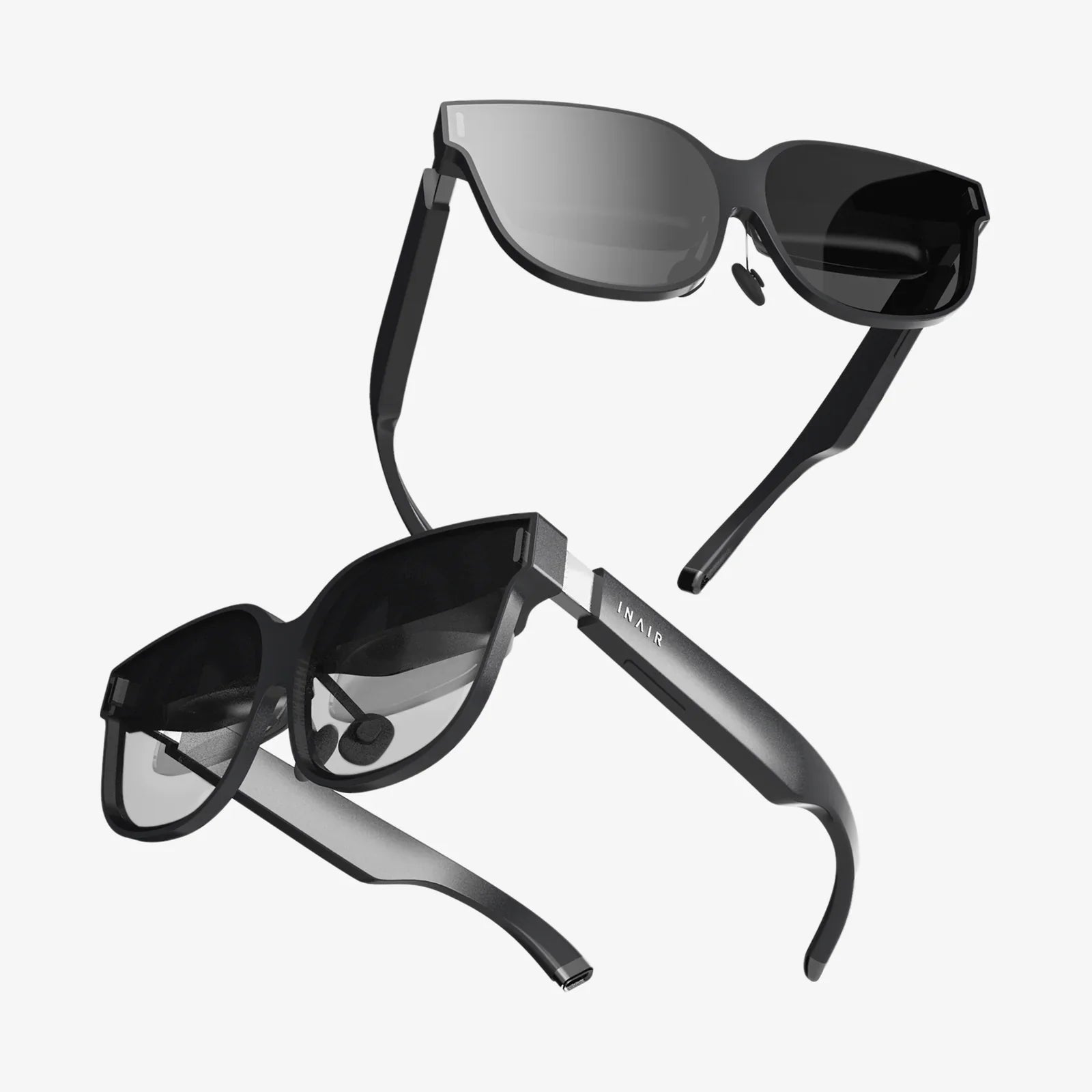
Imagine stepping into a world so vast, so seamless, and so breathtakingly real that the very notion of a 'screen' dissolves into the experience itself. This is the promise, the allure, and the revolution of the VR XL screen—a technological leap that is quietly redefining the boundaries of human perception and digital interaction. It’s not just an upgrade; it’s a gateway to entirely new realities, and it’s capturing the imagination of creators and consumers alike. The journey beyond the traditional headset begins here, in the expansive, unbroken vistas of the virtual large format.
Beyond Pixels: Redefining Presence in Virtual Reality
For years, the conversation around visual fidelity in virtual reality has been dominated by a single metric: resolution. While the clarity of individual pixels is undoubtedly important, it is only one piece of the immersion puzzle. The true enemy of presence—that magical feeling of actually being somewhere else—has often been the constricted field of view (FOV) and the persistent, ghost-like reminder of the goggles themselves. Users were looking at a world through a scuba mask or a pair of binoculars, always cognizant of the hardware that mediated their experience.
The advent of VR XL screen technology marks a paradigm shift. This isn't merely about packing more pixels into the same space; it's about architecting a visual experience that expands to meet our natural human field of vision. By significantly widening the horizontal and vertical planes of view, these advanced systems begin to fill our peripheral vision, the very area our brains use to subconsciously gauge our environment and feel grounded. The harsh edges of the lens fade away, replaced by a digital horizon that feels continuous and boundless. This expansion is the first and most critical step in tricking the brain into letting go of reality and fully accepting the virtual one.
The Architecture of Immersion: How XL Screens Craft New Worlds
The engineering behind a true VR XL screen is a complex ballet of optics, software, and display technology. It requires a fundamental rethinking of almost every component within a headset.
Optical Innovations
Traditional Fresnel lenses, while effective for their time, often introduced visual artifacts like god rays and a limited 'sweet spot' for clarity. The push for larger visual fields has driven the adoption of entirely new lens designs, including advanced aspherical and pancake lenses. These designs allow for a much shorter distance between the display panel and the eye, which in turn allows for a wider field of view without a monstrously large headset. They provide a more uniform focus across the entire expanse of the XL screen, maintaining edge-to-edge clarity that is essential for believability.
Display Panels and Rendering
Feeding an XL screen with enough data is a Herculean task. We are moving beyond standard high-resolution displays to custom-built panels capable of incredibly high pixel densities and, crucially, blistering refresh rates. This is because a wider field of view must be rendered without introducing motion blur or latency, the twin killers of immersion that can quickly lead to discomfort. This places immense demand on the rendering hardware, necessitating advanced techniques like foveated rendering, where eye-tracking technology ensures only the center of the user's gaze is rendered in full detail, while the peripheral areas—still important for immersion but less so for detail—are rendered more efficiently.
Software and Content Creation
The hardware is nothing without software designed to exploit its potential. Game engines and development platforms are evolving to natively support these expansive canvases. This means creating assets and environments that are designed to be observed from any angle, encouraging exploration rather than guiding a user down a narrow visual corridor. It empowers creators to build worlds that feel lived-in and vast, knowing the player can truly stop and look around, absorbing details that would have been cropped out of a traditional VR view.
The Ripple Effect: Applications Transformed by an Expansive View
The impact of VR XL screens extends far beyond the realm of entertainment, seeping into professional, educational, and therapeutic fields.
Professional Simulation and Design
For architects and engineers, an XL screen transforms virtual reality from a novel presentation tool into a true digital twin. Walking through a building design is no longer a constrained tour; it becomes a genuine architectural review. An engineer can stand inside a full-scale, virtual model of a jet engine, able to glance up at its full height and around at its complex wiring without the view being chopped into sections. This unparalleled sense of scale and spatial context drastically improves design comprehension, collaboration, and the identification of potential issues long before physical prototypes are built.
Education and Virtual Tourism
Imagine a history class where students can stand in the Roman Forum, not just see a reconstructed model in front of them, but truly stand within it, with the ruins stretching out to their left and right, the virtual sky above them. The sense of place becomes profound. For virtual tourism, visiting the Louvre or hiking the Grand Canyon achieves a new level of authenticity. The experience is no longer framed; it is enveloping. This fosters a deeper emotional and intellectual connection to the subject matter, moving learning from passive observation to active exploration.
Therapeutic and Wellness Applications
In therapeutic settings, particularly for treating phobias, anxiety, or PTSD, immersion is the active ingredient. A VR XL screen enhances exposure therapy by creating environments that are inescapably real. For someone with a fear of flying, sitting in a virtual airplane cabin that extends fully into their periphery is vastly more effective than one that feels like a window into another world. Similarly, meditation and mindfulness applications can transport users to a serene beach or a quiet forest glade with a convincing totality that can more effectively calm the nervous system and promote relaxation.
Navigating the Challenges: The Path to Mainstream Adoption
Despite its immense potential, the path for VR XL screen technology is not without significant hurdles that innovators must overcome.
Computational Demand: Rendering photorealistic imagery across such a vast visual field requires immense graphical processing power. This currently tethers the highest-fidelity experiences to powerful external computers, limiting accessibility and mobility. The industry is in a race to develop more efficient rendering algorithms and more powerful mobile chipsets to untether these experiences without compromise.
Comfort and Form Factor: Wider fields of view historically required larger, heavier lenses and displays, leading to bulky headsets that are uncomfortable for extended use. The revolution in compact lens technology is key to solving this, but balancing field of view, resolution, weight, and cost remains a delicate act for designers.
Content Availability: Hardware is useless without content designed for it. Developers must be incentivized and equipped to create experiences that leverage the full potential of the XL canvas, rather than simply porting existing content. This requires new design philosophies and tools, which are still in their relative infancy.
The Future is Expansive: What Lies Beyond the Horizon
The VR XL screen is not the end goal; it is a crucial waypoint on the journey towards perfect virtual immersion. As this technology matures and converges with other advancements like haptic feedback, spatial audio, and neural interfaces, the line between the real and the virtual will become increasingly blurred. We are moving towards a future where digital experiences are not something we observe, but something we inhabit. The VR XL screen is the foundational technology that expands the doorway to those experiences, making it wide enough to step through completely, leaving the concept of a screen behind us in the real world. It is the canvas upon which the next generation of digital life will be painted, and its potential is as limitless as the virtual horizons it now reveals.
You've only ever glimpsed virtual reality through a keyhole; the VR XL screen is about throwing the door wide open and stepping into a world with no borders, no boundaries, and no reminders of the one you left behind. The next era of digital experience isn't just about seeing more—it's about feeling everything, and it's waiting for you to take that first, expansive look.
Share:
Best AR Accessories: The Ultimate Guide to Enhancing Your Augmented Reality Experience
Can AR Glasses Be Prescription? The Future of Vision and Technology