


Imagine a world where your glasses translate a foreign street sign in real-time, your ring detects an irregular heartbeat before you feel a symptom, and your earbuds summarize a crucial meeting the moment it ends. This isn't a distant sci-fi fantasy; it's the rapidly unfolding reality captured in the latest wearable AI news, heralding a revolution that promises to weave artificial intelligence directly into the fabric of our daily existence. The conversation has moved far beyond step counts and notification mirrors. We are standing at the precipice of a new era where our most personal devices are becoming intelligent, context-aware partners, fundamentally reshaping how we interact with information, our health, and the world around us.
Beyond the Wrist: The Expanding Universe of Form Factors
The term 'wearable' once conjured images of wrist-worn fitness bands and smartwatches. While these devices remain immensely popular and are becoming increasingly sophisticated, the most exciting wearable AI news revolves around a dramatic diversification of form factors. Engineers and designers are asking a fundamental question: where else can we seamlessly integrate intelligence?
The answer is everywhere. Smart rings have emerged as a powerful platform for continuous health monitoring, offering a less intrusive form factor that users can wear even while sleeping. Their smaller size has historically limited their computational power, but with the advent of ultra-efficient AI chips designed for on-device processing, these rings can now analyze sleep patterns, respiratory rate, and even blood oxygen levels without constantly draining a battery or streaming raw data to the cloud.
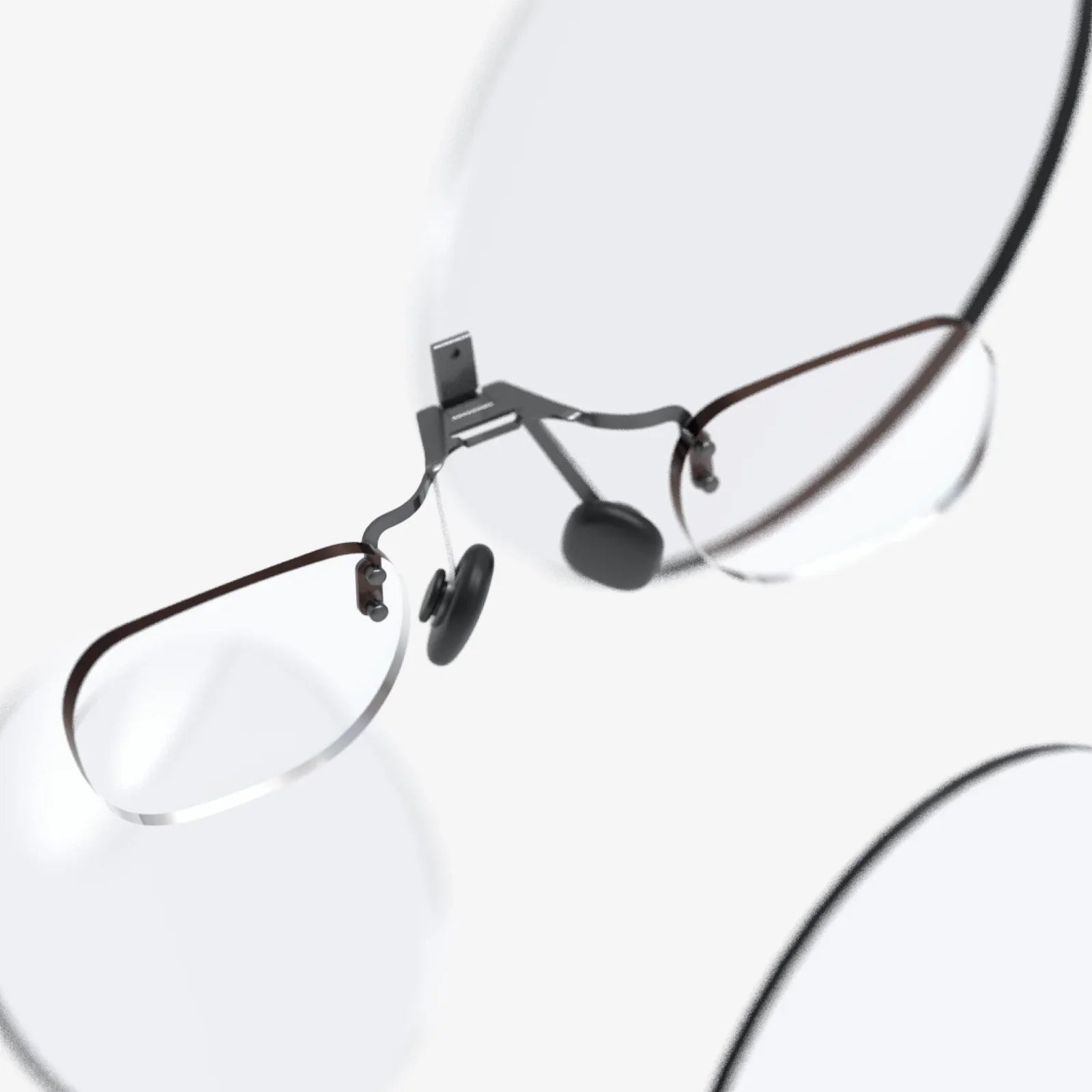
Smart glasses are undergoing a similar renaissance. Early attempts often struggled with clunky designs and limited functionality. Today's prototypes and emerging products, fueled by advances in micro-displays, waveguides, and miniature sensors, are focusing on augmented reality (AR) overlays. The AI component is what makes this useful; it's the intelligence that recognizes objects, translates text, and provides contextual information based on what the user is looking at. This moves smart glasses from a novelty to a potent tool for navigation, learning, and professional assistance.
Even the humble earbud is being transformed. Next-generation models are incorporating multiple sensors and powerful processors to move beyond audio playback and into the realm of health and contextual audio. Imagine earbuds that can monitor core body temperature during a workout, adjust noise cancellation based on your environment automatically, or amplify the voice of the person you're facing in a noisy room. This level of auditory intelligence, processing sound in real-time to enhance or suppress specific elements, is a direct result of embedded AI models.
The overarching trend is clear: wearables are migrating to parts of the body that allow for continuous, unobtrusive use. The goal is no longer to be a device you look at, but one you look through—an invisible layer of intelligence integrated into your life.
The Engine Room: On-Device AI and the Shift from Cloud Dependence
Perhaps the most critical technical development fueling this revolution is the move from cloud-dependent AI to on-device processing. Earlier generations of smart devices were often little more than sensor hubs. They collected data—heart rate, movement, audio snippets—and shipped it off to a powerful remote server for analysis. This model created significant latency, privacy concerns, and functionality gaps whenever an internet connection was unavailable.
The latest wearable AI news is dominated by breakthroughs in specialized microchips known as NPUs (Neural Processing Units) or AI accelerators. These chips are not designed for general computation; they are meticulously engineered to perform the trillions of mathematical operations required for neural networks with extreme efficiency. This allows complex AI models to run directly on the wearable device itself.
The benefits of this shift are profound:
- Latency: Responses become instantaneous. When you ask your glasses to translate text, the translation appears immediately without a frustrating delay for data transmission and cloud processing.
- Privacy: Highly personal data, like your health metrics or conversations, never has to leave your device. It is processed locally, dramatically reducing the risk of data breaches and unauthorized access. This is a paramount concern for users and a key focus for developers.
- Reliability: Functionality does not disappear in a subway, on a airplane, or in any other area with poor connectivity. The intelligence is always there, working offline.
- Battery Life: While AI processing consumes power, transmitting a constant stream of data to the cloud consumes far more. Efficient on-device processing is a net positive for battery longevity, a perpetual challenge in wearable design.
This technological leap is what enables the real-time, context-aware features that define the new generation of wearables. The intelligence is no longer in a distant data center; it's right there on your finger, in your ear, or on your face.
Revolutionizing Personal Health: From Reactive to Predictive Care
Nowhere is the impact of wearable AI more tangible and potentially life-saving than in the realm of personal health. We are moving from a paradigm of reactive healthcare—treating problems after they arise—to one of predictive and preventative wellness.
Modern wearables are evolving into sophisticated health monitoring platforms. They are incorporating a wider array of sensors, including ECG for electrical heart activity, PPG for optical blood flow measurement, skin temperature sensors, and even sensors for measuring galvanic skin response (a correlate for stress). But raw sensor data is just noise. The value is extracted by the AI algorithms that continuously analyze this data stream, learning a user's unique baselines and identifying subtle anomalies that may signal a problem.
Consider these transformative applications:
- Advanced Sleep Analysis: Beyond tracking sleep stages, AI can now detect patterns suggestive of sleep apnea, chronic insomnia, or other disorders by analyzing blood oxygen saturation, heart rate variability, and movement throughout the night.
- Mental Wellness Tracking: By correlating data like sleep quality, resting heart rate, physical activity, and even vocal tone analysis from microphones, AI models can provide users with insights into their stress levels and overall mental well-being, suggesting moments for mindfulness or breaks.
- Early Disease Detection: This is the holy grail. Large-scale research studies are already underway, using wearables to collect vast datasets with the goal of training AI to identify early signatures of illnesses like atrial fibrillation, Lyme disease, or even the flu before classic symptoms emerge. The device becomes a continuous health sentinel.
- Personalized Fitness Coaching: AI doesn't just count reps; it can analyze your running form through motion sensors, suggest optimal recovery times based on your physiological data, and dynamically adjust workout plans to help you avoid injury and maximize results.
The implication is a future where individuals have unprecedented visibility and agency over their own health, empowered by a constant stream of AI-processed insights directly from their body.
The Invisible Interface: Contextual and Ambient Computing
Another major theme in wearable AI news is the pursuit of the ultimate user interface: no interface at all. The goal of ambient computing is to have technology recede into the background, providing information and assistance precisely when it's needed without requiring active engagement with a screen.
Wearable AI is the key to making this vision a reality. By synthesizing data from multiple sensors—location, movement, calendar, biometrics, and audio cues—the device builds a sophisticated understanding of your context. Is the user in a business meeting? Driving a car? Jogging in the park? Having a conversation? The AI determines the appropriate mode of interaction.
This might manifest as:
- A gentle haptic pulse on your wrist for an important notification, while suppressing all others.
- Your glasses displaying navigation arrows on the pavement ahead only when you come to an intersection.
- Your earbuds automatically lowering the volume of your podcast when someone starts speaking to you.
- The device summarizing the key points of a lecture you just attended without you having to ask.
The AI acts as a digital filter for the world, prioritizing what matters and eliminating noise. It shifts the interaction model from "pull" (where the user must actively seek information) to "push" (where the device intelligently delivers the right information at the right time). This creates a more natural, less distracting, and ultimately more powerful relationship with technology.
Navigating the Storm: Challenges on the Horizon
For all its promise, the path forward for wearable AI is fraught with significant challenges that dominate thoughtful discourse on the topic.
Privacy and Security: This is the single biggest hurdle. These devices will have access to the most intimate dataset ever assembled: a continuous record of where you are, what you're doing, who you're talking to, and the inner workings of your body. The industry must adopt a philosophy of "privacy by design," ensuring data is encrypted, processed on-device whenever possible, and that users have transparent, granular control over how their information is used. Robust regulatory frameworks will be essential to build and maintain consumer trust.
Battery Life: More sensors and more processing demand more power. While on-device AI is more efficient than cloud-based models, the hunger for new features constantly pushes against the physical limits of battery technology. Innovations in low-power displays, efficient chipsets, and perhaps new charging paradigms (like solar or kinetic energy) will be crucial.
Accuracy and Reliability: When an AI suggests a potential health issue, the stakes are incredibly high. False positives can cause unnecessary anxiety, while false negatives could have dire consequences. These systems must undergo rigorous clinical validation and be presented to users as tools for insight rather than definitive diagnostic instruments. Clear communication about the limitations of these technologies is non-negotiable.
The Social Divide: As with any advanced technology, there is a risk that high-cost wearable AI could exacerbate social and economic inequalities, creating a divide between those who can afford enhanced health and cognitive capabilities and those who cannot.
Digital Fatigue and Overload: There is a very real danger of these devices creating a new form of anxiety—a constant pressure to optimize every heartbeat, sleep cycle, and minute of the day. The industry must be mindful of promoting digital wellness and allowing users to disconnect without feeling they are missing out.
The Future is Personalized: The Road Ahead
Looking forward, the trajectory of wearable AI points toward ever-greater levels of personalization and integration. The devices of tomorrow will not be one-size-fits-all; they will feature AI models that are trained exclusively on the user's own data, becoming hyper-personalized assistants that understand your unique habits, preferences, and physiological quirks.
We can anticipate further miniaturization of components, eventually leading to wearables that are virtually indistinguishable from ordinary jewelry or clothing. Biomaterial sensors that adhere to the skin like a temporary tattoo could provide clinical-grade monitoring without any bulky hardware. The line between the biological and the digital will continue to blur.
Furthermore, the true power of these devices will be unlocked through interoperability—a seamless ecosystem where your ring, your glasses, and your earbuds work in concert, sharing insights to create a holistic model of your state and context, all orchestrated by sophisticated AI.
The next headline in your wearable AI news feed might announce a device that can non-invasively monitor blood glucose, a pair of AR contact lenses, or a regulatory milestone that sets a new global standard for data privacy. This is a field moving at breakneck speed, driven by a convergence of advancements in artificial intelligence, sensor technology, and material science.
The promise is a world where technology enhances our human experience without overwhelming it, where we are healthier, more informed, and more connected to the world around us in meaningful ways. The devices on our bodies are becoming the gateways to this future, not by being smarter than us, but by being smart for us. The era of passive wearables is over; the age of intelligent, anticipatory, and truly personal AI companions is just beginning, and it's a story you'll want to watch unfold right on your wrist, in your ears, and before your eyes.
Share:
T-Mobile One Wearable: The Future of Seamless Connectivity on Your Wrist
T-Mobile One Wearable: The Future of Seamless Connectivity on Your Wrist