


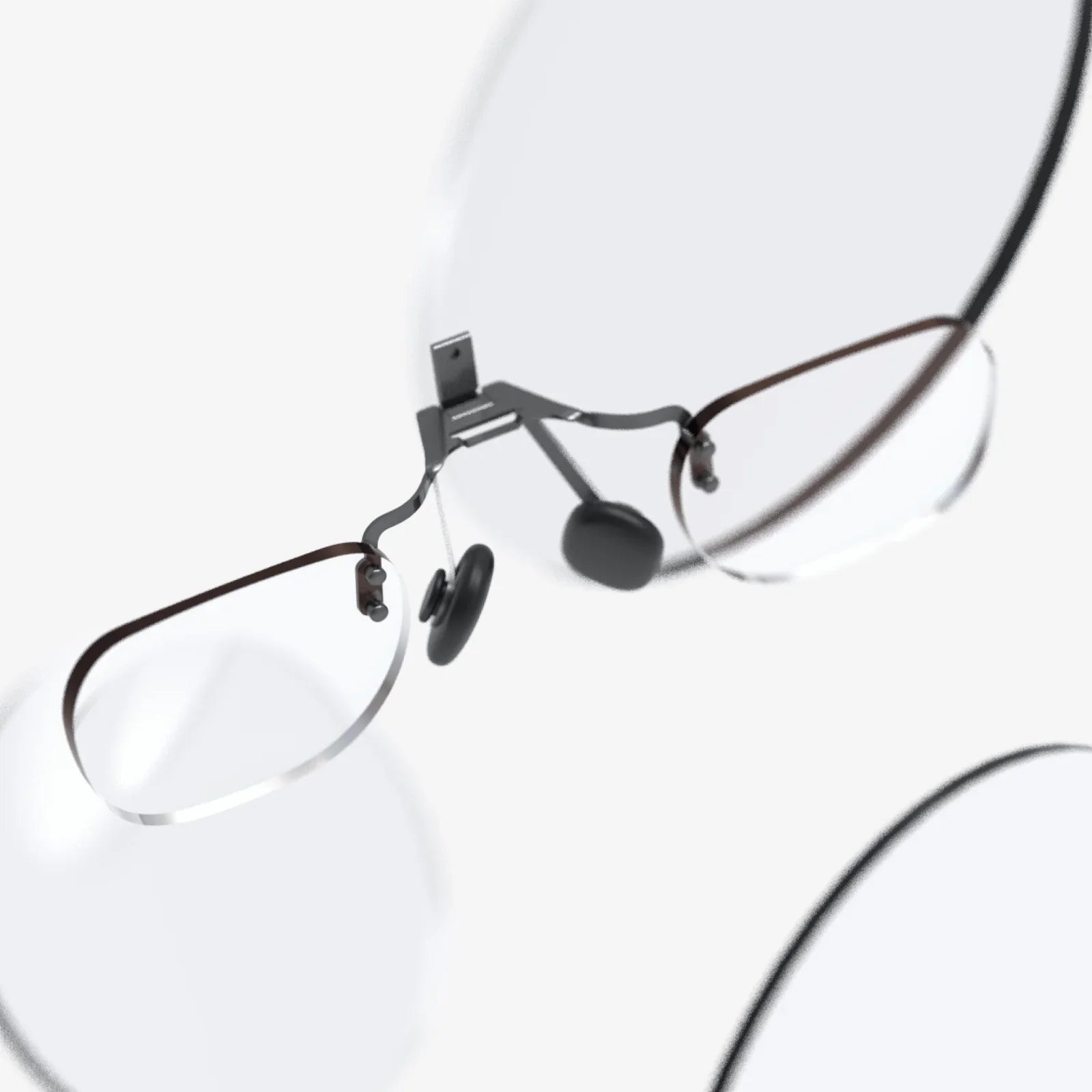
Imagine a world where information doesn’t live on a screen in your hand or on your desk, but is seamlessly woven into the very fabric of your perception. Where digital instructions float over a complex machine you’re repairing, where historical figures narrate their stories as you walk through ancient ruins, and where a navigational path is painted onto the sidewalk before you. This is the promise, and the rapidly approaching reality, of modern wearable AR headsets. This technology is poised not just to change what we see, but to fundamentally alter how we work, learn, connect, and interact with the world around us, making the digital and physical realms one and the same.
The Architectural Marvel: How AR Headsets Perceive Our World
At their core, wearable AR headsets are feats of miniaturized engineering, combining a suite of sophisticated sensors and displays to create a cohesive augmented experience. Unlike their virtual reality counterparts that seek to replace your vision entirely, AR headsets are designed to enhance it.
The magic begins with a complex array of cameras and sensors. These act as the device's eyes, continuously scanning the environment. Through a process known as simultaneous localization and mapping (SLAM), the headset builds a real-time, three-dimensional map of the room or space you're in. It understands the geometry of your desk, the location of your walls, and the depth of the hallway. This spatial awareness is the critical foundation upon which digital content can be anchored persistently and realistically.
Then comes the display technology, the window through which the digital overlays are presented. Several competing methodologies exist. Some devices use waveguide optics, where light is bounced through a thin piece of glass, projecting images directly into the user's retina. Others employ micro-LED projectors that beam light onto a specially coated lens, which then reflects it into the eye. The ultimate goal of all these systems is the same: to create bright, high-resolution, and, most importantly, semi-transparent visuals that appear to coexist with the physical world, not obscure it.
From Sci-Fi to Reality: The Evolution of Form and Function
The journey of AR headsets has been a dramatic one, marked by a relentless pursuit of miniaturization and user comfort. Early prototypes were often bulky, tethered to powerful desktop computers, and offered a limited field of view. They were impressive proofs-of-concept but impractical for sustained use.
The modern era has been defined by a shift towards all-in-one, untethered devices. Advances in mobile processors, battery technology, and sensor miniaturization have been crucial. Today's leading devices are self-contained computers, boasting processing power that rivals high-end laptops, all packaged into a form factor that, while still noticeable, is designed for extended wear. The focus has expanded from pure technical capability to encompass critical human factors: weight distribution, ergonomics, thermal management, and style. The holy grail remains a pair of AR glasses that are indistinguishable from standard eyewear, a goal that the industry is steadily marching towards.
Transforming the Professional Landscape: The Industrial Metaverse
While consumer applications often grab headlines, the most profound and immediate impact of wearable AR headsets is occurring in enterprise and industrial settings. Here, the technology is not a novelty; it's a powerful tool solving real-world problems and driving efficiency.
- Manufacturing and Field Service: Technicians can see digital schematics overlaid directly onto the machinery they are assembling or repairing. Remote experts can see what the on-site worker sees and annotate their field of view with arrows, circles, and notes, guiding them through complex procedures without ever boarding a plane. This drastically reduces errors, slashes training time, and minimizes equipment downtime.
- Healthcare and Medicine: Surgeons can visualize critical patient data, such as ultrasound or vital signs, without looking away from the operating field. Medical students can practice procedures on detailed, interactive 3D holograms of human anatomy. The technology offers new ways to visualize the impossible, improving both education and patient outcomes.
- Design and Architecture: Architects and interior designers can walk clients through full-scale, holographic models of unbuilt structures. They can change materials, move walls, and adjust lighting in real-time, allowing for collaborative design decisions long before the first brick is laid.
- Logistics and Warehousing: In massive distribution centers, workers wearing AR headsets receive order-picking information directly in their line of sight, with digital arrows guiding them on the optimal route. Item information and bin locations are highlighted, accelerating fulfillment speed and dramatically reducing picking errors.
The Social and Consumer Frontier: A New Layer of Reality
Beyond the factory floor and operating room, wearable AR headsets are beginning to weave their way into the fabric of daily life, promising to redefine social interaction, entertainment, and personal productivity.
The concept of the "spatial web" is central to this vision. It posits a future where digital information is spatially mapped to the physical world, accessible only through an AR interface. A restaurant's menu and reviews might float above its entrance. A historical marker could come to life with a reenactment when you look at a monument. Your friend's social media avatar might be waiting for you at a coffee shop, visible only to you through your glasses.
Entertainment will become immersive and shared. Instead of watching a movie on a flat screen, you could have a holographic concert performed on your living room table or play a board game with life-sized digital characters. The line between spectator and participant will blur, creating entirely new forms of narrative and play.
On a personal level, these devices could become the ultimate contextual assistant. Notifications would no longer be disruptive alerts on a phone but subtle, context-aware cues in your periphery. Your to-do list could be pinned to your refrigerator, and your calendar could hover over your desk. The device could recognize people you meet and discreetly display their name and how you know them, or translate foreign language signs in real-time as you look at them.
Navigating the Obstacles: The Roadblocks to Ubiquity
For all its potential, the path to mainstream adoption of wearable AR headsets is fraught with significant technical, social, and ethical challenges that must be thoughtfully addressed.
Technical Hurdles: Battery life remains a primary constraint. Powering high-resolution displays, multiple cameras, and powerful processors is incredibly demanding. The quest for all-day battery in a slim form factor continues. Furthermore, achieving perfect visual coherence—where digital objects are indistinguishable from real ones in terms of lighting, occlusion, and persistence—is an immense computational challenge that is still being solved.
The Social Conundrum: The issue of social acceptance is perhaps the biggest wildcard. How will society react to people wearing cameras on their faces in social settings? The specter of the "glasshole"—a term coined from early adopters who were seen as antisocial and intrusive—still looms. Norms around when and where it is appropriate to wear such devices will need to be established. Furthermore, the potential for AR to create informational and experiential divides between those who can afford the technology and those who cannot is a serious concern.
The Privacy Paradox: This is arguably the most critical challenge. Wearable AR headsets, by their very nature, are data collection machines. They have the potential to continuously capture video and audio of their surroundings, mapping private spaces and recording individuals without their explicit consent. The ethical collection, storage, and use of this data are paramount. Robust frameworks must be developed to ensure user privacy and prevent a dystopian future of perpetual surveillance. Questions of digital vandalism—where malicious actors place offensive or dangerous AR content in public spaces—also need to be addressed.
Glimpsing the Horizon: The Future is Transparent
The trajectory of wearable AR is clear: devices will become lighter, more powerful, more socially acceptable, and eventually, as ubiquitous as smartphones. The convergence with advancements in artificial intelligence will be particularly transformative. AI will act as the intelligent engine, parsing the immense stream of visual data to provide truly contextual and proactive assistance, moving beyond simple command responses to anticipatory help.
We are moving towards a future where the question won't be whether to use AR, but how we ever managed without it. It promises to augment not just our reality, but our human potential—enhancing our memory, our skills, and our connection to a world saturated with hidden information. The headset is merely the conduit; the real revolution is happening behind our eyes, changing our perception of what is possible.
The true measure of this technology's success won't be its technical specifications, but its ability to fade into the background—to become so intuitive and useful that we forget it's there, allowing us to focus not on the device itself, but on a richer, more informed, and more magical experience of the world we share. The next computing platform isn't on your desk or in your pocket; it's being built directly onto your field of vision, and it's poised to change everything.
Share:
Cheapest VR - Your Ultimate Guide to Affordable Virtual Reality
HMD Means: The Hidden Engine Powering Your Digital World