


Imagine a world where digital information doesn't live on a screen in your hand but is seamlessly painted onto the fabric of your reality. Where the line between the physical and the digital not only blurs but disappears entirely, offering a new layer of understanding, connection, and experience. This is the promise of wearable augmented reality technology, a revolution not confined to labs or niche enthusiasts but one that is quietly, yet rapidly, marching into our daily lives, poised to change everything.
The Genesis: From Clunky Prototypes to Invisible Interfaces
The journey of wearable AR is a story of exponential miniaturization and computational power. Early iterations were often bulky headsets with limited field-of-view, tethered to powerful desktop computers. They were impressive proofs-of-concept but far from practical for everyday use. The turning point came from the convergence of several critical technologies. The smartphone industry acted as an unwitting incubator, driving down the size and cost of high-resolution micro-displays, miniature high-quality cameras, inertial measurement units (IMUs), and powerful mobile processors. These components became the essential building blocks for the first generation of viable wearable AR.
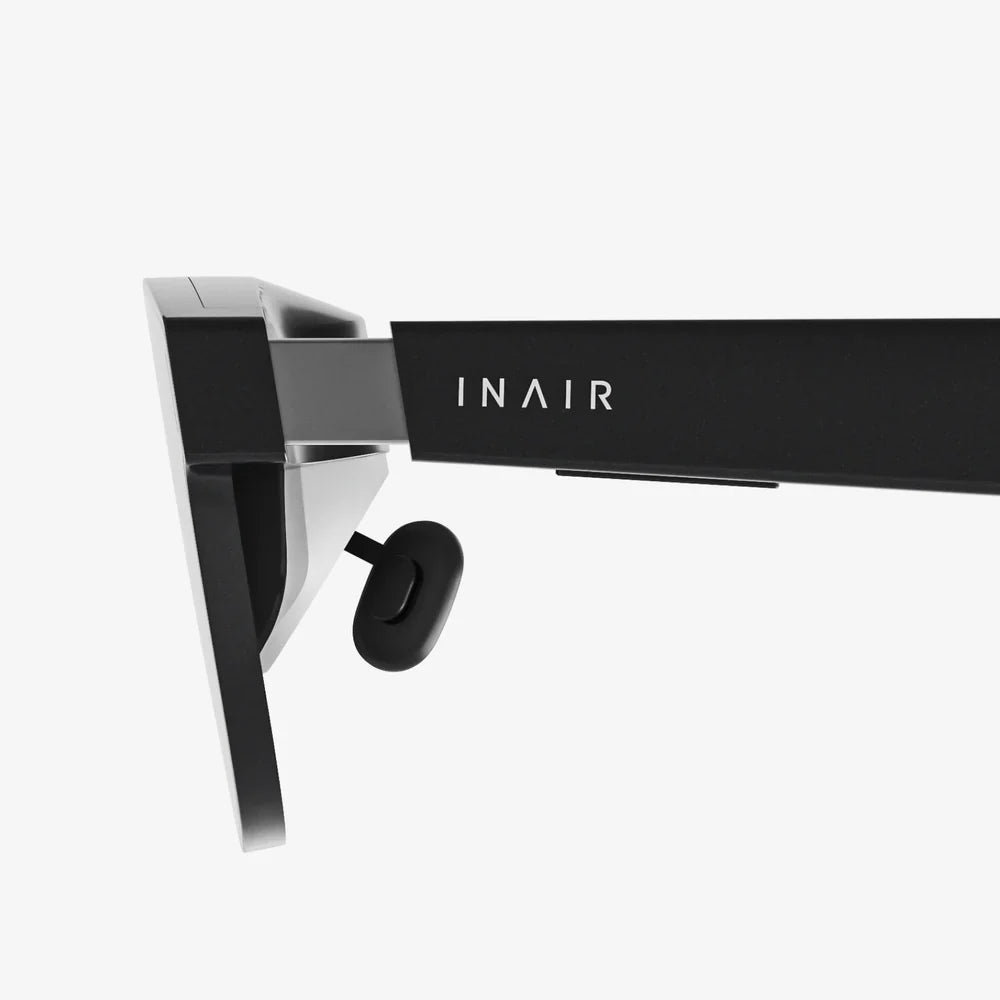
Today, the form factor is rapidly evolving beyond headsets. We are seeing the emergence of smart glasses that look nearly indistinguishable from standard eyewear, enabled by advanced waveguide optics and micro-LED projectors that beam light directly onto the retina. Research into even more intimate interfaces, such as AR contact lenses and neural interfaces, suggests a future where the technology becomes truly invisible, woven into the very way we perceive the world.
How It Works: The Magic Behind the Digital Curtain
At its core, wearable AR tech performs a continuous, real-time magic trick: it understands the physical world and convincingly places digital objects within it. This process relies on a sophisticated symphony of hardware and software.
The Hardware Symphony
A typical advanced AR wearable is a sensor-packed powerhouse. Its eyes are a suite of cameras—not just for taking pictures, but for depth sensing (using LiDAR or time-of-flight sensors), spatial mapping, and tracking the user's eye movements. Its inner ear is an IMU, a combination of accelerometers and gyroscopes that tracks the precise orientation and movement of the user's head. Microphones listen for voice commands and ambient sounds, while speakers or bone conduction audio provide a private soundscape. All this data is processed by a dedicated chipset that handles the immense computational load of simultaneous localization and mapping (SLAM).
The Software and Algorithms: The Brain
This sensor data is meaningless without intelligent software. SLAM algorithms are the true heroes, constructing a real-time 3D map of the environment while precisely locating the device within it. This allows a digital dragon to land convincingly on your physical coffee table, knowing exactly where that table is in space. Computer vision algorithms identify objects and surfaces—is that a wall, a floor, or a face? Machine learning models understand gestures and voice commands, making interaction intuitive. Finally, rendering engines work tirelessly to composite photorealistic digital content into the user's view, matching lighting and perspective perfectly to sell the illusion.
Transforming the World of Work: Beyond the Desk
While consumer applications often grab headlines, the most profound immediate impact of wearable AR is occurring in the enterprise and industrial sectors. Here, the technology is not for entertainment; it's a tool for enhancing efficiency, safety, and precision.
- The Augmented Technician: A field service engineer wearing smart glasses can see schematics, instruction manuals, and expert annotations overlaid directly on the complex machinery they are repairing. They can stream their first-person view to a remote expert thousands of miles away, who can then draw arrows and circles directly into their field of view, guiding them through a complex procedure. This reduces errors, slashes downtime, and democratizes expertise.
- The Intelligent Warehouse: In massive fulfillment centers, workers equipped with AR glasses can have the most optimal pick path displayed before their eyes, with digital arrows guiding them to the next item. Item information and bin locations can be superimposed, accelerating the picking and packing process to incredible speeds and drastically reducing errors.
- Design and Prototyping: Architects and engineers can walk through full-scale 3D models of their designs before a single foundation is poured. They can test structural integrity, assess sightlines, and make changes in real-time, saving millions in costly post-construction modifications.
- Healthcare and Surgery: Surgeons can have vital signs, ultrasound data, or 3D reconstructions of a tumor superimposed onto their view of the patient during an operation, providing x-ray vision and enhancing surgical precision. Medical students can learn anatomy by exploring detailed holograms of the human body.
Redefining Social Connection and Storytelling
Beyond the spreadsheet and the warehouse, wearable AR promises to reshape the most human of our activities: connecting with others and sharing stories.
The concept of the "metaverse" is intrinsically linked to AR wearables. Rather than a fully virtual world requiring a clunky headset, AR offers a persistent digital layer on top of our existing world. You could leave a virtual note for a family member on the kitchen counter, or see a friend's avatar sitting on your couch when you join a video call, creating a powerful sense of shared presence. Public spaces could become dynamic canvases for digital art and shared experiences, from historical recreations to collaborative games.
Storytelling will evolve from a passive to an active experience. Imagine walking through a city and seeing historical figures reenacting events on the very streets where they happened, or having a fantasy narrative unfold in your local park, with you as a character within it. This spatial storytelling has the potential to make education immersive and entertainment truly world-breaking.
The Invisible Elephant in the Room: Privacy, Ethics, and the Future of Attention
This powerful technology does not arrive without profound challenges. The same always-on, always-sensing device that can recognize a friend's face to display their name also has the potential to create the most pervasive surveillance tool ever conceived. The ethical questions are daunting.
- Privacy: Who has access to the continuous video and audio feed from your glasses? How is that data stored, analyzed, and used? The potential for facial recognition on a mass scale raises alarming prospects for both corporate and government overreach. Clear regulations and ethical frameworks, built on principles of user consent and data minimization, will be non-negotiable.
- The Attention Economy: If we thought smartphones were distracting, consider a world where digital notifications and advertisements are permanently grafted onto your visual field. The battle for your attention will reach a new zenith. The design of these interfaces must prioritize user well-being, allowing for digital quiet spaces and filters to prevent overwhelming sensory overload, a phenomenon often called "AR fatigue."
- The Digital Divide: Will access to this enhanced reality and the productivity boosts it offers create a new class of haves and have-nots? Will it further isolate those who cannot or choose not to participate in this digitally-augmented world?
- Reality Itself: As the digital layer becomes richer and more persuasive, what happens to our shared sense of objective reality? If two people in the same room can see entirely different digital information, does common ground erode?
The Next Frontier: Where Do We Go From Here?
The wearable AR technology of today is merely the flickering black-and-white television before the dawn of color HD. The path forward is toward greater contextual awareness and intelligence. Future devices will move beyond simply understanding the geometry of a room to comprehending its semantics—knowing not just that there is a table, but that it's a dining table set for a romantic dinner, and adjusting the digital experience accordingly.
Advancements in AI will enable digital entities to become true assistants, anticipating needs and providing information before it's even asked for. The ultimate goal is a technology that feels less like a tool and more like a subtle extension of our own cognition, enhancing our human capabilities without overwhelming them. The convergence with other fields like biotechnology could lead to direct neural interfaces, making the blend between thought and digital action seamless.
The true potential of wearable AR tech lies not in flashy holograms for their own sake, but in its ability to make us more capable, more connected, and more deeply understanding of our world and each other. It has the power to augment not just our reality, but our humanity itself. The revolution will not be televised; it will be illuminated, annotated, and experienced directly through the lenses we wear, forever changing our perception of what is real and what is possible.
The screen is fading, and the world is waking up, ready to be rewired with a new layer of magic. The device that will unlock this isn't in your pocket; its final form is still being designed, but its purpose is clear: to make the digital world finally, and completely, at home in ours.
Share:
Best Smart Glasses for Work 2025: The Ultimate Guide to Augmented Productivity
Hey Glasses AI Smart Glasses Are Redefining Our Interaction With The Digital World