


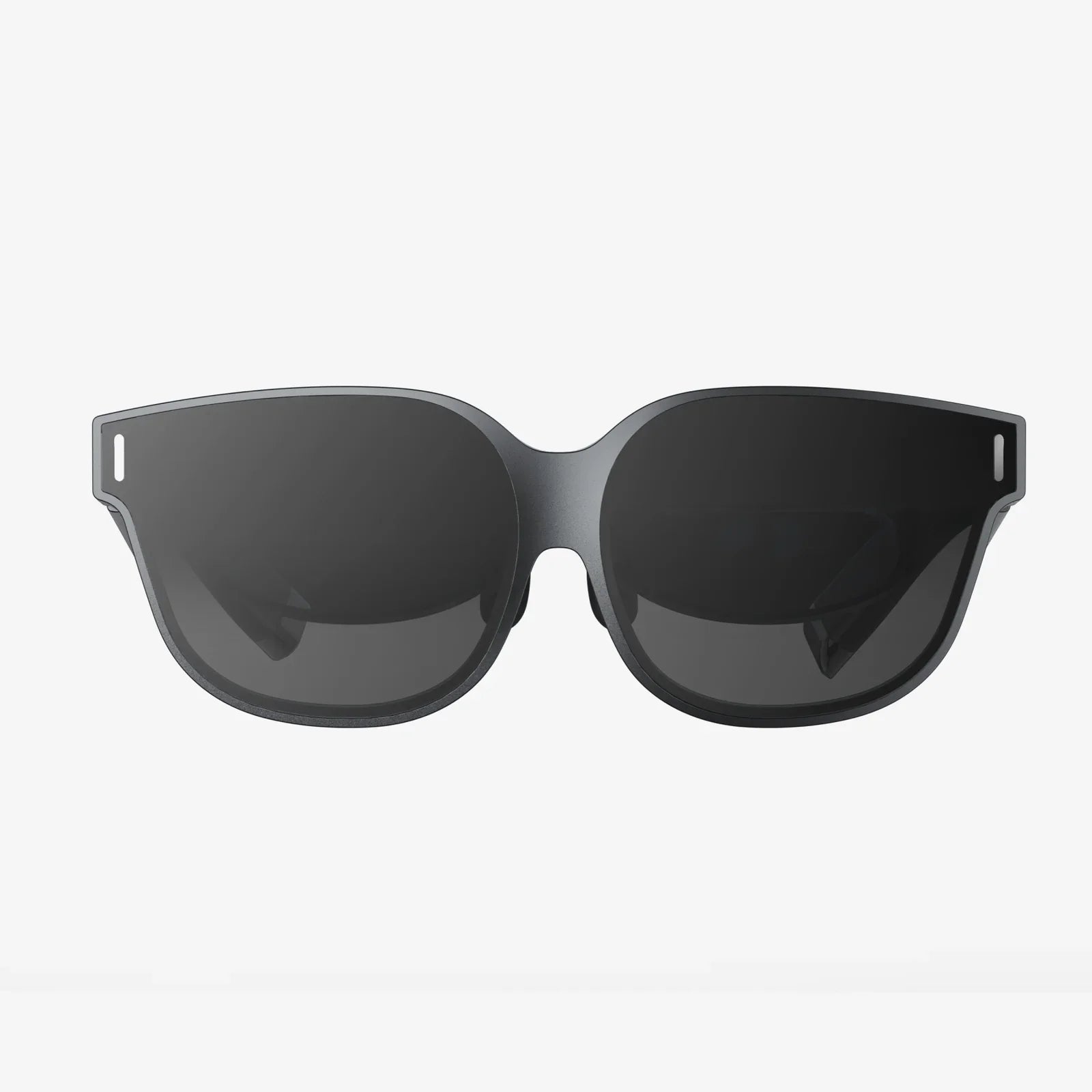
Imagine a world where your digital workspace isn't tethered to a desk, where critical information floats seamlessly in your field of vision, and the boundary between the physical and digital realms dissolves into a harmonious, interactive experience. This is no longer the realm of science fiction; it is the burgeoning reality ushered in by the wearable computer monitor. These devices, which project a digital display directly into the user's line of sight or onto a portable screen worn on the body, are poised to revolutionize not just how we work, but how we learn, play, and connect with the world around us. The era of static computing is fading, making way for a dynamic, personalized, and perpetually accessible visual interface that moves with you.
The Architectural Shift: From Stationary Screens to Personal Visual Spaces
The fundamental architecture of personal computing has remained largely unchanged for decades. We sit before a fixed monitor, our physical presence required at a specific point in space to interact with the digital universe. The wearable computer monitor shatters this paradigm. It represents a shift from a location-centric computing model to a user-centric one. The display is no longer a destination; it is an attribute of the individual.
This shift is powered by advancements in several key areas. Micro-display technology, such as OLEDoS (Organic Light-Emitting Diode on Silicon) and LCoS (Liquid Crystal on Silicon), creates incredibly bright, high-resolution images on chips smaller than a fingernail. These micro-displays are then projected into the user's eye via sophisticated waveguide optics or reflected onto a small, transparent combiner, overlaying digital content onto the real world. Alternatively, some designs utilize compact, high-density LCD or OLED screens mounted on a lightweight arm, providing a private, portable viewing experience without the augmented reality component.
Concurrently, improvements in miniaturized computing power, battery efficiency, and sensor packages (including accelerometers, gyroscopes, magnetometers, and often depth-sensing cameras) allow these devices to understand their position in space and the context of their environment. This fusion of hardware creates a new class of device that is both a display and a perceptual instrument.
Unveiling the Forms: Heads-Up, Heads-Down, and Everything In Between
The term "wearable computer monitor" encompasses a spectrum of form factors, each designed for specific use cases and user preferences.
Optical See-Through Augmented Reality Glasses
This is the most futuristic and arguably the most powerful iteration. These devices, which often resemble a robust pair of glasses, use optical combiners to superimpose digital imagery onto the user's natural field of view. This creates the illusion that holographic screens, application windows, and 3D models are existing within the user's physical environment. The primary advantage is contextual computing; information is presented exactly where and when it is needed. A mechanic can see a wiring diagram overlaid on the engine they are repairing, a surgeon can view patient vitals without looking away from the operating table, and a traveler can see navigation arrows painted onto the street in front of them.
Video See-Through Systems
Instead of using transparent combiners, these systems employ cameras to capture the real world and then display it, along with computer-generated graphics, on opaque displays in front of the user's eyes. This allows for richer, more vivid digital overlays and effects but can create a slight latency between real-world movement and the video feed, which some users find disorienting. It also removes the user one step from direct visual contact with their surroundings, though pass-through video technology is improving rapidly.
Portable Private Displays
Not all wearable monitors are about augmented reality. A significant category focuses on pure, private screen real estate. These devices typically feature a small, high-resolution screen (often 1080p or 4K) mounted on a lightweight frame that can be positioned in front of the user's eyes. They connect to a laptop, smartphone, or gaming console via USB-C or HDMI, creating a massive virtual screen that is invisible to anyone else. This form factor is immensely popular among digital nomads, programmers who want a multi-monitor setup anywhere, and enthusiasts seeking an immersive media experience on the go.
The Professional Paradigm: Revolutionizing Industries One Task at a Time
The practical applications of wearable monitors are already transforming numerous professional fields, offering unprecedented gains in efficiency, accuracy, and safety.
In field service and manufacturing, technicians wearing AR-capable monitors can access interactive manuals, schematics, and remote expert guidance hands-free. Instead of juggling a tablet or paper manual, instructions are overlaid directly onto the machinery they are servicing, highlighting specific components and providing step-by-step visual cues. This reduces errors, slashes training time, and minimizes downtime.
For healthcare professionals, the implications are profound. Surgeons can view MRI scans and patient monitoring data in their visual periphery during procedures. Nurses can see patient histories and medication schedules simply by looking at a room. This constant, seamless access to critical information can enhance decision-making and improve patient outcomes.
Logistics and warehouse operations are being supercharged by this technology. Pickers and packers can see optimal routing paths through aisles, with digital indicators highlighting the exact shelf and item to retrieve, all without needing to consult a handheld scanner. This "vision picking" dramatically increases fulfillment speed and accuracy.
For the modern remote knowledge worker, the portable private display is a game-changer. It enables a expansive, multi-screen workstation from the confines of a coffee shop, airplane seat, or hotel room. This portable productivity empowers a level of focus and capability while mobile that was previously unimaginable, effectively decoupling high-performance computing from a fixed office.
Beyond the Workspace: Social, Ethical, and Human Considerations
As with any transformative technology, the integration of wearable computer monitors into daily life is not without its complex challenges and societal questions.
The most immediate concern is the social friction these devices could create. Walking down the street or sitting in a meeting with a display obscuring part of your face presents a barrier to human connection. Social norms around when and where it is appropriate to use such technology are yet to be established. The potential for distraction is also significant; navigating a busy sidewalk while also interacting with a floating browser window poses obvious risks.
Privacy and data security become paramount. These devices, equipped with cameras and microphones, have the potential to record everything the user sees and hears. This raises critical questions about consent, data ownership, and surveillance. Robust ethical frameworks and clear regulations will be essential to prevent misuse and protect individual privacy.
On a more philosophical level, there is the question of digital dissociation. If we increasingly layer a digital reality over our physical one, do we risk diminishing our engagement with the un-augmented world? Will constant access to information and stimulation erode our capacity for boredom, reflection, and direct, uninterrupted human interaction? The technology offers immense utility, but it must be designed and used in a way that augments our humanity rather than replaces it.
Gazing into the Crystal Ball: The Future of Visual Computing
The wearable computer monitors of today are merely the primitive precursors of what is to come. The trajectory points towards devices that are increasingly lighter, more powerful, more socially acceptable, and more integrated with our physiology.
Future iterations will likely move beyond glasses altogether. Research into contact lens displays and even direct neural interfaces for visual cortex stimulation is already underway. The end goal is a seamless, invisible interface that provides information on demand without any conscious effort or obtrusive hardware.
Display technology will continue to advance, offering wider fields of view, higher resolution, and more realistic visual integration with the real world. The development of more sophisticated spatial computing platforms will allow digital objects to behave as if they have real physical presence, respecting occlusion and interacting with the environment in believable ways.
Ultimately, the convergence of AI and wearable displays will be the most significant catalyst for change. An AI assistant, aware of your context, tasks, and preferences, could proactively manage the information displayed, presenting only what is necessary and relevant at any given moment, transforming the device from a passive screen into an active, intelligent collaborator.
The screen that once chained us to a desk is being cut loose, evolving into a fluid extension of our perception and intent. It’s a silent revolution happening not in a lab, but on our faces, promising to unlock new dimensions of human potential and redefine our very experience of reality itself.
Share:
Advanced Digital Product Development: The Blueprint for Modern Innovation
Human Computer Interaction UCI: The Invisible Bridge Shaping Our Digital Future