


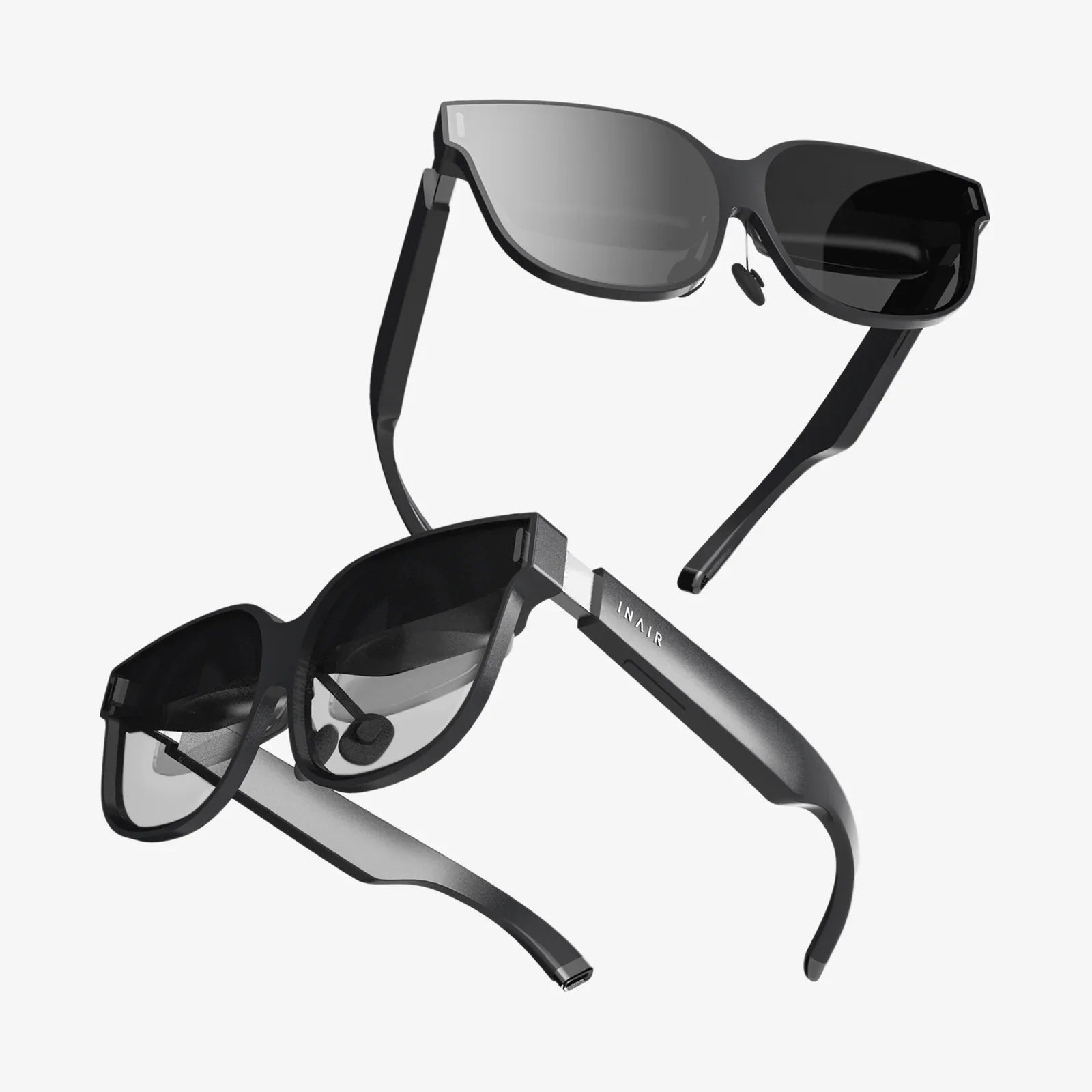
Imagine a world where your entire digital life—your emails, maps, messages, and entertainment—floats seamlessly in your field of vision, accessible with a glance or a gesture, leaving your hands free to engage with the physical world around you. This is no longer the realm of speculative fiction; it is the imminent future promised by the rapid advancement of the wearable computer screen. This technology represents a fundamental shift in human-computer interaction, moving beyond the confines of pockets and desktops to integrate digital information directly into our daily lived experience. We are on the cusp of an era where the screen is not something we look at, but something we look through, a constant companion that augments our reality, productivity, and connection.
The Evolutionary Leap From Calculators to Cognitive Partners
The journey of the wearable computer screen is a story of relentless miniaturization and ambitious imagination. The earliest inklings emerged not with computers, but with timekeeping. The wristwatch, a revolutionary wearable for its era, consolidated a necessary tool into a convenient, glanceable format. The digital calculator watch of the 1980s was a primitive but prophetic step, embedding a tiny, monochromatic screen and computational power onto the wrist.
The true conceptual birth of modern wearable displays is often traced to the work of computer scientist Steve Mann in the 1980s and 90s. His "Digital Eye Glass" systems were cumbersome, wired to backpack-mounted computers, but they proved a radical concept: a person could wear their computing environment. This research directly influenced the development of later projects within academia and industry, setting the stage for the explosion of interest in the 21st century.
The release of early consumer smartwatches marked a critical commercialization phase. These devices prioritized notifications and health tracking, their small screens serving as a secondary, complementary display to a primary smartphone. Simultaneously, the concept of head-mounted displays gained traction, initially within industrial and military applications for hands-free data access. The convergence of these two paths—wrist-worn and head-mounted—along with breakthroughs in display technology, battery life, and processing power, is what defines the current generation of wearable computer screens. They are no longer passive displays but proactive, context-aware cognitive partners.
Deconstructing the Technology The Magic Behind the Display
The magic of a wearable computer screen lies in its ability to project a high-fidelity digital image onto a tiny, energy-efficient canvas, often directly into the user's eye. This feat is achieved through a sophisticated interplay of several core technologies.
Display Technologies A Battle of Light and Efficiency
Several competing technologies are vying for dominance in the wearable display space, each with distinct advantages.
- Micro-OLED (Organic Light-Emitting Diode): This is currently the gold standard for high-end, immersive headsets. Micro-OLED panels are incredibly small (often under one inch) but pack a dense array of self-illuminating pixels, resulting in stunning brightness, exceptional contrast ratios with true blacks, and a wide color gamut. Their major drawback is higher power consumption, a significant challenge for all-day wearable devices.
- Micro-LED: Widely considered the next evolutionary step, Micro-LED technology promises all the benefits of Micro-OLED—high brightness, excellent contrast—but with drastically improved power efficiency and longer lifespan. Manufacturing complexities currently make it prohibitively expensive for mass-market consumer devices, but it is the technology to watch for the future.
- LCoS (Liquid Crystal on Silicon): A more established technology, LCoS uses a liquid crystal layer applied to a reflective silicon mirror. An external light source (an LED or laser) illuminates the panel, and the liquid crystals manipulate the light to form an image. It offers high resolution and good color accuracy but can struggle with motion blur and is generally bulkier than OLED solutions.
- Laser Beam Scanning (LBS): A fundamentally different approach, LBS systems use tiny mirrors (MEMS) to scan red, green, and blue laser beams directly onto the retina. This allows for always-in-focus images and can create incredibly small optical engines. However, it has historically faced challenges with achieving consistent brightness and overcoming the "laser speckle" effect.
Optical Architectures How Light Reaches Your Eye
Simply having a tiny screen is not enough; the image must be magnified and presented comfortably to the eye. This is the job of the optical stack.
- Birdbath Optics: A common design in many current consumer headsets. It uses a combination of a beamsplitter and a spherical mirror (resembling a birdbath) to reflect the image from a display mounted above the eye into the lens and then into the user's eye. It's a relatively compact and cost-effective solution but often results in a smaller field of view and bulkier form factors.
- Waveguide Optics: This is the technology enabling the sleek, sunglasses-like form factor that many companies are pursuing. Light from a micro-display is coupled into a transparent glass or plastic slab. Using techniques like diffraction gratings or holographic optical elements, the light is "piped" through the waveguide and then ejected out towards the eye. Waveguides allow for thin, lightweight, and visually normal designs, though they can present challenges with brightness uniformity and optical clarity.
- Free-Space Combiners: Often used in more specialized applications, these systems use a series of lenses and partially reflective mirrors to combine the digital image with the real world. They can offer a very wide field of view and high image quality but tend to be larger and heavier.
The Supporting Cast Sensors, Power, and Processing
A display is useless without intelligence. Modern wearable screens are packed with sensor suites:
- Cameras: For tracking hand gestures, understanding the environment (SLAM technology), and capturing photos/video.
- Inertial Measurement Units (IMUs): Accelerometers and gyroscopes that track head and movement with extreme precision.
- Eye-Tracking Cameras: Crucial for understanding user intent, enabling foveated rendering (which dramatically reduces processing load by rendering only the area you're looking at in high detail), and creating intuitive UI interactions.
- Microphones and Speakers: For voice assistant control and spatial audio.
Powering this sensor and display array is the perennial challenge. Battery technology advances slowly, forcing designers to make difficult trade-offs between performance, size, and battery life. This has led to innovations in low-power displays, efficient chipsets, and the strategic offloading of intensive tasks to a paired companion device, like a smartphone or a dedicated processing unit worn elsewhere on the body.
A World of Applications Beyond Novelty
The value of a wearable computer screen is not in the technology itself, but in the transformative applications it enables across every sector.
Enterprise and Industrial Revolutionizing the Frontline Worker
This is where wearable screens are already delivering immense value. Technicians can have repair manuals, schematics, and remote expert guidance overlaid on the machinery they are fixing. Warehouse workers can see optimized picking routes and inventory data without returning to a stationary terminal. Surgeons can visualize patient vitals and 3D anatomical models during procedures without looking away from the operating field. The gains in efficiency, accuracy, and safety are tangible and profound.
Healthcare and Assisted Living Enhancing Capabilities
For individuals with low vision, wearable screens can act as powerful visual aids, enhancing contrast, zooming in on text, or highlighting obstacles in their path. For those with memory impairments, context-aware reminders about people's names or daily tasks can provide newfound independence. Medical professionals can use them for hands-free access to patient records and for training through detailed, interactive anatomical visualizations.
Navigation and Contextual Awareness The World as an Interface
Imagine walking through a foreign city with navigation arrows painted onto the street itself, or having the history of a landmark pop up as you gaze upon it. Restaurant reviews and ratings could float above their doors. This seamless blending of digital information with physical location creates a deeply intuitive and informative way to interact with our surroundings.
Content Consumption and Social Connection A New Medium
Wearable screens promise to redefine entertainment. They can project a massive, virtual television screen onto any blank wall or create a completely immersive cinematic experience. For social connection, they enable avatars and digital personas to share your physical space, making remote interaction feel more present and personal. The potential for a new form of spatial computing—where digital objects have a place in the real world—is immense.
The Human Factor Challenges and Ethical Considerations
This technological leap is not without its significant hurdles and societal questions.
The Form Factor Dilemma Fashion vs. Function
The ultimate success of head-worn devices hinges on social acceptance. Early models have been criticized for being too bulky, too odd-looking, or simply too uncomfortable for all-day wear. The industry is racing to create devices that are not only powerful but also stylish, lightweight, and something people actually want to be seen wearing. The goal is to make the technology disappear, both physically and socially.
The Privacy Paradox Who is Watching Whom?
Devices with always-on cameras and microphones worn in public spaces represent a privacy nightmare. The potential for surreptitious recording is high, and the concept of "consensual reality" is challenged. Clear ethical guidelines, robust privacy controls, and obvious physical indicators of recording (like a light) are non-negotiable prerequisites for widespread adoption. The industry must build trust, not just technology.
The Digital Divide and Accessibility
As with any advanced technology, there is a risk of exacerbating social and economic inequalities. Will these devices become a necessary tool for work and social participation, creating a new class of "haves" and "have-nots"? Furthermore, design must be inclusive from the start, ensuring that people with different physical abilities and neurodivergences can use them effectively.
Mental Health and the Attention Economy
A persistent digital overlay vying for our attention could be the final victory for the attention economy. The risk of digital addiction, social isolation (being physically present but mentally elsewhere), and cognitive overload is real. Designing for mindfulness, offering easy "digital detox" modes, and creating interfaces that augment rather than interrupt human connection will be critical to ensuring this technology serves humanity, not the other way around.
The path forward is not merely one of sharper pixels and longer battery life; it is a journey we must undertake with careful consideration, establishing norms and regulations that ensure this powerful technology enhances our humanity without eroding our privacy, our attention, or our connection to the un-augmented world. The wearable computer screen is not just a new gadget—it is a new layer of reality, and we hold the responsibility to design it wisely. The future is not just something we will see on a screen; it is something we will wear.
Share:
Will AR: The Invisible Revolution Reshaping Our Reality
Examples of Wearables: The Future on Your Wrist, In Your Ears, and Woven Into Your Life