


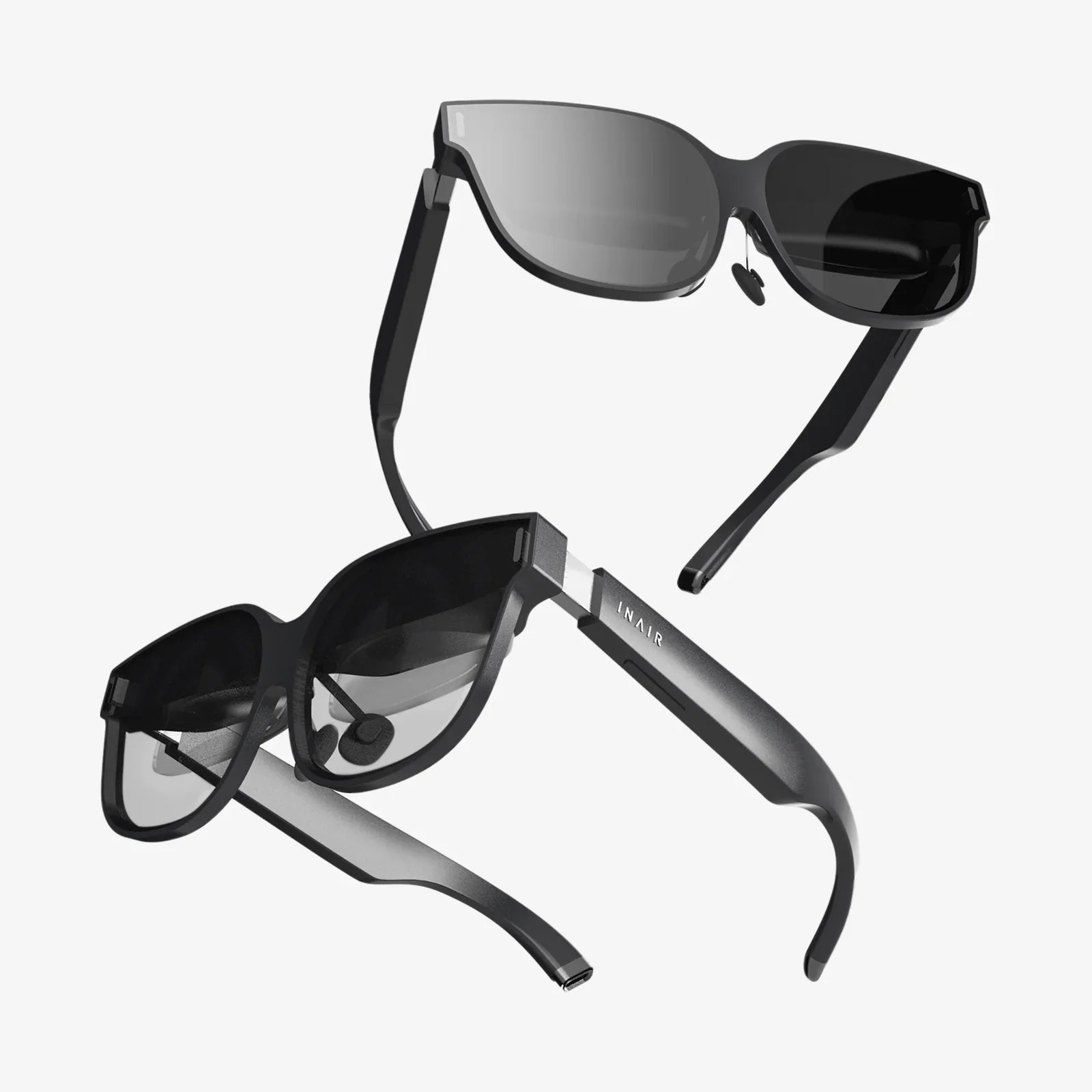
The sleek device on your wrist tracking your heart rate, the discreet headset overlaying digital schematics onto a factory floor, the smart ring monitoring your sleep cycles—these are no longer fragments of science fiction. We are living in the dawn of the wearable revolution, and the architects of this new reality are the innovative wearable computing companies pushing the boundaries of what technology can be. This isn't just about gadgets; it's about a fundamental shift in how we interact with data, our environment, and our own biology. The journey from clunky prototypes to seamless, integrated systems is a story of relentless innovation, and it's a story that is intimately entwined with our future.
The Genesis of an Intimate Technology
The concept of wearable computing is not a product of the 21st century. Its roots can be traced back decades, to a time when computers occupied entire rooms. Visionaries dreamed of a more personal, portable form of computation. Early experiments in the 1960s and 70s, like the wearable camera-to-tactile vest system developed to aid the blind, were groundbreaking but isolated. The true conceptual foundation was laid in the late 1970s and 1980s, with researchers exploring the idea of computers as a constant, intelligent companion. These initial forays were academic, often bulky, and powered by a belief that computing should be an extension of the human intellect, not a separate box on a desk.
The 1990s and early 2000s saw the first commercial stirrings. The rise of personal digital assistants and the development of Bluetooth technology created a fertile ground for connectivity. However, these devices were still carried, not worn. The pivotal moment arrived with the convergence of several key technologies: miniature sensors became vastly more powerful and affordable, wireless connectivity became ubiquitous and low-power, and cloud computing provided the immense data-crunching power required to make sense of the constant stream of information generated by wearables. This technological trifecta provided the essential toolkit for a new generation of companies to build upon.
The Core Technological Pillars Powering Wearables
The magic of a modern wearable device is a symphony of advanced engineering. At its heart lies a sophisticated system-on-a-chip, a miniature computer that balances immense processing power with an absolute obsession with energy efficiency. This is paired with a suite of micro-sensors:
- Inertial Measurement Units (IMUs): Combining accelerometers and gyroscopes, these track movement, orientation, and steps with astonishing precision.
- Optical Heart Rate Monitors: Using photoplethysmography (PPG), they shine light into the skin to detect blood volume changes, providing continuous heart rate data.
- Global Positioning System (GPS): For outdoor positioning, pace, and route mapping.
- Electrodermal Activity (EDA) Sensors: Measuring minute changes in skin sweat to indicate stress levels.
- Electrocardiogram (ECG) Sensors: Measuring the heart's electrical activity for more detailed cardiac health insights.
But hardware is only half the story. The raw data from these sensors is meaningless without sophisticated algorithms and artificial intelligence. Machine learning models are trained on vast datasets to distinguish between a running motion and typing on a keyboard, to filter out noise from a heart rate signal, and to predict sleep stages based on movement and heart rate variability. This software intelligence is what transforms a sensor-packed bracelet into a health and fitness advisor.
The Dominant Arena: Health, Wellness, and Fitness
The most visible and commercially successful segment of the wearable market is undoubtedly health and fitness. This is where wearable computing companies found their first mass audience. What started as simple step counters has evolved into comprehensive health platforms on the wrist.
These devices now offer:
- 24/7 heart rate monitoring and alerts for unusually high or low readings.
- Sleep stage tracking (light, deep, REM) with scores and advice for improvement.
- Blood oxygen saturation (SpO2) monitoring.
- Workout tracking with dozens of specific activity profiles.
- Stress tracking and guided breathing sessions.
- Advanced metrics like VO2 Max estimates and recovery time analysis.
The long-term vision for many companies in this space extends far beyond fitness. It's about proactive healthcare. The ability to continuously monitor key physiological biomarkers presents a paradigm shift from episodic, reactive medicine (visiting a doctor when you feel sick) to continuous, preventative care. Large-scale research studies, enabled by consenting users sharing their anonymized data, are already exploring the potential to detect conditions like atrial fibrillation, sleep apnea, and even the early signs of infectious diseases. This turns the wearable from a consumer gadget into a potentially life-saving medical tool, blurring the line between consumer electronics and clinical-grade devices.
Beyond the Wrist: The Expanding Form Factor Universe
While wrist-worn devices dominate market share, innovation is flourishing in a diverse range of form factors, each serving a unique purpose.
- Smart Glasses and Augmented Reality (AR): This is perhaps the most ambitious frontier. Wearable computing companies are developing glasses that aim to seamlessly blend the digital and physical worlds. Unlike virtual reality, which replaces your environment, AR overlays contextual information—directions, messages, translations, or complex 3D models—onto your field of view. The potential applications are staggering, from a technician seeing repair instructions overlaid on a machine to a surgeon visualizing a patient's anatomy during an operation.
- Smart Audio: Earbuds have evolved from simple music players into intelligent hearing aids, translation devices, and fitness companions. With embedded sensors, they can track head movement for spatial audio, monitor heart rate from the ear, and even enable gesture controls.
- Smart Clothing and Footwear: Textiles with woven-in conductive fibers can track biomechanics, muscle activity, and posture with far greater accuracy than a wrist device. This is invaluable for professional athletes and physical rehabilitation.
- Smart Rings: Offering a minimalist, continuous form of tracking, primarily focused on sleep and activity, with the benefit of longer battery life due to their slightly larger size.
This diversification signifies a market maturing beyond a one-size-fits-all approach, tailoring technology to specific contexts and user needs.
The Industrial and Enterprise Revolution
While consumer wearables capture headlines, a quiet revolution is underway in factories, warehouses, hospitals, and construction sites. Enterprise-grade wearables are designed for durability, reliability, and solving specific business problems.
In logistics, smart glasses can display picking instructions to warehouse workers, freeing their hands and drastically reducing errors and training time. On construction sites, augmented reality helmets can overlay building plans onto the physical structure, ensuring accuracy and safety. For field service technicians, AR wearables can provide remote expert guidance, where a specialist can see what the technician sees and annotate their field of view with arrows and instructions. This not only boosts efficiency and productivity but also enhances worker safety by providing critical information hands-free. For these companies, the return on investment is measured in reduced errors, faster completion times, and improved safety records.
Navigating the Storm: Challenges and Ethical Imperatives
The path forward for wearable computing companies is not without significant obstacles and profound ethical questions.
- Data Privacy and Security: This is the paramount concern. Wearables collect the most intimate data possible: where you go, how you sleep, your heart patterns, and potentially even your emotional state. Companies are entrusted with a digital map of their users' lives. The questions are immense: Who owns this data? How is it used? Is it anonymized for research? Could it be sold to insurers or employers? A single data breach could be catastrophic. Building and maintaining trust through transparent policies and robust, encryption-first security is not optional; it is the foundation of the entire industry.
- Battery Life and Power Management: The constant tension between adding powerful new features and maintaining all-day (or multi-day) battery life remains a core engineering challenge. Innovations in low-power displays, processors, and sensor hubs are constant, but user expectations for longevity always outpace them.
- Accuracy and Regulatory Hurdles: As companies venture into health claims, they enter the stringent world of medical device regulation. Gaining approval for features like ECG or sleep apnea detection requires rigorous clinical validation. A misstep here can lead to regulatory action and a severe loss of consumer trust.
- Digital Divide and Algorithmic Bias: There is a risk that the benefits of this health monitoring technology could be limited to those who can afford it, exacerbating health disparities. Furthermore, if the algorithms are trained on non-diverse datasets, they may be less accurate for underrepresented groups, leading to misdiagnosis or poor user experiences.
The Future Forged on the Body
The trajectory of wearable computing points toward even greater integration and intelligence. We are moving toward devices that are increasingly unobtrusive, even invisible—think smart contact lenses or advanced subdermal implants. The concept of the "digital twin"—a dynamic, virtual model of a person's physiology, updated in real-time by wearable data—could become the cornerstone of personalized medicine, allowing for hyper-personalized treatments and preventative strategies.
Brain-computer interfaces, though in early stages, represent the ultimate frontier, promising direct communication between the brain and external devices. This could restore functions for people with disabilities and create entirely new forms of interaction. The environmental and contextual awareness of devices will also deepen, with wearables acting as a central hub in the Internet of Things, automatically adjusting your home's temperature, lighting, and music based on your biometric state.
The next decade will be defined by how well wearable computing companies navigate the delicate balance between innovation and responsibility, between capability and privacy. Their success will not be measured merely in units sold, but in their ability to enhance human potential without compromising our autonomy. The goal is not to become cyborgs, but to become more profoundly human—healthier, safer, more connected, and more capable, with technology working silently in the background to empower us. The device on your wrist is just the beginning; it's a window into a future where our technology understands us better than ever before, promising a world where our well-being is continuously supported, our work is seamlessly enhanced, and our reality is infinitely augmented.
Share:
Smart Spectacles for Men: The Ultimate Guide to Tech-Enhanced Vision
AI Sunglasses Smart Glasses Technology Features Are Revolutionizing How We See the World