


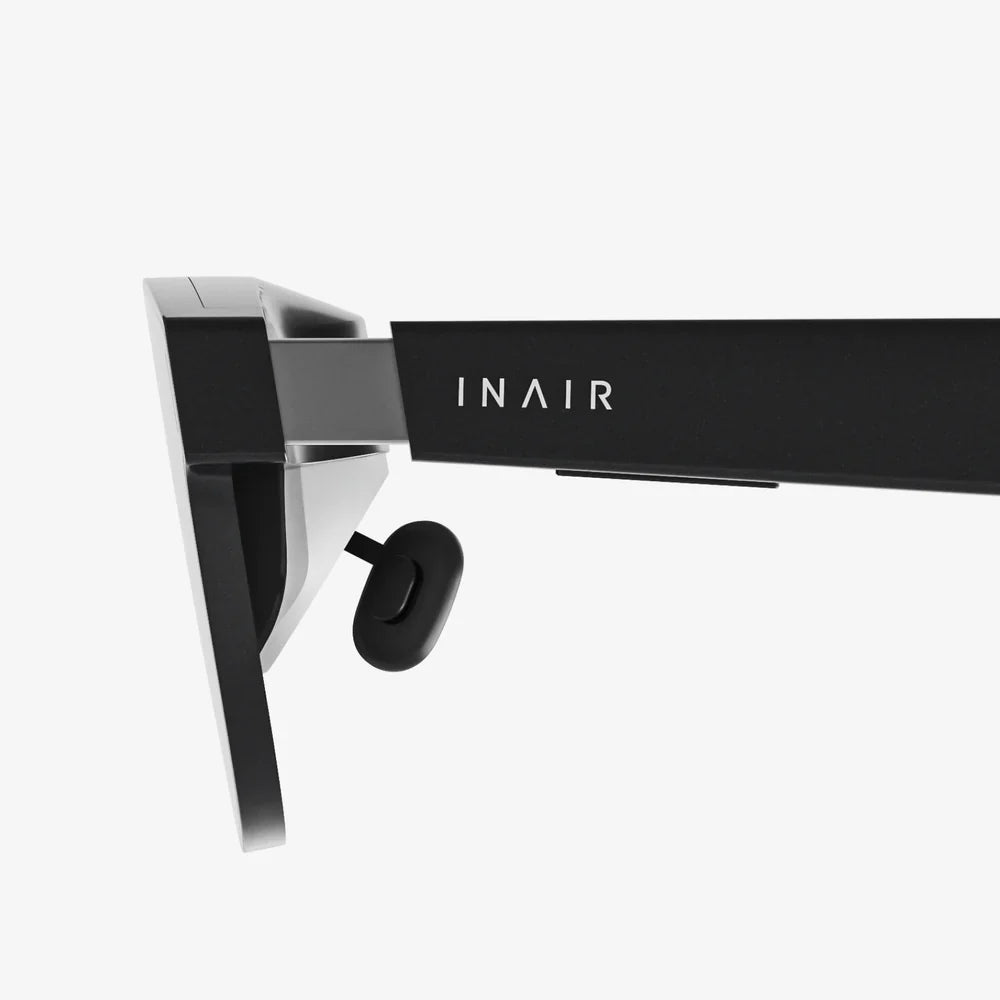
Imagine a world where your clothing monitors your health, your glasses overlay digital information onto reality, and your watch communicates with your environment—this isn't science fiction anymore, but the tangible future being built by innovative wearable computing projects in labs and garages worldwide. The convergence of miniaturized hardware, sophisticated software, and ubiquitous connectivity is pushing personal technology beyond the palm of your hand and onto your body, creating an intimate, always-available computing experience that promises to revolutionize how we live, work, and interact with the world around us.
The Historical Arc: From Calculator Watches to Cognitive Augmentation
The concept of wearable technology is far from new. One could trace its lineage back to the abacus ring of the 17th century or, more practically, to the hearing aid, one of the first truly wearable electronic devices. However, the modern era of wearable computing projects began in earnest in the 1960s. Edward Thorp and Claude Shannon created a cigarette-pack-sized computer to predict roulette wheels, arguably one of the first covert wearable computers. The 1970s and 1980s saw the rise of the calculator watch, a primitive but popular symbol of wearable tech's potential.
The term "wearable computer" was coined in the 1990s, largely driven by the work of researchers like Steve Mann at the Massachusetts Institute of Technology. Mann's pioneering work with head-mounted displays and wearable cameras, which he termed "mediated reality" or "augmented reality," laid the foundational philosophy for the field: that computers should serve as intelligent assistants that augment human intellect and perception, not merely as tools we intermittently use. This decade saw the emergence of truly functional, if cumbersome, systems designed for specific industrial and research applications.
The 2000s brought incremental improvements in miniaturization and power efficiency, but it was the 2010s that witnessed the explosion of consumer-facing wearable computing projects. The convergence of the smartphone ecosystem—providing cheap sensors, powerful low-energy processors, and robust wireless protocols—created a fertile ground for innovation. This era moved wearables from the realm of academic research and niche applications into the mainstream consciousness, setting the stage for the incredibly diverse and ambitious projects of today.
Deconstructing the Ecosystem: Core Components of a Modern Wearable
Every successful wearable computing project is a marvel of integration, a delicate balance of form and function built upon a core set of technological components. Understanding these building blocks is essential to appreciating the complexity behind even the simplest device.
Sensing the Self and the Surroundings
Sensors are the eyes and ears of a wearable device. They bridge the gap between the physical and digital worlds, collecting raw data that is then processed into meaningful information. The suite of sensors available to modern developers is vast and varied.
- Inertial Measurement Units (IMUs): These are the workhorses of movement tracking, typically combining accelerometers, gyroscopes, and magnetometers to precisely measure orientation, acceleration, and rotation.
- Biometric Sensors: This category includes optical heart rate monitors, electrodermal activity (EDA) sensors for measuring stress, skin temperature sensors, and even emerging technologies like continuous glucose monitors (CGMs) and sensors that can analyze sweat composition.
- Environmental Sensors:
To understand context, wearables must also sense the world around the user. This includes ambient light sensors for adjusting screen brightness, microphones for audio input and environmental sound analysis, barometric pressure sensors for altitude and weather forecasting, and gas sensors that can detect air quality and pollutants.
Processing and Power: The Brain and the Fuel
At the heart of every device lies the microcontroller unit (MCU) or system-on-a-chip (SoC). These are not the power-hungry processors found in laptops but are meticulously engineered for ultra-low-power operation. They must be capable enough to run complex algorithms for sensor fusion, machine learning, and connectivity while sipping power to ensure all-day or multi-day battery life. This constant trade-off between capability and power consumption is one of the central challenges in any wearable computing project.
Power management is arguably the single greatest constraint. Engineers employ a multitude of strategies to extend battery life: using low-power states and sleep modes whenever possible, optimizing software to minimize CPU wake time, employing power-efficient display technologies, and often designing custom silicon for specific tasks. The choice of battery technology—typically lithium-polymer for its energy density and flexibility—is critical. Furthermore, innovative projects are exploring alternative power sources, such as energy harvesting from body heat, kinetic movement, or ambient light.
The Interface Paradox: Output and Interaction
How does a device with limited real estate communicate with the user? This is a profound design challenge. Output modalities have evolved far beyond simple screens.
- Visual Output: This ranges from tiny OLED and LCD displays to micro-projectors that can turn a wrist or a wall into a screen, and most futuristically, to retinal投影 and augmented reality glasses that paint information directly onto the user's field of vision.
- Haptic Feedback: Precise vibrational motors can convey a stunning array of information through touch, from simple notifications to complex, directional cues for navigation.
- Auditory Output: Miniature speakers and bone conduction technology provide audio feedback and enable voice assistants without blocking ambient noise.
Input is equally diverse. While touchscreens and physical buttons are common, the most compelling wearable computing projects utilize more passive and natural forms of interaction. This includes voice commands, gesture recognition using cameras or radar, and even interpreting physiological signals like muscle activity (electromyography or EMG) to detect subtle finger movements before they happen.
Connectivity: The Link to the Digital World
A wearable device is rarely an island. Its true power is unlocked when it connects to other devices and the cloud. Bluetooth Low Energy (BLE) is the undisputed champion for short-range, low-power communication with a smartphone. Wi-Fi is used for heavier data transfers. For independent devices, cellular connectivity (e.g., LTE-M, NB-IoT) provides always-on access but at a significant cost to power consumption. Ultra-wideband (UWB) is emerging for precise spatial awareness and device-to-device ranging. This constant, seamless flow of data is what transforms a simple tracker into a node in a vast, intelligent network.
Navigating the Development Maze: Key Challenges and Considerations
Bringing a wearable computing project from a prototype on a breadboard to a polished, functional device is a Herculean task fraught with unique obstacles that extend far beyond pure software or hardware development.
The Form Factor Conundrum
Perhaps the most immediate challenge is physical design. A wearable must be not only functional but also comfortable, aesthetically pleasing, and socially acceptable. It must conform to the human body, which is soft, dynamic, and variable. This involves selecting materials that are hypoallergenic, durable, and pleasant to the touch. The device must be unobtrusive enough to be worn for extended periods, yet robust enough to withstand the rigors of daily life—sweat, rain, impacts, and temperature fluctuations. Getting this balance wrong can doom an otherwise technologically brilliant project.
The Algorithmic Core: From Data to Insight
Raw sensor data is noisy and often meaningless. The true magic lies in the algorithms that transform this data into actionable insights. This involves sophisticated signal processing and sensor fusion techniques to combine data from multiple sources into a coherent and accurate picture of the user's state and activity. For example, determining whether a user is walking, running, or cycling requires analyzing patterns from the accelerometer and gyroscope. This is increasingly handled by machine learning models trained on vast datasets of human activity. Developing, training, and optimizing these models to run efficiently on resource-constrained hardware is a specialized and critical skill.
The Privacy Imperative
Wearables collect the most intimate data imaginable: where you go, who you talk to, how you sleep, and the subtle rhythms of your body. This creates a monumental responsibility for developers. A successful project must be built on a foundation of privacy by design. This means implementing strong data encryption both at rest and in transit, providing users with transparent control over their data, minimizing data collection to only what is necessary, and often, performing data processing directly on the device (edge computing) rather than shipping sensitive information to the cloud. A single privacy misstep can erode user trust instantly and irrevocably.
A Tapestry of Applications: Transforming Industries and Empowering Individuals
The potential applications for wearable computing are as diverse as human experience itself. They are already making significant impacts across numerous fields.
Revolutionizing Healthcare and Well-being
This is arguably the most impactful domain. Wearables are shifting healthcare from a reactive model to a proactive and preventive one. Continuous physiological monitoring can detect atrial fibrillation early, alert diabetics to dangerous glucose levels, and help manage chronic conditions like hypertension. For researchers, wearables provide unprecedented longitudinal data on patient populations in their natural environments, moving beyond the snapshot provided by a clinic visit. In mental health, devices can detect physiological correlates of stress and anxiety, prompting mindfulness exercises or biofeedback sessions. For the elderly, wearables offer fall detection and remote monitoring, enabling them to live independently for longer.
Redefining Industrial and Enterprise Workflows
On the factory floor, on construction sites, and in warehouses, wearables are enhancing safety and efficiency. Smart glasses can overlay schematics, instructions, or safety information directly into a technician's field of view, allowing them to work hands-free. Wearable sensors can monitor workers for signs of heat stress or fatigue, preventing accidents before they happen. Rugized wrist-worn devices can scan barcodes, manage inventory, and guide logistics, streamlining complex operations.
Unlocking Human Potential in Sports and Fitness
Beyond counting steps, advanced wearables provide elite athletes and casual gym-goers alike with deep biomechanical insights. Sensors can analyze running gait to prevent injury, measure muscle load to optimize recovery, and provide real-time feedback on technique. This granular data allows for hyper-personalized training regimens that were once only available in professional sports labs.
Creating New Realities in Entertainment and Social Connection
Wearables are the gateway to immersive experiences. Virtual reality headsets transport users to entirely digital worlds for gaming and socializing. Augmented reality glasses promise to layer information, art, and shared experiences onto our physical reality, creating a new medium for storytelling and human connection. Haptic suits can let you feel the virtual environment, deepening the sense of presence and immersion.
Gazing into the Crystal Ball: The Future is on Your Body
The trajectory of wearable computing points toward even greater integration with our biology and our lives. We are moving toward devices that are virtually invisible—woven directly into fabrics as e-textiles, embedded in unobtrusive patches, or even placed under the skin. The line between device and user will blur as interfaces become more natural, potentially leveraging direct brain-computer interfaces (BCIs) for control. The ultimate goal is a technology that feels less like a tool and more like a seamless extension of our own cognition and perception, an always-available partner in navigating the complexities of modern life.
The next time you glance at a wrist-based notification or ask a voice assistant for the weather, remember that you are experiencing just the faintest whisper of a coming revolution. The most transformative wearable computing projects are still in development, hidden in research labs and startup incubators, quietly preparing to step out onto the world stage and redefine our very humanity. The future won't be in your pocket; it will be on your wrist, in your ears, over your eyes, and woven into the very fabric of your existence, waiting for its moment to connect, assist, and amaze.
Share:
AR Management: The Strategic Imperative for Modern Business Operations
AR Management: The Strategic Imperative for Modern Business Operations