


Imagine a world where your watch doesn't just tell time, but tells you something profound about yourself—predicting a health event before you feel a symptom, understanding your stress levels before you snap at a colleague, or guiding you through a complex repair job with instructions overlaid on your vision. This is no longer the realm of science fiction. The convergence of miniaturized sensors, powerful edge computing, and sophisticated algorithms has birthed a new era of wearable devices with AI artificial intelligence capabilities, poised to fundamentally reshape every facet of our daily existence, from how we manage our health to how we interact with the world around us.
The Engine Room: How AI Transforms the Simple Wearable
At its core, a wearable device is a data collection platform. Sensors gather a torrent of raw, unstructured data: heart rate variability, blood oxygen saturation, skin temperature, accelerometer readings, ambient light, and sound. On their own, these data points are often meaningless. A heart rate of 85 BPM is just a number. It's the integration of artificial intelligence, particularly machine learning (ML), that acts as the translator, turning this raw data into actionable, contextual intelligence.
AI operates in these devices through several key paradigms:
- On-Device AI: Instead of sending every byte of data to a distant cloud server for processing, advanced chipsets now allow AI models to run directly on the wearable. This enables real-time analysis and immediate feedback, crucial for functions like fall detection or instant language translation. It also enhances privacy and security, as sensitive biometric data never has to leave the device.
- Federated Learning: This is a privacy-centric approach where the AI model learns from data across millions of devices without ever accessing the raw data itself. The model is sent to the device, learns locally from the user's data, and only sends anonymous, aggregated model updates back to the central server to improve the global algorithm. Your personal health data remains yours alone.
- Predictive Analytics: This is where AI moves from descriptive ("what happened") to predictive ("what will happen"). By analyzing long-term trends and patterns in your data, these systems can identify anomalies. For instance, a consistent, slight elevation in resting heart rate coupled with decreased sleep quality might predict the onset of an illness like a cold or flu before any overt symptoms appear.
- Personalized Baselines: Unlike one-size-fits-all health metrics, AI models can establish a unique baseline for each individual. What's a "normal" heart rate for you is different from someone else. The AI learns your personal normal, making its detection of "abnormal" far more accurate and personally relevant.
The Quantified Self, Amplified: Health and Wellness Revolution
The most profound impact of AI-infused wearables is undoubtedly in the domain of health and wellness, shifting the paradigm from reactive healthcare to proactive and preventative well-being.
Proactive Health Monitoring
Modern devices can do much more than count steps. They are evolving into sophisticated health guardians. Advanced photoplethysmography (PPG) sensors, powered by AI, can now perform on-demand electrocardiograms (ECG) to detect atrial fibrillation (AFib), a major cause of strokes. AI algorithms analyze the electrical signals to identify irregularities with startling accuracy. Similarly, algorithms can now detect signs of sleep apnea by analyzing blood oxygen levels and movement throughout the night, prompting users to seek medical advice.
Mental and Emotional Well-being
The next frontier is mental health. By analyzing metrics like heart rate variability (a key indicator of stress response), sleep patterns, and even vocal tone (through built-in microphones), AI can build a picture of a user's emotional state. A device might notice the physiological signs of an anxiety attack building and prompt the user to initiate a guided breathing exercise. It could identify patterns of prolonged stress and suggest behavioral changes, effectively acting as a constant, passive mood journal.
Personalized Fitness and Nutrition
Generic workout plans are becoming obsolete. AI wearables can now create dynamic, personalized fitness regimens. By analyzing your workout history, recovery rate (through HRV and sleep data), and real-time performance, the device can suggest whether you should push for a personal best or opt for a recovery day. It can even adjust goals mid-workout based on your physiological feedback. This extends to nutrition, with some systems using metabolic data to provide more personalized nutritional suggestions, moving beyond simple calorie counting.
Beyond the Wrist: A World of Intelligent Wearables
While smartwatches and fitness bands dominate the conversation, AI is embedding itself into a much wider ecosystem of wearables, each with unique applications.
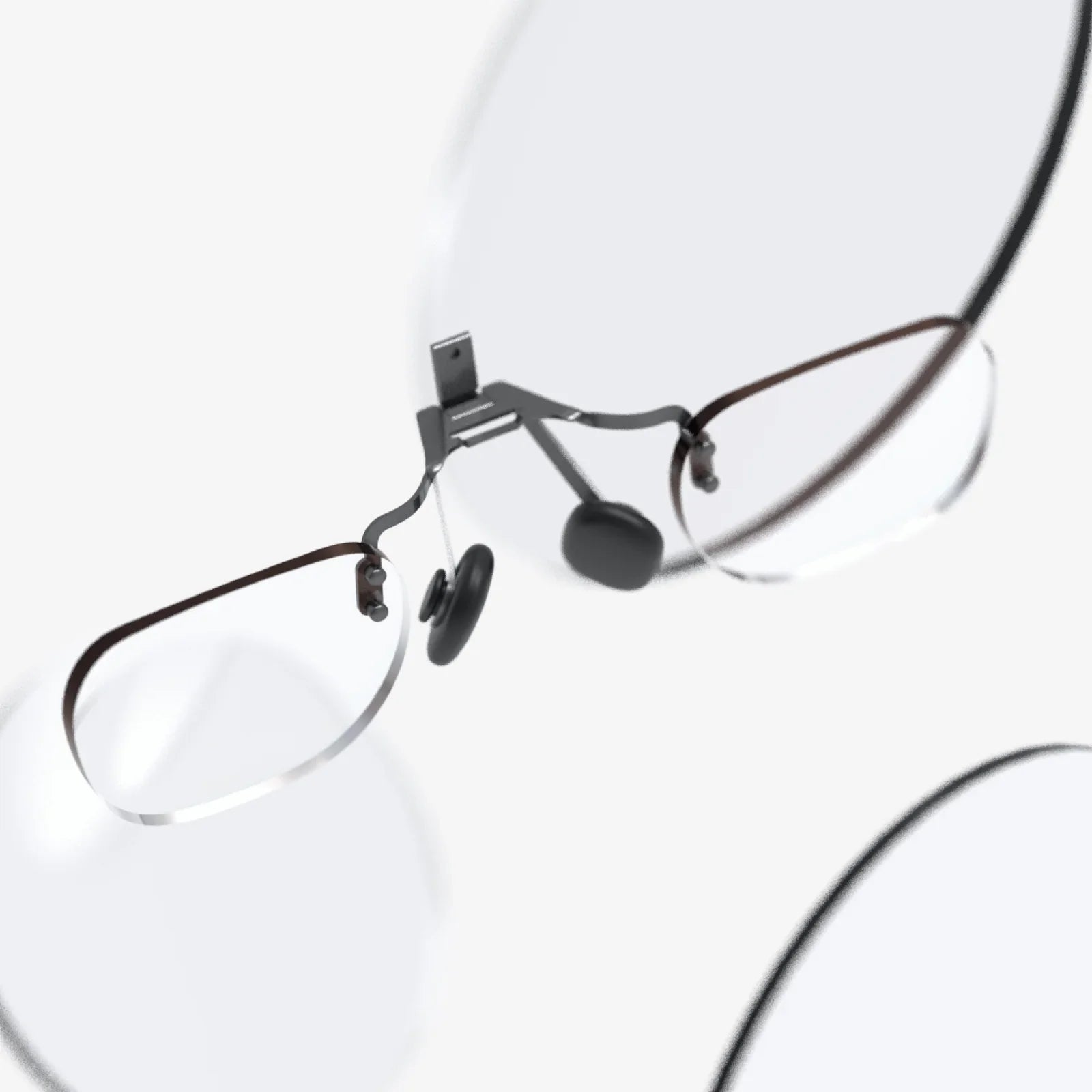
- Smart Eyewear: Augmented Reality (AR) glasses represent the pinnacle of AI wearables. They overlay digital information onto the physical world. AI is the brain that makes this useful. It can perform real-time object recognition, translating street signs instantly, identifying plant species, or providing schematic overlays for engineers performing complex repairs. In social situations, AI could display the name and recent conversation points of a person you're meeting, acting as a memory aid.
- Smart Hearables: Earbuds are evolving into intelligent hearing assistants. AI algorithms can amplify speech while dampening background noise in real-time, not just for music but for conversations in a crowded room. They can translate languages conversationally, provide context-aware information based on what you hear, and even monitor body temperature through the ear canal.
- Smart Clothing: Fabrics woven with conductive threads and micro-sensors can monitor biomechanics, posture, and muscle activity. For athletes, this provides feedback on form and efficiency. In industrial settings, it can monitor workers for signs of fatigue or unsafe movements, preventing injury. For patients in rehabilitation, it offers precise monitoring of recovery progress.
The Invisible Guardian: Safety and Security Applications
The always-on, personal nature of these devices makes them powerful tools for personal safety. Advanced fall detection algorithms, which use AI to distinguish between a trip and a serious fall, can automatically contact emergency services and share your location if you are unresponsive. Some devices are incorporating features that can detect the sound of glass breaking or a car crash, triggering an alert.
For personal security, discreet wearable buttons can summon help, while future developments might include AI that can recognize elevated heart rates and vocal stress associated with a threatening situation, proactively offering to call for help or record evidence.
The Flip Side of the Coin: Ethical Dilemmas and Societal Challenges
This brave new world of pervasive, intelligent monitoring is not without its significant risks and ethical quandaries.
Data Privacy and Security
The most intimate details of our lives—our health, location, habits, and even emotions—are being recorded. Who owns this data? How is it used? While federated learning helps, the threat of data breaches is monumental. This data is a goldmine not just for hackers, but also for insurers, employers, and advertisers. The potential for discrimination based on health data is a terrifying prospect.
Algorithmic Bias and Accuracy
AI models are only as good as the data they are trained on. If training data lacks diversity, the algorithms will perform poorly for underrepresented groups. A heart attack detection algorithm trained primarily on male physiology might miss critical signs in women. The consequences of a "false negative" or a "false positive" in a medical context are severe, raising questions about regulatory approval and legal liability.
The Psychological Impact
Constant self-quantification can lead to "analysis paralysis" or heightened health anxiety, a condition sometimes called "cyberchondria." When every heartbeat is monitored, normal variations can be misinterpreted as dire problems. This can create an unhealthy obsession with metrics, overshadowing the subjective experience of well-being.
The Erosion of Human Skills
As we offload more cognitive and perceptual tasks to our devices—from navigation to memory to diagnosis—what skills are we losing? Over-reliance on technology could atrophy our innate abilities to read a map, remember information, or listen to our own bodies' signals.
The Road Ahead: The Future Woven with Intelligence
The trajectory points towards even deeper integration. We are moving towards truly context-aware devices that anticipate our needs without explicit commands. Future wearables might interface directly with the human body through non-invasive or minimally invasive biosensors, providing continuous glucose monitoring or early cancer detection.
The ultimate goal is a seamless, ambient intelligence that enhances human capability without being intrusive—a digital guardian angel that empowers us to live healthier, safer, and more efficient lives, all while navigating the complex moral landscape it creates.
The promise of these devices is a life less ordinary—a future where technology doesn't just connect us to the internet, but connects us more deeply to ourselves, offering insights hidden in the rhythm of our own hearts and the potential to intercept illness before it strikes, fundamentally rewriting the contract between our bodies and the technology we choose to live with.
Share:
Why Is Wearable Technology Useful: A Deep Dive Into the Connected Self
Why Is Wearable Technology Useful: A Deep Dive Into the Connected Self