


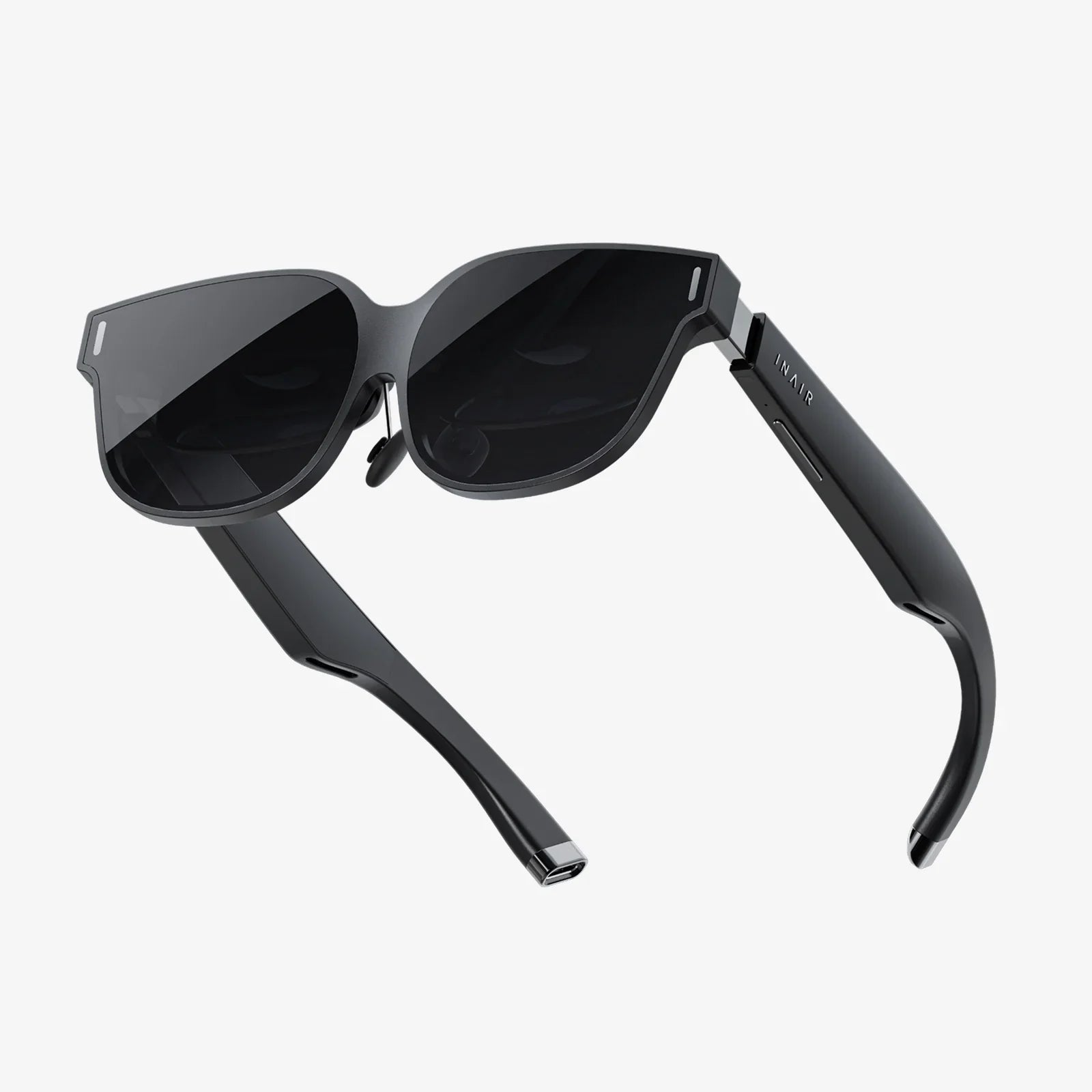
Imagine a world where your keyboard floats in the air before you, accessible with a glance, leaving your hands free and your posture unbroken. This is no longer the stuff of science fiction; it is the burgeoning reality promised by wearable display glasses for typing, a technological leap poised to untether us from our screens and redefine our relationship with digital text.
The Evolution of Input: From Stone Tablet to Thin Air
The history of human communication is a history of interfaces. We progressed from carving symbols into stone to the elegant efficiency of the quill and ink, then to the mechanical clatter of the typewriter, and finally to the soft, silent tap of modern keyboards and the swift glide of thumbs across glass screens. Each leap reduced friction, increased speed, and expanded access. Wearable display glasses represent the next logical, yet revolutionary, step in this continuum. They decouple the act of input from a specific, physical device, projecting the interface directly into our visual field and merging the digital and physical worlds into a seamless experience.
How It Works: The Magic Behind the Lenses
At its core, the technology integrates two sophisticated systems: an optical display and an input capture method.
The Display: Your Personal Heads-Up Display (HUD)
Miniaturized projectors or advanced waveguide technology embedded in the glasses' frame beam light onto transparent lenses or specialized reflectors. These lenses then focus the image onto the user's retina, creating the perception of a crisp, high-resolution screen floating in space. This can be a semi-transparent overlay on the real world (augmented reality) or a more immersive, opaque display (virtual reality), depending on the design. The virtual keyboard, text editor, or any other application window appears fixed in your field of view, allowing you to look at your surroundings while simultaneously interacting with digital content.
The Input: Beyond the Physical Keystroke
This is where the true innovation for typing lies. Without a physical keyboard to press, these devices employ ingenious methods to detect intent:
- Optical Hand Tracking: Tiny, outward-facing cameras meticulously track the subtle movements of your fingers and hands. Sophisticated machine learning algorithms interpret these movements, translating a tap on an imaginary key on your leg or a gesture in the air into a specific character input. It’s a complex dance of computer vision and predictive modeling.
- Voice-to-Text Integration: Many systems seamlessly integrate powerful speech recognition software. A simple voice command can activate dictation mode, allowing for hands-free composition at remarkable speeds, with the transcribed text appearing within the display.
- Bluetooth Connectivity: For those who prefer tactile feedback, the glasses can often pair with a small, portable Bluetooth keyboard or a gesture-control ring, offering a hybrid approach that combines the freedom of a wearable display with the familiarity of physical input.
A Universe of Applications: More Than Just Novelty
The potential uses for this technology extend far beyond a simple curiosity. They promise to unlock new levels of efficiency and accessibility across numerous fields.
Supercharged Productivity and the Mobile Office
The modern professional is increasingly mobile, but productivity is often still chained to a desk. Wearable display glasses shatter these chains. Imagine a consultant reviewing a complex spreadsheet while walking through a factory floor, a journalist drafting notes live from a press conference without looking down at a phone, or a programmer debugging code while comfortably reclined in a chair, avoiding neck and back strain. The ability to maintain an ergonomic posture while accessing vast digital workspaces is a significant health and efficiency benefit.
Revolutionizing Accessibility
This technology could be genuinely life-changing for individuals with certain physical disabilities. For those with limited hand mobility or dexterity, voice-controlled typing and gesture-based navigation offer a new avenue for digital communication and computer interaction. The ability to position a virtual screen comfortably within one's field of view can also aid those with visual impairments when paired with magnification software.
The Ultimate Tool for Field Technicians and Engineers
For a technician repairing a complex piece of machinery, an engineer inspecting a construction site, or a surgeon following a procedural guide, hands-free access to manuals, schematics, and data is invaluable. They can view instructions, input observations, or log data without ever putting down their tools, shifting their focus, or compromising safety.
A New Paradigm for Creative Expression
Writers, poets, and composers could find a new muse in this unshackled format. The ability to type or dictate while walking in nature, sitting in a bustling café for inspiration, or simply lying back and staring at the sky could fundamentally alter the creative process, minimizing distractions and merging the environment with the canvas.
Navigating the Challenges: The Road to Ubiquity
Despite the exciting potential, the path to widespread adoption is not without its obstacles. Current iterations of the technology face several significant hurdles that engineers and designers are racing to overcome.
The Ergonomics of Invisible Interfaces
Typing on a non-tactile surface presents a learning curve. The lack of haptic feedback—the physical click of a key—means users must rely solely on visual confirmation, which can initially slow typing speed and increase error rates. Furthermore, holding one's hands in mid-air for extended periods, a phenomenon sometimes called "gorilla arm," can lead to fatigue. Future iterations will need to perfect predictive text, auto-correction, and perhaps even integrate subtle haptic feedback through wearable devices to make the experience more intuitive.
Battery Life and Processing Power
High-resolution displays, multiple cameras for tracking, and powerful onboard processors are notoriously energy-intensive. Balancing a sleek, lightweight, and comfortable form factor with a battery capable of lasting a full workday is a primary engineering challenge. The processing power required to run complex AR overlays and real-time hand-tracking algorithms also generates heat, which must be managed effectively within the confined space of the glasses' frame.
The Social Hurdle: The Privacy and Etiquette Conundrum
Walking down the street talking to your glasses might feel as awkward today as wearing a Bluetooth headset did two decades ago. Social acceptance is a key barrier. Furthermore, the always-on cameras necessary for hand and environment tracking raise legitimate privacy concerns for both the user and those around them. Clear indicators of recording and robust data privacy frameworks will be essential for public trust.
The Future Vision: Where Do We Go From Here?
The current state of wearable display glasses for typing is akin to the early days of the mobile phone—bulky, expensive, and with limited functionality, but brimming with world-changing potential. As with all technology, we can expect rapid iteration. Future generations will become lighter, more powerful, and more energy-efficient. They will likely integrate more seamlessly with our other devices and the emerging Internet of Things.
The ultimate goal is a pair of glasses that look indistinguishable from regular eyewear but can project a vast, high-fidelity display and be controlled by intuitive gestures, eye movements, and voice commands. Advancements in neural interfaces may one day allow us to type simply by thinking, making the current hand-tracking methods seem primitive. The distinction between the physical world and the digital information layer we interact with will continue to blur, creating a truly integrated and immersive computing experience.
The quiet hum of innovation is building to a crescendo, and the familiar tap-tap-tap of the keyboard is being joined by a new sound—the silent, efficient whisper of text being created in mid-air. Wearable display glasses for typing are not just a new gadget; they are a key that unlocks a new dimension of interaction, offering a glimpse into a future where our digital and physical realities are not just connected, but harmoniously one. The question is no longer if this future will arrive, but how quickly we will adapt to and embrace the incredible possibilities it holds.
Share:
AR in Events: How Augmented Reality Apps for Events Are Revolutionizing Attendee Engagement
Is AR an Emerging Technology? The Future is Now and It's Overlaid on Reality