


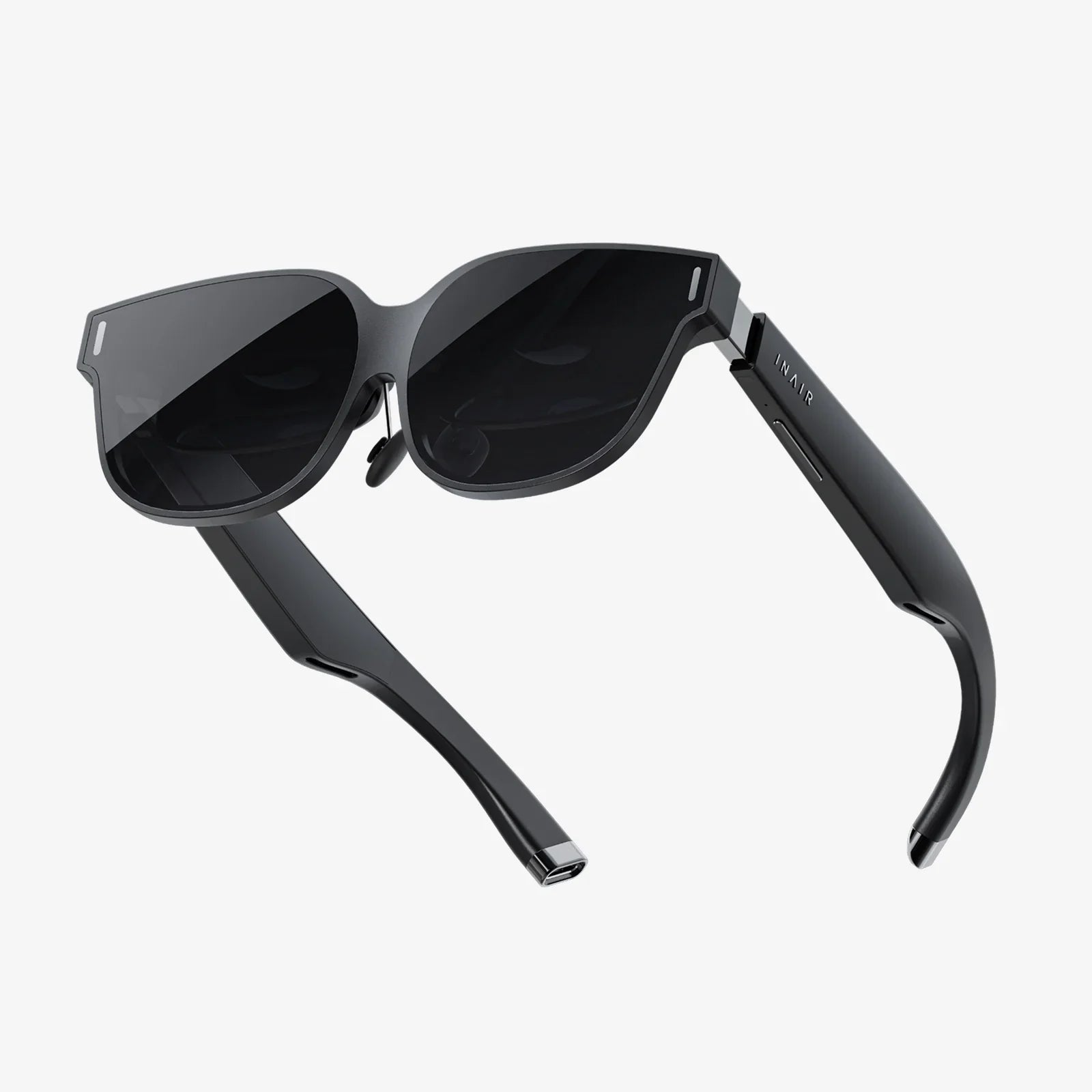
Imagine a world where information floats before your eyes, where digital assistants appear as holograms in your living room, and your entire workspace is limited only by the horizon. This isn't a scene from a science fiction film; it's the imminent future being built today, and the latest wearable display glasses news suggests it's arriving faster than anyone anticipated. The race to perfect this technology is heating up, promising to revolutionize how we work, play, and connect.
The Evolution from Novelty to Necessity
The journey of wearable displays began with clunky prototypes and underwhelming consumer launches that often felt more like a proof of concept than a practical tool. Early versions were hampered by limited fields of view, short battery life, social awkwardness, and a lack of compelling software. They were, for many, a solution in search of a problem.
However, recent breakthroughs are systematically dismantling these barriers. The latest generation of devices showcases significant improvements in core technologies. Waveguide optics, for instance, have become more sophisticated, allowing for brighter, sharper, and wider digital overlays without making the lenses impossibly thick or dark. Micro-LED displays are providing unprecedented pixel density and color gamuts, making virtual elements appear seamlessly integrated into the real world rather than a dim, ghostly afterthought.
Key Technological Breakthroughs Making Headlines
What exactly is driving the current wave of optimism? The news cycle is dominated by several key areas of advancement.
1. The Form Factor Revolution: Style Meets Substance
Perhaps the most noticeable shift is in design. The stigma of wearing bulky, obtrusive hardware is fading as manufacturers finally prioritize aesthetics. New models are strikingly sleeker, often resembling fashionable sunglasses or standard eyeglasses. This normalization of design is critical for mass adoption. No one wants to be a cyborg on the morning commute; they want a discreet tool that enhances their day without defining their appearance.
2. Spatial Computing and AI Integration
The hardware is only half the story. The real magic lies in the software. Modern wearable glasses are becoming powerful spatial computers. They use a suite of sensors—high-resolution cameras, depth sensors, LiDAR, and inertial measurement units (IMUs)—to understand their environment in real-time. This allows digital content to not just appear in your space, but to interact with it. A virtual monitor can stay pinned to your wall. A animated character can hide behind your real-world sofa.
Coupling this with on-device artificial intelligence unlocks incredible potential. Imagine your glasses recognizing a person you've met before and discreetly displaying their name and last conversation topic. Or translating a foreign menu instantly, overlaying the English text directly onto the physical menu in your hands. This context-aware, AI-driven assistance is the killer app the industry has been waiting for.
3. Enterprise Adoption: The Silent Revolution
While consumer applications grab headlines, the most significant and profitable adoption is happening in enterprise and industrial settings. Companies are deploying wearable displays to provide workers with hands-free access to crucial information. A technician repairing a complex machine can see schematics and instructional videos overlaid on the equipment itself. A surgeon can monitor a patient's vital signs without looking away from the operating field. A warehouse worker can see picking and packing instructions without fumbling with a handheld scanner. This practical, productivity-boosting use case is providing the revenue and real-world testing needed to refine the technology for everyone.
Market Dynamics and the Competitive Landscape
The market for this technology is no longer a one-horse race. The landscape has diversified dramatically. Tech giants, ambitious startups, and specialized industrial firms are all vying for dominance, each with a slightly different vision for the future.
This competition is incredibly healthy for innovation. It pushes companies to solve the hard problems faster: improving battery efficiency, developing more intuitive user interfaces (think gesture control and voice commands instead of handheld remotes), and creating robust developer platforms. The news is filled with announcements of new software development kits (SDKs) and strategic partnerships aimed at building the essential apps and experiences that will make these devices indispensable.
Beyond the Hype: Addressing the Challenges
For all the progress, significant hurdles remain before these devices become as commonplace as smartphones. Battery technology, while improving, still limits all-day use for power-intensive applications. The "social acceptance" question, while easing, is not fully resolved. People will need to feel comfortable wearing them in social situations and confident that they are not being recorded without consent.
Furthermore, the potential for distraction is immense. Navigating a busy street with emails and notifications flashing before your eyes presents a real safety concern. And then there are the profound questions of data privacy and security. These devices, by their very nature, are data collection machines, constantly scanning and interpreting your environment. Establishing clear, transparent, and robust data governance policies is not just a feature; it is a prerequisite for public trust.
A Glimpse into the Daily Life of Tomorrow
So, what will a world with ubiquitous wearable displays actually look like? Let's paint a picture of a future, informed by the current trajectory of news and development.
Your morning run is enhanced with a real-time map and health metrics hovering at the edge of your vision, all without the need to look at your wrist. Your commute is transformed, as you review your day's schedule and catch up on the news on a massive virtual screen that only you can see. At work, you have three large monitors set up in an instant, anywhere you choose to sit, and you collaborate with a remote colleague whose hologram sits across the virtual table from you.
In the evening, you play a game where fantastic creatures dash through your home garden, or you watch a movie that feels like a live play performed on your living room wall. The line between the digital and the physical will blur, creating new forms of art, communication, and experience that we are only beginning to imagine.
The Road Ahead
The next few years will be decisive. The technology is moving out of the lab and into the world. We will see a proliferation of devices catering to different niches: ultra-lightweight models for all-day wear, feature-rich powerhouses for developers and professionals, and specialized units for specific industries. The ecosystem of applications will explode, moving from simple novelties to truly useful tools that redefine categories like remote work, navigation, and education.
The whispers from R&D labs and the steady drumbeat of patent filings suggest the best is yet to come. The next generation of wearable display glasses won't just be about what you see—they'll be about how you interact with a seamlessly blended reality, fundamentally altering the human experience. The future is not something we will step into; it is something we will put on.
Share:
AR Technology Explained: The Digital Layer Transforming Our Reality
AR Technology Explained: The Digital Layer Transforming Our Reality