


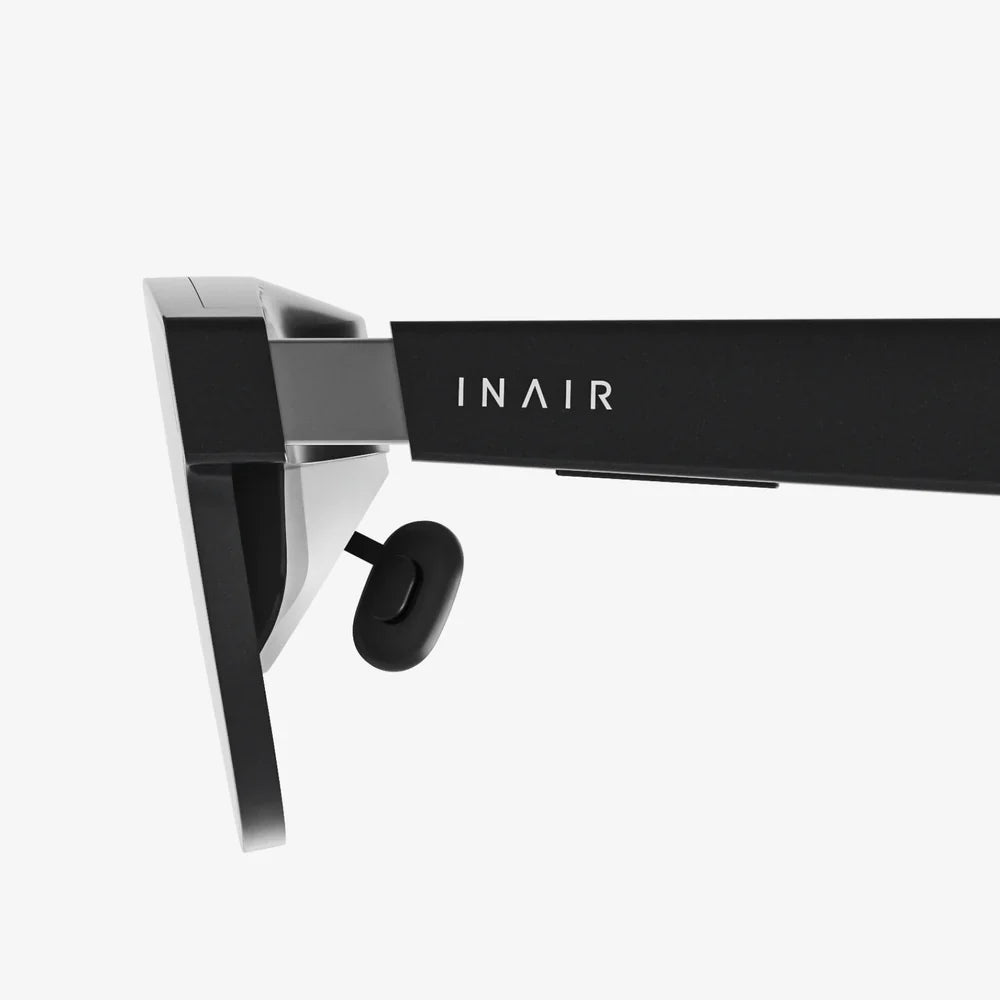
Wearable display technology patent infringement analysis is no longer a niche legal exercise reserved for large corporations. As smart glasses, AR headsets, and display-embedded wearables move from futuristic concepts to everyday products, the risk of stumbling into a patent dispute increases dramatically. For startups, engineers, investors, and even independent developers, understanding how infringement is evaluated can be the difference between a successful launch and a devastating lawsuit that drains both money and momentum.
Because wearable displays sit at the intersection of optics, electronics, software, and user-interface design, the patent landscape around them is especially dense and complex. A single product may implicate dozens of patents covering everything from waveguides and microdisplays to gesture recognition and power management. That complexity makes a structured, methodical approach to patent infringement analysis not just helpful, but essential.
Why Wearable Display Patent Infringement Analysis Matters
Wearable display technology patent infringement analysis is fundamentally about risk prediction and control. It answers a few critical questions:
- Does a specific wearable display product or prototype likely infringe existing patents?
- Which patents pose the highest risk, and why?
- What design choices can reduce or eliminate that risk?
- How should a company prepare for potential enforcement or licensing demands?
Ignoring these questions can lead to injunctions blocking sales, forced redesigns after launch, or costly settlements. On the other hand, early and thorough analysis can uncover opportunities: cross-licensing leverage, white-space for new inventions, and defensible design-around strategies that support long-term product roadmaps.
Understanding the Wearable Display Technology Stack
Before diving into infringement analysis, it helps to break wearable displays into core technical components, each of which is typically covered by its own cluster of patents:
1. Display and Optical Subsystems
- Microdisplays: OLED, LCD, micro-LED, and other miniature panels.
- Optical combiners: Waveguides, prisms, mirrors, and holographic elements that overlay virtual imagery onto the real world.
- Lens and projection systems: Collimating optics, projection lenses, and light engines.
- Brightness and contrast control: Methods for adjusting luminance and color balance in varying ambient conditions.
2. Sensors and Tracking
- Head and eye tracking: IMUs, cameras, and dedicated eye-tracking sensors.
- Gesture and hand tracking: Vision-based recognition, depth sensors, and inertial tracking.
- Environmental sensing: RGB cameras, depth cameras, and spatial mapping sensors.
3. Processing and Software
- Rendering engines: Real-time graphics pipelines for AR/VR content.
- Sensor fusion algorithms: Combining data from multiple sensors for stable tracking.
- User interface frameworks: Interaction models for gaze, voice, gestures, and haptics.
- Power and thermal management: Algorithms for balancing performance, heat, and battery life.
4. Form Factor and Ergonomics
- Mounting structures: Headbands, frames, visors, and helmet integrations.
- Weight distribution: Mechanical designs that distribute weight for comfort.
- Cable routing and modularity: Connectors, detachable modules, and wearable power packs.
Each of these domains is heavily patented. Effective infringement analysis requires mapping your product’s features to these technical domains and then to the relevant patents.
Core Concepts in Patent Infringement Analysis
To make sense of wearable display technology patent infringement analysis, you need a firm grasp of how infringement is legally determined. The key concepts include:
Claim-Centric Analysis
Patents are enforced based on their claims, not their general descriptions or figures. A patent claim defines a specific legal boundary. Infringement analysis asks whether a product implements each element of a claim.
- Independent claims stand alone and define the broadest protection.
- Dependent claims add limitations to independent claims and can be easier to avoid but still important.
If every element of an asserted claim is present in the accused product, there is a strong basis for direct infringement, assuming the claim is valid and properly interpreted.
Literal Infringement vs. Equivalents
There are two main paths to infringement:
- Literal infringement: The product matches each claim limitation as written.
- Infringement under the doctrine of equivalents: Even if the product does not literally match, it performs substantially the same function, in substantially the same way, to achieve substantially the same result as the claimed element.
In wearable displays, even small technical variations (for example, changing the exact type of waveguide or tracking algorithm) may not be enough to avoid equivalents-based infringement if the core idea is the same.
Direct, Indirect, and Contributory Infringement
Wearable display products often involve ecosystems of hardware, software, and services. That raises different infringement theories:
- Direct infringement: Making, using, selling, offering to sell, or importing a product that practices the claimed invention.
- Induced infringement: Encouraging or instructing others to infringe (for example, providing software updates or documentation that cause users to use a patented method).
- Contributory infringement: Supplying a component specially made for use in a patented invention, with no substantial non-infringing uses.
For example, a company that sells wearable hardware plus cloud-based AR processing could face allegations that the combined system infringes both device and method claims, even if some steps occur on remote servers.
Step-by-Step Wearable Display Patent Infringement Analysis
A systematic approach helps avoid blind spots. Below is a structured process tailored to wearable displays.
Step 1: Define the Accused Product in Technical Detail
Begin by creating a detailed technical profile of the wearable display system:
- Hardware architecture diagrams
- Optical path and display stack schematics
- Sensor and tracking subsystem descriptions
- Software architecture, including key algorithms and data flows
- User interaction flows (e.g., gaze selection, gesture input, voice commands)
This internal documentation becomes the foundation for mapping features to patent claims.
Step 2: Identify Relevant Patent Families
Next, search for patents related to:
- Optical waveguides, combiners, and projection systems
- Near-eye displays and head-mounted displays
- Eye tracking, gaze estimation, and foveated rendering
- Hand and gesture tracking for AR/VR
- Spatial mapping and environment reconstruction
- Wearable-specific power management and thermal control
- Ergonomic mounting structures for head-worn displays
Use patent databases, classification codes, citations, and known competitor portfolios to assemble an initial set of patents that could be relevant. This is often refined into a focused list of high-risk patents based on claim scope and jurisdiction.
Step 3: Conduct Claim Charting
Claim charting is the heart of wearable display technology patent infringement analysis. It involves creating a two-column table:
- Left column: Each limitation of the patent claim, broken down line by line.
- Right column: Evidence that the accused product meets (or does not meet) each limitation.
Evidence can include:
- Product specifications and marketing materials
- Technical documentation and design files
- Reverse-engineering reports
- Source code excerpts (for software-related claims)
For example, a claim might recite “a waveguide configured to guide light from a microdisplay to a user’s eye via total internal reflection.” The chart would show whether the product uses a waveguide with that functionality, supported by technical diagrams or teardown images.
Step 4: Interpret Claims in Light of the Specification and Prosecution History
Claim language does not exist in a vacuum. It must be interpreted in context:
- Specification: The patent’s written description and drawings can clarify what the inventor meant by certain terms.
- Prosecution history: Arguments and amendments made during examination can narrow or define the scope of the claims.
In wearable display patents, terms like “waveguide,” “see-through,” “virtual image,” or “head-mounted” may have specific meanings based on how they were used and distinguished from prior art. A careful reading can reveal non-infringement positions or, conversely, confirm that a claim is broad enough to cover your design.
Step 5: Evaluate Literal Infringement and Equivalents
Once claim charts are drafted and claims interpreted, evaluate:
- Whether every element is literally present in the product.
- If not literal, whether the differences are minor enough that a doctrine of equivalents argument might succeed.
For instance, if a claim recites a “transparent waveguide” and your product uses a semi-transparent optical combiner with a similar function, a court could still find equivalence depending on the details.
Step 6: Consider Validity and Enforceability
A patent can only be enforced if it is both valid and enforceable. In parallel with infringement analysis, evaluate:
- Prior art: Earlier publications, products, or patents that might anticipate or render the claim obvious.
- Enablement and written description: Whether the patent sufficiently teaches how to make and use the invention.
- Inequitable conduct: Rare but serious issues where the patent may be unenforceable due to misconduct during prosecution.
In the wearable display field, rapid innovation means there is often rich prior art, including academic papers, conference presentations, and early prototypes. These can be powerful tools in challenging overbroad patents.
Special Challenges in Wearable Display Patent Analysis
Wearable displays introduce unique complexities that make patent infringement analysis more challenging than in some other hardware fields.
Multi-Component, Distributed Systems
Many wearable display systems rely on distributed processing between the device and external hardware such as smartphones, computers, or cloud servers. Claims may cover:
- End-to-end AR rendering pipelines
- Offloaded computation for tracking and mapping
- Network-based synchronization of virtual objects
This raises questions such as:
- Who performs each step of a method claim (device maker, user, service provider)?
- Is there a single entity that “controls or directs” the performance of all steps?
These issues are crucial when evaluating method claims for infringement in cloud-connected wearable systems.
Software and Algorithm Patents
Wearable display technology heavily depends on software for tracking, rendering, and user interaction. Patent claims may cover:
- Specific sensor fusion algorithms for head tracking
- Techniques for foveated rendering based on eye tracking
- Gesture recognition pipelines using camera data
Analyzing infringement of such claims often requires access to source code, algorithm descriptions, or detailed reverse engineering. At the same time, software-related patents can raise subject-matter eligibility issues in some jurisdictions, affecting their enforceability.
Human Factors and Ergonomic Claims
Some patents focus on how wearable displays are mounted, adjusted, or balanced on the user’s head. These can cover:
- Specific strap or frame geometries
- Weight distribution mechanisms
- Adjustment mechanisms for different head sizes
These claims can be deceptively broad and may catch hardware designers off guard if they focus only on optics and electronics. Careful review of mechanical features is necessary to avoid underestimating infringement risk.
Freedom-to-Operate (FTO) for Wearable Displays
Freedom-to-operate analysis is a proactive form of wearable display technology patent infringement analysis. It aims to determine whether a proposed product can be commercialized without infringing third-party patents, or at least with manageable risk.
Scope and Limitations of FTO
FTO is not about whether your own patents are strong; it is about whether others can block you. A typical FTO study will:
- Focus on specific jurisdictions where the product will be sold or manufactured.
- Analyze active (in-force) patents, not expired ones.
- Prioritize patents with claims that plausibly read on your product’s features.
Because patent landscapes change as new patents grant and old ones expire, FTO is a snapshot in time. For long development cycles, periodic updates are essential.
Design-Around Strategies
When FTO identifies high-risk patents, design-around strategies can reduce infringement risk:
- Technical substitution: Use a different optical architecture, sensor type, or algorithm that does not meet key claim limitations.
- Feature removal: Omit non-essential features that create infringement risk, particularly in early product versions.
- Architectural partitioning: Allocate certain functions to external devices or services in ways that avoid claim structures.
For example, if a patent claims a specific combination of eye tracking and foveated rendering, a design-around might involve using head orientation alone for rendering optimization, at least until a license can be negotiated.
Global Considerations in Wearable Display Patent Infringement
Wearable display products are often sold globally, and patent law is territorial. This has several implications for infringement analysis.
Jurisdictional Differences
Key differences across jurisdictions include:
- Patentable subject matter: Software and business method patents may be treated differently.
- Claim interpretation: Standards for reading claims and using prosecution history can vary.
- Remedies: Availability of injunctions, damages calculations, and preliminary relief differs.
A feature that is risky in one country may be safer in another due to differences in patent coverage and enforcement practices.
Parallel Portfolios and Family Members
Many wearable display patents belong to international families with related filings in multiple countries. When analyzing infringement risk, it is important to:
- Track which family members are granted, pending, or expired.
- Compare claim scope across jurisdictions, as claims may be narrower or broader depending on local examination.
- Monitor ongoing opposition or invalidation proceedings in key markets.
This global perspective can influence where to launch first, where to seek licenses, and where to challenge problematic patents.
Litigation, Licensing, and Negotiation Strategies
Wearable display technology patent infringement analysis is often performed in anticipation of, or in response to, enforcement actions. Understanding how the analysis feeds into broader IP strategy is crucial.
Using Analysis to Inform Litigation Strategy
In a dispute, detailed claim charts and technical documentation become core evidence. They help shape:
- Non-infringement arguments: Highlighting missing claim elements or different technical approaches.
- Validity challenges: Identifying prior art that reads on the asserted claims.
- Counterclaims: Asserting your own patents against the accuser, if applicable.
Because wearable displays combine many patented technologies, countersuits based on your own portfolio can be a powerful lever in settlement discussions.
Licensing and Cross-Licensing
When analysis shows that infringement risk is significant and design-around options are limited or impractical, licensing becomes a key path forward. Effective licensing strategies involve:
- Valuing the importance of the patented technology to your product.
- Assessing the strength and breadth of the patent claims.
- Considering cross-licensing opportunities if you hold relevant patents.
In a crowded wearable display space, cross-licensing can allow multiple players to innovate without constant litigation, while still rewarding meaningful R&D investments.
Best Practices for Teams Building Wearable Display Products
To integrate wearable display technology patent infringement analysis into product development in a practical way, consider the following best practices.
1. Build an IP-Aware Engineering Culture
Encourage engineers and designers to understand basic patent concepts. This does not mean turning them into lawyers, but rather:
- Training them to recognize patent-sensitive areas like optics, tracking algorithms, and user interfaces.
- Encouraging documentation of novel solutions for potential patent filings.
- Promoting early discussions with IP counsel when new features are proposed.
2. Integrate IP Reviews into Product Milestones
Instead of treating infringement analysis as a last-minute hurdle, weave it into the development cycle:
- Early concept review: High-level FTO to spot obvious risks.
- Design freeze review: Detailed claim charting for critical features.
- Pre-launch review: Update analysis with newly granted patents and final product specs.
This staged approach reduces the chance of late surprises that force expensive redesigns.
3. Maintain a Living Patent Landscape Map
For core technologies like waveguides, eye tracking, and gesture recognition, maintain an internal map of:
- Key patent holders and their portfolios.
- Expiring patents that may open new design freedoms.
- Emerging patent filers that could become future competitors or partners.
This landscape view supports strategic decisions about where to invest in R&D, where to file your own patents, and where licensing may be inevitable.
4. Preserve Evidence and Documentation
Thorough documentation of your design choices and development history can be invaluable in a dispute. Keep records of:
- Alternative designs considered and why certain approaches were chosen.
- Internal discussions about avoiding specific patents.
- Technical justifications for differences from known patented solutions.
Such records can support non-infringement and independent development narratives if allegations arise.
The Strategic Value of Proactive Analysis
Wearable display technology patent infringement analysis is not merely a defensive exercise conducted under threat. When approached proactively, it becomes a strategic tool that can shape product architecture, guide R&D investments, and strengthen your negotiating position in an increasingly competitive landscape.
By understanding how claims map to real-world wearable display implementations, teams can design with awareness, not fear. They can identify where genuine innovation is needed to escape crowded patent spaces, where licensing is a rational cost of entry, and where the law leaves room for creative engineering. For anyone serious about building the next generation of wearable displays, mastering this analytical discipline is not optional; it is a quiet but powerful advantage that can determine who thrives as the market matures and who gets sidelined by legal and technical missteps.
Share:
Fit Glass Screen Protector Guide: Perfect Installation and Lasting Protection
xbox touch controller tips, tricks, and setup guide for better mobile play