


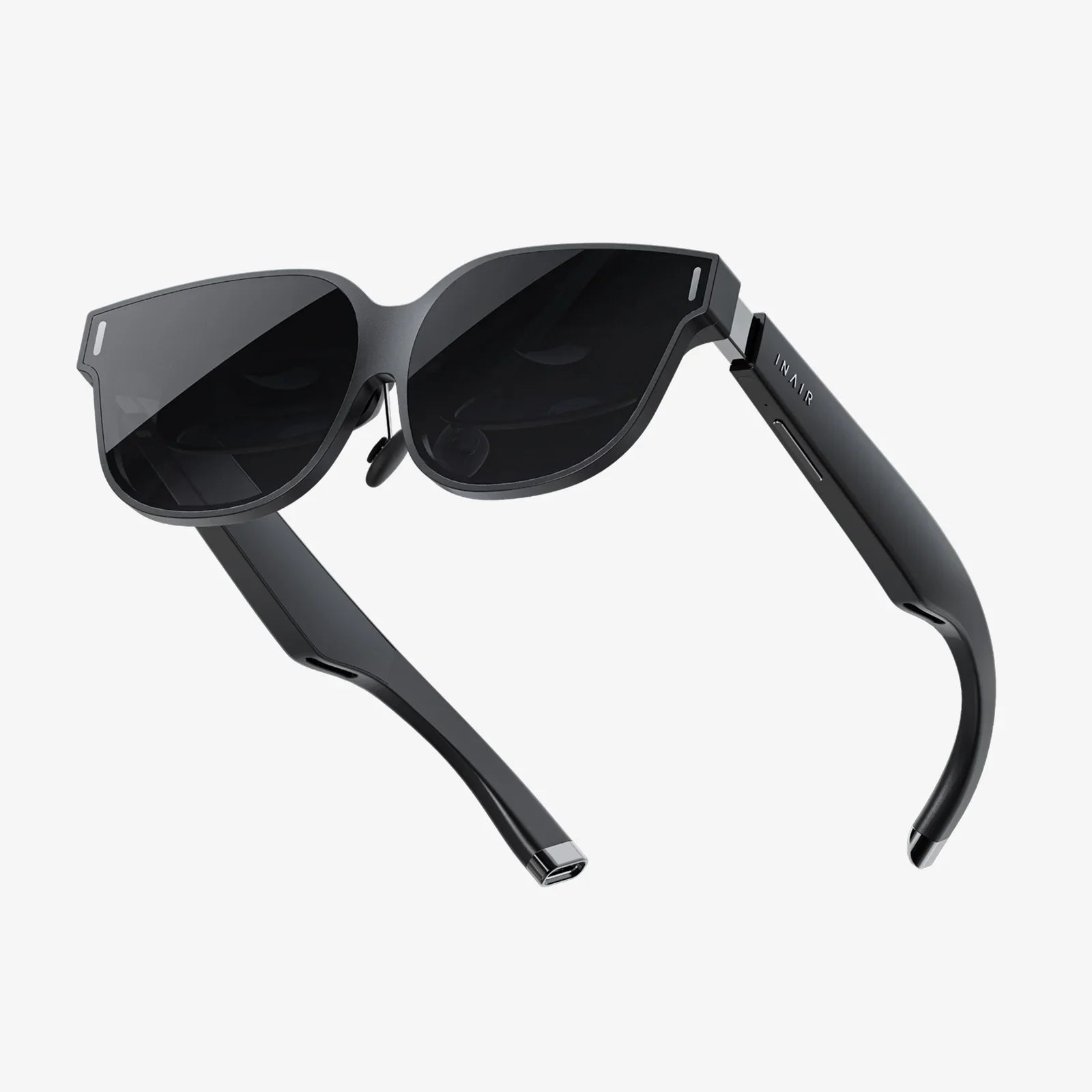
- by wangfred
Wearable HMD Revolution: How Head-Mounted Displays Are Redefining Reality
- by wangfred
Wearable HMD devices are quietly reshaping how people see, work, and play, and the change is happening faster than most realize. From immersive gaming worlds and virtual offices to remote surgeries and interactive classrooms, head-mounted displays are no longer just futuristic gadgets; they are becoming essential tools that blend digital content directly into our field of view. If you want to understand where the next wave of digital transformation is headed, knowing how wearable HMD technology works, where it is used, and what challenges it still faces is one of the smartest moves you can make today.
At its core, a wearable HMD (head-mounted display) is a device worn on the head that places screens or optical systems directly in front of the eyes. These displays can show fully virtual environments, overlay digital information onto the real world, or mix both in sophisticated ways. As computing power increases and components become smaller and lighter, wearable HMD systems are evolving from bulky headsets into sleek, everyday devices that promise to redefine how people interact with information, each other, and their surroundings.
A wearable HMD is a visual interface worn like glasses, goggles, or a helmet that positions one or more displays close to the eyes. Instead of looking at a traditional screen on a desk or in your hand, the user looks through or into the device. The display can cover part or all of the user’s field of view, depending on the design and its intended use.
Wearable HMD devices can be broadly categorized into three functional types:
Most modern wearable HMD devices integrate sensors, processors, lenses, and connectivity features, making them standalone computers that sit on your head. Some rely on external computers or mobile devices for processing, but the trend is clearly moving toward self-contained, lightweight systems.
To understand why wearable HMD technology is so powerful, it helps to look at the components that make these devices work. Each part plays a critical role in creating a convincing and comfortable visual experience.
At the heart of every wearable HMD is one or more displays. Common display technologies include:
Resolution, refresh rate, and field of view are key display metrics. Higher resolution reduces the “screen-door effect” where individual pixels become visible. Higher refresh rates (typically 90 Hz or above for VR) help reduce motion sickness and improve comfort. A wider field of view increases immersion by filling more of the user’s natural vision.
Because the display sits very close to the eyes, wearable HMD devices rely on lenses or optical waveguides to focus and shape the image. Common approaches include:
Advanced wearable HMD systems may support adjustable interpupillary distance (IPD) and diopter adjustments, allowing users with different eye spacing and vision prescriptions to achieve a sharp, comfortable image.
Immersive experiences depend on accurate tracking. Wearable HMD devices use a variety of sensors to determine the position and orientation of the user’s head and, in many cases, their hands and body.
These sensors work together to maintain a stable, low-latency representation of the virtual or augmented environment. The faster and more accurate the tracking, the more convincing and comfortable the experience.
Wearable HMD devices need significant computing power to render 3D graphics, process sensor data, and handle connectivity. Depending on the design, processing may be handled by:
Efficient power management and thermal design are critical. A wearable HMD must balance performance with battery life and comfort, avoiding excessive heat near the user’s face.
Interaction methods are evolving rapidly. Common input options include:
As interaction systems improve, wearable HMD experiences become more intuitive, reducing the learning curve for new users and opening the door to more complex tasks.
Wearable HMD technology is spreading across industries. While gaming and entertainment often receive the most attention, many of the most transformative uses are happening in professional and industrial contexts.
Gaming remains one of the most visible drivers of wearable HMD adoption. VR headsets transport players into fully realized worlds where they can look around naturally, use their bodies to interact, and experience presence in a way traditional screens cannot match.
Beyond games, immersive media is expanding into:
As content libraries grow and devices become more affordable, wearable HMD entertainment is likely to become a mainstream option rather than a niche experience.
Wearable HMD devices are redefining the idea of the workplace. Instead of flat video calls and static documents, teams can meet in virtual rooms where 3D models, data visualizations, and shared whiteboards float around them.
Common collaboration scenarios include:
For remote workers, wearable HMD devices can create a sense of presence and focus that traditional setups struggle to match. Virtual monitors can be resized and arranged in space, providing expansive digital workspaces even in small physical rooms.
Healthcare is one of the most promising areas for wearable HMD innovation. Medical professionals are using these devices to enhance training, planning, and patient care.
Key healthcare applications include:
The ability to visualize complex information spatially and interact with it in real time makes wearable HMD devices a powerful tool in both education and clinical practice.
In classrooms and training centers, wearable HMD technology turns abstract concepts into tangible experiences. Instead of reading about historical events, students can stand in a reconstructed city. Instead of viewing diagrams of molecules, they can manipulate 3D models with their hands.
Educational uses include:
By engaging multiple senses and encouraging active participation, wearable HMD experiences can improve retention and make learning more inclusive for different learning styles.
In industrial and field environments, wearable HMD devices provide hands-free access to critical information. Technicians can see instructions overlaid directly on equipment, workers can receive remote assistance, and complex workflows can be streamlined.
Common scenarios include:
These applications demonstrate how wearable HMD technology can directly impact productivity, safety, and cost in demanding environments.
The rapid adoption of wearable HMD devices is driven by a set of compelling benefits that traditional screens cannot match.
By surrounding the user’s field of view and tracking head movements, wearable HMD systems create a sense of presence — the feeling of “being there” inside a virtual or augmented space. This immersion enhances engagement, making experiences more memorable and emotionally impactful.
Humans naturally think and move in three dimensions. Wearable HMD devices leverage this by allowing users to walk around virtual objects, reach out to grab them, or observe them from any angle. This spatial understanding is particularly valuable in design, engineering, architecture, and medical visualization.
In AR and MR scenarios, users can access instructions, data, and communication tools without looking down at a phone or tablet. This hands-free access is especially valuable when both hands are needed for tasks, such as in surgery, maintenance, or field inspections.
Wearable HMD simulations allow learners to practice repeatedly, receive immediate feedback, and experience rare or dangerous situations safely. Skills learned in realistic virtual environments transfer more effectively to real-world performance.
Virtual collaboration enabled by wearable HMD systems can reduce the need for travel by making remote meetings more engaging and productive. Experts can “teleport” into remote locations virtually to guide on-site teams, cutting costs and response times.
Despite impressive progress, wearable HMD technology still faces significant challenges that must be addressed for widespread, long-term adoption.
Wearing a device on the head for extended periods can cause discomfort, particularly if it is heavy or poorly balanced. Pressure on the nose, forehead, or back of the head can lead to fatigue. Designers are focusing on weight reduction, better strap systems, and improved materials to make devices more comfortable.
Visual fatigue is another concern. Prolonged use may cause eye strain, especially if the optics are misaligned or the user’s eyes constantly adjust between virtual and real objects at different focal distances.
Motion sickness in VR often occurs when there is a mismatch between what the eyes see and what the inner ear senses. High latency, low frame rates, or inaccurate tracking can contribute to this problem. Developers and hardware designers must optimize performance, minimize lag, and design locomotion methods that reduce discomfort.
Many wearable HMD devices still have a narrower field of view than natural human vision, which can break immersion. Achieving a wide field of view while maintaining high resolution and optical clarity is technically challenging. As display and optics technologies advance, future devices are expected to offer more natural, panoramic views.
Standalone wearable HMD devices rely on batteries, which limit usage time. High-performance graphics and continuous sensor processing consume significant power, generating heat that must be safely dissipated. Balancing performance, battery life, and comfort remains an ongoing engineering challenge.
Wearable HMD devices equipped with cameras and sensors raise important privacy questions. Bystanders may not know if they are being recorded, and spatial mapping data could reveal sensitive information about homes or workplaces.
On a social level, wearing a headset can create a sense of isolation or awkwardness in public settings. Designers and policymakers must address these concerns through transparent data practices, clear indicators of recording, and thoughtful social norms.
The next generation of wearable HMD devices will be shaped by several exciting trends that push the boundaries of what is possible.
One of the most visible trends is miniaturization. Advances in microdisplays, waveguide optics, and low-power processors are enabling thinner, lighter designs that resemble regular glasses more than traditional headsets. As devices become less intrusive and more stylish, everyday use in public spaces will become more acceptable.
Future wearable HMD systems will feature more advanced spatial mapping and object recognition. Devices will understand rooms, furniture, people, and objects, allowing digital content to interact more naturally with the physical world. For example, virtual characters might sit on real chairs, and digital tools could snap precisely onto physical surfaces.
Artificial intelligence will play a growing role inside wearable HMD devices. Context-aware assistants will understand what the user is doing and provide timely, relevant information. Eye tracking, gesture recognition, and voice input will combine to create adaptive interfaces that anticipate user needs.
In work settings, AI could highlight important components in a complex machine, suggest the next steps in a procedure, or translate foreign-language signs and speech in real time.
Foveated rendering is a technique that uses eye tracking to render only the area the user is directly looking at in full resolution, while reducing detail in peripheral vision. This approach significantly cuts computing requirements, enabling higher-quality graphics without draining the battery as quickly.
Combined with smarter power management and hardware acceleration, foveated rendering will help wearable HMD devices deliver richer visuals in smaller, cooler, and more efficient packages.
As more developers build applications for wearable HMD platforms, ecosystems will expand beyond isolated apps into interconnected experiences. Users may move seamlessly between work, learning, and entertainment within the same virtual environments, with persistent avatars, spaces, and digital assets.
Interoperability between devices and platforms will be crucial. Standards for spatial data, avatar identity, and virtual goods will help ensure that investments in content and skills carry over from one system to another.
For individuals and organizations considering wearable HMD adoption, a thoughtful approach can maximize benefits while managing risks and costs.
Before investing, it is important to identify specific problems that wearable HMD technology can solve. Examples include reducing training time, improving remote collaboration, enhancing design workflows, or creating new customer experiences. Clear use cases guide device selection, software development, and success metrics.
Different environments require different device characteristics. A factory floor may prioritize durability, hands-free operation, and safety certifications. A design studio may focus on visual fidelity and precise tracking. Understanding the physical context and user workflows ensures that the chosen wearable HMD solution fits real-world needs.
Launching small pilot programs allows organizations to test wearable HMD applications with real users, gather feedback, and refine processes. Iterative deployment helps identify practical issues such as comfort, training requirements, and integration with existing systems before scaling up.
Introducing wearable HMD technology often requires changes in habits and workflows. Providing training, documentation, and ongoing support is essential. Addressing user concerns about comfort, privacy, and job impact can improve adoption and satisfaction.
To justify continued investment, organizations should track metrics such as reduced error rates, faster training times, improved collaboration outcomes, or increased customer engagement. Over time, these measurements help refine strategies and guide future upgrades.
Looking ahead, wearable HMD technology has the potential to become as common as smartphones are today, subtly weaving digital experiences into daily routines.
Imagine walking through a city with navigation cues hovering at intersections, restaurant reviews appearing beside storefronts, and real-time translation floating next to foreign-language signs. At home, virtual screens could replace physical televisions and monitors, letting you arrange multiple displays around your living room without clutter.
Social interactions could evolve as well. Friends might meet in shared virtual spaces that blend with their physical rooms, playing games or watching media together regardless of distance. Family members could leave digital notes or 3D reminders in specific locations, visible only through their wearable HMD devices.
Of course, these possibilities come with important questions about balance. Constant access to digital overlays might be distracting or overwhelming if not carefully managed. Thoughtful design, user controls, and social norms will be essential to ensure that wearable HMD technology enhances life rather than dominating it.
The momentum behind wearable HMD innovation is unmistakable. Developers, researchers, and creators are exploring new ways to use these devices every day, from transforming how children learn to reinventing how professionals design, heal, and collaborate. Whether you are an individual curious about immersive experiences or a decision-maker planning the next wave of digital transformation, paying attention to wearable HMD technology now can position you ahead of the curve. The screens we hold today are giving way to displays we wear, and those who understand and experiment with this shift will be best prepared to shape and benefit from the realities that come next.