


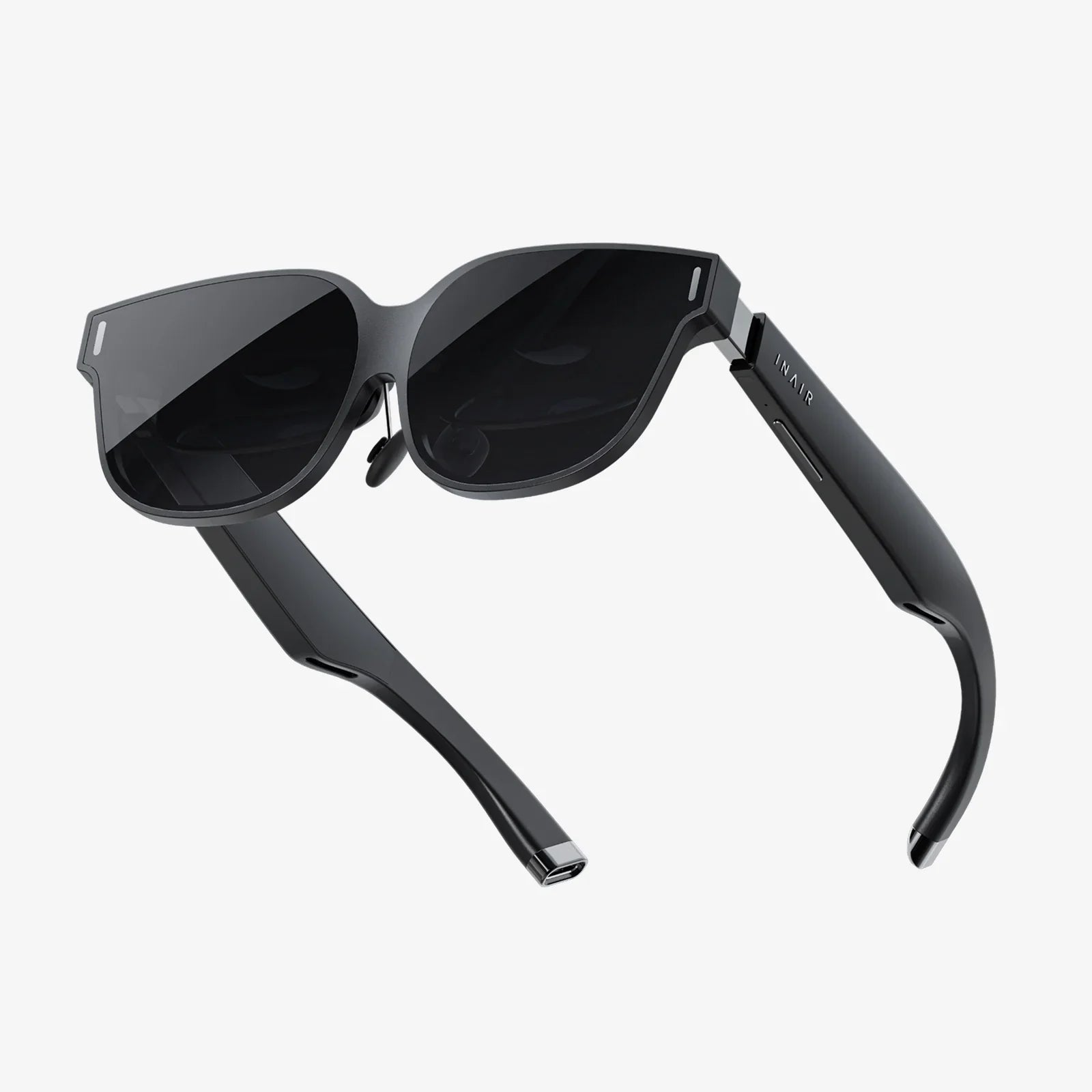
Imagine a world where your clothing monitors your posture, your ring tracks your stress levels, and your glasses overlay digital information onto the physical world around you. This isn't a distant sci-fi fantasy; it's the rapidly converging present of wearable technology. But to view these devices merely as gadgets is to miss the profound narrative they are weaving into the fabric of human existence. The true wearable meaning extends far beyond the silicon and sensors; it represents a fundamental shift in how we interact with data, understand our bodies, and ultimately, perceive ourselves. We are entering an era where technology is becoming intimately personal, not just in our pockets, but on our skin, in our ears, and woven into our very attire, promising a future of hyper-awareness and seamless integration that will redefine human potential.
From Tool to Extension: The Philosophical Shift
The history of technology is a story of external tools. The hammer, the plow, the computer—each was an object we picked up, used, and set down. They existed outside of us. Wearables shatter this paradigm. They are designed for persistent contact, creating a continuous, bidirectional flow of information between the user and the digital realm. This transforms them from mere tools into extensions of the self. A fitness tracker isn't just a device you wear; it becomes an extension of your proprioception, providing a quantified sense of your physical activity that your natural senses cannot perceive. This philosophical shift is the core of modern wearable meaning: technology is no longer something we use intermittently; it is something we integrate continuously, blurring the traditional boundaries between our biological selves and our digital augmentations.
The Quantified Self: Data as a Mirror
The most immediate and widespread application of wearables has been in the realm of health and wellness, giving rise to the "Quantified Self" movement. This is where the abstract concept of wearable meaning becomes tangibly personal.
Beyond Step Counting: A Holistic Health Dashboard
Early devices focused on simple metrics like step count and calories burned. Today's advanced wearables act as holistic health dashboards, offering insights that were once only accessible in clinical settings.
- Heart Health: Continuous heart rate monitoring, detection of irregular rhythms, and calculation of heart rate variability (HRV) provide a window into cardiovascular fitness and stress levels.
- Sleep Architecture: By tracking sleep stages (light, deep, REM), wearables move beyond simple duration to analyze sleep quality, helping users understand the factors that lead to restorative rest.
- Blood Oxygen Sensing: This metric can offer insights into overall respiratory health and fitness adaptation.
- Electrodermal Activity and Skin Temperature: These biomarkers are pioneering new ways to track stress responses and predict illness onset.
The wearable meaning here is empowerment through data. Individuals are no longer passive patients receiving periodic check-ups; they are active participants in their health journey, equipped with a stream of personalized data to make informed lifestyle choices, identify potential issues early, and track the efficacy of interventions in real-time.
Invisible Integration: The Next Frontier of Form Factor
The evolution of form is critical to understanding deeper wearable meaning. The goal is not to create the most powerful standalone device, but the most seamless integration. The journey has moved from clip-on pedometers to wrist-worn smartwatches, and is now accelerating towards near-invisibility.
Smart Fabrics and Biometric Clothing
The next wave involves weaving technology directly into textiles. Shirts with embedded sensors can measure breathing rate, muscle effort, and ECG signals with medical-grade accuracy during athletic activity or physical rehabilitation. Smart socks can analyze a runner's gait, while biometric shorts can track muscle load. This eliminates the need for a separate device, making the technology feel less like an add-on and more like a natural property of the clothing itself.
Discreet Biometric Monitors
Smart rings represent a significant leap in minimalism. They offer continuous sleep and activity tracking in a form factor that is unnoticeable and can be worn 24/7, even while swimming or sleeping. Smart hearing aids are evolving into sophisticated health hubs, capable of enhancing hearing, translating languages, monitoring falls, and even checking vital signs. These developments point to a future where health monitoring is constant, comprehensive, and completely unobtrusive.
The Augmented Human: Sensory and Cognitive Expansion
Perhaps the most futuristic dimension of wearable meaning lies in the realm of augmentation—using technology to expand human senses and cognitive abilities.
Augmented and Virtual Reality
Smart glasses and AR headsets aim to overlay the digital world onto the physical one. This isn't just about playing games; it's about contextual computing. A mechanic could see a wiring diagram superimposed on an engine block. A surgeon could have a patient's vital statistics and 3D scan data visible during a procedure. A tourist could see historical information materialize over a cityscape. This technology promises to dissolve the barrier between information and environment, making data instantly accessible and contextually relevant.
Brain-Computer Interfaces (BCIs)
While still in earlier stages of consumer development, non-invasive BCIs represent the ultimate expression of wearable meaning. Headbands that measure EEG signals could allow users to control devices with their thoughts, meditate more effectively by receiving real-time feedback on their brain state, or even communicate in new ways. This points toward a future where the line between thought and action, intention and execution, becomes increasingly blurred.
The Ethical Labyrinth: Navigating the Dark Side of Connection
This deep integration does not come without significant risks and ethical dilemmas. The true wearable meaning of this technology is a double-edged sword, and its challenges are as profound as its promises.
Data Privacy and Ownership
The most intimate data imaginable—our heart rhythms, sleep patterns, location, and even brain activity—is being collected continuously. Who owns this data? How is it stored, secured, and used? There is immense potential for misuse by insurers, employers, advertisers, or malicious actors. The concept of "biometric privacy" is becoming a critical legal and ethical battleground, forcing us to question what we are willing to trade for convenience and insight.
The Algorithmic Gaze and Behavioral Nudging
Wearables don't just collect data; they interpret it through algorithms and provide feedback. This "algorithmic gaze" can shape our behavior in subtle ways. A device that congratulates you for reaching 10,000 steps reinforces that specific goal. But what if the goals programmed are not in our best interest? Could these devices be used to nudge us towards purchasing certain products or adhering to specific health programs dictated by corporate interests rather than individual well-being?
Anxiety and the Tyranny of Metrics
For some, the constant stream of data can lead to obsession and anxiety, a condition often called "orthosomnia"—the unhealthy pursuit of perfect sleep data. When every heartbeat and sleep stage is quantified, a bad night's sleep or a missed activity goal can become a source of significant stress, potentially divorcing us from our innate bodily feelings and replacing them with a constant, judgmental metric.
The Future Woven: What Truly Lies Ahead?
The trajectory is clear: wearables will become smaller, more powerful, more integrated, and ultimately, more biological. We are moving towards devices that are not just on the skin, but potentially in the body—biodegradable sensors, smart contact lenses, and embedded monitors that communicate directly with our nervous system. The ultimate wearable meaning may be the creation of a closed-loop system where technology doesn't just monitor but responds autonomously: a device that detects a dangerous drop in blood sugar and releases glucagon, or one that senses an oncoming panic attack and administers a calming neurostimulus.
The true impact of wearable technology is not measured in gigabytes or gigahertz, but in the silent, fundamental rewiring of the human experience. It offers a mirror to see ourselves with unprecedented clarity, a lens to perceive a world rich with digital information, and a toolset to enhance our capabilities beyond natural limits. Yet, this power demands profound responsibility—a global conversation about privacy, equity, and the very definition of human agency. The device on your wrist is merely the gateway; the real journey is into a future where the line between the organic and the engineered becomes beautifully, terrifyingly, and irrevocably blurred, challenging us to redefine what it means to be human in a connected world.
Share:
Over The Ear Headphones Mic: The Ultimate Guide to Superior Sound and Communication
Visor Glasses The Ultimate Guide to This Revolutionary Eyewear Trend