


- by wangfred
Wearable Tech Companies Are Shaping Our Future Beyond the Wrist
- by wangfred
Imagine a world where your clothing monitors your health, your glasses overlay digital information onto the physical realm, and your watch not only tells time but predicts your needs. This isn't a distant science fiction fantasy; it's the tangible reality being built, line of code by circuit, by the most innovative wearable tech companies on the planet. These enterprises have moved far beyond counting steps, embarking on a monumental quest to redefine the very interface between humans and technology, promising a future of unprecedented connectivity, health, and personal empowerment.
The journey of wearable technology is a story of rapid and remarkable evolution. The earliest iterations were simple, single-function devices focused primarily on fitness metrics. They answered the basic question: "How active am I?" Today, leading wearable tech companies are answering far more complex and profound questions: "Is my heart healthy?" "Am I stressed?" "How can I sleep better?" "How can I perform my job more safely and efficiently?" This shift represents a transition from passive data collection to active, intelligent insight generation.
The core of this evolution lies in the sophistication of sensors. Early accelerometers have been joined by a suite of advanced hardware including optical heart rate monitors, electrocardiogram (ECG) sensors, blood oxygen saturation (SpO2) sensors, skin temperature gauges, galvanic skin response (GSR) sensors for stress, and even electroencephalography (EEG) for brainwave activity. This sensor fusion creates a holistic digital portrait of the user, generating a continuous stream of biometric data that was previously only accessible in clinical settings.
Furthermore, the development of low-power processors and sophisticated algorithms has been crucial. These algorithms are the secret sauce; they transform raw sensor data into actionable health and wellness insights. They can detect subtle patterns, identify anomalies like atrial fibrillation, and provide personalized recommendations, effectively putting a medical-grade diagnostic tool and a personal wellness coach on your wrist.
While smartwatches and fitness bands dominate the market conversation, visionary wearable tech companies are exploring a vast landscape of form factors, each designed for a specific purpose and context.
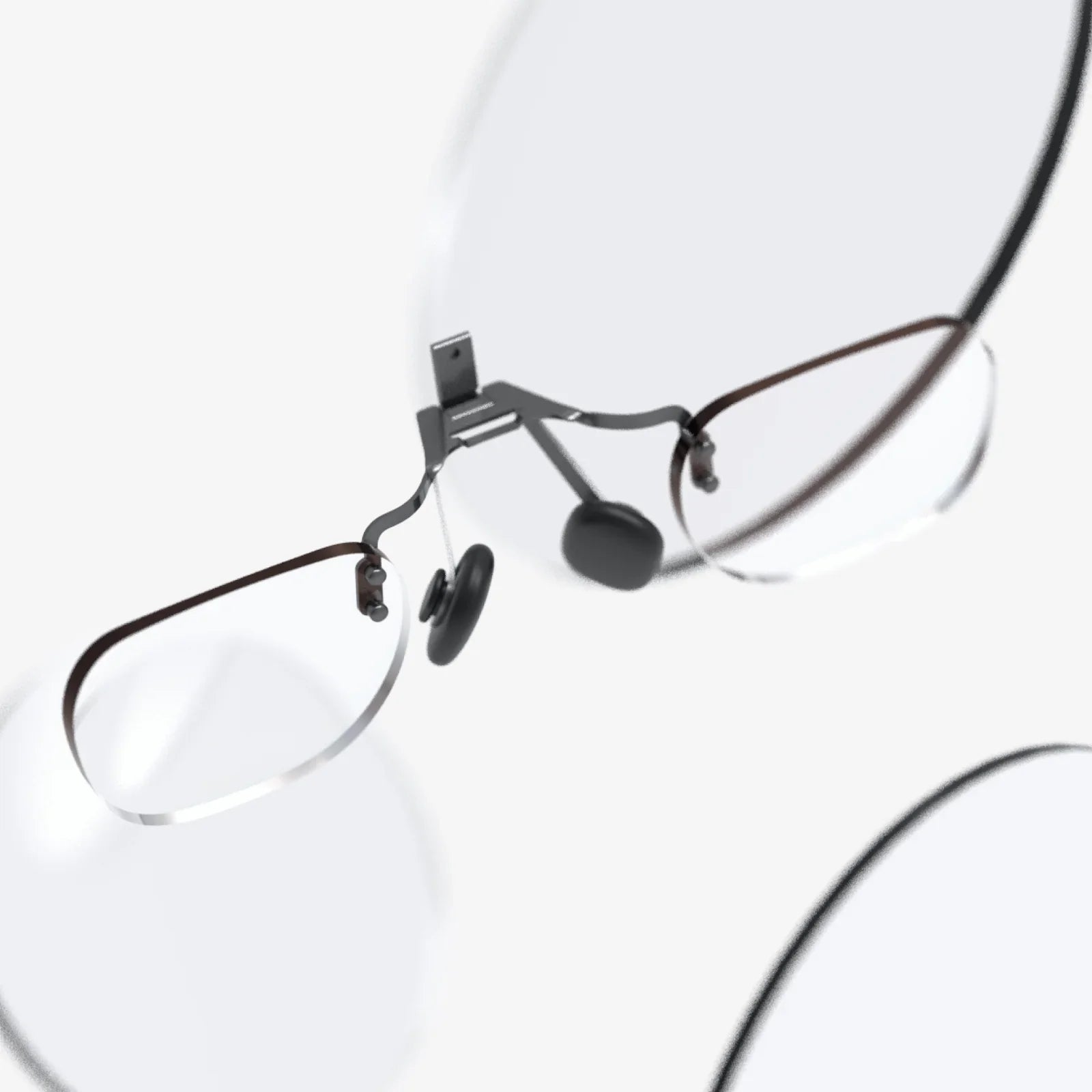
This category represents one of the most ambitious frontiers. Smart glasses aim to seamlessly blend the digital and physical worlds by overlaying contextual information—like directions, translations, or product details—directly onto the user's field of view. For enterprise applications, this technology is revolutionary, allowing field technicians to access schematics hands-free, warehouse workers to optimize picking routes, and surgeons to view patient data without looking away from the operating table. The companies succeeding here are those solving real-world problems with robust, purpose-built hardware, not just chasing a consumer novelty.
Earbuds have undergone their own transformation, evolving from simple music playback devices into intelligent hearables. They now incorporate active noise cancellation (ANC), transparent hearing modes, real-time language translation, and personalized soundscapes. Advanced models include biometric sensors for heart rate tracking, turning a daily commute into a health monitoring session. This form factor is particularly powerful due to its ubiquity and discretion, offering a constant, unobtrusive connection to digital assistance and personal data.
Perhaps the most seamless integration of technology involves weaving it directly into the fabric of our lives—literally. Smart apparel companies are developing shirts, shoes, socks, and even sports bras embedded with flexible, washable sensors. This allows for a level of biomechanical analysis previously impossible with a wrist-worn device, such as measuring running form, muscle exertion, and core body temperature with unparalleled accuracy. For athletes and medical patients alike, this provides a deep, continuous understanding of the body in motion.
Beyond consumer wellness, a critical sector of wearable tech companies is dedicated to developing FDA-approved or CE-marked medical devices. These include continuous glucose monitors (CGMs) for diabetics, wearable ECG patches for cardiac patients, and smart inhalers for those with respiratory conditions. These devices are not about lifestyle; they are about life-saving monitoring and management, enabling remote patient monitoring and reducing the burden on healthcare systems. Similarly, industrial wearables like connected safety helmets and exoskeletons are designed to protect workers and enhance their physical capabilities in demanding environments.
The path for wearable tech companies is fraught with significant challenges that separate transient gadget makers from enduring technology leaders.
The single greatest physical constraint on wearable design is battery technology. Consumers demand devices that last for days or weeks on a single charge, yet they also want always-on displays, continuous health monitoring, and powerful connectivity. This creates an immense engineering challenge. Companies are tackling this through a combination of ultra-low-power processors, sophisticated power management software, and the exploration of new energy sources like solar charging, kinetic energy harvesting, and even bioenergy that draws minute amounts of power from the human body itself.
Wearable tech companies are custodians of the most intimate data imaginable: our continuous physiological and behavioral information. How this data is stored, processed, and shared is a paramount concern. A robust strategy must include end-to-end encryption, transparent privacy policies that give users full control over their data, and a clear stance against selling personal health information. The ethical implications are vast, ranging from insurance premium adjustments based on activity data to potential employer misuse. The companies that build trust through rigorous security and ethical data practices will be the ones that thrive long-term.
Hardware is meaningless without software that delivers undeniable value. The "killer app" for wearables remains elusive and is likely to be different for various user segments. For some, it's health anomaly detection. For others, it's seamless payment and access control. For enterprises, it's productivity and safety enhancement. Beyond a single app, success hinges on seamless integration into larger ecosystems—whether it's syncing with a smartphone OS, integrating with electronic health record (EHR) systems for clinicians, or connecting to enterprise resource planning (ERP) software. Interoperability, not walled gardens, is the key to mass adoption.
The trajectory of wearable technology points toward a future where the line between technology and the human body becomes increasingly blurred, moving from devices we wear to technology that is woven into our very being.
The ultimate goal is for the technology to fade into the background—to become invisible. This means moving beyond screens on wrists to interfaces that are integrated into our environment and our clothing. Haptic feedback, bone conduction audio, and contextual awareness will allow technology to serve us without requiring constant visual engagement. The device itself becomes less important than the continuous, ambient stream of intelligent assistance it provides.
The future of health wearables is not reactive but predictive. By applying artificial intelligence and machine learning to vast longitudinal health datasets, these devices will move from telling you what happened to predicting what might happen. They could provide early warnings for illness, predict the onset of metabolic conditions, or recommend specific interventions to prevent injury. This shifts the healthcare paradigm from treatment to prevention, potentially improving millions of lives and reducing global healthcare costs.
On the farthest frontier, several ambitious companies are developing non-invasive and invasive BCIs. These technologies aim to create a direct communication pathway between the brain and an external device. The applications range from medical (allowing paralyzed individuals to control prosthetic limbs or communicate) to the enhancement of human cognition and capabilities. While fraught with ethical questions, BCI represents the final step in merging human and machine intelligence.
The race to define our technological future is no longer confined to Silicon Valley server farms or smartphone design labs; it is happening on our wrists, in our ears, and woven into the fabric of our clothes. The most successful wearable tech companies understand that they are not selling hardware; they are selling a promise—a promise of better health, enhanced capability, and a more seamless and intelligent way of navigating the world. They are building the nervous system for a new, hyper-connected human experience, and in doing so, they are quietly becoming some of the most influential architects of our daily lives and our collective future. The next time you glance at your wrist, remember, you're not just checking the time; you're getting a glimpse of the world to come.