


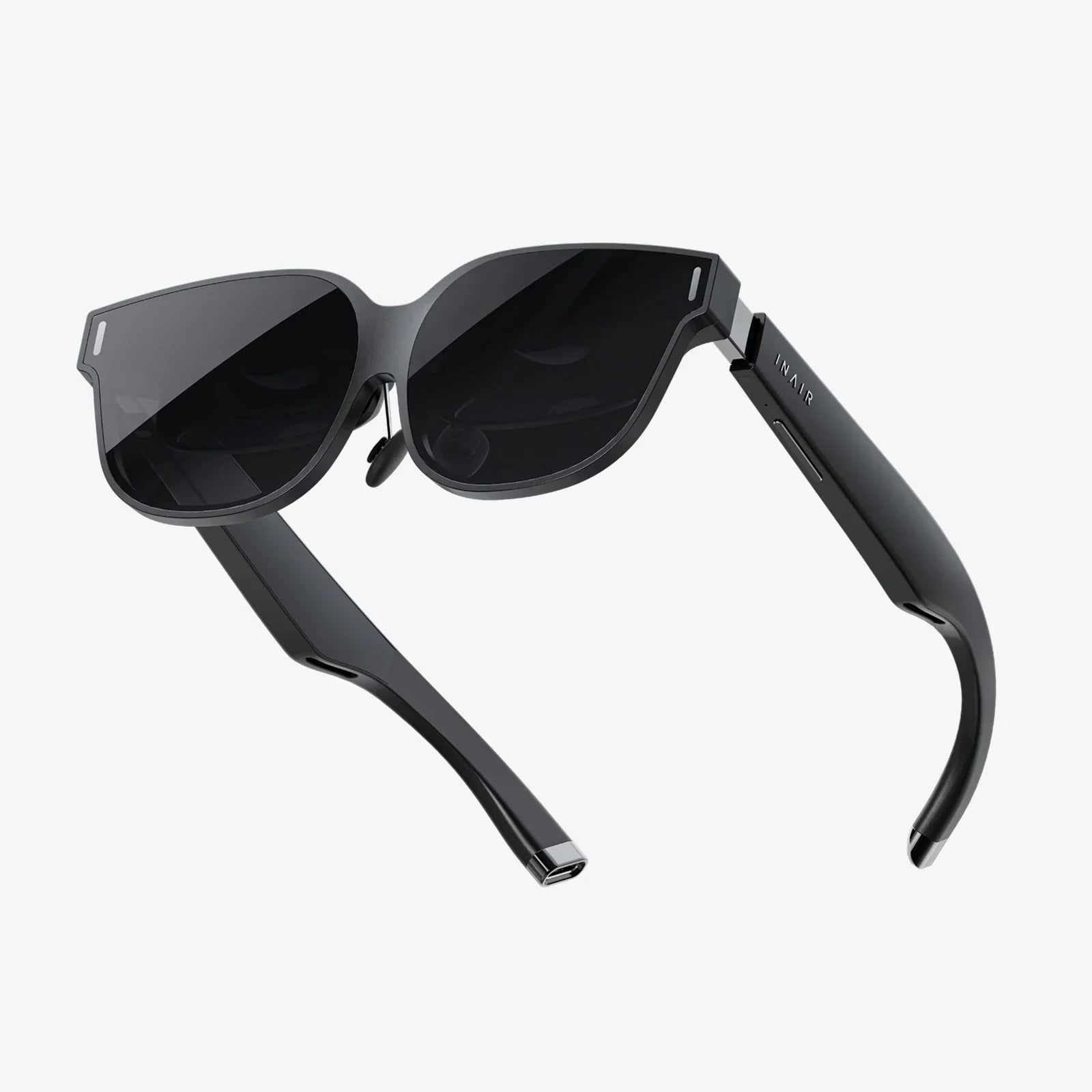
Imagine a world where your shirt monitors your heart rhythm, your glasses translate foreign street signs in real-time, and your shoes guide you through a city with gentle vibrations. This isn't a distant sci-fi fantasy; it's the burgeoning reality being built today by a global wave of innovators through ambitious wearable technology projects. These endeavors are pushing the boundaries of what's possible, moving beyond simple step-counting to create seamless, intuitive, and powerful interfaces between humans and machines. The next technological revolution won't be held in your hand; it will be worn on your body, woven into your fabric, and integrated into your very being, and it all starts in labs, workshops, and garages where these incredible projects come to life.
The Expansive Universe of Wearables: Beyond the Wrist
When most people think of wearables, their minds jump to smartwatches and fitness trackers. However, the domain of wearable technology projects is infinitely more diverse. We can categorize these innovations based on their form factor and primary point of interaction with the user:
- Wrist-Worn Devices: The most mature category, encompassing advanced health monitors, devices with environmental sensors, and those capable of contactless payments and authentication.
- Smart Clothing and E-Textiles: This is where fashion meets function. Projects here involve embedding sensors and conductive threads directly into fabrics. This allows for biometric monitoring across the entire torso for more accurate health data, muscle activity tracking for athletes, and even clothing that can change its insulation properties based on the environment.
- Head-Mounted Displays (HMDs) and Smart Glasses: Ranging from fully immersive virtual reality headsets for training and design to augmented reality glasses that overlay digital information onto the real world for field technicians, surgeons, and logistics workers.
- Hearables: Advanced earbuds and hearing aids that do far more than play music. They can translate languages conversationally, amplify specific sounds in a noisy environment, monitor core body temperature, and act as a discrete voice-controlled assistant.
- Smart Footwear: Shoes with pressure sensors to analyze gait and prevent injuries for runners, haptic feedback systems for navigation, and even kinetic energy harvesters that power the device itself.
- Biometric Patches and Implantables: Small, adhesive patches that continuously monitor specific biomarkers like glucose levels, hydration, or medication adherence, sending data directly to a healthcare provider. Implantables, while more invasive, represent the ultimate integration, such as devices that can regulate nerve signals or monitor deep tissue health.
The Engine Room: Core Technologies Driving Innovation
The success of any wearable technology project hinges on the sophisticated synergy of several core technological domains. Advancements in each area directly enable new capabilities and form factors.
Miniaturization and Sensor Fusion
The relentless drive to make components smaller, more power-efficient, and more powerful is the bedrock of wearables. Modern projects utilize micro-electromechanical systems (MEMS) – tiny accelerometers, gyroscopes, magnetometers, and barometers. The magic lies in sensor fusion, where algorithms intelligently combine data from all these sources to create a highly accurate picture of movement, orientation, and environment. This allows a device to distinguish between a user walking, running, and cycling with remarkable precision.
Advanced Biometric Sensing
Moving beyond basic motion tracking, cutting-edge projects employ a suite of biosensors:
- Optical Photoplethysmography (PPG): Uses green LED light to detect blood volume changes under the skin to measure heart rate. Newer projects use multi-wavelength LEDs (green, red, infrared) to attempt more complex measurements like blood oxygen saturation (SpO2) and even potential indicators of blood pressure.
- Electrodermal Activity (EDA) Sensors: Measure minute changes in the skin's electrical conductivity, which correlate with stress levels and emotional arousal.
- Electrocardiogram (ECG): Provides a medical-grade reading of the heart's electrical activity by measuring the voltage between two points on the body, crucial for detecting atrial fibrillation.
- Bioimpedance Sensors: Send a tiny, imperceptible electrical current through the body to measure composition metrics like body fat percentage and hydration levels.
Power Management and Energy Harvesting
The single greatest constraint for wearable technology projects is battery life. Innovations here are critical. This includes developing ultra-low-power processors, efficient operating systems, and sophisticated power management software that puts unused sensors into sleep mode. Furthermore, projects are increasingly exploring energy harvesting techniques to supplement batteries. These include:
- Photovoltaic: Capturing energy from ambient light, even indoors.
- Thermoelectric Generators (TEGs): Converting the body's natural heat into electrical energy.
- Piezoelectric and Kinetic Harvesters: Generating power from movement and vibration, such as the motion of walking or the movement of a jacket sleeve.
- Radio Frequency (RF) Energy Harvesting: Scavenging tiny amounts of energy from ambient Wi-Fi and cellular signals.
Connectivity and the Edge
For data to be useful, it must be transmitted. Bluetooth Low Energy (BLE) remains the workhorse for connecting to smartphones. However, newer projects are integrating standalone connectivity like LTE-M and NB-IoT, allowing them to operate independently of a phone. Perhaps the most significant shift is the move towards edge computing. Instead of sending all raw data to the cloud for processing, advanced wearables pre-process data on the device itself. This drastically reduces latency (crucial for real-time feedback), conserves battery life, and enhances user privacy by keeping sensitive biometric data on the device.
Transforming Industries: Wearable Projects in Action
The impact of these projects is being felt far beyond consumer gadgetry. They are revolutionizing entire sectors.
Healthcare and Remote Patient Monitoring
This is arguably the most profound application. Wearable technology projects are enabling a shift from reactive to proactive and continuous healthcare. Clinicians can now monitor patients with chronic conditions like cardiac arrhythmias, hypertension, or diabetes remotely and in real-world settings, catching dangerous trends before they become emergencies. Projects are also focused on post-operative recovery, ensuring patients are mobile within safe parameters, and on advanced fall detection for the elderly, providing peace of mind and faster emergency response.
Industrial Safety and Enterprise Efficiency
In harsh industrial environments, wearables are saving lives. Projects include:
- Smart hard hats with sensors for detecting toxic gases, impacts, or worker falls.
- Exoskeletons that reduce strain and prevent injuries for workers performing repetitive heavy lifting.
- AR glasses that allow technicians to access schematics and receive remote expert guidance hands-free, drastically reducing errors and downtime.
- Wearable tags that monitor location and vitals of lone workers in remote locations like mines or oil rigs.
Sports Science and Human Performance
Elite athletes are using data from wearables to optimize every aspect of their training. Smart clothing can analyze muscle load and efficiency. GPS and motion sensors track movement patterns, speed, and acceleration to fine-tune strategy and prevent overtraining. Perhaps most importantly, wearables can provide early warning signs of fatigue or potential injury, allowing for timely intervention.
Accessibility and Assistive Technology
Some of the most inspiring wearable technology projects are those designed to empower individuals with disabilities. These include:
- Haptic navigation vests for the visually impaired, which translate GPS directions into patterns of vibrations.
- Smart gloves that translate sign language into spoken word or text in real-time.
- Brain-computer interface (BCI) headbands that allow individuals with limited mobility to control devices with their thoughts.
The Human Factor: Challenges and Ethical Considerations
For all their promise, wearable technology projects face significant hurdles that extend beyond mere technical challenges.
The Privacy Paradox
Wearables collect the most intimate data possible: continuous, real-time information about our bodies, habits, locations, and even emotions. This creates a massive responsibility. Projects must be designed with Privacy by Design principles. Key questions arise: Who owns this data? How is it encrypted? Who is it shared with (insurers, employers, advertisers)? The potential for surveillance and discrimination based on health or activity data is a serious ethical concern that developers must address transparently.
User Experience and Design Aesthetics
A device can have groundbreaking technology, but if it's uncomfortable, bulky, ugly, or difficult to use, it will fail. The greatest challenge is creating technology that people want to wear all day. This requires a deep collaboration between engineers, data scientists, UX/UI designers, and fashion designers. The device must be unobtrusive, its interface intuitive, and its feedback meaningful without being overwhelming.
Data Accuracy and Regulatory Hurdles
When a device provides health data, accuracy is non-negotiable. A false reading can have serious consequences. Projects aimed at the medical space must undergo rigorous clinical validation and navigate complex regulatory landscapes like approvals from bodies such as the FDA to be classified as medical devices. This is a costly and time-consuming process, but a necessary one to ensure safety and efficacy.
Security Vulnerabilities
A wearable device is a node on a network, and like any connected device, it can be hacked. A vulnerability in a pacemaker or an insulin pump is a life-threatening risk. Security cannot be an afterthought; it must be a core component of the design and architecture from day one, with regular software updates to patch newly discovered vulnerabilities.
Gearing Up: How to Start Your Own Wearable Technology Project
The barrier to entry has never been lower. Aspiring innovators can start with development kits that bundle a microcontroller, a suite of sensors, and connectivity modules. Platforms like Arduino and Raspberry Pi offer a fantastic sandbox for prototyping. The key steps involve:
- Define the Problem: Start with a clear, specific user need, not just a cool technology.
- Prototype Rigorously: Build quick and dirty prototypes to test your core assumptions about form, function, and user interaction.
- Embrace Iteration: Be prepared to fail and learn. User feedback is your most valuable resource.
- Consider the Entire System: Think about the device, the data it generates, the app or dashboard that displays it, and the cloud infrastructure that supports it.
- Prioritize Privacy and Security: Bake these into your project's DNA from the very beginning.
The future of wearable technology projects is not just about adding more sensors or extending battery life by a few hours. It's about moving towards true contextual and ambient intelligence. The next generation of devices will be virtually invisible—woven into the fabrics we wear, embedded in discreet patches, or integrated into advanced hearables. They will move from simply tracking data to predicting our needs and acting autonomously on our behalf. They will understand our context: knowing when we are stressed and suggesting a breathing exercise, detecting an irregular heart rhythm and automatically alerting a doctor, or guiding us through a complex task with AR visuals precisely when we need it. The line between technology and humanity will continue to blur, creating a partnership that enhances our abilities, safeguards our health, and deepens our understanding of ourselves. The revolution is not coming; it's already on our wrists, in our ears, and woven into our clothes, and it's only just getting started.
Share:
What Are The Newest Smart Glasses: A Deep Dive into the Next Era of Wearable Tech
AR Questions: The Ultimate Guide to Accelerated Reader Queries and Quizzes