


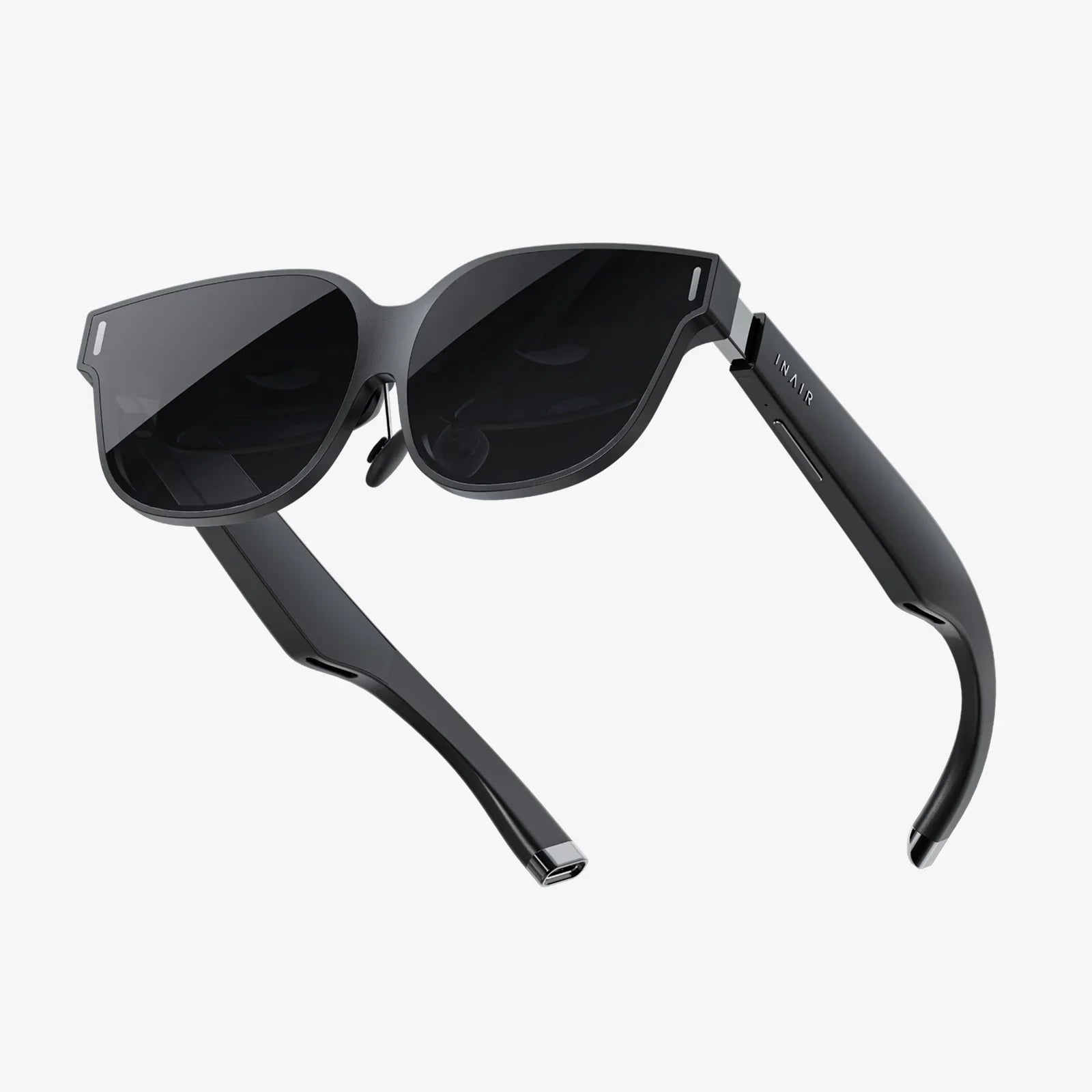
Remember the promise? A world where information seamlessly overlays our reality, where digital assistants are not just in our ears but before our eyes, and where the line between the physical and digital realms gracefully blurs. For over a decade, the dream of smart glasses has captivated our imagination, often feeling perpetually five years away. But if you’ve been following wearables news today, smart glasses are no longer a futuristic fantasy—they are a rapidly evolving, tangible reality stepping out of the laboratory and onto our faces, poised to redefine how we interact with the world and each other.
From Novelty to Necessity: The Enterprise Revolution
The most significant and impactful adoption of smart glasses technology is not happening on city streets with consumers, but on factory floors, in hospital corridors, and within sprawling warehouses. This is where the value proposition is undeniable and immediate, driving a quiet but powerful revolution in enterprise and industrial applications.
In logistics and manufacturing, technicians equipped with smart glasses can see real-time inventory data, assembly instructions, and schematic diagrams overlaid directly on the machinery they are repairing. Their hands remain free, drastically improving efficiency and reducing error rates. A remote expert, thousands of miles away, can see through the technician's eyes via a live video feed and annotate their field of view with arrows and notes, guiding them through a complex procedure as if they were standing right beside them. This application alone is transforming training protocols and slashing downtime.
The healthcare sector is witnessing a similar transformation. Surgeons are experimenting with devices that can display vital signs, ultrasound images, or 3D anatomical models directly in their line of sight during procedures, eliminating the need to constantly glance away at distant monitors. This enhances precision and maintains focus. For medical students, smart glasses offer an unprecedented tool for learning, allowing them to observe procedures from the surgeon's perspective. Furthermore, they are being used to assist patients with low vision, overlaying enhanced contrast and highlighting obstacles to improve navigation and independence.
The Design Dilemma: Balancing Form and Function
The historical albatross around the neck of smart glasses has been design. Early iterations were often bulky, obtrusive, and socially awkward, immediately marking the wearer as a "glasshole" and drawing unwanted attention. A key piece of wearables news today is that this critical barrier is finally crumbling. The industry has learned a painful but vital lesson: for mass adoption, smart glasses must first be glasses.
Advancements in micro-optics, waveguide technology, and micro-LED displays are enabling developers to miniaturize the core components. We are now seeing prototypes and initial product releases that look strikingly similar to standard, fashionable eyewear. The computing power, battery, and projection systems are being ingeniously integrated into the frames, making the technology almost invisible to the casual observer. The goal is no longer to look like a cyborg, but to look stylish while subtly enhancing one's capabilities.
This focus on aesthetics is paramount for the consumer market. People are highly selective about what they wear on their faces; it's an integral part of their identity and style. The winning devices will be those that offer personalization, partnering with renowned designers and lens manufacturers to ensure they are not just accepted, but desired as a fashion accessory first and a tech gadget second.
Augmenting Reality: The Killer Apps Beyond the Hype
Hardware is nothing without software. The question remains: what will we actually *do* with smart glasses? The killer app for the consumer market is still emerging, but several compelling use cases are coming into focus, moving beyond gimmicky filters and novelties.
- Contextual Navigation: Imagine walking through a foreign city where directional arrows are painted onto the sidewalk, and historical information about a building pops up as you look at it. This goes far beyond holding up a phone, offering a truly immersive and hands-free guide to the world.
- Real-Time Translation: See a menu in a language you don't understand? Look at the text, and the translated version appears instantly overlaid on the real world, breaking down language barriers in a profoundly natural way.
- Accessibility Empowerment: As mentioned in healthcare, these devices can be life-changing for individuals with visual or hearing impairments, offering real-time captioning of conversations, identifying objects, and amplifying visual cues.
- Enhanced Social Interaction: While fraught with privacy concerns, the ability to discreetly see information about someone you've just met (with their permission) could revolutionize networking and social situations.
These applications shift the paradigm from pulling information out of a device to having it pushed to you contextually, exactly when and where you need it.
The Privacy Paradox: Navigating the Ethical Minefield
This is the single greatest challenge facing the widespread adoption of smart glasses. The ability to record video, take pictures, and analyze the environment passively and discreetly raises enormous ethical and societal questions. The specter of a society where everyone is potentially recording everyone else is a legitimate concern that must be addressed head-on.
Manufacturers and developers are exploring technical solutions to alleviate these fears. Prominent physical recording indicators—such as bright LED lights that activate when a camera is in use—are a non-negotiable baseline. Audible cues for recording and clear, intuitive privacy controls for the wearer are essential. More advanced concepts include privacy zones, where the device's sensors are automatically disabled in sensitive areas like bathrooms or changing rooms, perhaps through geofencing or image recognition.
Beyond technology, a new social contract is needed. Norms around when it is and isn't appropriate to use such devices must be established. Legislation will inevitably lag behind technology, but a proactive public dialogue is crucial. The industry must commit to transparency and robust data governance, ensuring that the incredible power of always-on, first-person perspective data is not abused. Trust, once lost, will be nearly impossible to regain.
The Future is Framed: What's Next on the Horizon?
The evolution of smart glasses is inextricably linked to progress in other fields. Artificial Intelligence is the brain that will make sense of the vast amount of visual and auditory data these glasses collect, providing relevant and timely information. Faster and more reliable 5G and subsequent network generations are the circulatory system, enabling low-latency cloud processing and seamless connectivity without draining the device's limited battery.
We are moving towards a future of multi-device ecosystems. Your smart glasses won't replace your smartwatch or phone; they will work in concert with them. Your watch might track your health metrics, your phone handle heavy computation, and your glasses serve as the primary visual interface. This distributed approach to computing, often called the "ambient computing" paradigm, is where the industry is ultimately headed.
Looking further ahead, the convergence of smart glasses with neural interface technology—though still in its infancy—hints at a future where we might not need screens at all, instead interfacing with digital information through thought alone. For now, however, smart glasses represent the most practical and imminent step into an augmented world.
The journey of smart glasses from a captivating concept to a mainstream tool is accelerating at a breathtaking pace. The enterprise world has already proven their immense value, and the consumer market is next. The headlines are no longer about if they will arrive, but how they will seamlessly integrate into the fabric of our daily lives, enhance our human experience, and navigate the complex web of social and ethical considerations they inevitably bring. The future is not just in your hand; it’s right before your eyes.
Share:
Digital Interaction Design: The Invisible Hand Shaping Our Digital Reality
Which Virtual Meeting is Best: The Ultimate Guide to Choosing Your Platform