


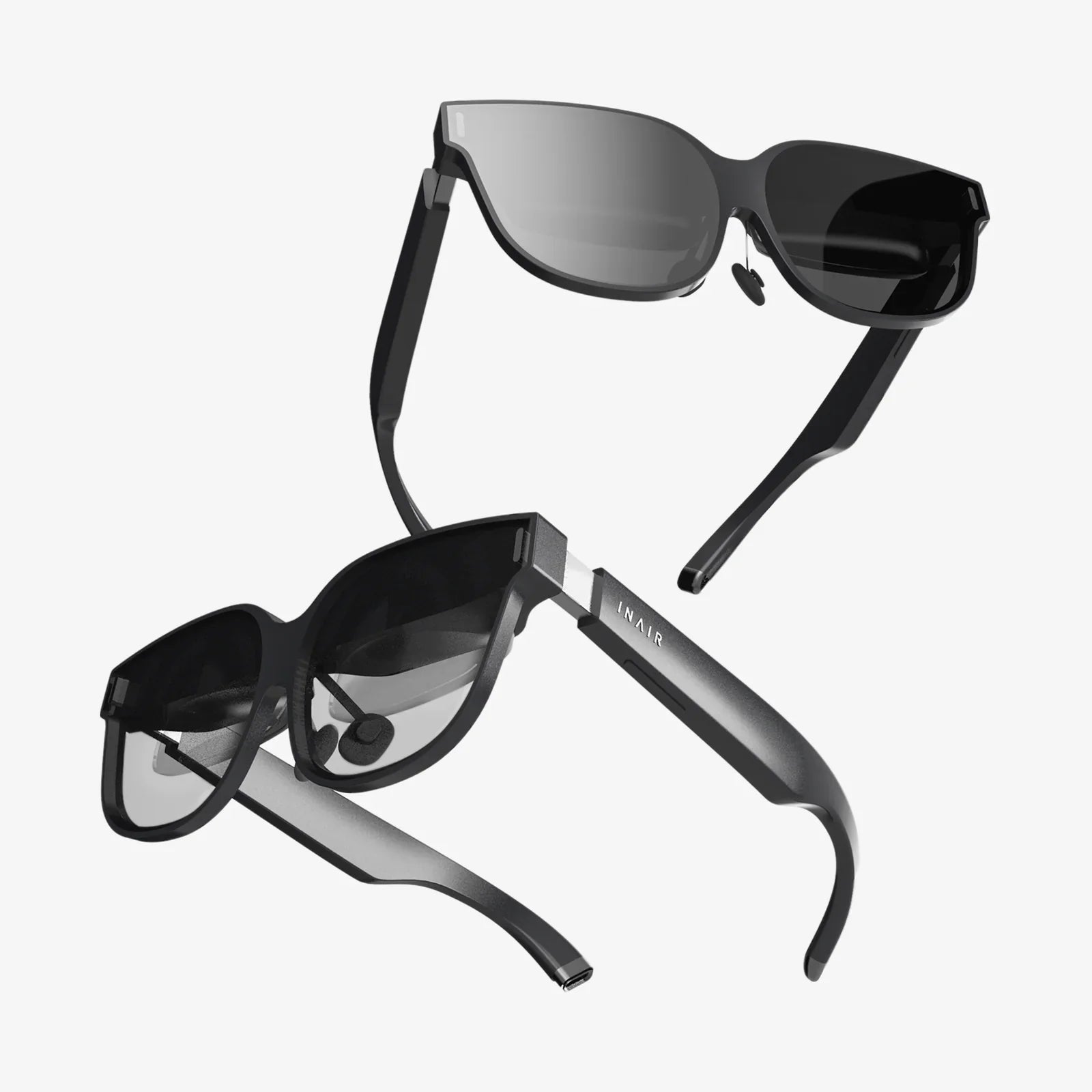
Imagine a world where the boundary between the digital and the physical dissolves. Where information doesn't reside on a screen you hold, but floats seamlessly in your field of vision, accessible with a glance or a whisper. This is the promise, the paradigm-shifting potential, of the wearing computer. It’s a revolution not of bigger screens or faster processors, but of radical integration, weaving the power of computation directly into the fabric of our daily lives and, quite literally, onto our bodies. This isn't a distant sci-fi fantasy; it's the next, inevitable chapter in the relentless miniaturization and personalization of technology, poised to change everything from how we work and learn to how we connect with each other and perceive reality itself.
From Concept to Reality: A Brief History of Wearable Computation
The idea of a computer worn on the body is far older than most realize. While the term itself feels modern, its conceptual roots stretch back decades. In the 1960s, mathematicians and engineers like Edward O. Thorp and Claude Shannon developed a rudimentary, shoe-worn computer to predict roulette wheels—a clandestine and cumbersome proof-of-concept. The 1980s saw Steve Mann, often called the "father of wearable computing," begin his lifelong experimentation with head-mounted cameras and displays, creating prototypes that were bulky and complex but visionary in their intent. Mann’s work was not about convenience; it was about augmenting human perception, a concept known as mediated reality.
The true catalyst for public awareness, however, arrived in the 2010s with the development of early commercial smart glasses. These devices, though often limited and met with mixed reception, demonstrated a crucial leap: moving computing from the hand (smartphones) to the head and eyes. They proved that the technology was viable, even if the design and social acceptance weren't yet there. Simultaneously, the explosive success of the smartwatch provided a more palatable entry point for wearable computing, normalizing the idea of a powerful, connected computer on the wrist. These two streams of development—eyewear and wristwear—have converged, accelerated by advances in miniaturization, battery technology, artificial intelligence, and 5G connectivity, to bring us to the cusp of a true wearing computer era.
Beyond the Screen: The Core Technologies Powering the Revolution
A modern wearing computer is a symphony of advanced technologies working in concert. It is far more than just a smartphone strapped to your face or arm.
Advanced Display Systems
The most critical and challenging component is the display. For eyewear, this often involves micro-displays and waveguides or holographic optical elements (HOEs) that project images directly onto the retina or into the user's field of view. This creates the illusion of digital screens floating in the real world, a technology known as augmented reality (AR). These systems must be bright enough for daylight, high-resolution enough to be legible, and energy-efficient enough to not drain a small battery instantly.
Miniaturized Processing and Sensing
At its heart is a system-on-a-chip (SoC) that packs a central processing unit (CPU), graphics processing unit (GPU), and often a dedicated AI processing unit (NPU) into a space the size of a fingernail. This powerhouse is fed data from a sophisticated sensor array, including:
- High-resolution cameras for photography, computer vision, and world understanding.
- Depth sensors (LiDAR, time-of-flight) to map the environment in 3D.
- Inertial Measurement Units (IMUs) with accelerometers and gyroscopes to track head and body movement with precision.
- Microphones for voice commands and audio recording, often with beamforming to isolate the user's voice from background noise.
- Biometric sensors like heart rate monitors and skin temperature sensors on wrist-worn devices.
Intuitive Input Modalities
With no traditional keyboard or mouse, wearing computers rely on a new language of interaction. Voice assistants, powered by natural language processing, are a primary method. Touch-sensitive surfaces on the frames or a companion device allow for swipes and taps. Perhaps most fascinating is the development of gesture control, where cameras track subtle finger and hand movements to manipulate virtual objects. Emerging research is even exploring neural interfaces that detect faint electrical signals from the brain intended for hand movement, allowing for control at the speed of thought.
Connectivity and Power
These devices are not meant to be islands. They leverage high-speed Bluetooth, Wi-Fi, and ultra-low-latency 5G to stream data, access cloud computing resources, and stay synchronized with other devices. All of this demands immense power, making battery technology a critical bottleneck. Innovations in solid-state batteries, energy-efficient chipsets, and even systems that harvest ambient kinetic or solar energy are key to enabling all-day wearability.
Transforming Industries: The Practical Applications
The potential of the wearing computer extends far beyond consumer novelty. It is poised to become an indispensable tool across numerous professional fields.
The Empowered Frontline Worker
This is where the technology may have its most immediate and profound impact. For a technician repairing a complex machine, a wearing computer can overlay animated repair instructions directly onto the equipment, highlighting exactly which bolt to turn. A surgeon can see a patient's vital signs and 3D scan data without looking away from the operating field. A warehouse worker can see optimal picking routes and inventory data hands-free, dramatically increasing efficiency and accuracy. This assisted reality provides a superhuman level of guidance and information access.
Redefining Collaboration and Remote Expertise
Imagine a field engineer stuck on a problem. By live-streaming their point-of-view from their smart glasses to an expert thousands of miles away, that expert can annotate the engineer's real-world view with arrows, circles, and notes, effectively guiding them as if they were there. This "see what I see" functionality dissolves geographical barriers, enabling mentorship, collaboration, and problem-solving on an unprecedented scale.
A New Paradigm for Learning and Training
Medical students can practice complex procedures on virtual anatomy overlays. Mechanics-in-training can learn to dismantle an engine with step-by-step digital guides. History students can walk through ancient Rome, seeing it reconstructed around them. The wearing computer transforms learning from a passive to an active, immersive, and experiential process, dramatically improving retention and understanding.
The Human Factor: Social and Ethical Implications
This technological leap is not without its significant challenges and societal questions. The path forward must be navigated carefully.
The Privacy Paradox
A device that records audio and video continuously presents an obvious privacy nightmare. The concept of the "glasshole" emerged from early adopters making those around them feel uncomfortable and surveilled. Robust, transparent, and user-controlled privacy features are non-negotiable. This includes physical camera shutters, clear recording indicators, and strict policies on data collection, storage, and usage. The social contract around recording in public spaces will need to be rewritten.
The Digital Divide and Accessibility
As with any transformative technology, there is a risk of exacerbating inequality. Will wearing computers become a costly tool for the privileged, creating a new class of digitally augmented "haves" and unaugmented "have-nots"? Conversely, they also hold immense promise for accessibility, offering real-time translation for the deaf and hard of hearing, navigation for the visually impaired, and memory aids for those with cognitive disabilities. Ensuring these devices are developed with inclusivity and affordability at their core is paramount.
The Erosion of Attention and Presence
Smartphones already compete for our attention. A wearing computer that layers a constant stream of notifications, information, and entertainment over the real world could further diminish our ability to be present, engage in deep thought, and connect with the people physically around us. Designing for intentionality—creating interfaces that enhance the moment rather than distract from it—will be the great design challenge of this medium.
The Future is Wearable: What Comes Next?
The current generation of devices are merely stepping stones. The true endgame is technology that is virtually indistinguishable from ordinary eyewear or jewelry—lightweight, stylish, and with all-day battery life. We are moving towards contextually aware systems that anticipate our needs, offering information before we even ask. The line between AR and VR will blur, creating persistent digital layers over our reality, a concept often called the spatial web or metaverse.
Further out, the convergence of wearing computers with breakthroughs in biotechnology could lead to even more intimate integration. Think smart contact lenses with built-in displays or more advanced brain-computer interfaces that move beyond simple commands to a true synthesis of human and machine intelligence.
The journey to a seamlessly integrated digital life is already underway, and it’s not happening on a device in your pocket—it’s happening on your face and your wrist. The wearing computer represents the final uncoupling of information from a stationary screen, offering a glimpse of a future where knowledge, connection, and assistance are woven into the very fabric of our perception. The question is no longer if this future will arrive, but how we will choose to shape it, ensuring it amplifies our humanity rather than diminishes it. The next time you put on a pair of glasses or fasten your watch, remember: you're already wearing a computer. It's only going to get smarter, and more powerful, and more personal from here.
Share:
Cost of a VR: A Comprehensive Guide to Understanding the True Price of Virtual Reality
3D Holograms: The Future of Visual Communication is Here and It's Transparent