


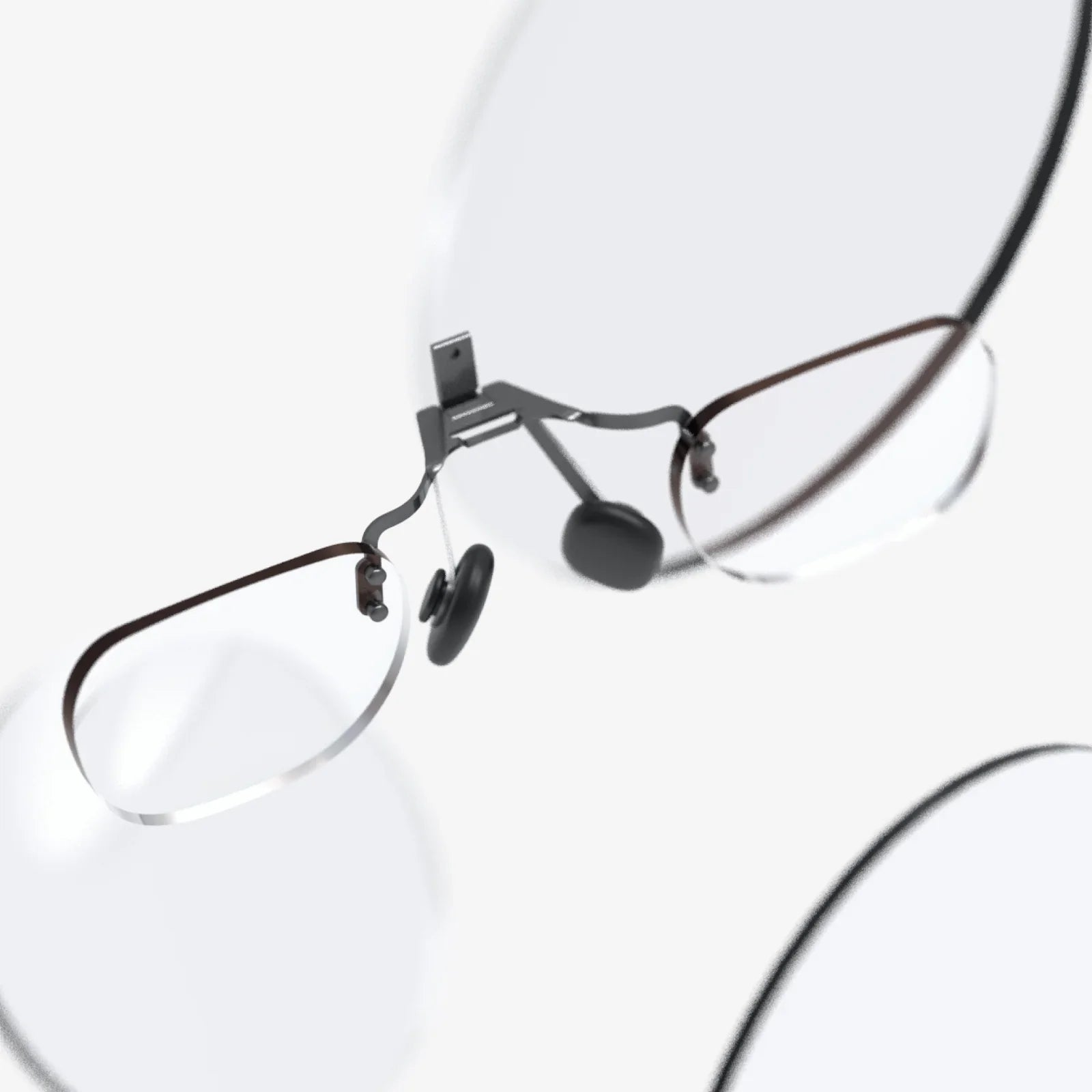
Imagine slipping on a device and instantly being transported. The familiar contours of your living room dissolve, replaced by the vertiginous summit of a mountain, the meticulous cockpit of a starship, or a shared digital canvas where you create with friends across the globe. This is the immediate, breathtaking promise of wearing a VR headset—a portal not just to new worlds, but to new ways of seeing, feeling, and connecting. It’s an experience that is rapidly moving from science fiction to mainstream reality, and its implications are as deep as they are wide.
The Anatomy of Immersion: More Than Just a Screen on Your Face
To dismiss the act of wearing a VR headset as merely strapping a screen close to your eyes is to profoundly misunderstand the technology. It is a sophisticated orchestration of hardware and software designed to hijack the senses and convince the brain, however temporarily, that it is somewhere else. This process, known as immersion, is the cornerstone of the VR experience.
The primary visual component involves two high-resolution displays (one for each eye) housed within the headset. These displays show slightly different images, replicating the stereoscopic vision that gives humans depth perception. Advanced lenses then focus and reshape this imagery to fill your field of view, minimizing the distracting presence of the physical world. Early headsets suffered from a low field of view, creating a distinct "goggle" effect, but modern iterations have vastly expanded this visual cone, pulling the user more completely into the virtual environment.
However, vision is only one part of the puzzle. True immersion is a multi-sensory endeavor. This is where head-tracking technology becomes critical. Using a combination of internal gyroscopes, accelerometers, and external or internal cameras (inside-out tracking), the headset constantly monitors the orientation and position of your head. When you look up, down, or side-to-side, the world within the headset moves in perfect, lag-free synchrony. This 1:1 movement is non-negotiable; any perceptible delay between your physical movement and the virtual response can break immersion and, for some, induce a feeling of nausea often called simulator sickness.
Beyond sight and motion, sound plays an equally vital role. 3D spatial audio is the auditory equivalent of stereoscopic vision. Instead of emitting a uniform sound, the headset uses complex algorithms to simulate how sound waves interact with the environment and your ears. A virtual bee buzzing around your head will sound like it's moving in a circle. The echo of your footsteps will change depending on whether you're in a virtual marble hall or a dense forest. This auditory layer adds a shocking amount of believability to the experience, convincing your brain of the reality of the space long before your eyes are fully convinced.
The Physical Act: Comfort, Awareness, and the Human Body
The experience of wearing a VR headset is inherently physical. The initial act involves adjusting straps for a secure yet comfortable fit—a "sweet spot" where the image is clear and the pressure on the face is manageable. Weight distribution is crucial; a front-heavy device can strain the neck during extended sessions. Manufacturers continually innovate with materials and designs, aiming for a balance between powerful internal components and ergonomic wearability.
Once inside, the user enters a state of divided physical awareness. Their body is still present in the physical world—they can feel the floor beneath their feet, the controller in their hand—but their primary conscious attention is directed toward their virtual body, or avatar. This disconnect can lead to fascinating, and sometimes humorous, physical phenomena. Users have been known to try to lean on virtual tables, only to tumble to the real floor. The simple act of reaching for a virtual object requires the brain to reconcile the expected visual feedback with the actual kinesthetic feeling of your arm moving.
This physicality is also where safety systems, like the guardian boundary or passthrough mode, become essential. These features allow users to define a safe play area and, with a double-tap or voice command, instantly see a grayscale video feed of their real-world surroundings. This prevents collisions with walls, pets, or furniture, seamlessly blending the real and the virtual for practical safety.
The Psychological Shift: Presence, Embodiment, and Altered States
The ultimate goal of all this technological effort is to induce a psychological state known as "presence." Presence is the unequivocal feeling of "being there" in the virtual environment. It’s the moment your logical mind stops registering the headset and accepts the digital world as your reality. This is not a binary switch but a spectrum, and it is the holy grail of VR design.
A powerful contributor to presence is the concept of embodiment. When you look down in a social VR application and see a pair of virtual hands that mimic your real movements with high fidelity, your brain begins to accept that virtual body as your own. This phenomenon, known as the proprioceptive drift, can be so strong that if your virtual avatar is touched or threatened, you may experience a genuine physiological response—a quickened heart rate, a flinch, or a sense of unease.
This profound mind-body connection opens up incredible possibilities beyond entertainment. Therapists are using VR to treat phobias by gradually exposing patients to their fears (like heights or public speaking) within a safe, controllable virtual space. Patients undergoing painful physical therapy are using immersive VR landscapes to distract their brains, effectively reducing their perceived pain levels. The headset becomes a tool for healing, leveraging its ability to alter subjective experience.
Beyond the Individual: The Social and Collaborative Dimension
While early VR was often a solitary activity, the future is intensely social. Wearing a VR headset is increasingly about sharing experiences with others. Social VR platforms allow people from anywhere on the planet to gather as avatars in a shared digital space. They can attend virtual concerts, watch movies on a giant screen as if in a theater, play games, or simply hang out and converse.
The magic of social VR lies in the conveyance of non-verbal communication. While current technology can't perfectly replicate every facial micro-expression, advanced headsets with eye-tracking and facial-expression capture can translate a user's smile, frown, or look of surprise onto their avatar. Combined with natural hand gestures and body language, this creates a startlingly rich and empathetic form of communication that transcends traditional video calls. It’s the difference between talking to a rectangle on a screen and feeling like you are in the same room with another person.
In professional contexts, this has revolutionary potential. Architects and engineers can walk clients through unbuilt designs at full scale. Medical students from different countries can collaboratively practice a complex procedure on a detailed virtual cadaver. Remote teams can brainstorm on an infinite, interactive whiteboard. The headset ceases to be a gaming peripheral and becomes a telepresence tool, a gateway to a new paradigm of collaboration where physical location is no longer a barrier.
The Flip Side: Ethical Considerations and the Challenges Ahead
For all its potential, the act of wearing a VR headset is not without its significant challenges and ethical quandaries. The issue of privacy and data collection is paramount. These devices are data-generating powerhouses. They can track precisely where you look (gaze tracking), how you move, your physiological responses, and even the nuances of your social interactions within virtual spaces. The question of who owns this incredibly intimate biometric and behavioral data, and how it is used, is one of the most pressing issues facing the industry.
There is also the risk of addiction and escapism. If a virtual world is more stimulating, rewarding, or socially fulfilling than a user's real life, the temptation to retreat into it for unhealthy periods is real. This raises concerns about mental health, particularly for younger, more impressionable users. Furthermore, the phenomenon of the "Proteus Effect" suggests that the appearance and characteristics of one's avatar can influence behavior in both the virtual and real world. Embodying a powerful avatar may make one more confident, while a negative representation could have the opposite effect.
Finally, there is the challenge of access and the digital divide. High-quality VR requires a not-insignificant financial investment in both hardware and the computing power to run it. As these experiences become more integral to social connection, education, and work, there is a risk of creating a new class of "have-nots" who are excluded from these digital frontiers, exacerbating existing social inequalities.
The Horizon: Where Do We Go From Here?
The current state of wearing a VR headset is impressive, but it is merely a stepping stone. The technology is on a rapid trajectory of miniaturization and improvement. We are moving toward headsets that are lighter, wireless, and with resolution so high the human eye cannot distinguish pixels—a state known as "retina" quality in VR.
Further out, research into haptic feedback suits and gloves promises to add the crucial sense of touch to the visual and auditory immersion. Imagine feeling the texture of a virtual stone or the handshake of a colleague thousands of miles away. Brain-computer interfaces, though far in the future, hint at a world where we could control virtual environments with our thoughts, creating experiences of unparalleled fluidity and intimacy.
The concept of the "metaverse"—a persistent, interconnected network of virtual spaces—represents the ultimate evolution of this technology. Wearing a headset could become as natural as picking up a smartphone, a primary interface for a layer of digital reality seamlessly integrated with our physical existence.
The simple act of wearing a VR headset is a transaction. We trade a sliver of our immediate physical reality for access to infinite possibilities. It is a tool for unparalleled empathy, allowing us to walk in another's shoes. It is a canvas for boundless creativity, limited only by imagination. It is a bridge across vast distances, making the global village a tangible, shared space. As the technology continues to evolve and integrate into the fabric of our lives, this act will become less of a novelty and more of a fundamental way we learn, work, heal, and connect. The headset is the key, but the real journey is just beginning.
Share:
How Much for a VR Headset: A Complete Price Breakdown Guide
Best AI Sunglasses The Ultimate Guide to Smart Eyewear