Imagine a world where information doesn't live on a screen in your hand but is seamlessly woven into your perception of reality, where language barriers dissolve in real-time, and where the world itself becomes an interactive, intelligent interface. This is not a distant science fiction fantasy; it is the burgeoning reality being built today, one pair of AI glasses at a time. This technology promises to fundamentally alter our relationship with information, our environment, and each other, moving computing from something we look at to something we look through.
The Core Concept: From Wearable to See-able
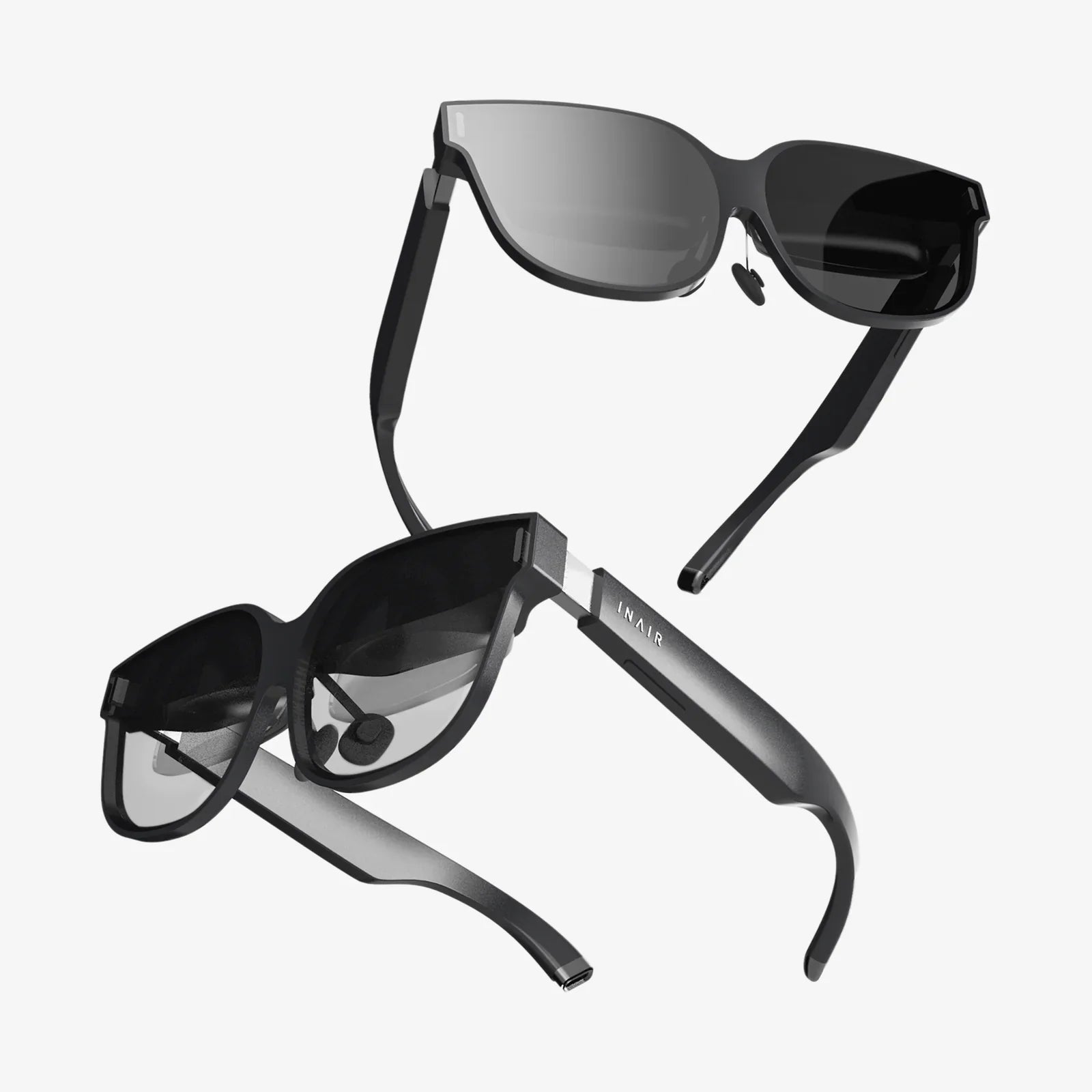
At their most fundamental level, AI glasses are a wearable computing platform that integrates a visual display—often in the form of micro-projectors that cast images onto the lenses—with a suite of sensors, a processing unit, and connectivity features. Unlike their predecessor, smart glasses, which primarily offered a heads-up display for notifications, true AI glasses are defined by their use of on-device and cloud-based artificial intelligence to understand, interpret, and act upon the world the user is seeing and hearing. They are not just a display; they are a perceptual co-pilot.
Real-Time Translation: Erasing Language Barriers
One of the most immediate and powerful applications is the ability to break down language barriers instantaneously. This functionality operates on two primary levels:
-
Spoken Translation: Using advanced microphones, the glasses can capture a conversation in one language and, through bone conduction or tiny speakers, play the translated version into the user's ear almost in real-time, allowing for a somewhat natural flow of dialogue.
-
Visual Text Translation: This is where the true magic happens. The built-in cameras scan text in the environment—a street sign, a restaurant menu, a document. The onboard AI then performs optical character recognition (OCR), translates the text, and superimposes the translated version directly over the original text in the user's field of view. It creates the illusion that the world itself is rewriting its text to a language you understand.
This capability is revolutionary for travelers, international business professionals, and immigrants, offering a newfound level of independence and connection.
Visual Assistance and Augmented Reality
Beyond translation, AI glasses act as a powerful visual aid, augmenting human perception and cognition.
-
Object and Person Identification: For individuals with visual impairments, the glasses can describe scenes, identify objects, read text aloud, and even recognize and name friends or colleagues as they approach, providing crucial contextual information.
-
Contextual Information Overlays: Imagine looking at a complex piece of machinery and seeing animated instructions overlaid onto its components. Or pointing your gaze at a landmark and seeing its history pop up. Or navigating a new city with arrows painted directly onto the street in your vision, eliminating the need to constantly glance at a phone.
-
Search and Find: Misplaced your keys? The glasses could potentially remember where you last left them and highlight them in your view. This "visual search" function extends to finding products in a store or specific information in a physical book.
Advanced Navigation and Spatial Awareness
Navigation is elevated from a 2D map to a 3D, immersive experience. AI glasses can use precise GPS, lidar, or other spatial sensors to understand your exact position and orientation. Instead of following a blue dot on a screen, you follow a path or arrows that are integrated into the real world, guiding you turn-by-turn without ever taking your eyes off your surroundings. This is invaluable for everything from walking in a new city to performing complex tasks in a warehouse or on a construction site, where hands-free, eyes-up guidance is critical for safety and efficiency.
Hands-Free Operation and Content Creation
In an increasingly digital world, AI glasses offer liberation from the smartphone. They are the ultimate hands-free device.
-
Voice-Activated Control: The primary interface is voice. Users can send messages, make calls, set reminders, search the web, and control smart home devices simply by speaking, keeping their hands and attention free for other tasks.
- The embedded cameras allow users to capture photos and videos from a first-person perspective effortlessly. This is a game-changer for creators, mechanics, doctors, and anyone who needs to document their process or share their point of view without holding a device. The AI can help frame shots, edit on the fly, and live-stream the view.
Contextual Computing and Personalized AI
The ultimate goal of this technology is contextual computing—where the device understands not just what you're looking at, but the situation you are in, and proactively offers useful information.
-
Proactive Assistance: If you glance at your calendar in the morning and see a meeting across town, the glasses could automatically check traffic and suggest when you need to leave, displaying a notification unobtrusively.
-
Personalized Memory Aid: They could act as an external memory bank, helping you recall names, details from previous conversations, or where you parked your car.
-
Workflow Optimization: For specialized professions, the AI can be trained on specific datasets. A technician could get real-time diagnostic data overlaid on equipment. A surgeon could see vital signs and imaging data without looking away from the patient. The glasses become a professional tool that amplifies expertise.
The Flip Side: Privacy, Security, and the Social Contract
The potential of AI glasses is shadowed by significant and legitimate concerns. A device that is always on, always watching, and always listening is a profound privacy challenge.
-
The Privacy Paradox: The same cameras that translate a menu can also record private conversations and capture images of unsuspecting bystanders. The concept of consent in public spaces is thrown into question. Robust visual and audio indicators that the device is recording are a bare minimum, but the societal norms are yet to be written.
-
Data Security: The amount of personal, visual, and audio data these devices collect is staggering. This data is a high-value target for hackers. Ensuring this information is encrypted, processed securely, and not exploited by the manufacturers themselves is a critical hurdle.
-
Social Acceptance: The failure of early smart glasses was partly due to the "glasshole" stigma—the social awkwardness of talking to someone wearing a camera on their face. Overcoming this will require elegant, normal-looking design and clear social cues about when the device is active.
The Future Lens: Where Do We Go From Here?
The current generation of AI glasses is merely the prototype. The future points toward even more seamless integration.
-
Improved Form Factor: The holy grail is a pair of glasses that are indistinguishable from regular eyewear, with all-day battery life and displays that are bright and clear in all lighting conditions.
-
Advanced AI Models: As multimodal AI models grow more sophisticated, the glasses' understanding of context will become incredibly nuanced, moving from simple object recognition to truly comprehending scenes and intentions.
-
Brain-Computer Interfaces (BCI): Further out, we may see the move from voice control to silent, thought-based commands, creating a direct link between the brain and the digital overlay.
The true impact of AI glasses lies not in any single feature, but in the paradigm shift they represent. They are dismantling the barrier between the digital and physical realms, promising a future of enhanced understanding, effortless efficiency, and newfound abilities. Yet, this power demands a parallel evolution in our ethical frameworks and social norms. The question is no longer if this technology will integrate into our lives, but how we will choose to shape it, ensuring that the world it helps us see is one we still want to live in. The revolution won't be televised; it will be seen through the lenses on our faces.


Share:
Latest Developments in Augmented Reality Glasses: A New Era of Wearable Computing
Augmented Reality Effects of on Human Perception, Interaction, and Society