


- by wangfred
What AR and VR Could Look Like in the Next Decade
- by wangfred
Imagine a world where the line between the digital and the physical doesn't just blur—it disappears. A world where information dances before your eyes, where you can collaborate with a colleague who appears to be sitting across from you despite being on another continent, and where your living room can transform into any environment you can dream of. This isn't the distant future; it's the trajectory we are on, powered by the rapid evolution of Augmented Reality (AR) and Virtual Reality (VR). The next decade promises not just incremental improvements but a fundamental reimagining of how we interact with technology and with each other. The journey from clunky headsets and niche applications to seamless, ubiquitous interfaces is already underway, and its destination will change everything.
Before we leap into the future, it's crucial to understand the present spectrum. AR and VR are not the same; they represent different points on a continuum often referred to as the "virtuality continuum."
Virtual Reality (VR) is an immersive, digital-only experience. By wearing a headset, you are fully transported to a computer-generated world, completely occluding your physical surroundings. This is the technology of total escape, used for gaming, simulation training, and virtual tourism.
Augmented Reality (AR), by contrast, layers digital information onto the real world. Through glasses, a smartphone screen, or eventually contact lenses, you see your environment, but it's enhanced with data, annotations, and virtual objects. Think of a navigation arrow painted onto the street in front of you or a virtual dinosaur stomping through your local park.
Bridging these two is Mixed Reality (MR), where digital and physical objects not only coexist but can interact in real-time. A virtual character might jump onto your real-world couch, or you could use a digital control panel to manipulate a real, physical robot via the interface.
The most immediate and dramatic shift we will witness is the death of the screen. Our current paradigm of interacting with rectangles of glass—smartphones, monitors, TVs—will begin to fracture.
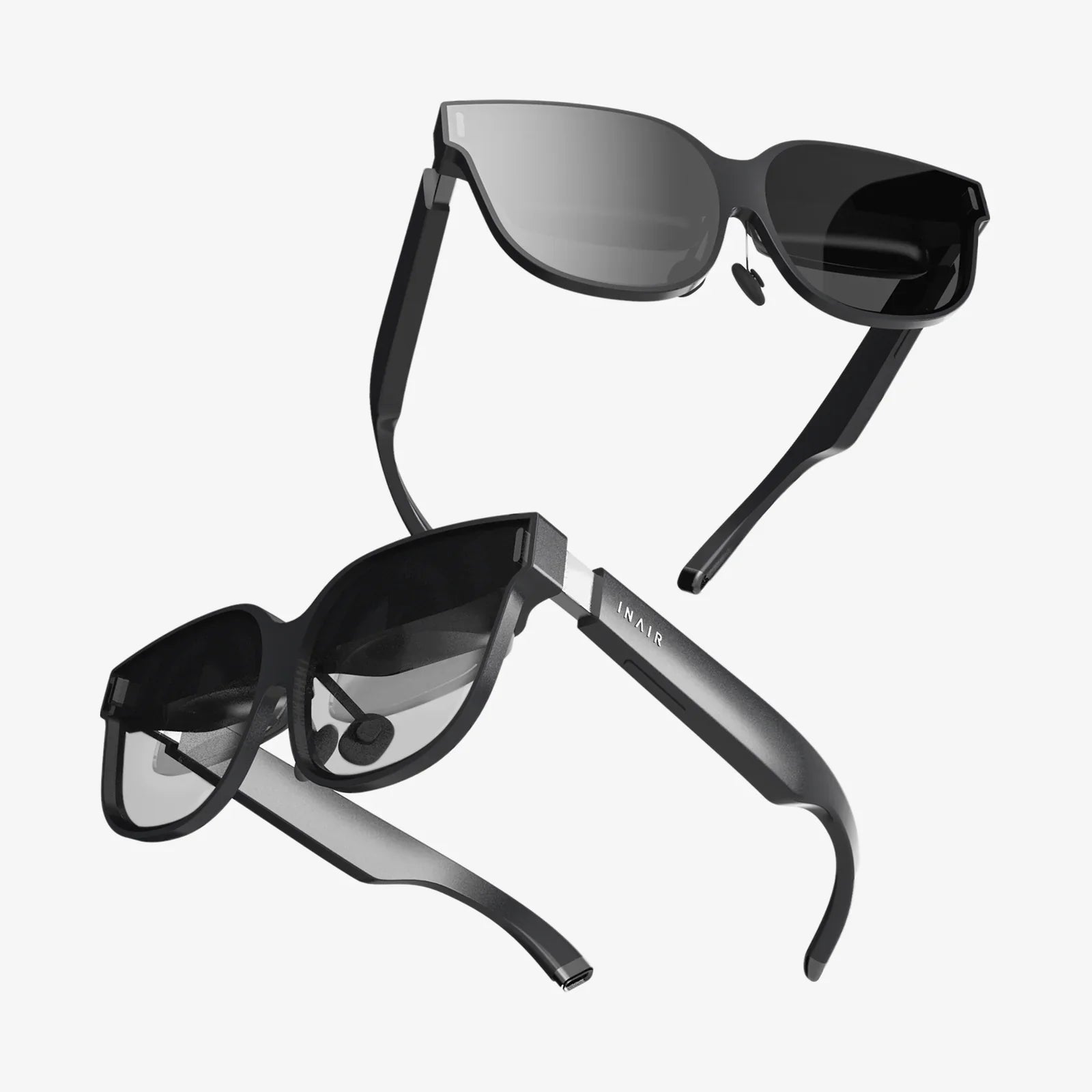
Today's VR headsets are becoming more powerful yet smaller. The next step is a shift from headsets to sleek, socially acceptable glasses. These devices will be lightweight, with all-day battery life, and offer high-resolution, photorealistic passthrough AR. This means instead of seeing the world through cameras (which can cause latency and nausea), you'll see the real world through transparent waveguides or advanced lenses, with digital elements perfectly anchored within it. They will be your phone, your computer, your theater, and your communication device, all in one pair of glasses.
This new interface requires a new operating system: spatial computing. Our digital world will no longer be confined to pages on a screen but will be mapped onto the physical world. Your kitchen counter could display your recipe, your wall could become a massive video call canvas, and your workspace could be a constellation of interactive 3D models only you can see. The internet will become a layer of information draped over reality itself. Instead of searching for a restaurant on your phone, you'll simply look down a street and see ratings, menus, and wait times hovering above each establishment.
The concept of the "office" will be utterly transformed. Why join a flat video call when you can join a holographic meeting? Colleagues from around the globe will appear as life-like avatars or even volumetric video captures, sitting around a virtual table with you. You'll be able to collaboratively design 3D prototypes, manipulate complex data visualizations with your hands, and brainstorm on an infinite whiteboard that feels as tangible as a physical wall. This will democratize expertise and collaboration, making physical location increasingly irrelevant for knowledge work.
As the technology matures, its integration into our lives will become more profound and personal, moving beyond utility into the realm of enhanced human capability.
Your AR glasses, equipped with a suite of sensors and powered by sophisticated AI, will evolve from a tool into a partner. They will understand context. When you walk into a supermarket, your shopping list automatically appears. When you look at a complex piece of machinery, step-by-step repair instructions overlay the components. When you meet someone at a conference, a subtle cue reminds you of their name and your last conversation topic. This isn't just information display; it's ambient intelligence that anticipates your needs and empowers you with knowledge at the precise moment it's needed.
Social media will evolve into shared experiential spaces. Instead of posting a photo from your vacation, you might share a 360-degree, volumetric capture of a sunset on a beach, allowing friends and family to "stand" beside you and experience the moment. Live events, from concerts to sports, will be attended by millions of virtual attendees who have the best "seat" in the house—or who can walk onto the field alongside their heroes. Narrative itself will change, moving from passive viewing to interactive stories where you are inside the movie, making choices that alter the plot.
The impact on healthcare will be revolutionary. Surgeons will use AR overlays to see "X-ray vision" of a patient's anatomy during procedures, improving accuracy and outcomes. Medical students will practice complex surgeries in hyper-realistic VR simulations. For patients, VR will become a powerful tool for pain management, physical rehabilitation, and treating phobias and PTSD through controlled exposure therapy. AR could assist individuals with visual impairments by enhancing contrast, highlighting obstacles, and reading text aloud in real-time, effectively acting as a synthetic super-sense.
Looking further ahead, the convergence of AR/VR with other exponential technologies like AI, nanotechnology, and neuroscience will lead to changes that challenge our very perception of reality.
The ultimate goal is to bypass the eyes and ears entirely. Brain-Computer Interfaces (BCIs) aim to read and write neural signals, allowing for direct communication between the brain and a computer. Imagine not just seeing a virtual forest but "feeling" the breeze and smelling the pine needles, all triggered by direct neural stimulation. This could enable the perfect simulation of any experience, from visiting ancient Rome to composing music with your thoughts. The ethical and philosophical implications are staggering, raising questions about the nature of reality, experience, and self.
In this synthesized reality, the constraints of the physical body and world become optional. You could adopt any avatar form, defy gravity, or manipulate time. Education could involve "living"> inside a historical event or exploring the human bloodstream as a nano-sized explorer. This technology could become the ultimate platform for human creativity, empathy, and exploration, allowing us to experience perspectives utterly alien to our biological reality.
This powerful future is not without its perils. The potential for pervasive surveillance, addictive experiences, and the manipulation of perception is immense. Who controls the operating system that layers over our reality? How do we prevent a "digital divide" from becoming a "reality divide"? Can we trust what we see? Establishing robust ethical frameworks, digital rights, and security protocols is not an afterthought; it is a prerequisite for building a future where these technologies empower rather than enslave humanity. We must grapple with questions of privacy, data ownership, and the psychological impact of a life where one can constantly curate and escape reality.
The path from today's nascent technology to tomorrow's synthesized reality is being paved right now in research labs and startup garages. It promises a world of unimaginable convenience, connection, and creativity, but it also demands our careful consideration and conscious design. The future of AR and VR isn't just about what we can build; it's about deciding what kind of reality we want to live in. The ultimate interface won't be a device you hold—it will be the world itself, alive with information, story, and connection, waiting for you to step in and see what it could truly become.