


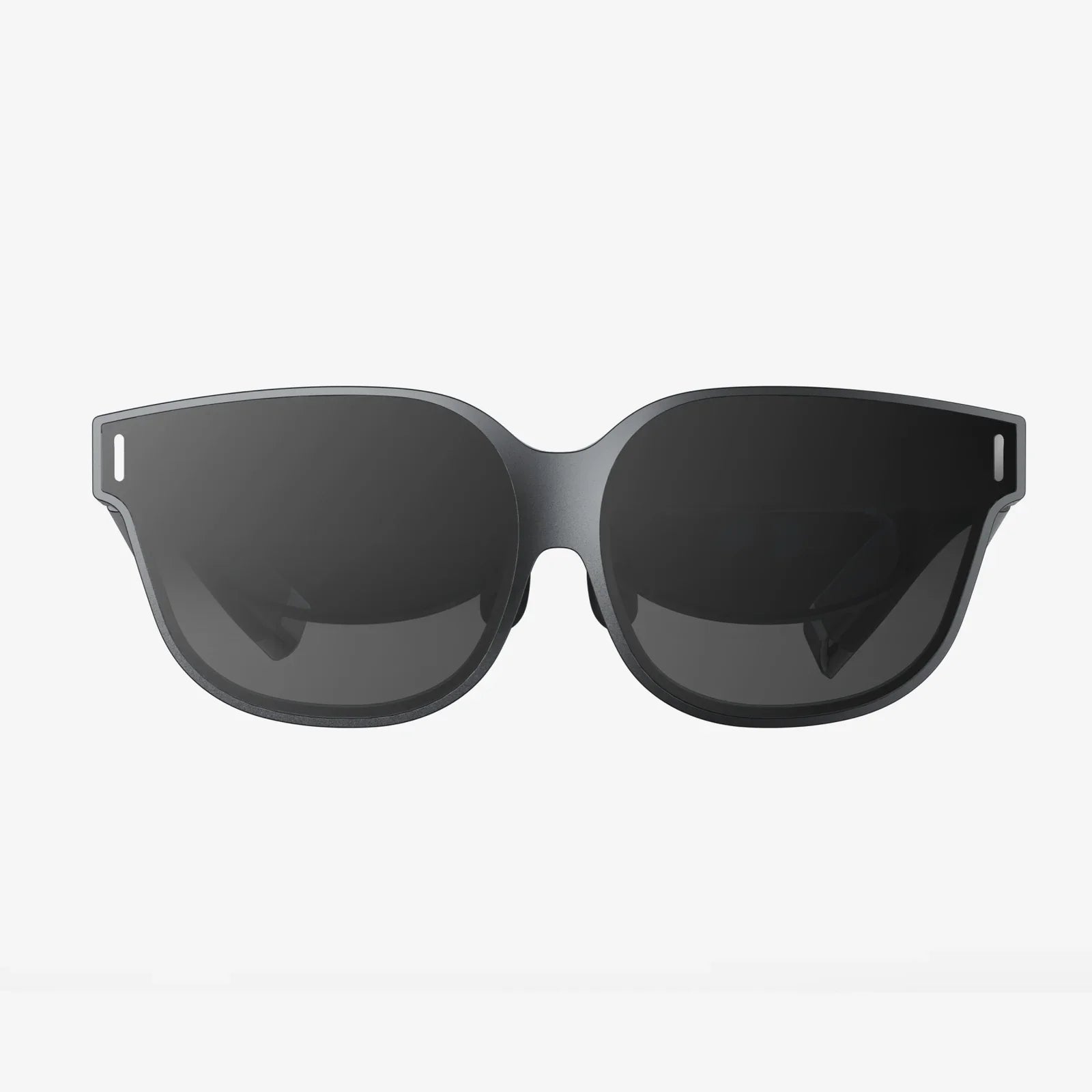
Imagine a world where digital information doesn’t live on a screen in your hand or on your desk, but is seamlessly woven into the very fabric of your reality. Instructions float over the engine you’re repairing, a navigational path is painted onto the street in front of you, and a colleague from another continent sits across your physical table, able to interact with the same 3D model you’re examining. This is the promise of augmented reality (AR) headsets, a technology that is rapidly transitioning from futuristic fantasy to tangible tool. But what is it actually like to strap one of these devices to your head and step into this blended world? The experience is nothing short of revolutionary, a complex cocktail of awe-inspiring potential and present-day limitations that points toward a fundamentally different way of interacting with computing and with each other.
The First Moment: A Portal to a New Layer of Reality
The initial experience of putting on a modern AR headset is a moment of quiet disbelief. Unlike the fully immersive, sight-blocking plunge of virtual reality (VR), AR begins by anchoring you in your own environment. You can still see your hands, your room, the people around you. The magic begins when digital elements start to appear within that space, not as a flat projection on a lens, but as holographic objects that convincingly occupy real volume. A virtual screen for watching a movie might be pinned to your wall, appearing as solid and bright as any high-end physical monitor. A digital pet might scamper around your floor, realistically occluded by the legs of your furniture. This phenomenon, known as passthrough—where cameras feed the real world to high-resolution displays inside the headset—or through advanced optical systems that project light onto transparent lenses, is the bedrock of the AR experience. It creates a powerful and often unsettling sense of the impossible being made manifest right before your eyes.
Seeing the Unseeable: The Visual and Audio Experience
The core of any AR headset is its ability to visually augment your world. This is achieved through a symphony of sophisticated hardware.
A World Retold Through Lenses and Light
The quality of the visual overlay is paramount. Early AR was plagued by narrow fields of view, where digital objects were confined to a small, postage-stamp-sized area in the center of your vision, instantly breaking the illusion. Modern devices have made staggering progress. The field of view is now expansive, though not yet perfect, allowing digital content to occupy a significant portion of your peripheral vision, which is crucial for immersion. The resolution of these virtual elements is incredibly sharp, with text appearing crisp and readable, and colors vibrant. Furthermore, the interplay of light and shadow is critical. Advanced headsets use environmental understanding to have digital objects cast shadows onto your real-world floor and be occluded by your real-world sofa, a technical feat that tricks your brain into accepting the digital as physical.
The Sound of the Future
Audio is the unsung hero of the AR experience. Spatial audio technology uses tiny, precisely calibrated speakers to make sounds appear to emanate from specific points in your room. A notification ping might come from a virtual screen to your left, while the soundtrack of a game might feel like it’s surrounding you. This 360-degree soundscape is just as important as the visual overlay for selling the fantasy of a blended reality. It’s not just about hearing sound; it’s about hearing it in context, from the correct direction, completing the sensory picture.
Beyond the Mouse and Keyboard: Intuitive Interaction
If seeing digital objects is the first wonder, interacting with them is the second. AR headsets have largely moved beyond clunky controllers, instead leveraging a more natural and intuitive form of input: you.
The Power of Your Hands
Hand tracking is a game-changer. Cameras on the headset continuously map the precise position of your fingers and hands. To interact, you simply reach out and pinch or tap with your thumb and index finger. You can resize a window by pinching its corners and pulling, rotate a 3D model by grabbing it and turning your wrist, or press virtual buttons with a tap. The learning curve is almost non-existent because it leverages a lifetime of muscle memory. It feels like a direct extension of your will, a far cry from the abstraction of moving a mouse cursor. This direct manipulation is profoundly empowering and makes the technology feel less like a computer and more like a natural tool.
The Voice of Command
Complementing hand tracking is robust voice control. You can simply say, “Open my messages,” or “Play some music,” and the headset responds. This voice-first interface, powered by intelligent assistants, allows for seamless multitasking. You can be following a recipe with digital instructions overlaid on your mixing bowls and ask, “How many grams in a cup of flour?” without ever stopping to type or touch anything. It turns the headset into a always-available companion that you converse with, further dissolving the barrier between you and the digital layer it provides.
Navigating the Blended World: The User Interface
The operating system of an AR headset is its own unique beast. It’s not a desktop or a smartphone home screen; it’s an environment. The home view is often your own physical space, clean and empty. From there, you summon apps, which manifest as free-floating windows or immersive environments. You can arrange these windows around you—a browser here, a messaging app there, a video player on your ceiling as you lie down. This creates an infinite desktop limited only by the physical space you’re in. Navigation is a fluid mix of eye gaze (looking at an icon to select it), hand gestures (pinching to confirm), and voice. It’s a paradigm shift from task-based computing to environment-based computing, where your digital workspace is as malleable and personal as your physical one.
The Physical Form: Comfort, Portability, and the Road Ahead
For all the digital wonder, the headset remains a physical object strapped to your face, and this is where some of the biggest trade-offs exist. The technology is still in its relative infancy, and the components—high-resolution displays, powerful processors, numerous cameras, and large batteries—have weight and generate heat. A modern AR headset is a substantial piece of engineering. You are acutely aware that you are wearing a advanced computational device. Comfort is a key focus for manufacturers, with balanced weight distribution, soft straps, and light-blocking seals being important considerations. The goal is to make the technology fade away, to make you forget you’re wearing it and focus only on the experience it provides. We are not fully there yet, but the trajectory is clear: lighter, more powerful, and more comfortable with each generation. The ultimate goal is a device that resembles a pair of everyday glasses, a form factor that would signal the technology’s true arrival into the mainstream.
A Tool For Tomorrow: The Transformative Potential
The true power of AR headsets is not in watching floating videos, as novel as that is. It lies in their potential to augment human capability across every facet of life.
Revolutionizing Work and Productivity
Imagine an architect walking a client through a full-scale, holographic model of a new building before a single brick is laid. A surgeon could have vital signs and 3D scans overlaid directly on their field of view during a procedure. A factory technician, wearing a headset, could see step-by-step repair instructions and part numbers visually annotated on the malfunctioning machinery in front of them, with a remote expert able to see their view and draw arrows and circles directly into their vision to guide them. This isn't a distant future; it's happening now in enterprise settings. It democratizes expertise and context-specific information in a way no manual or tablet ever could.
Redefining Learning and Connection
Education becomes an immersive adventure. Students could dissect a virtual frog, walk through ancient Rome, or hold and examine the planets of the solar system in their hands. Social connection takes on a new dimension. Instead of flat video calls on a screen, AR enables a sense of presence—the feeling that you are in the same room with someone else, able to share and interact with virtual objects together as if they were physically there. This has profound implications for reducing the isolation of remote work and connecting families and friends across vast distances in a more meaningful way.
The Other Side of the Lens: Considerations and Challenges
This incredible technology does not arrive without its questions and challenges. Battery life, while improving, is still a constraint, often offering a few hours of intensive use. The field of view, though wider, is not yet human-peripheral. The social acceptance of wearing such devices in public is still evolving. And perhaps most importantly, the ethical considerations are immense. The same technology that can overlay helpful information can also overlay targeted advertisements onto every surface you see, or record vast amounts of data about your environment and behavior. The concept of digital privacy and security must be completely rethought for a world where a camera-equipped computer is strapped to your face, seeing what you see. Navigating these challenges will be just as important as advancing the technology itself.
So, what are AR headsets like? They are a breathtaking preview, a pair of high-tech binoculars trained on the future of computing. They are a testament to human ingenuity, offering a glimpse of a world where the line between the digital and the physical is not just blurred, but erased. The experience is one of empowerment, wonder, and occasional frustration—a technology that feels both astonishingly advanced and clearly still in its early chapters. To use one is to understand that this is not merely a new gadget; it is the beginning of a new platform, a new way of seeing, and ultimately, a new way of being human in a world enriched by a layer of magic only we can see.
Share:
VR Headset for Android Tablet: Your Ultimate Guide to Affordable Mobile Immersion
What's the Best VR Headset for iPhone 6? A Deep Dive into Retro Mobile VR