


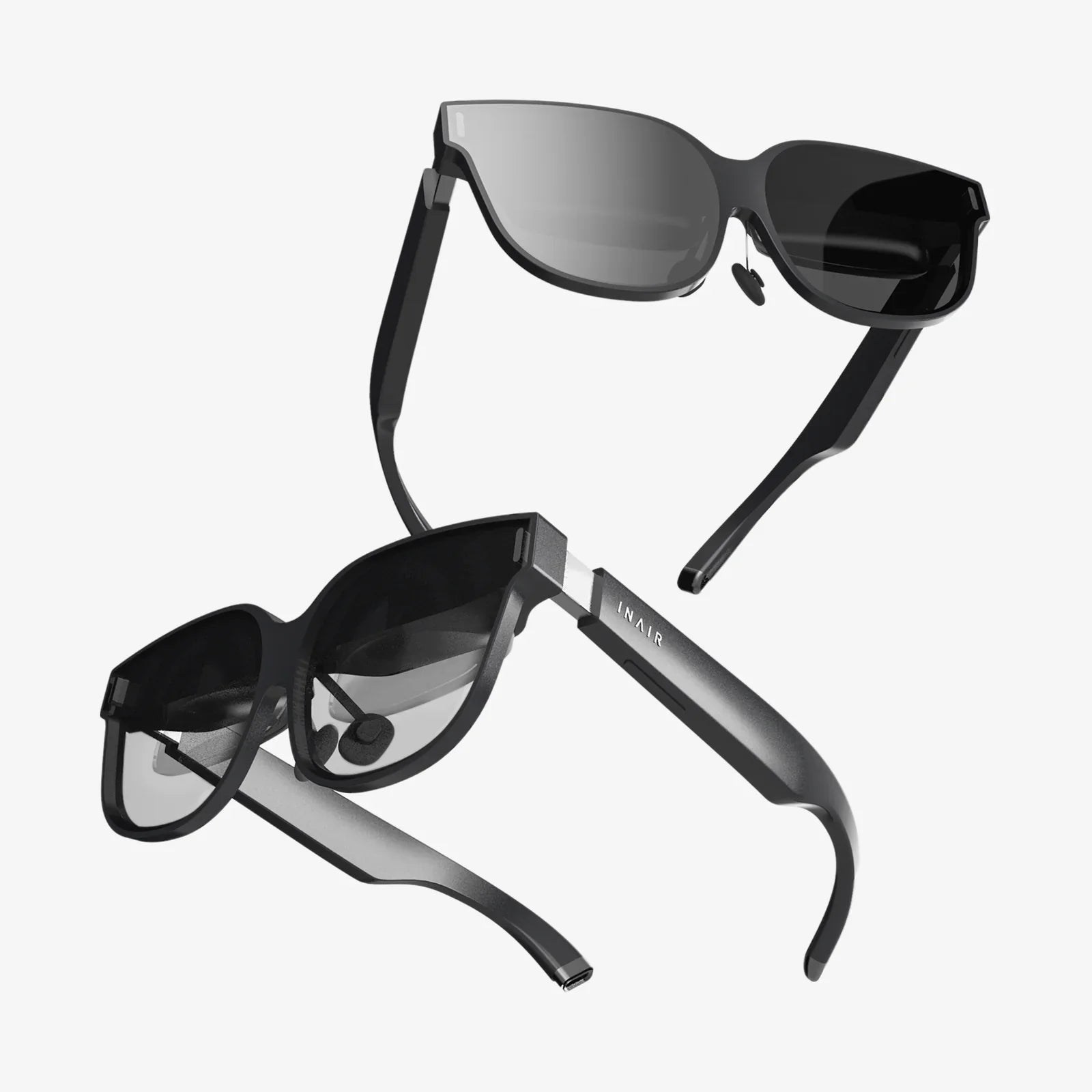
Imagine a world where digital information doesn't just live on a screen in your hand but is seamlessly woven into the fabric of your reality. Directions float on the road in front of you, a recipe hovers next to your mixing bowl, and a colleague's avatar collaborates with you from across the globe as if they were in the room. This is the promise held within two simple letters: AR. If you've ever wondered what this technology truly entails and how a simple pair of glasses can unlock it, you're about to embark on a journey to the cutting edge of wearable computing.
Demystifying the Acronym: More Than Just Reality
At its core, AR stands for Augmented Reality. It is a technology that superimposes a computer-generated image, video, or information layer onto a user's view of the real world. Unlike Virtual Reality (VR), which creates a completely immersive, digital environment that replaces the real world, AR enhances your existing reality by adding digital elements to it. Think of it as a heads-up display (HUD) for life itself. The goal is to blend digital and physical worlds so seamlessly that the interactive digital elements become a natural part of your perception.
The Core Components: How AR Glasses Create Magic
Transforming a standard pair of spectacles into a portal for augmented experiences requires a sophisticated blend of hardware and software. While designs vary, most AR glasses share several key components that work in concert.
1. The Display Technology: Projecting the Digital
This is the heart of the device—the component that actually paints the digital images onto your field of view. There are several primary methods:
- Waveguide Displays: This is among the most common and advanced methods. Light from a micro-display projector is channeled through a transparent, wafer-thin piece of glass or plastic (the waveguide) using a combination of diffraction gratings or mirrors. This technology allows for a sleek, glasses-like form factor while projecting bright, clear images onto the lenses.
- Curved Mirror Combiners: This method uses a small, semi-transparent curved mirror placed in front of the eye. A projector displays an image onto this combiner, which reflects it into the eye while still allowing the user to see the real world behind it. This can offer a very wide field of view.
- Retinal Projection: A more experimental approach, retinal projection (or scanning) aims lasers or LED light directly onto the retina of the eye. This can create incredibly sharp images regardless of the user's eyesight, but it presents significant technical and safety challenges.
2. Sensors and Cameras: The Eyes of the Glasses
For digital content to interact convincingly with the real world, the glasses must first understand that world. A suite of sensors acts as its eyes and ears:
- Cameras: One or more cameras track the environment, recognize objects, and read surfaces. They enable features like hand tracking for gesture control and can scan QR codes or identify products.
- Depth Sensors: Often using infrared light, these sensors (like time-of-flight sensors) map the environment in three dimensions. This allows digital objects to occlude or be occluded by real-world objects and sit convincingly on a table or floor.
- Inertial Measurement Units (IMUs): These include accelerometers and gyroscopes that track the precise movement and orientation of the user's head. This ensures the digital content remains locked in place even as you move your head around.
- Eye-Tracking Cameras: Tiny cameras pointed at the eyes can determine exactly where the user is looking. This enables intuitive control (just look at a button to select it), enables dynamic focus rendering, and can create realistic avatars with lifelike eye contact.
3. Processing Power: The Brain Behind the Operation
All the data from the sensors must be processed in real-time. This immense computational task can be handled in two ways:
- On-Device Processing: Higher-end, self-contained glasses have a powerful System-on-a-Chip (SoC) within the frame itself, similar to a smartphone. This allows for full functionality without tethering to another device.
- Tethered Processing: Many designs offload the heavy processing to an external device, like a smartphone or a small wearable computer pack, connected via a cable or wirelessly. This keeps the glasses lighter, cooler, and more energy-efficient.
4. Connectivity and Audio
Staying connected is crucial. Wi-Fi and Bluetooth are standard for accessing cloud data and connecting to peripherals. For audio, many AR glasses use bone conduction or tiny directional speakers that beam sound directly into the user's ears without blocking ambient noise, maintaining situational awareness.
Beyond Novelty: The Practical Applications of AR Glasses
While consumer applications like gaming and social media filters are highly visible, the true transformative power of AR glasses is already being realized in enterprise and specialized fields.
Revolutionizing Industry and Manufacturing
On factory floors and in warehouses, AR glasses are boosting efficiency and reducing errors. Technicians can see assembly instructions overlaid directly on the machinery they are repairing. Warehouse workers can see optimal picking routes and item information without consulting a handheld scanner, keeping their hands free and their workflow uninterrupted. Remote experts can see what a on-site worker sees and annotate their view with arrows and notes to guide them through complex procedures, drastically reducing travel costs and downtime.
Transforming Healthcare and Medicine
Surgeons can have vital signs, 3D anatomical models from pre-op scans, and other critical data displayed in their line of sight during procedures. Medical students can learn anatomy by exploring detailed holograms of the human body. Nurses can instantly access patient records and medication information hands-free, improving both speed and accuracy of care.
Enhancing Design and Architecture
Architects and interior designers can walk through full-scale 3D models of their creations before a single brick is laid. They can visualize how a new piece of furniture would look in a room or how sunlight will fall at different times of the day. Automotive designers can examine and interact with life-size 3D models of new car designs, making collaborative changes in real-time.
Redefining Remote Collaboration and Communication
AR glasses promise to make video calls obsolete, replacing them with spatial computing experiences where digital avatars of colleagues can sit in your real-world meeting room, interact with shared 3D models, and collaborate as if they were physically present. This creates a sense of "telepresence" that flat screens cannot match.
Challenges and Considerations on the Road to Adoption
Despite the exciting potential, several significant hurdles remain before AR glasses become as ubiquitous as smartphones.
The Form Factor Dilemma
The ultimate challenge is packing all the necessary technology—powerful processors, bright displays, multiple sensors, and a battery—into a package that is socially acceptable, comfortable to wear all day, and aesthetically pleasing. Early devices often face a trade-off between capability and size, being either too bulky for mainstream use or too limited in their features.
Battery Life and Thermal Management
Powering high-resolution displays and constant sensor data processing is incredibly energy-intensive. Achieving all-day battery life in a small form factor is a major engineering challenge, closely linked to managing the heat generated by these components.
Social Acceptance and Privacy
The concept of wearing a camera on your face raises legitimate privacy concerns for both the wearer and those around them. Social norms around when and where it is appropriate to wear such devices are yet to be established. The "glasshole" stigma from early devices is a barrier that new designs must overcome through clear indicators of recording and robust privacy controls.
The Quest for a Killer App
While enterprise has found its killer apps in training and remote assist, the consumer market is still searching for the undeniable, must-have application that will drive mass adoption. It needs to be an experience that is not just incrementally better on glasses, but fundamentally impossible without them.
The Future is Augmented: What Lies Ahead?
The trajectory of AR glasses points toward a future where they become as integrated into our lives as smartphones are today. We can expect continuous miniaturization of components, leading to styles that are indistinguishable from regular eyewear. Advances in artificial intelligence will make interactions more intuitive, allowing the glasses to anticipate our needs and provide contextually relevant information without explicit commands. Eventually, the technology may evolve toward contact lenses or even direct neural interfaces, but for the foreseeable future, the glasses form factor remains the most practical and powerful gateway to an augmented world.
The journey to understand what AR stands for in glasses reveals far more than a simple definition; it uncovers a fundamental shift in how we will interact with information and with each other. This isn't just about a new gadget—it's about designing a new layer of human experience, one where the digital and physical finally become one. The next time you see someone wearing a pair of high-tech spectacles, look closely; you might just be catching a glimpse of the future.
Share:
Picture Expansion: The Revolutionary AI Technology Reshaping Visual Content Creation
Picture Expansion: The Revolutionary AI Technology Reshaping Visual Content Creation