


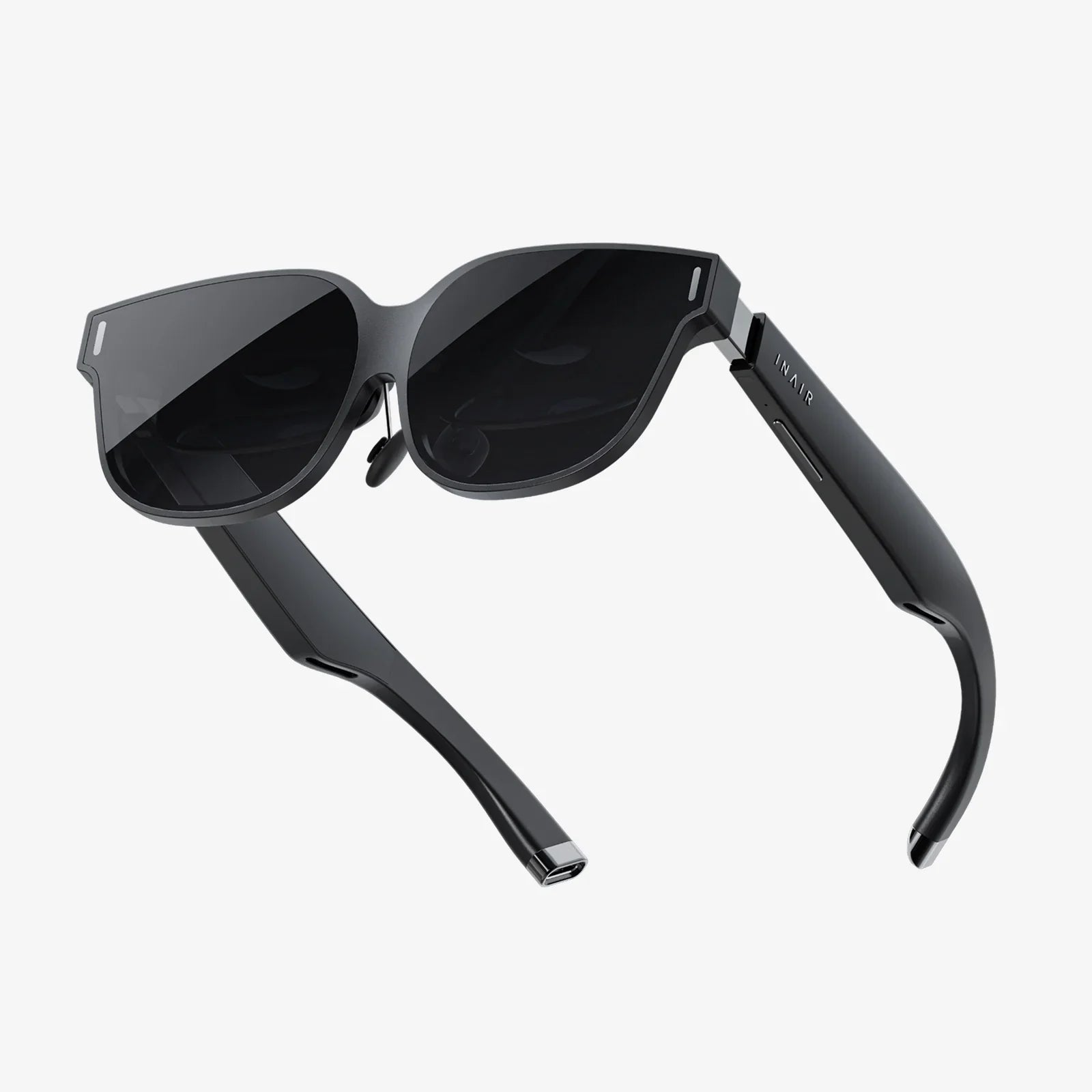
- by wangfred
What AR VR Headsets Are Like: A Journey Into Digital Realms
- by wangfred
Imagine a device that can shrink the universe to fit between your eyes and your eyelids, a portal you wear on your face that can conjure worlds from the void or paint digital dreams onto your living room. This is the promise and the reality of modern AR and VR headsets, and the experience of using one is far more complex and profound than any simple specification sheet could ever convey. It is a journey for the senses, a challenge to perception, and a glimpse into a future that is already unfolding before our very eyes.
The initial experience begins not with sight, but with touch. You lift the device, noting its heft. Modern headsets are a careful ballet of engineering, balancing batteries, lenses, processors, and sensors. They are lighter than their ancestors from just a few years ago, but they still have a tangible presence. As you secure the strap system—whether a simple elastic band or an elaborate rigid halo—you feel it cradle your head. The fit is paramount; a poorly adjusted headset is a constant distraction, while a perfect fit makes the technology itself begin to fade away.
Then comes the act of placing the display over your eyes. Often, you are instructed to first define your interpupillary distance (IPD), the space between your pupils. This crucial calibration, done via a physical slider or a software menu, ensures the virtual world has a correct sense of scale and depth. You finally lower the visor, and the physical world is either completely replaced or strikingly augmented.
What you see through a high-quality headset is the culmination of decades of display technology. It is not like looking at a television screen; it is like having a television screen for a reality.
In Augmented Reality, the magic is different. Digital objects are composited onto a live feed of your real environment or projected through semi-transparent lenses. The fidelity of this blending is the holy grail. The goal is for a virtual cat to sit convincingly on your real sofa, casting accurate shadows and being occluded by your real coffee table as you walk around it. When it works, it creates a delightful and uncanny sense of wonder.
Vision is only half the story. The auditory experience is equally critical for suspension of disbelief. Headsets employ advanced spatial audio technology. This means sounds have a virtual origin point in the 3D space around you.
If a virtual bee is buzzing behind your left shoulder, you will hear it in your left ear. The sound changes subtly as you turn your head—it might move to your side, then behind you, then to your right as you rotate. This 360-degree soundscape is incredibly effective at selling the reality of the simulation. The creak of a wooden plank in a haunted house feels above you. The whisper of a character feels like it is right in your ear. It is a deeply immersive and often overlooked aspect of the experience that powerfully anchors you in the digital realm.
We explore digital worlds not just with our eyes and ears, but with our hands. This is where motion-tracked controllers come in. They become your virtual hands, swords, paintbrushes, and tools. You look down in a VR game and see your digital hands mimic the precise orientation and position of your physical ones. This embodiment is a powerful neurological trick.
Advanced haptic feedback in the controllers provides a sense of touch. You feel a subtle vibration when you pull a virtual trigger, a sharper buzz when your sword clashes with an enemy's shield, and a rhythmic pulse for a revving engine. This tactile feedback bridges the gap between the abstract digital action and physical sensation, making interactions feel weighty and consequential.
Your entire body becomes part of the interface. Inside-out tracking, where cameras on the headset itself map the room, allows you to walk around, crouch, lean, and dodge. You are not just a floating camera; you are an physical actor in the scene. Ducking behind a virtual barricade to avoid enemy fire requires you to physically crouch. Peering around a corner requires you to lean.
This physicality is a double-edged sword. It is the source of unparalleled immersion, transforming passive viewing into an active experience. However, it also introduces the unique phenomenon of virtual reality sickness. For some, when there is a disconnect between what the eyes see (e.g., running) and what the inner ear feels (standing still), it can lead to dizziness and nausea. Developers use clever techniques like teleportation movement and comfort vignettes (softly blurring the periphery during motion) to mitigate this, allowing more people to comfortably enjoy the experience.
Perhaps the most startling revelation of using a modern headset is the social experience. In social VR platforms, you can meet with others represented by stylized avatars. But it does not feel like a video game. Because you are embodied, because you can make eye contact (the headset tracks your eyes), because you can use hand gestures, and because you hear their spatially-aware voice, you achieve a sensation of shared presence. You feel like you are truly in the same room with another person, despite being miles apart physically. The conversation flows naturally, punctuated by nonverbal cues. It is a form of communication that is richer and more human than a phone call or video chat.
Removing the headset after a long session is its own unique experience. There is often a brief, disorienting moment of re-acclimating to the real world—a phenomenon sometimes called the VR hangover. Your brain has become so accustomed to the rules of the virtual world that the consistent, un-changing nature of reality can feel momentarily strange. Your hand might not feel quite like your own for a few seconds. This feeling passes quickly, but it is a testament to the power of the technology to reshape perception.
More lasting is the shift in perspective. After using AR and VR, you start to see the physical world differently. You might look at an empty corner of a room and imagine a virtual sculpture there. You understand that the space around you is not fixed; it is a canvas waiting to be painted with information and imagination. It fosters a new mindset, one that sees the potential for digital layers to enhance, educate, and entertain within our everyday lives.
The journey of an AR/VR headset is one of constant evolution. The technology is rapidly moving towards smaller form factors, like lightweight glasses, higher-resolution displays that are indistinguishable from reality, and more intuitive input methods like advanced hand-tracking that eliminates controllers altogether. The goal is to make the technology vanish entirely, leaving only the experience.
Using a headset today is to witness the birth of a new paradigm of computing. It is an intimate, personal, and profoundly sensory experience that is difficult to encapsulate in words. It is the thrill of standing on the edge of a virtual volcano, the focus of sculpting a digital masterpiece in thin air, the connection of sharing a laugh with a friend who exists only as light inside a visor. It is a glimpse into a future where the lines between the digital and the physical are not just blurred, but are woven together into a new, richer tapestry of human experience. The portal is here, and it fits on your head.
This is not just about games or novelty; it is about fundamentally expanding the canvas of human experience. The headset is the brush, and the world—both real and virtual—is the palette. The question is no longer what these devices can do, but what we will choose to create with them. The next great masterpiece, the next revolutionary classroom, the next profound social connection, might not be found on a screen, but all around you, waiting to be unlocked.
Share:
Best AI Glasses 2025: The Smart Glasses Revolutionizing Daily Life with Unprecedented AI Features
Visual and Augmented Reality: The Invisible Layer Reshaping Our World