


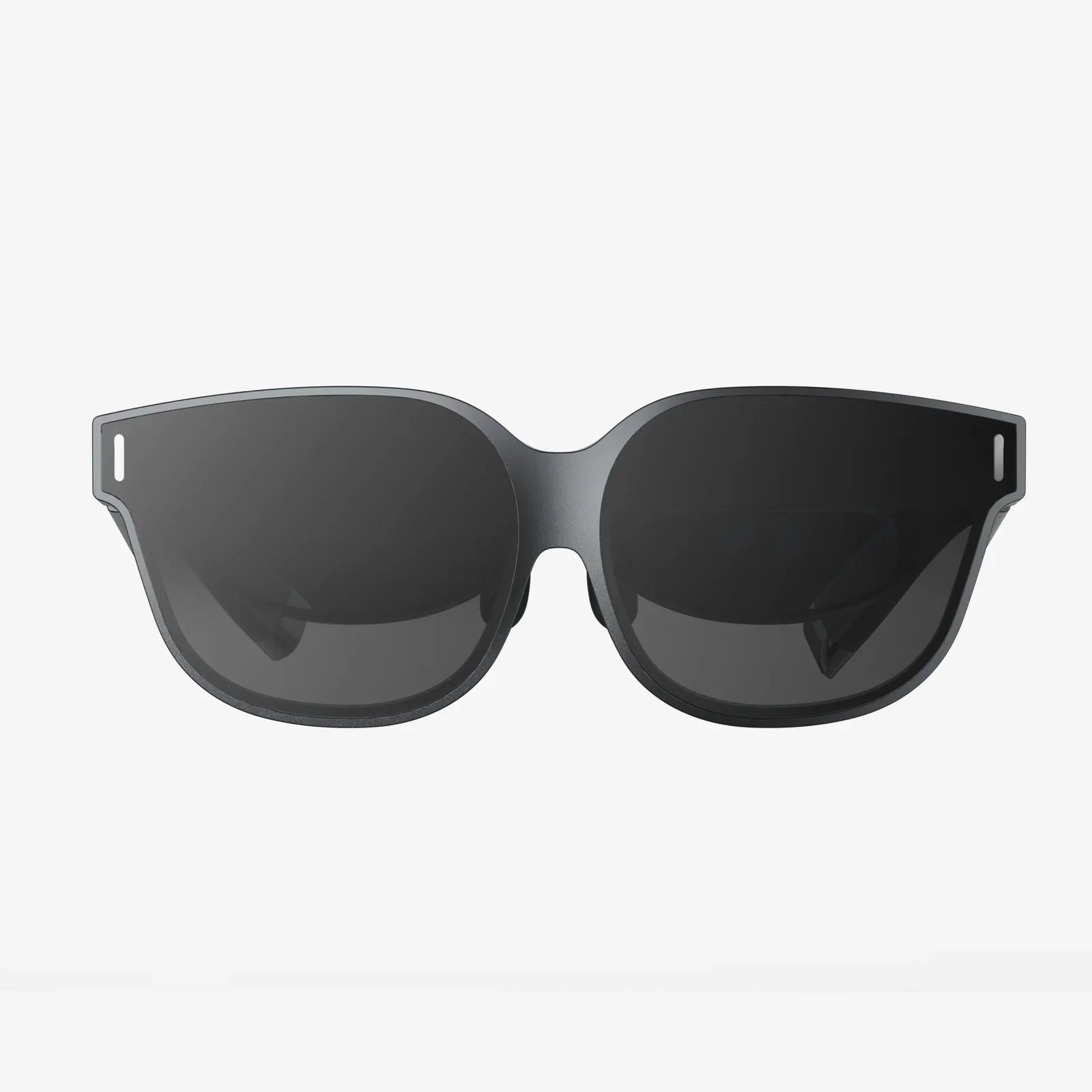
Imagine a world where information flows seamlessly into your field of view, where language barriers dissolve before your eyes, and your entire digital life is accessible without ever looking down at a screen. This is no longer the realm of science fiction; it is the burgeoning reality promised by digital glasses, a technological leap poised to revolutionize how we see and interact with the world around us. This article delves deep into the intricate ecosystem of this wearable technology, unpacking its mechanics, its vast potential, and the profound questions it raises for our future.
Beyond Simple Lenses: Defining the Digital Paradigm
At its core, the term digital glasses refers to any eyewear that incorporates computational technology to augment the user's experience. Unlike standard prescription glasses, which passively correct vision, or sunglasses, which merely filter light, digital glasses are active participants in your perception. They are a sophisticated blend of optics, micro-electronics, sensors, and software designed to overlay digital information onto the real world or to create immersive digital environments. This places them at the intersection of several technological domains, including augmented reality (AR), virtual reality (VR), and assistive technology.
The Architectural Blueprint: Core Components and Technologies
The magic of digital glasses is engineered through a symphony of complex components working in unison. Understanding these parts is key to appreciating their capability.
1. The Display Systems: Painting Light onto Reality
This is the most critical component, the mechanism through which digital content is projected into the user's eyes. Several competing technologies exist:
- Waveguide Optics: Often considered the gold standard for sleek designs, waveguides use tiny, transparent gratings etched into the lens to bend light from a micro-projector at the temple into the eye. This allows for a seemingly floating image that overlays the real world without obstructing it.
- Curved Mirror Optics: This system uses a small combiner—a partially reflective piece of glass—placed in front of the eye. A projector shoots an image onto this combiner, which then reflects it into the retina while still allowing most ambient light to pass through.
- Retinal Projection: A more advanced and nascent technology, retinal projection (or virtual retinal display) aims to scan light directly onto the retina. This can potentially offer a wider field of view and sharper image, regardless of the user's vision prescription.
2. The Sensory Suite: Perceiving the World
To interact intelligently with the environment, digital glasses are equipped with a powerful array of sensors:
- Cameras: High-resolution cameras capture the world in front of the user, enabling computer vision algorithms to understand surfaces, objects, and gestures.
- Inertial Measurement Units (IMUs): These include accelerometers and gyroscopes that track the precise movement and orientation of the user's head in real-time.
- Depth Sensors: Using technologies like LiDAR or structured light, these sensors map the environment in three dimensions, allowing digital objects to be placed and occluded realistically within a space.
- Microphones and Speakers: For voice input and private audio output, enabling hands-free control and immersive soundscapes.
- Eye-Tracking Cameras: These internal sensors monitor where the user is looking, enabling intuitive interaction (e.g., selecting an item by looking at it) and enabling dynamic focus displays.
3. The Computational Engine: The Brain Behind the Lenses
All the data from the sensors is processed by an onboard system-on-a-chip (SoC). This miniature computer is responsible for the immense task of simultaneous localization and mapping (SLAM), rendering graphics, running AI models for object recognition, and managing power consumption. Some models may offload heavier processing to a paired companion device, like a smartphone, via a high-speed wireless connection.
4. Power and Connectivity: The Lifelines
Powering these advanced systems is a significant challenge. Designs often incorporate batteries within the temple arms or use a small, separate battery pack connected via a wire. Efficient power management is paramount. For connectivity, Wi-Fi, Bluetooth, and 5G are essential for accessing cloud services, streaming content, and communicating with other devices.
A Spectrum of Applications: Transforming Industries and Daily Life
The true power of digital glasses is revealed not in their components, but in their application. Their utility spans from professional enterprise to consumer convenience and profound medical assistance.
Enterprise and Industrial Revolution
This is currently the most mature and valuable market. Digital glasses are becoming indispensable tools on the job site:
- Remote Expert Guidance: A field technician repairing a complex machine can stream their point-of-view to an expert thousands of miles away, who can then annotate the technician's real-world view with arrows, diagrams, and instructions.
- Warehousing and Logistics: Workers can see real-time inventory data, optimal picking routes, and instructions overlaid on bins and shelves, dramatically increasing accuracy and efficiency.
- Design and Manufacturing: Architects and engineers can visualize 3D blueprints overlaid onto a physical construction site, allowing them to identify potential clashes and verify measurements instantly.
Consumer and Lifestyle Enhancement
While the consumer market is still developing, the potential is staggering:
- Navigation: Turn-by-turn directions can be displayed on the road ahead, allowing users to navigate a new city without constantly checking their phone.
- Real-Time Translation: Look at a foreign menu or sign, and the translated text can appear superimposed over the original, effectively breaking down language barriers.
- Contextual Information: Look at a landmark to get its history, or at a product on a shelf to see reviews and price comparisons.
- Immersive Gaming and Entertainment: Transforming living rooms into digital playgrounds or bringing media players and large virtual screens anywhere.
Healthcare and Assistive Technology
Perhaps the most impactful use case is in health and accessibility:
- Visual Impairment Assistance: For those with low vision, digital glasses can enhance contrast, recognize faces and read text aloud, identify objects, and warn of obstacles, granting a new level of independence.
- Surgical Assistance: Surgeons can have vital patient statistics, MRI scans, or ultrasound imagery visually pinned to their patient during a procedure, keeping their focus entirely on the task.
- Therapeutic Applications: Used in exposure therapy for phobias or for cognitive rehabilitation by creating controlled, augmented environments.
Navigating the Challenges: The Hurdles on the Path to Adoption
Despite the exciting potential, significant hurdles remain before digital glasses become as ubiquitous as smartphones.
The Form Factor Conundrum
The ultimate challenge is creating a device that is socially acceptable, comfortable to wear for long periods, and aesthetically pleasing. Early prototypes were often bulky, heavy, and had limited battery life. The industry is in a relentless pursuit of a design that is indistinguishable from regular eyeglasses—a goal that requires monumental advancements in miniaturization, battery technology, and thermal management.
Power and Performance
High-resolution graphics, constant sensor data processing, and wireless connectivity are incredibly power-intensive. Delivering all-day battery life in a lightweight form factor is perhaps the single greatest engineering challenge. This often forces a trade-off between performance, size, and battery life.
The Privacy Paradox
Digital glasses, with their always-on cameras and microphones, represent a profound privacy challenge. The potential for surreptitious recording raises serious concerns about consent and surveillance. Manufacturers must address this with clear hardware indicators (like recording lights), robust privacy controls, and ethical data handling policies to gain public trust.
User Interface and Experience
Interacting with a floating interface requires entirely new paradigms. Voice control, hand gestures, and eye tracking are the primary candidates, but each has limitations. Designing intuitive, reliable, and non-fatiguing interfaces is crucial for mainstream adoption.
The Future Lens: What Lies Ahead
The trajectory of digital glasses points toward a more integrated and intelligent future. We can anticipate the convergence of these devices with artificial intelligence, becoming true contextual companions that understand our habits and needs. Advancements in neural interfaces may eventually allow for control via thought. Furthermore, as they evolve, they could begin to monitor health biomarkers through the skin or tears, transforming from a communication device into a guardian of our well-being. The distinction between assistive technology and consumer technology will blur, creating tools that enhance human capability for everyone.
The journey toward perfecting digital glasses is a marathon, not a sprint, but the finish line promises a fundamental shift in human-computer interaction. They hold the potential to unlock new dimensions of productivity, bridge gaps in understanding, and empower individuals in ways we are only beginning to imagine. The question is no longer if they will become a part of our daily lives, but how quickly we will adapt to and shape the new realities they will unveil right before our eyes.
Share:
Augmented Reality and Virtual Reality Definition: The Ultimate Guide to Understanding Our Digital Future
Intelligent Photochromic Auto Focus Glasses: The Future of Vision is Here