


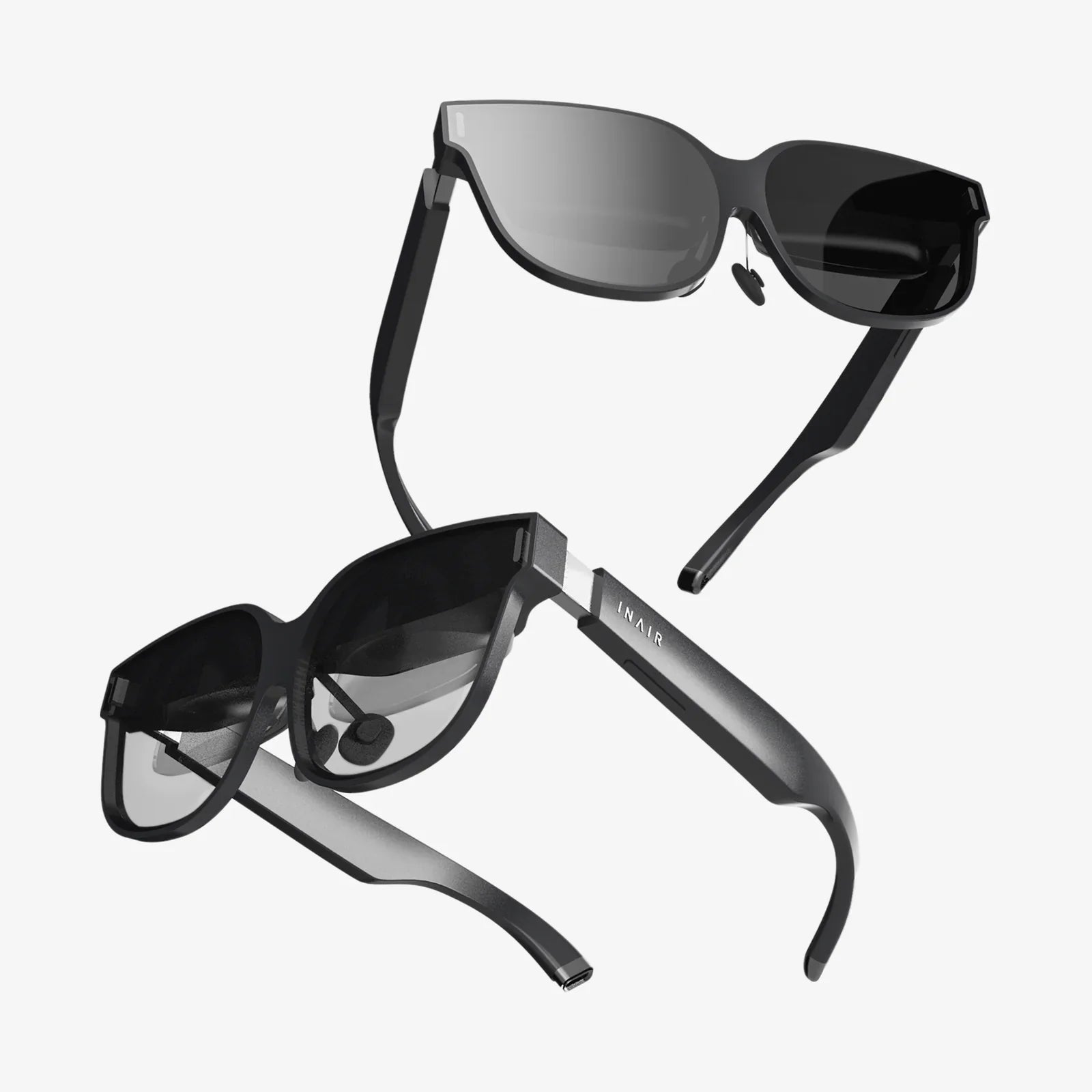
Imagine a world where digital information doesn't confine you to a screen in your hand or on your desk but instead floats seamlessly in your field of vision, accessible with a glance, a voice command, or a subtle gesture. This is the promise of smartglasses, a revolutionary wearable technology poised to change our relationship with computers and information forever. They represent not just an incremental step in gadget evolution, but a fundamental shift towards a more intuitive, immersive, and integrated digital life, and understanding them is key to understanding the next decade of technological innovation.
Beyond Science Fiction: Defining the Modern Smartglass
At its most fundamental level, smartglasses are a wearable computer in the form of eyewear. They are designed to overlay digital information—known as augmented reality (AR)—onto the user's view of the physical world. This differs significantly from Virtual Reality (VR), which creates a completely immersive, computer-generated environment that blocks out the real world. Smartglasses are about augmentation, not replacement; they enhance reality by adding a contextual and interactive data layer.
The core concept is to provide information without the disruptive act of looking down at a phone or a monitor. This creates a state of continuous, ambient computing where data is available precisely when and where it's needed. Think of a navigator seeing directional arrows painted onto the road ahead, a mechanic seeing a torque specification overlay on a bolt they are tightening, or a traveler seeing historical facts materialize beside a monument they are viewing. This is the power of contextual computing delivered through smartglasses.
Deconstructing the Technology: How Smartglasses Work
The magic of smartglasses is achieved through a sophisticated symphony of hardware components working in concert. While designs vary, most share a common set of core technologies.
The Optical Engine: Projecting a Digital World
This is the heart of the device. The primary challenge is projecting a digital image onto a transparent lens without obstructing the user's view of the real world. Several technologies achieve this:
- Waveguides: This is the most prevalent technology in modern enterprise-grade smartglasses. Light from a micro-display (like a tiny LCD or OLED) is injected into a thin, transparent piece of glass or plastic. This light is then "guided" through the lens using a combination of diffraction gratings or holographic optical elements (HOEs) that bend the light, eventually directing it toward the user's eye. The result is a bright, sharp image that appears to float in space several feet away, all while the lens remains largely transparent.
- Curved Mirrors (Birdbath Optics): This design uses a beamsplitter, a semi-transparent mirror, and a curved mirror (the "birdbath") to reflect the image from a micro-display into the user's eye. While effective and often capable of delivering rich color and high contrast, this approach can result in a bulkier form factor compared to waveguides.
- Retinal Projection: A more experimental approach, this technology aims to scan low-power laser light directly onto the user's retina. The promise is an incredibly large, bright image that remains in focus regardless of the user's eyesight, but it presents significant engineering and safety challenges.
Sensing the World: Cameras and Sensors
To understand the environment and interact with it, smartglasses are equipped with a suite of sensors:
- Cameras: High-resolution cameras capture the user's field of view, enabling computer vision algorithms to identify objects, read text, and understand spatial geometry. Depth-sensing cameras (like time-of-flight sensors) map the environment in 3D, crucial for placing digital objects convincingly in physical space.
- Inertial Measurement Unit (IMU): This combination of accelerometers and gyroscopes tracks the precise movement and orientation of the user's head. This allows the digital overlay to remain locked in place relative to the physical world—a critical feature known as "persistence."
- Microphones and Speakers: Array microphones enable clear voice commands and call functionality, often with advanced noise cancellation. Bone conduction speakers are commonly used, which transmit sound through the user's skull bones, leaving their ears open to hear ambient noises—a vital safety feature.
Processing Power and Connectivity
Smartglasses require significant computational power to run computer vision algorithms, render graphics, and process AI models. This can be handled in two ways:
- On-board Processing: Higher-end models include a dedicated System-on-a-Chip (SoC), making them self-contained computers.
- Companion Processing: Many designs tether to a smartphone or a small, pocketable "compute pack" that houses the processor and battery. This offloads weight and heat from the glasses themselves, allowing for a more comfortable, glasses-like form factor.
Connectivity via Wi-Fi, Bluetooth, and often 5G is essential for accessing cloud services, streaming data, and enabling real-time collaboration.
A Spectrum of Form and Function: Types of Smartglasses
Not all smartglasses are created equal. They exist on a spectrum, primarily defined by their intended use case and technological capability.
Monocular vs. Binocular Displays
- Monocular: These devices feature a display for only one eye. They are typically lighter, less expensive, and optimized for displaying simple notifications, basic data, or a head-up display (HUD). They excel at providing contextual information without full immersion.
- Binocular: Featuring a display for each eye, these offer a more immersive and spatially aware AR experience. They are essential for complex 3D visualizations, detailed instructions, or entertainment applications where depth perception is key. They tend to be more technologically complex and, consequently, more expensive.
Consumer vs. Enterprise Focus
- Enterprise-Grade: The current powerhouse of the smartglasses market. These are rugged, high-performance devices built for specific industrial, medical, or logistical tasks. They prioritize functionality, battery life, and durability over fashion. They are tools designed to solve business problems, improve efficiency, reduce errors, and enable remote expertise.
- Consumer-Focused: These prioritize style, comfort, and social acceptability. Their functionality is often more subdued, focusing on notifications, hands-free calls, photography, and light navigation. The ultimate goal is to look as much like regular glasses as possible while packing in just enough smart features to be useful.
The Real-World Impact: Applications Transforming Industries
While consumer applications capture the imagination, the most profound impact of smartglasses is already being felt in enterprise and specialized fields.
Revolutionizing Field Service and Manufacturing
Technicians and assembly line workers are using smartglasses to access digital work instructions, schematics, and manuals hands-free. A complex wiring diagram can be overlaid directly onto the machinery being repaired. Remote experts can see what the on-site worker sees and provide guidance by drawing annotations into their field of view, drastically reducing travel costs and resolution times.
Enhancing Healthcare and Surgery
Surgeons can visualize patient vitals, MRI scans, or ultrasound data in their line of sight without turning away from the operating table. Medical students can learn anatomy through detailed 3D holograms. Nurses can instantly access patient records and medication information, improving accuracy and patient care.
Logistics and Warehousing
In massive distribution centers, "pick-by-vision" systems guide warehouse workers to exact item locations. Digital arrows point the way, and the system can confirm the correct item is picked by scanning it visually, dramatically increasing picking speed and accuracy while reducing training time.
Design and Architecture
Architects and interior designers can walk clients through immersive 1:1 scale holographic models of unbuilt structures. Engineers can visualize and interact with complex 3D models of machinery before a single physical part is manufactured, enabling rapid prototyping and design validation.
Navigating the Challenges: The Road to Ubiquity
Despite their potential, smartglasses face significant hurdles on the path to mass adoption.
- Form Factor and Social Acceptance: The classic "cyborg" aesthetic is a major barrier. For all-day wear, smartglasses must be lightweight, comfortable, and indistinguishable from fashionable eyewear. Overcoming the social awkwardness of wearing a camera on one's face and the perception of being distracted or recording others is a immense societal challenge.
- Battery Life: High-performance computing and bright displays are power-hungry. Achieving all-day battery life in a slim, glasses-like form factor remains a fundamental engineering constraint.
- User Interface (UI) and User Experience (UX): How does one interact with a screen that is "everywhere and nowhere"? Voice, gesture, and touchpad controls are still evolving. Designing intuitive interfaces that feel natural and not cumbersome is critical.
- Privacy and Security: The always-on, always-sensing nature of smartglasses raises legitimate privacy concerns. Clear ethical guidelines, robust data security, and transparent user controls over when and what is being recorded are non-negotiable for public trust.
The Future Lens: What's Next for Smartglasses?
The evolution of smartglasses is accelerating, driven by advancements in multiple fields. We are moving towards a future where the technology becomes increasingly invisible and powerful.
- True All-Day Wearables: The holy grail is a device that you forget you're wearing. Advances in micro-optics, ultra-low-power displays, and battery technology will eventually produce smartglasses that are virtually indistinguishable from regular prescription glasses.
- The AI Co-pilot: Artificial intelligence will be the defining feature of next-gen smartglasses. Instead of just displaying information, they will act as a proactive assistant. Imagine your glasses quietly reminding you of a colleague's name moments before a meeting, translating a foreign menu in real-time, or alerting you to a potential hazard on the road that you hadn't noticed.
- Spatial Computing and the Metaverse: Smartglasses are the primary gateway to the concept of the "metaverse"—a persistent network of 3D virtual spaces. They will allow us to place persistent digital objects and artworks in the real world for others to discover and interact with, fundamentally blurring the lines between our digital and physical existences.
The journey from a niche tool to a ubiquitous companion is underway. The devices we see today are merely the primitive ancestors of what is to come. They are the proof-of-concept for a new paradigm of human-computer interaction, one that promises to weave computing into the very fabric of our daily perception. The question is no longer if this future will arrive, but how quickly we will adapt to a world where our reality is permanently, and wonderfully, augmented.
Share:
Augmented Reality Definition Technology: Bridging the Digital and Physical Worlds
Augmented Reality Market Size 2024: A Comprehensive Breakdown of a Multi-Billion Dollar Ecosystem