Imagine pointing your smartphone at a dusty, ancient ruin and watching it rebuild itself in glorious, towering detail right before your eyes. Or trying on a new pair of glasses from the comfort of your couch, seeing them perfectly fitted to your face as if you were standing in the store. This isn't science fiction; it's the tangible, exhilarating reality of augmented reality (AR) today. The digital and physical worlds are no longer separate realms but are merging into a new, enhanced layer of experience, and it's happening all around us. The question isn't whether AR is the future—it's how it's already reshaping our present.
Demystifying the Magic: What Exactly is Augmented Reality?
Before we dive into the myriad of examples, it's crucial to establish a clear definition. Augmented Reality (AR) is a technology that superimposes a computer-generated image, video, or 3D model onto a user's view of the real world. Unlike Virtual Reality (VR), which creates a completely artificial environment, AR uses the existing environment and overlays new information on top of it. This is most commonly achieved through the cameras and screens of smartphones and tablets, or through specialized eyewear like smart glasses. The core principle is enhancement, not replacement. It adds a digital layer of data—text, graphics, audio, and haptic feedback—to our perception of reality, making that reality more informative, interactive, and engaging.
The Retail Renaissance: Trying Before Buying, Digitally
The retail sector has been one of the earliest and most enthusiastic adopters of AR, fundamentally changing the shopping experience from a transactional chore into an interactive adventure.
Virtual Try-On for Apparel and Accessories
One of the most powerful applications is virtual try-on. Numerous fashion and accessory retailers now offer apps that allow you to see how a pair of sunglasses, a watch, or even lipstick will look on you. Using advanced facial mapping and tracking, the AR software accurately places the item on your live image, allowing you to move your head, smile, and see how it looks from different angles. This eliminates the guesswork of online shopping and drastically reduces return rates, all while providing a fun, engaging user experience.
Furniture and Home Décor Placement
Another stellar example is in home goods. Imagine debating whether a new sofa will fit in your living room, both in terms of size and style. With AR, you can simply select the item from an app, point your phone's camera at the intended space, and see a life-size, 3D model of the sofa placed perfectly in the room. You can walk around it, see how the fabric looks under your lighting, and even see if it blocks a walkway—all before spending a single dollar. This application solves a major pain point for consumers and empowers them to make confident purchasing decisions.
Transforming the Classroom: Interactive and Immersive Education
Education is being revolutionized by AR, moving learning from passive absorption to active exploration. Textbooks are being transformed into dynamic portals of knowledge.
Bringing Textbooks and Diagrams to Life
Instead of staring at a static, 2D image of the human heart in a biology book, students can use an AR app to make a detailed, beating 3D model emerge from the page. They can rotate it, zoom in to see the ventricles and arteries, and even take a virtual tour through the bloodstream. This applies to history (watching historical events play out on a tabletop), astronomy (holding the solar system in your hands), and geometry (visualizing complex shapes from all angles). This tactile, visual learning caters to different learning styles and makes complex subjects instantly more comprehensible and memorable.
Museum and Historical Site Enhancement
Museums and historical sites are using AR to create deeply enriching experiences. By pointing a device at an exhibit or a ruin, visitors can see reconstructions of ancient artifacts, watch historical figures tell their stories, or see how a crumbling castle once looked in its prime. This adds context and narrative, turning a simple visit into an unforgettable educational journey.
Revolutionizing Healthcare: From Training to Treatment
The stakes in healthcare are incredibly high, and AR is proving to be a powerful tool for improving outcomes for both medical professionals and patients.
Advanced Surgical Planning and Guidance
Surgeons are using AR for complex procedures. By overlaying CT scans or MRI data directly onto a patient's body during surgery, a surgeon can essentially see “inside” the patient, visualizing the precise location of tumors, blood vessels, or bones without making large incisions. This enhances precision, reduces risk, and can lead to shorter operation times and faster patient recovery.
Medical Training and Patient Education
For training, medical students can practice procedures on detailed, interactive AR models instead of cadavers or mannequins, receiving real-time feedback. For patients, AR can be used to visualize a medical condition or explain a complex surgical procedure in an easy-to-understand, 3D format, reducing anxiety and improving informed consent.
Navigation and Wayfinding: The World as Your Map
AR is solving the age-old problem of figuring out which way to go, transforming navigation from an abstract map into an intuitive, visual guide.
Live View Navigation in Urban Environments
Several major mapping applications now offer a "Live View" or AR walking mode. Instead of staring at a blue dot on a 2D map, you simply lift your phone, and the camera view shows you the real world with giant arrows and directions painted onto the sidewalk, telling you exactly when and where to turn. This is invaluable in dense urban environments with complex intersections, making navigation effortless and eliminating the confusion of traditional maps.
Indoor Navigation and Information Overlays
This technology extends indoors. Imagine being in a massive airport and using AR to see directions to your gate seamlessly overlaid on the terminal. Or being in a large supermarket and having an AR path light up on the floor guiding you to the exact aisle for pasta sauce. Beyond directions, you could point your phone at a restaurant to see its reviews and menu, or at a monument to get a historical information bubble.
Gaming and Entertainment: Play in Your World
The gaming world was introduced to the mass potential of AR with the global phenomenon of a mobile game that had players chasing digital creatures in parks, streets, and their own backyards. This game demonstrated the core appeal of AR gaming: it uses your environment as the playground.
Location-Based and Tabletop Games
Beyond that, AR enables immersive tabletop games where fantastical battles unfold on your coffee table, or interactive storybooks where characters leap out and interact with the child reading. It allows filmmakers to create AR-enhanced posters and promotional materials, and social media platforms to offer a endless array of fun, engaging filters and effects that transform users' faces and environments, making communication more playful and creative.
Industrial and Manufacturing: The Invisible Assistant
In the industrial sector, AR is a powerhouse for efficiency, safety, and training, often referred to as the "invisible assistant" for workers.
Remote Expert Assistance and Complex Assembly
A field technician tasked with repairing a complex machine can wear AR glasses that allow an expert located thousands of miles away to see what they see. The remote expert can then draw arrows, highlight components, and display instructions directly into the technician's field of view, guiding them through the repair step-by-step. This saves immense time and cost on travel and drastically reduces errors.
Digital Work Instructions and Warehouse Logistics
In manufacturing and assembly, workers can use AR to see digital work instructions overlaid on the physical product they are building, showing exactly which part goes where and how to torque it. In warehouses, AR can guide pickers to the exact shelf and bin for an item, optimizing their path and streamlining the entire logistics chain.
The Future is Overlaid: Where Do We Go From Here?
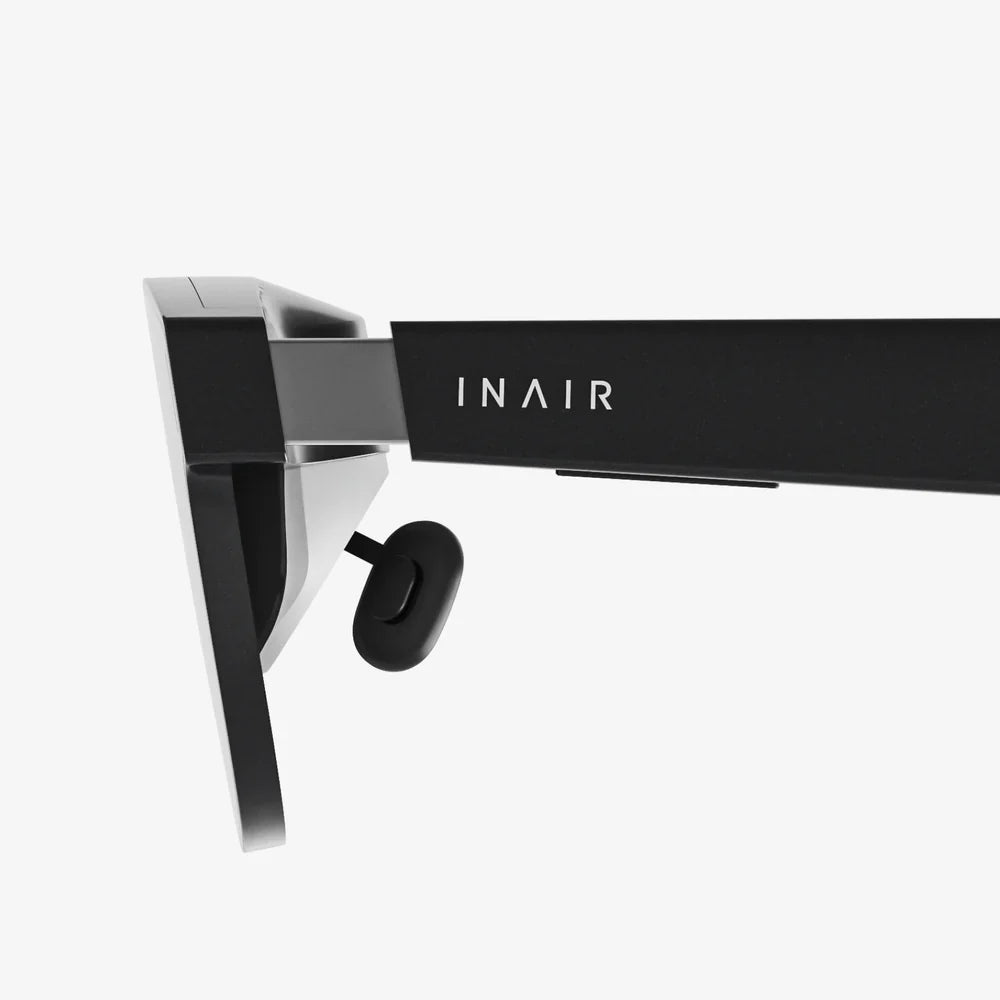
The examples we see today are merely the foundation. The future of AR points towards even more seamless integration. The evolution from holding up a smartphone to wearing stylish, lightweight AR glasses is inevitable. This will unlock "hands-free" AR, where information is constantly available in our periphery—translating street signs in real-time, displaying the name of a colleague you just met, or providing subtle navigation cues as you walk. It will further blur the line between the digital and the physical, creating a world where our reality is perpetually enhanced, informed, and augmented by a invisible digital layer.
From the practical magic of visualizing a new couch in your home to the life-saving precision of guided surgery, augmented reality is no longer a futuristic promise—it's a present-day utility. These examples are just the beginning of a fundamental shift in how we interact with information, our environment, and each other. The overlay is here, and it's inviting us all to see our world not just as it is, but as it could be.


Share:
Wearing Glasses and VR: The Ultimate Guide to a Clear and Comfortable Experience
Wearing Glasses and VR: The Ultimate Guide to a Clear and Comfortable Experience