


- by wangfred
What Are The AR Display Screens Called? A Guide To The Tech Powering Digital Overlays
- by wangfred
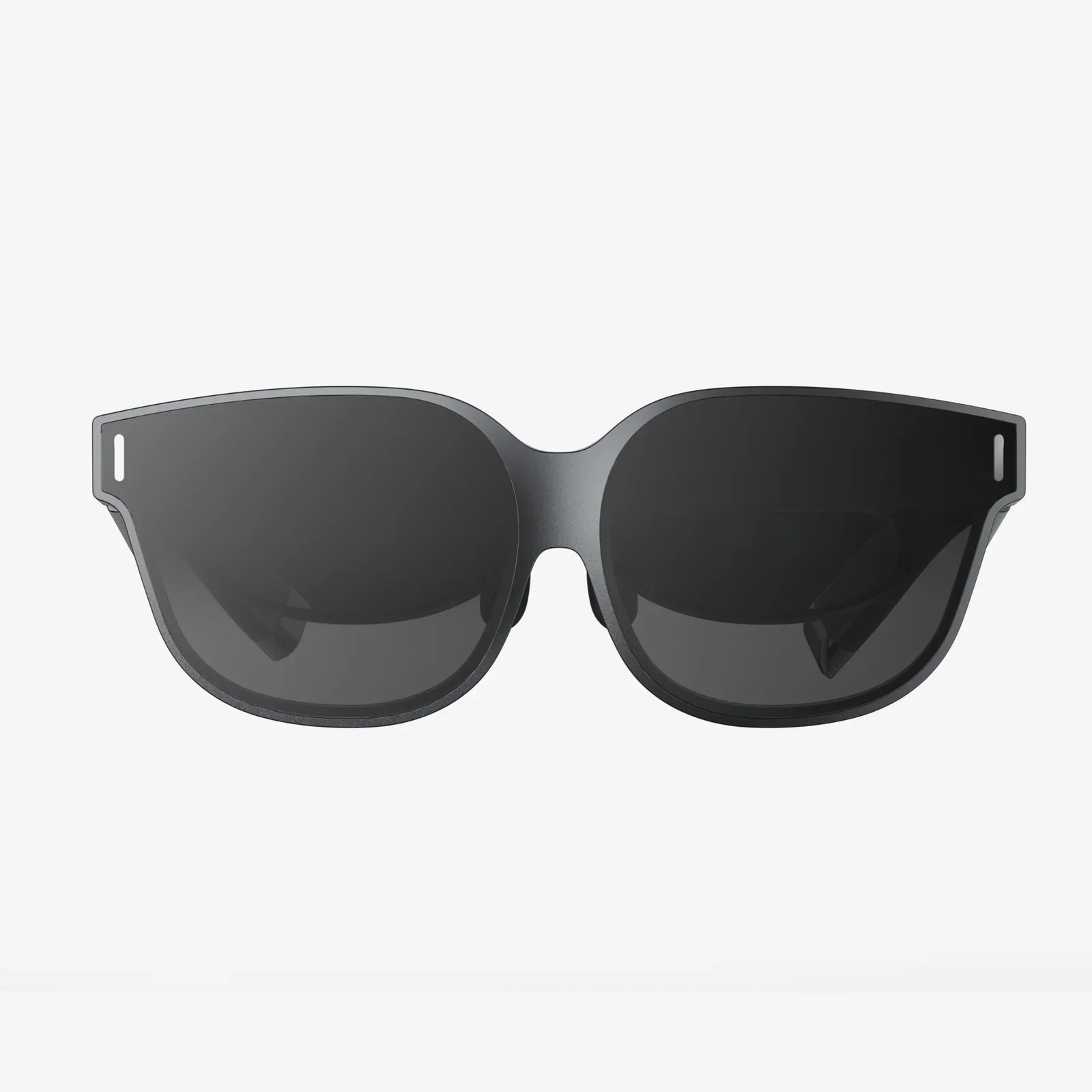
You see it in futuristic movies, high-concept tech demos, and maybe even in a recent product launch: digital information, vibrant 3D models, and interactive interfaces seamlessly superimposed onto the real world. This is the promise of Augmented Reality (AR), a technology rapidly moving from science fiction to an integral part of our daily lives. But have you ever stopped to wonder, as a sleek pair of glasses projects a navigation arrow onto the street ahead, just how that digital phantom is made visible? The magic—and the immense engineering challenge—lies in the display. So, what are the AR display screens called? The answer isn't a single brand or a simple product name; it's a fascinating ecosystem of optical technologies, each with a unique name and a specific way of tricking our eyes into seeing what isn't there.
To understand the complex names of AR displays, we must first appreciate why a standard smartphone or television screen is utterly inadequate for a true AR experience. A traditional display is a destination for your eyes; you look at it, and it occupies your entire field of view for that content. AR, by its very definition, requires the opposite. The digital content must appear to coexist within your environment, not replace it. This necessitates a display system that is:
These formidable challenges have given rise to a range of sophisticated solutions. There is no single "best" technology, but rather a family of approaches, each with its own trade-offs between field of view, resolution, form factor, and cost. The quest for the perfect blend has become the holy grail of optical engineering.
Before diving into the specific types, it's helpful to understand the universal architecture of an AR display system. It consists of two fundamental parts:
The different "names" for AR displays primarily refer to the type of optical combiner and, to a lesser extent, the type of PGU employed.
When discussing modern AR glasses, the term you will encounter most frequently is waveguide. This is currently the dominant technology for consumer and enterprise-grade AR glasses aiming for a sleek, glasses-like form factor. A waveguide is a transparent substrate (often made of glass or plastic) that guides light waves from the PGU at the temple of the glasses to the eye.
The process involves in-coupling and out-coupling: special gratings or optics that inject the image into the waveguide and then eject it back out toward the eye. The magic is that this happens while allowing the real world's light to pass through the waveguide largely unimpeded. There are several subtypes of waveguides, each with its own technical nuances:
Waveguides are celebrated for their thinness and potential for a normal eyewear aesthetic. However, they often contend with challenges like a limited field of view, the "rainbow effect" (ghosting artifacts in diffractive models), and optical inefficiency that requires very bright PGUs.
While sometimes grouped with reflective waveguides, the Birdbath Combiner is a distinct and influential architecture. The name is a perfect description of its design: a beamsplitting cube shaped like a birdbath. Here’s how it works: The PGU (often a micro-OLED display) is mounted above the combiner, projecting an image downward. A curved, semi-transparent mirror reflects this image toward the user's eye while simultaneously allowing light from the real world to pass through from the front.
Birdbath combiners have been widely used in many standalone AR and VR headsets because they can deliver a very high-quality image with rich colors and a wide field of view. The trade-off is a bulkier optical module that protrudes from the glasses, making it less ideal for all-day, everyday wear compared to sleek waveguides, but excellent for focused, high-immersion experiences.
This category encompasses systems where the optical path isn't confined within a waveguide but exists in free space. A prominent example is the Free-Form Optics combiner. These are custom-designed, complexly shaped reflective or refractive surfaces that are engineered to take light from a PGU and project it into the eye with minimal distortion across a wide field of view. They are incredibly powerful but can be difficult and expensive to design and manufacture.
Often paired with free-space systems is a unique PGU technology: Laser Beam Scanning (LBS). Instead of a pixel-based micro-display, LBS uses tiny mirrors (MEMS mirrors) to raster-scan red, green, and blue laser beams directly onto the retina. Because it's drawing the image directly with lasers, it can achieve always-in-focus imagery and potentially very high efficiency. When combined with a free-form optical combiner, it creates a compelling, if complex, display system.
Perhaps the most futuristic-sounding approach is Retinal Projection or Virtual Retinal Display (VRD). As the name implies, this technology aims to project light directly onto the retina, bypassing the need for a physical screen or combiner in the line of sight altogether. This method promises ultimate transparency (since there's no combiner to look through), theoretically perfect focus regardless of the user's vision, and extreme efficiency.
Laser Beam Scanning is the primary method for achieving retinal projection. The safety of shooting lasers into the eye is, of course, a paramount concern and is managed by keeping the power output well within strict safety limits. While still largely in the R&D phase for mainstream consumer products, retinal projection represents a potential end-game for AR displays, offering an unparalleled combination of visual fidelity and minimalist design.
The evolution of AR displays is far from over. Research labs and companies are pushing the boundaries with new materials and physics. Metasurface Optics are an emerging field where nanostructures are engineered to manipulate light in previously impossible ways, promising ultra-thin, lightweight optical components that could replace bulky lenses and combiners. Similarly, advancements in holography point toward a future where true 3D light fields are projected into space, creating digital objects with realistic depth cues that you can literally walk around.
The choice of technology is a constant balancing act between field of view, resolution, form factor, power consumption, and cost. The "right" answer depends entirely on the application: a lightweight waveguide for all-day productivity glasses, a high-performance birdbath for immersive training simulations, or an experimental retinal display for the next generation of surgical scopes.
So, the next time you see a demo or read about a new pair of AR glasses, you'll know to look beyond the hype. The real story is in the intricate dance of light happening within the lenses. The quest to perfectly blend the digital and physical realms is driving some of the most exciting optical innovation of our time, and it's all happening right before our eyes—even if we can't see the screen.
Share:
Coolest Wearable Technology Shaping Our Connected Future
Coolest Wearable Technology Shaping Our Connected Future