


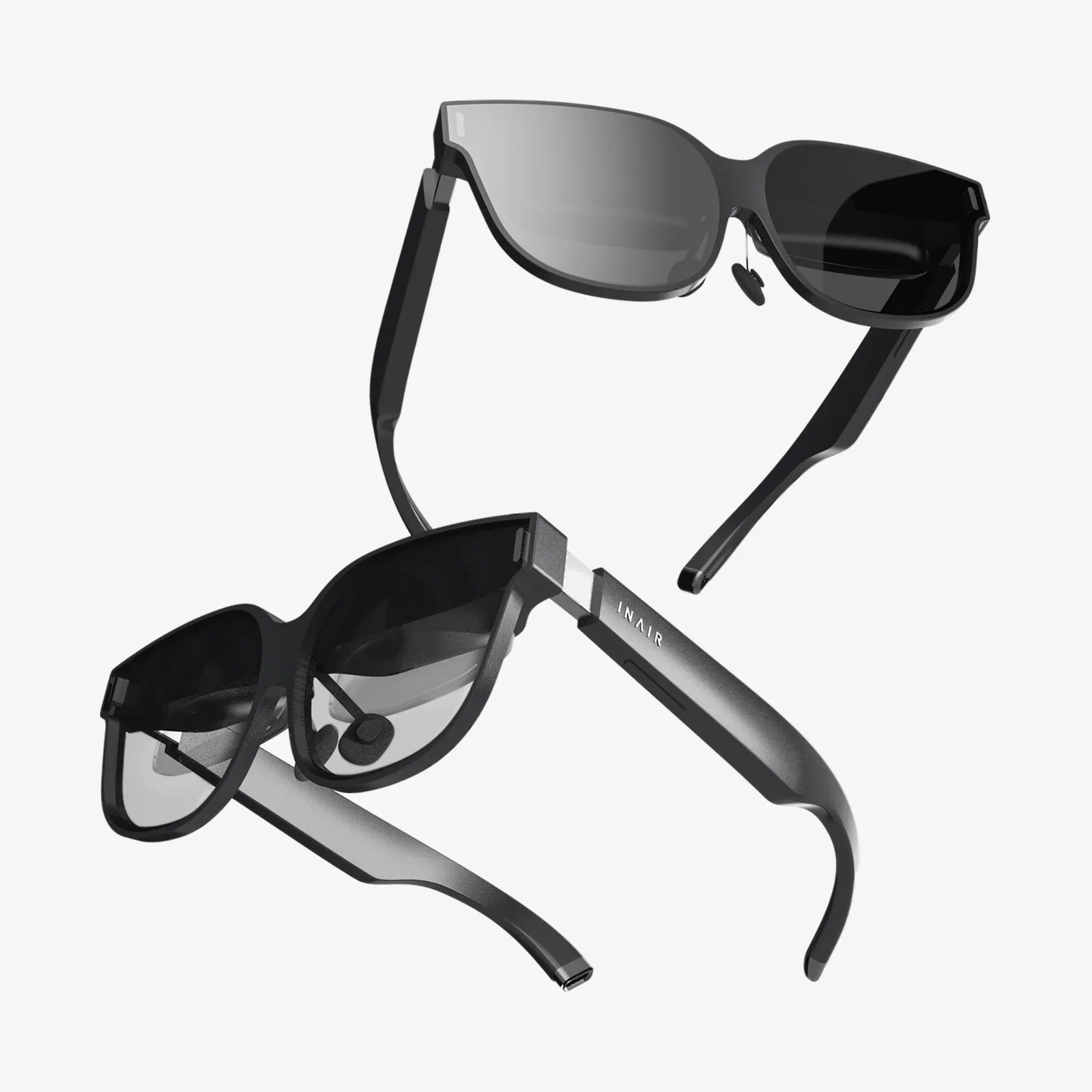
The digital and physical worlds are no longer separate realms; they are now intertwined in a dance of pixels and atoms, a fusion made possible by the revolutionary field of Augmented Reality (AR). This technology, once the stuff of science fiction, is now weaving itself into the very fabric of our daily lives, from how we shop and learn to how we work and play. But to truly grasp its transformative potential, we must move beyond the surface-level wonder and delve into the fundamental mechanics that make it all possible. The magic of AR isn't just in what you see—it's in how it sees, what it does, and how it shows it to you.
The Core Functions of AR: More Than Just Overlays
At its heart, AR is about enhancement, not replacement. Its primary functions are the building blocks that allow digital content to not only exist in our world but to interact with it intelligently and meaningfully. These functions are what separate true AR from a simple video overlay.
Environmental Recognition and Understanding
Before an AR system can add anything, it must first comprehend the environment. This is arguably the most critical function. Using data from cameras and sensors, the system performs several key tasks:
- Plane Detection: Identifying horizontal (floors, tables) and vertical (walls, doors) surfaces. This allows digital objects to be placed realistically, ensuring a virtual vase sits solidly on a real tabletop instead of floating mid-air or sinking through it.
- Mesh Reconstruction: Creating a detailed, three-dimensional map of the surroundings. This goes beyond simple planes to understand the complex geometry of a room, including irregular shapes like sofas, plants, and stairs.
- Object Recognition: Identifying specific objects or types of objects within the environment. This could be recognizing a coffee machine to display brewing instructions or identifying a car's engine part to show a repair manual overlay.
- Light Estimation: Analyzing the ambient light in a space to determine its direction, intensity, and color temperature. This allows the AR system to render digital objects with matching lighting and shadows, dramatically increasing the realism and believability of the scene.
Tracking and Persistence
For the illusion to hold, digital content must stay locked in place as the user moves. This function is what makes AR feel stable and real.
- 6DoF Tracking: Six Degrees of Freedom tracking understands the device's position and rotation in space. It tracks movement along the X, Y, and Z axes (translation) and rotation around those same axes (pitch, yaw, and roll). This is essential for the digital object to maintain its position from every angle.
- World Persistence: Advanced AR systems can "remember" the environment across sessions. You could place a virtual poster on your wall, leave the room, come back hours later, and the poster will still be exactly where you left it. This is often achieved by storing a point cloud or mesh of the space.
- Occlusion: A sophisticated function where real-world objects can pass in front of and block the view of digital objects. If a virtual character walks behind your real sofa, it should be hidden from view, just as a real person would be. This requires a deep understanding of the environment's depth and geometry.
Interaction and Manipulation
AR is not a passive experience; it's meant to be interactive. This function enables user control over the digital elements.
- Gesture Recognition: Using the camera to interpret hand and finger movements as commands. A pinch can select an object, a swipe can rotate it, and a tap can activate it.
- Raycasting: A fundamental technique for interaction. It involves projecting an invisible ray from the user's screen (or from a controller) into the 3D scene. The first object this ray hits is the one selected for interaction. This is how you "touch" and move virtual objects in 3D space.
- Physics Simulation: Integrating physics engines so that digital objects behave according to real-world rules. They can fall due to gravity, bounce off surfaces, collide with each other, and be affected by forces. This makes interactions feel natural and predictable.
The Development Methods: Building the AR Experience
Creating these complex functions requires a robust software foundation. Developers use a variety of methods and platforms to build AR applications, primarily through Software Development Kits (SDKs) and APIs.
Platform-Centric SDKs
These are comprehensive toolkits provided by major technology platforms. They offer a wide array of pre-built features, making development faster and more accessible.
- ARKit (for iOS) and ARCore (for Android): These are the dominant SDKs for mobile AR development. They handle the heavy lifting of motion tracking, environmental understanding, and light estimation. They provide developers with a reliable and high-performance foundation, abstracting away the complex computer vision algorithms. They are constantly updated with new capabilities like people occlusion, shared experiences, and improved tracking.
- WebAR: This method delivers AR experiences directly through a web browser, eliminating the need to download a dedicated application. It uses web technologies like JavaScript and WebGL. While historically less powerful than native SDKs, WebAR has made tremendous strides in accessibility and ease of sharing, making it ideal for marketing campaigns, quick previews, and broad-reach experiences.
Cross-Platform and Engine Integration
For projects targeting multiple devices or requiring high-fidelity 3D graphics, developers often work within game engines that have integrated AR support.
- Unity with AR Foundation: Unity is a powerful game engine, and its AR Foundation package provides a unified, cross-platform API. A developer can write code once and deploy it to both iOS (using ARKit) and Android (using ARCore), streamlining the development process for complex, interactive AR applications.
- Unreal Engine: Known for its cutting-edge graphics capabilities, Unreal Engine also supports AR development. It is the engine of choice for projects where visual fidelity and photorealism are paramount, such as high-end product visualizations and cinematic AR experiences.
Cloud-Based and Specialized AR
For more advanced needs, development methods extend beyond the local device.
- Cloud Anchors: This method enables shared AR experiences. Spatial data is uploaded to a cloud service, which then allows multiple users in different locations to see and interact with the same digital objects placed in their respective physical spaces. This is crucial for collaborative design, multi-player games, and social AR.
- SLAM (Simultaneous Localization and Mapping): While often a core component of SDKs, SLAM is a fundamental algorithmic method worth highlighting. It is the process by which a device can map an unknown environment while simultaneously tracking its own location within that map. It's the technological backbone that makes environmental understanding and persistent tracking possible.
The Window to the Digital Layer: AR Display Technology
The software functions and development methods are useless without a way to visualize the digital layer. Display technology is the final, crucial piece of the puzzle, determining how we perceive the augmented world. The field is rapidly evolving from screens we hold to lenses we wear.
Handheld Displays: The Smartphone Era
The most ubiquitous form of AR today relies on the device nearly everyone already owns: the smartphone.
- Optical See-Through: This is a misnomer for smartphones. They actually use Video See-Through. The device's camera captures a live video feed of the real world, the AR software composites digital elements into this feed in real-time, and the result is displayed on the screen. It's effective and accessible but can suffer from a limited field of view and a "tunnel vision" effect, as you're looking at the world through a small window.
- Tablets: Offer a larger canvas for AR, which is beneficial for detailed tasks like interior design or complex learning modules. However, they are less portable and intuitive for spatial computing than hands-free options.
Smart Glasses: The Future on Your Face
The ultimate goal of AR is to be seamlessly integrated into our field of vision through wearable glasses. Several competing technologies are vying to become the standard.
Optical Combiner Methods
These methods use optical elements to combine digital light with light from the real world.
- Waveguide Displays: The leading technology for consumer-grade smart glasses. Light from a micro-display (like a tiny LCD or OLED) is coupled into a thin, transparent glass or plastic substrate. This light is then "guided" through the lens via total internal reflection until it's directed out towards the user's eye. Waveguides allow for sleek, relatively normal-looking glasses but can present challenges with brightness, field of view, and manufacturing cost.
- Birdbath Optics: A compact design where light from a micro-display is reflected off a curved combiner (the "birdbath") and into the user's eye. This can offer a brighter image and wider field of view than some waveguides but often results in bulkier hardware that looks less like traditional eyewear.
Direct Projection Methods
These methods project light directly onto a surface.
- Retinal Projection: Also known as Virtual Retinal Display (VRD), this advanced method scans low-power laser light directly onto the user's retina. The promise is a bright, high-contrast image that appears to be in perfect focus regardless of the user's eyesight. It remains largely in the R&D phase due to significant technical and safety hurdles.
- Spatial Projectors: This approach bypasses the user's eyes entirely. A powerful projector is used to beam imagery directly onto physical surfaces in the environment—a wall, a table, a factory floor. This turns any surface into an interactive display and is useful for collaborative work and public installations, but it lacks personalization and portability.
Heads-Up Displays (HUDs)
A specialized category of AR display long used in aviation and now becoming common in automotive applications.
- Automotive HUDs: These project critical information like speed, navigation arrows, and safety warnings onto the windshield, allowing the driver to keep their eyes on the road. They typically use a combination of projectors and combiners to create a focused image that appears to float ahead of the car.
The Symbiotic Relationship
It is vital to understand that these three pillars—functions, methods, and display technology—do not exist in isolation. They are deeply interconnected in a cycle of mutual advancement. The development of more sophisticated environmental understanding functions (like semantic segmentation that identifies "wall" vs "window") demands more processing power, which pushes cloud-based methods forward. New display technologies like waveguides with a wider field of view enable more immersive experiences, which in turn require more robust tracking and interaction methods to maintain the illusion. A breakthrough in one area invariably creates new possibilities and challenges in the others, driving the entire field toward a more seamless and powerful integration of the digital and physical.
We stand at the precipice of a new era of computing, one where information will cease to be confined behind glass and will instead live all around us, contextually aware and instantly accessible. The journey to that future is being paved by the relentless innovation in AR's core functions that intelligently perceive our world, the sophisticated development methods that bring these experiences to life, and the revolutionary display technologies that will ultimately make the digital layer indistinguishable from reality itself. This isn't just about viewing a filter on your phone; it's about fundamentally reshaping human interaction with knowledge, imagination, and each other.
Share:
3D Display Projection Technology: A Revolutionary Leap in Visual Perception
Virtual Office Options: The Ultimate Guide to Building a Flexible and Professional Business Presence