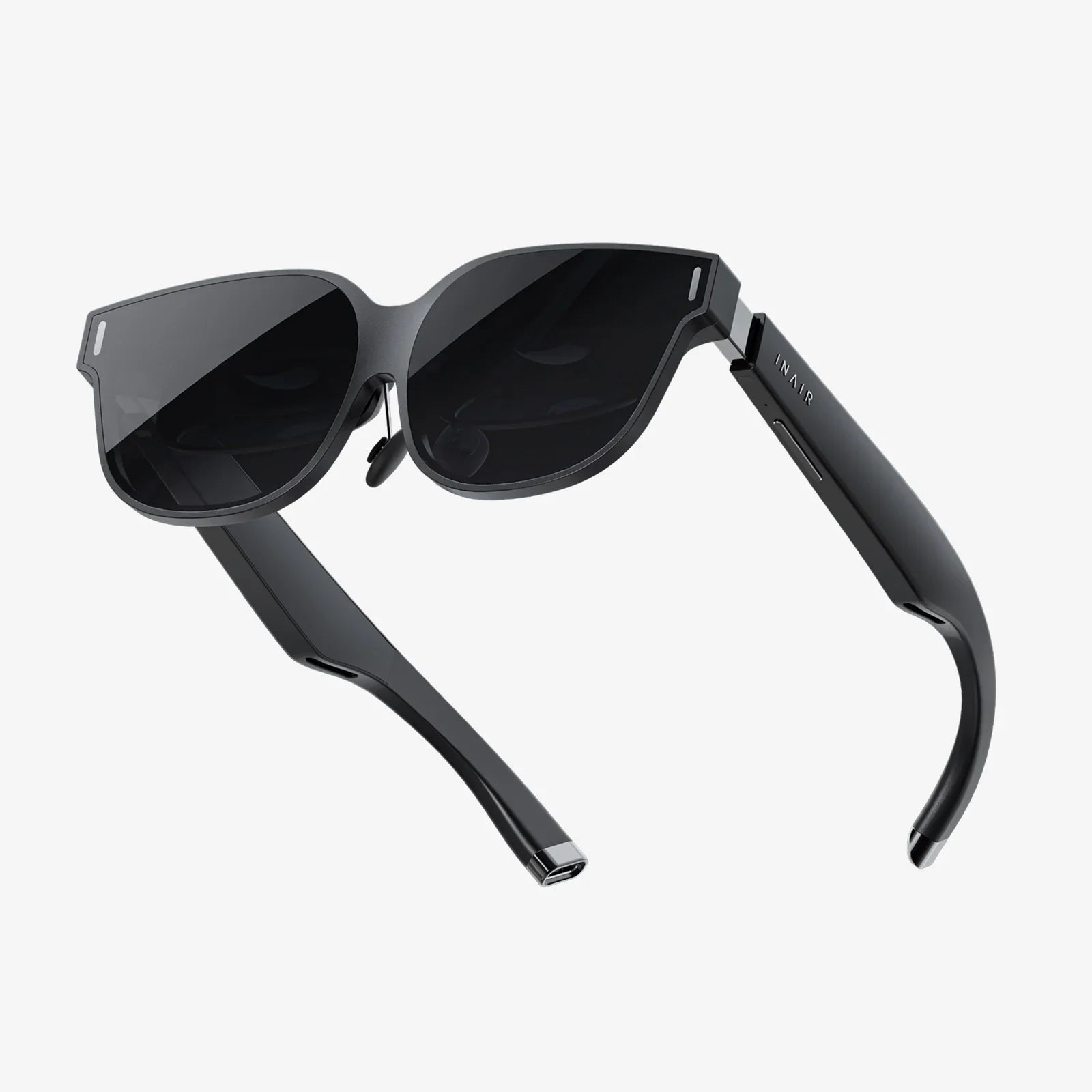
Stepping into the boardroom of the future no longer requires a plane ticket or a video call; it requires a headset. The enterprise virtual reality market is exploding, moving beyond novelty demos to become a core component of corporate strategy for training, design, collaboration, and customer engagement. But with a landscape flooded with options, how does a Chief Technology Officer, a Learning & Development manager, or an IT director cut through the hype? The quest isn't for the best gaming headset with a corporate skin; it's a strategic search for a secure, scalable, and robust tool that delivers a tangible return on investment. The question isn't just "what are the best goggles VR for enterprise?" but "what are the best goggles VR for our enterprise?" This definitive guide moves beyond specifications to explore the critical pillars that define true enterprise-grade VR, empowering you to make an investment that transforms your business.
Redefining "Best": It's Not About Polygons Per Second
In the consumer world, "best" is often synonymous with the highest resolution, the widest field of view, or the most powerful processor. For enterprise, these raw specs are merely the entry fee. The true definition of "best" is a headset that aligns with core business objectives: minimizing risk, maximizing uptime, ensuring security, and simplifying management at scale. A headset with a stunning display is useless if it can't be securely integrated into a company's existing IT infrastructure or if it's too fragile to survive daily use on a factory floor.
The enterprise VR landscape is broadly divided into two categories: tethered (or wired) headsets, which connect to a powerful computer or workstation, and standalone (all-in-one) headsets, which have all the necessary computing power built into the device. Each approach has its place. Tethered systems often deliver the highest fidelity experiences, crucial for detailed architectural visualization or complex engineering simulations. Standalone systems offer unparalleled freedom and flexibility, ideal for training scenarios where employees need to move around a large space or for use in locations where deploying high-end PCs is impractical.
The Pillars of Enterprise VR: A Framework for Evaluation
To identify the right solution, decision-makers must evaluate potential headsets against a framework of non-negotiable enterprise pillars.
1. Security and Data Privacy: The Non-Negotiable Foundation
Enterprise deployments handle sensitive data, from proprietary product designs and financial models to employee performance metrics. A consumer-grade headset that phones home to external servers with usage data is a non-starter.
-
Data Encryption: All data transmitted to and from the device, as well as data at rest, must be encrypted.
-
Device Management Integration: The headset should integrate with enterprise mobility management (EMM) and mobile device management (MDM) solutions. This allows IT departments to enforce security policies, remotely wipe devices if lost or stolen, and control application installation.
-
Controlled Software Ecosystem: Access to an open, consumer-focused app store can be a security nightmare. Enterprise solutions should offer a way to curate and deploy applications from a private, company-controlled storefront, ensuring only approved software is used.
-
Network Security: The devices must operate seamlessly within a corporate network, supporting secure Wi-Fi protocols and, ideally, offering features like "kiosk mode" to lock the device to a single application.
2. Manageability and Deployment at Scale
Deploying ten headsets is a project; deploying a thousand is an infrastructure challenge. The "best" enterprise headset is one that makes scaling effortless.
-
Remote Management: IT teams must be able to update software, change settings, and monitor device health across the entire fleet from a single dashboard, without physically touching each headset.
-
Simplified Setup (Out-of-Box Experience): Devices should be easy to unbox, configure, and get running. Features like automatic enrollment into an MDM upon startup save countless hours of IT labor.
-
User Profile Management: For shared-device environments (common in training centers), the ability to quickly switch users while maintaining separate data and profiles is essential.
3. Durability, Hygiene, and Comfort for All-Day Use
Enterprise users aren't playing a 30-minute game; they might be in an eight-hour training simulation. The hardware must be designed for this rigor.
-
Build Quality: Materials should be robust. This includes reinforced headstraps, quality plastics, and reliable controllers that can withstand accidental drops.
-
Comfort: Weight distribution is critical. Padded, adjustable straps, and interchangeable facial interfaces allow the headset to be worn comfortably for extended periods by a diverse workforce.
-
Hygiene: This is a paramount concern, especially for shared devices. Removable and washable foam or silicone facial gaskets are a minimum requirement. Some enterprise-focused kits include antimicrobial additives or offer disposable hygienic covers.
4. Total Cost of Ownership (TCO) and Clear ROI
The sticker price of the headset is only a fraction of the total investment. A holistic TCO analysis includes:
-
Hardware Cost: The headsets themselves, plus any additional controllers, base stations, or accessories.
-
Software and Content: Licensing fees for enterprise software platforms, content creation, or purchasing off-the-shelf training modules.
-
Infrastructure: For tethered setups, the cost of the high-end PCs required to run them. For standalone, the cost of charging stations, storage, and secure Wi-Fi deployment.
-
Management and Support: The IT labor required to deploy, manage, and support the fleet.
The "best" headset is the one that, when paired with a strong use case, demonstrates a clear return on investment—whether through reduced training costs, faster time-to-market, fewer workplace accidents, or improved sales conversion rates.
5. Ecosystem and Enterprise Support
A headset is not an island. Its value is derived from the software and support that surrounds it.
-
Enterprise Software Partnerships: The platform should be supported by leading enterprise software providers for virtual meetings, 3D design review, and training simulation creation.
-
Dedicated Support: Enterprises need more than online forums. Access to dedicated customer success managers, enterprise-level SLAs for technical support, and readily available repair services are critical for business continuity.
-
Roadmap and Longevity: Companies are making a multi-year investment. The vendor should have a clear, communicated roadmap for both hardware and software, ensuring the platform will evolve with business needs.
Matching the Headset to the Use Case
The "best" headset is entirely contextual to the problem it's solving. A one-size-fits-all approach does not work.
-
High-Fidelity Design & Engineering: For automotive design or architectural walkthroughs, a tethered headset connected to a powerful workstation is often necessary. The priority is visual fidelity, precise tracking, and integration with professional CAD/CAE software.
-
Soft Skills and Employee Training: For training customer service reps or hospital staff, a standalone headset is ideal. The focus is on ease of use, mobility, and the ability to run consistent simulations across multiple locations. Durability and hygiene are top concerns.
-
Industrial Field Service and Maintenance: Technicians working on complex machinery need both hands free. Standalone headsets with advanced passthrough cameras (allowing them to see their real environment) are key. They might use augmented reality features to overlay digital instructions onto physical equipment.
-
Collaborative Meetings and Virtual Workspaces: For remote collaboration, avatars, spatial audio, and shared whiteboards are crucial. Either a tethered or standalone headset can work, but strong software integration is more important than raw processing power.
The Future-Proofing Imperative
Technology evolves rapidly. A savvy enterprise buyer looks for headsets that are not just great today, but are built for tomorrow. Key trends to consider include:
-
Mixed Reality (MR) and Passthrough Capabilities: The line between VR and AR is blurring. The ability to blend high-quality digital content with a view of the real world via color passthrough cameras is becoming a powerful enterprise feature for guided work instructions and design.
-
Eye and Face Tracking: This technology provides invaluable data for training assessment (e.g., was the trainee looking at the right hazard?) and creates more realistic and expressive avatars for communication, building trust and presence in virtual meetings.
-
5G Integration: For enterprises with widespread operations, future headsets with 5G capabilities will enable high-quality, untethered experiences anywhere, reducing dependency on local Wi-Fi networks.
The journey to find the optimal enterprise VR solution is a strategic one, demanding a shift from a consumer mindset to an enterprise framework. It requires cross-functional collaboration between IT, procurement, and the business units that will derive the value. By rigorously evaluating options against the pillars of security, manageability, durability, TCO, and ecosystem support, organizations can confidently select a platform that doesn't just showcase the future of technology but actively builds the future of their business. The right headset becomes an invisible window—a seamless conduit to a more efficient, safe, and innovative way of working.
Imagine a future where onboarding a new employee in a different country is as simple as handing them a headset, immersing them in a perfect simulation of their new role before their first day. The technology to make this a widespread reality is here today, waiting for forward-thinking enterprises to look past the specs sheet and see the transformative potential within. The ultimate VR goggles won't be the ones with the highest resolution, but the ones that seamlessly disappear, empowering your workforce to achieve what was once thought impossible.