


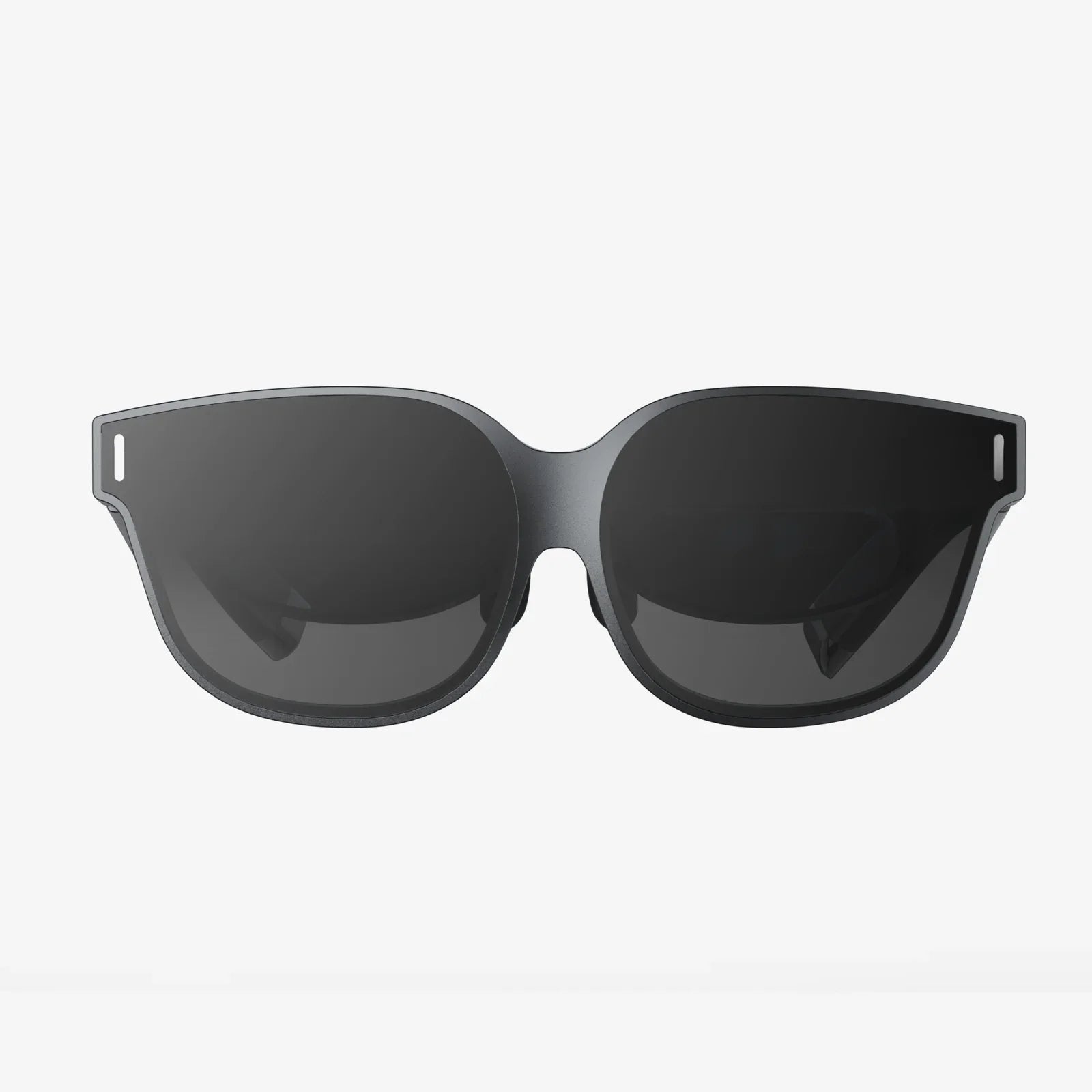
- by wangfred
What Are the Best Smart Glasses? A Deep Dive into the Future on Your Face
- by wangfred
Imagine a world where information flows seamlessly into your field of vision, where digital assistants whisper in your ear without a visible device, and your entire world can be augmented with a digital layer of context and convenience. This is the promise of smart glasses, a technology that has tantalized and teased for over a decade. But the question on everyone's mind is no longer if they are possible, but which ones truly deliver. The search for the best smart glasses isn't about finding a single perfect pair; it's about navigating a rapidly evolving landscape to find the right lens through which to view your digital life.
For many, the concept of smart glasses is inextricably linked to a single, infamous product that promised too much, too soon. Today's landscape is vastly different. The term "smart glasses" now encompasses a spectrum of devices with varying capabilities, designs, and intended uses. At its core, a smart glasses device is a wearable computer that incorporates a display element—either optical projection or a miniature screen—into a glasses-like form factor. They are designed to provide information to the user or offer interactivity through voice commands, touch surfaces, or gesture controls, all while attempting to maintain a semblance of normalcy and style.
When evaluating any pair of smart glasses, several critical features determine their place in the market and their usefulness to the wearer.
This is arguably the most important aspect. How information is presented to your eye is the defining characteristic. There are two primary methods:
The quality of the display—its resolution, color fidelity, brightness, and transparency—is paramount. A dim, fuzzy display ruins the experience, while a bright, sharp one feels magical.
Most smart glasses forego traditional headphones in favor of bone conduction or open-ear audio. Speakers built into the arms beam sound directly into your ear canal without blocking ambient noise. This allows you to listen to music, take calls, and hear AI responses while remaining fully aware of your surroundings—a critical feature for safety and social acceptance. The best audio systems are clear and loud enough for private listening without significant sound leakage that bothers people nearby.
A device meant to be worn on your face all day must be comfortable, lightweight, and, frankly, not look ridiculous. The best smart glasses prioritize a familiar, even fashionable, form factor. Many partner with established eyewear brands to offer a variety of frame styles, lens shapes, and prescription compatibility. The technology is miniaturized and distributed evenly across the frame to avoid looking bulky or lopsided. If you wouldn't wear them as regular glasses, you likely won't want to wear them as smart glasses.
All-day battery life remains a holy grail. The best devices currently offer between 4 to 8 hours of active use, often supplemented by a sleek charging case that provides multiple full charges. Performance is also key; sluggish response times, delayed voice recognition, or laggy displays can quickly frustrate users. A powerful, efficient processor is essential for a smooth experience.
The hardware is nothing without intuitive software. A robust operating system designed for a spatial interface is crucial. This includes:
There is no "one-size-fits-all" winner. The best smart glasses for you depend entirely on your primary use case. The market has effectively segmented into several distinct categories.
This category focuses on enhancing communication and media consumption. Their primary features are high-quality open-ear audio for calls and music, a built-in microphone for clear voice pick-up, and basic notification alerts (often through a small LED or simple display). They excel as a sleek, hands-free alternative to wireless earbuds for all-day wear. They are typically the most affordable and socially accepted category, as their technological footprint is subtle.
This is the futuristic vision fully realized. These glasses feature advanced waveguide displays that overlay rich, interactive digital content onto the real world. Use cases are expansive:
These devices are technologically breathtaking but often come with a higher price tag and, in some cases, trade-offs in battery life or form factor as the technology continues to mature.
Some devices are designed not for the mass consumer market but for specific industrial, medical, or logistical applications. They are built for durability, often with a focus on specific functions like barcode scanning, inventory management, or providing detailed schematics. They prioritize function and robustness over fashion.
Choosing the best smart glasses involves considering factors beyond the spec sheet.
A device with a camera on your face inherently raises privacy concerns, both for you and those around you. The best manufacturers address this head-on with clear physical indicators—like a bright LED light that activates when the camera is in use—and transparent data policies. Social acceptance is also a hurdle. The industry is learning that subtlety is key. Overt, tech-heavy designs can feel intimidating or intrusive in social settings, whereas designs that look like regular glasses are far more likely to be adopted.
Your existing digital life matters. A pair of glasses that integrates flawlessly with your smartphone's operating system will offer a smoother, more connected experience than one that requires constant workarounds. Consider where your photos, messages, and apps live.
After weighing all these factors, the answer becomes clear: the best smart glasses are the ones that disappear. Not in a literal sense, but in the sense that the technology fades into the background, allowing you to focus on the task at hand. For the audio-focused user who wants the best sound and call quality, a communication-focused model is unbeatable. For the developer, designer, or tech enthusiast hungry to experience the next computing paradigm, an AR powerhouse is the only choice. For the enterprise worker on a factory floor, a rugged specialist device is perfect.
The journey to find your ideal pair requires honest self-assessment. What problem do you want them to solve? How much are you willing to invest? How important is style to you? The market is moving at a breakneck pace, with new entrants and iterations arriving constantly. The true triumph of the current generation is that for the first time, the choices are genuinely compelling, usable, and diverse. We are no longer waiting for the future to arrive; we are simply deciding which frame it will come in. The perfect pair for you is out there, waiting to open your eyes to a world where the digital and physical are finally, and beautifully, intertwined.