


Imagine a world where your clothing monitors your vitals, your glasses overlay digital information onto the real world, and a device on your wrist not only tells time but could save your life. This isn't a glimpse into a distant sci-fi future; it's the reality of today, powered by the explosive growth of wearable technology. From the ubiquitous fitness tracker to cutting-edge smart fabrics, wearables are seamlessly integrating technology into the very fabric of our daily lives, transforming how we communicate, manage our health, and interact with the world around us. The question is no longer if you will use wearable tech, but which type will become an indispensable part of your existence.
The Wrist-Worn Revolution: Fitness Trackers and Smartwatches
The most recognizable and widespread category of wearables resides on the wrist. This segment is dominated by two closely related but distinct device types: fitness trackers and smartwatches.
Fitness Trackers, often referred to as activity bands, are the workhorses of the wellness world. Their primary function is to monitor health and activity metrics. They are typically equipped with an array of sensors including accelerometers to track movement, gyroscopes to measure orientation, and optical heart rate sensors to monitor pulse. The core data they provide includes:
- Step Counting: The foundational metric for daily activity.
- Distance Traveled: Calculated using step count and user-input stride length.
- Calories Burned: An estimate based on activity, heart rate, and user profile.
- Heart Rate Monitoring: Providing real-time and resting heart rate data.
- Sleep Tracking: Analyzing sleep duration, quality, and stages (light, deep, REM).
- Active Minutes: Tracking time spent in moderate-to-vigorous activity.
These devices are designed for longevity, often boasting battery lives measured in days or even weeks. They feature compact, minimalist designs focused on a specific purpose: quantifying your physical activity to motivate a healthier lifestyle.
Smartwatches represent a significant evolution of the concept. While they incorporate all the features of a fitness tracker, they are essentially miniature computers strapped to your wrist. They run operating systems, support third-party applications, and offer a much higher degree of connectivity and functionality. Key features that distinguish them include:
- Full Touchscreen Displays: For rich interaction and information display.
- Smartphone Integration: Displaying notifications, calls, messages, and emails.
- GPS Connectivity: For accurate outdoor activity mapping without a phone.
- Music Storage and Playback: Allowing users to listen to music wirelessly.
- Contactless Payments: Enabling payments directly from the wrist.
- Voice Assistant Support: Providing access to AI helpers for tasks and queries.
The line between these two categories continues to blur, with high-end fitness trackers gaining smart features and smartwatches placing a greater emphasis on advanced health monitoring, creating a robust ecosystem of wrist-worn technology for every need and budget.
Hearables: The Sound of the Future
Moving up from the wrist, hearables are a category of wearable technology that encompasses advanced audio devices, primarily wireless earbuds and headphones. They have evolved far beyond simple audio playback devices into sophisticated sensory and computational hubs.
Modern hearables are packed with technology. They feature multiple microphones for crystal-clear call quality and active noise cancellation (ANC), which uses microphones to pick up external noise and generate inverse sound waves to cancel it out. More importantly, they are becoming powerful health tools. Advanced models now include:
- Biometric Sensors: For monitoring heart rate and core body temperature during workouts.
- Hearing Enhancement: Using algorithms to amplify specific frequencies in real-time, acting like a hearing aid.
- Transparency Modes: Blending audio playback with ambient environmental sounds for safer situational awareness.
- Integrated Assistants: Allowing users to interact with voice assistants hands-free.
The future of hearables points towards even deeper integration with our health, with potential for monitoring blood pressure, detecting falls, and providing auditory biometric authentication.
Smart Eyewear: Augmenting Your Reality
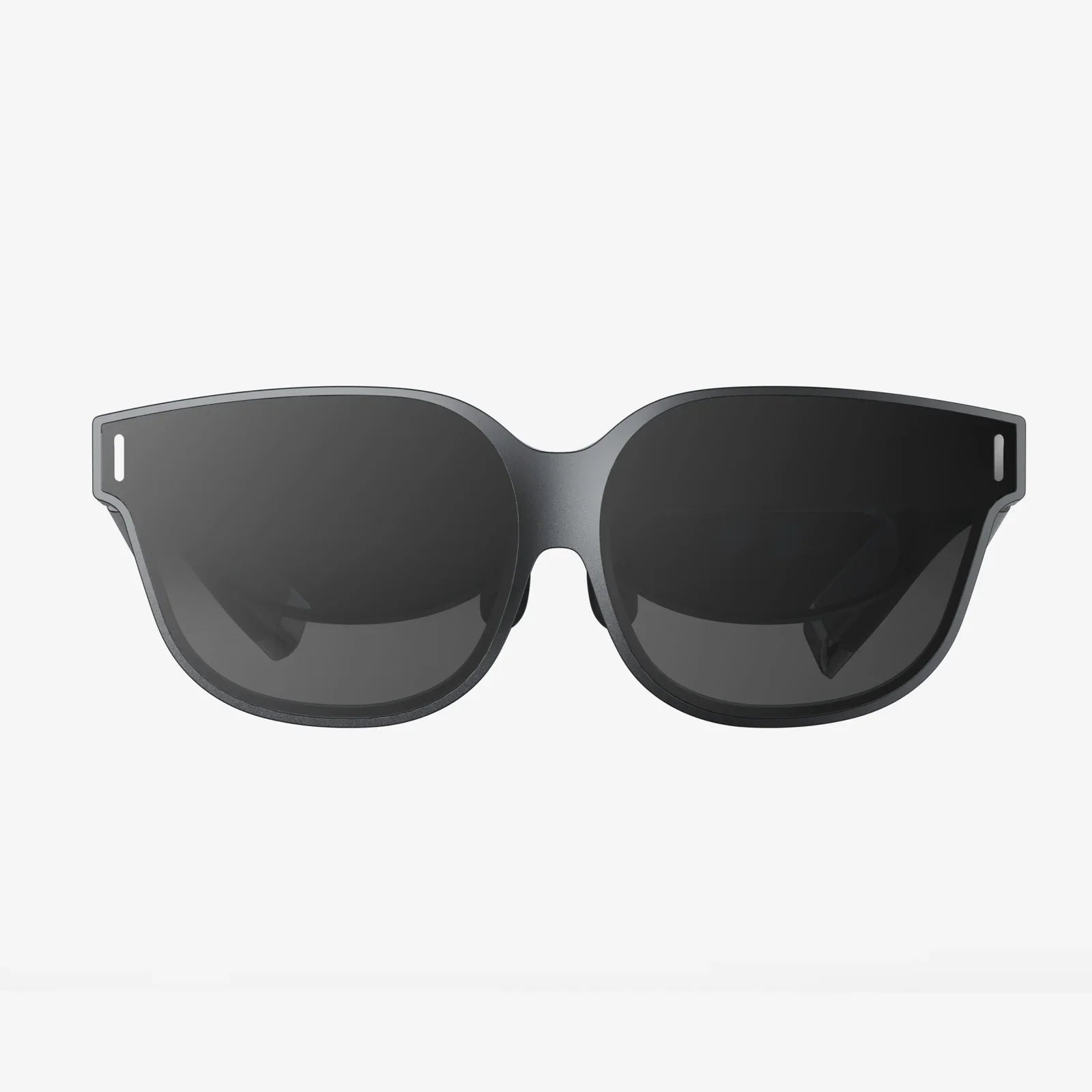
Perhaps the most futuristic segment of wearable tech is smart eyewear, which includes Augmented Reality (AR) and Virtual Reality (VR) headsets and glasses.
Virtual Reality (VR) Headsets are fully immersive devices that block out the physical world and transport the user to a completely digital environment. They are typically characterized by a large, head-mounted display that covers the eyes. Their primary applications are in:
- Gaming: Providing deeply immersive interactive experiences.
- Training and Simulation: Used by enterprises for safe, cost-effective training in fields like aviation, medicine, and military.
- Virtual Tourism and Socializing: Allowing users to explore virtual spaces and interact with others.
Augmented Reality (AR) Glasses, on the other hand, are designed to overlay digital information—such as images, text, and 3D objects—onto the user's view of the real world. This is a less immersive but more practical technology for all-day use. Early iterations focused on displaying notifications and basic information, but the technology is rapidly advancing towards:
- Navigation: Displaying directional arrows onto the street in front of you.
- Real-Time Translation: Overlaying translated text onto foreign-language signs.
- Remote Assistance: Allowing an expert to see what a technician sees and annotate their field of view with instructions.
- Information Display: Pulling up data sheets, schematics, or patient records hands-free for professionals.
While current consumer AR glasses are still in their relative infancy, the potential for this technology to become the next major computing platform, replacing smartphones, is immense.
Smart Clothing and Body Sensors: Technology Woven Into Fabric
Moving beyond accessories, wearable technology is being woven directly into the textiles we wear, giving rise to smart clothing and specialized body sensors. This represents the most intimate and integrated form of wearables.
Smart clothing incorporates conductive fibers and miniature sensors directly into garments like shirts, socks, sports bras, and shorts. This allows for a level of biometric monitoring that is impossible with a wrist-worn device. For example, a smart shirt can accurately measure:
- Electrocardiogram (ECG or EKG): Tracking the electrical activity of the heart with clinical-grade accuracy across the chest.
- Respiratory Rate: Measuring breathing patterns and volume using stretch sensors.
- Muscle Activity: Using electromyography (EMG) to analyze workout form and muscle exertion.
- Body Positioning: Analyzing running gait or cycling posture to prevent injury.
Beyond clothing, there are dedicated medical and health sensors designed for continuous monitoring. These include:
- Continuous Glucose Monitors (CGMs): Wearable patches that measure glucose levels in interstitial fluid, transmitting data to a smartphone to help diabetics manage their condition.
- Wearable ECG Monitors: Small, stick-on patches that can monitor heart rhythm for extended periods to detect irregularities like atrial fibrillation.
- Smart Patches: Disposable devices that can deliver medication, monitor specific biomarkers, or track body temperature.
This category is critically important, bridging the gap between consumer wellness and professional healthcare, enabling proactive and personalized medicine.
Specialized and Implantable Wearables
The definition of "wearable" is expanding to include even more integrated and specialized forms.
Smart Jewelry disguises technology in the form of rings, bracelets, and pendants. A smart ring, for instance, is an incredibly discrete device that can track sleep with high accuracy (as the finger is a better location for measuring pulse than the wrist), control smart home devices, and even function as a payment tool or key.
Head-Mounted Displays (HMDs) for enterprise represent a specialized class of AR wearables used in logistics, manufacturing, and field service. These ruggedized devices are worn on the head or helmet and are designed to provide workers with hands-free access to information, diagrams, and remote expert support, drastically improving efficiency and safety.
Looking even further, the field of implantable technology is emerging. While not "wearable" in the traditional sense, these devices represent the ultimate integration of tech and biology. They include:
- RFID and NFC Chips: Implanted between the thumb and forefinger, these tiny chips can store medical information, function as access keys, or make payments.
- Smart Prosthetics: Advanced prosthetic limbs that connect to the nervous system, allowing for intuitive control and even providing sensory feedback.
- Neurostimulators: Implanted devices that can manage chronic pain, treat Parkinson's disease, or prevent epileptic seizures.
While still niche, implantables point towards a future where the boundary between human and machine becomes increasingly porous.
Choosing Your Wearable and Navigating the Future
With this dizzying array of options, selecting the right wearable technology depends entirely on your individual needs. Ask yourself: Is your primary goal general fitness, advanced health monitoring, productivity, or pure entertainment? Your answer will guide you towards a wrist-worn device, a smart garment, hearables, or immersive glasses. Considerations around battery life, design, data privacy, and ecosystem compatibility are also paramount.
The future of wearable technology is hurtling towards even greater ubiquity and capability. We are moving towards a paradigm of continuous, ambient sensing, where multiple devices work in concert to create a holistic digital model of your body and your environment. Advances in battery technology, such as energy harvesting from body heat or movement, will make devices even less obtrusive. Most importantly, the convergence of AI with wearable data will shift the focus from simple tracking to intelligent prediction and automated intervention, offering truly personalized insights and recommendations that can enhance our health, safety, and productivity in ways we are only beginning to imagine.
The next time you glance at a fitness tracker or see someone with wireless earbuds, look closer. You're witnessing a silent revolution, one that is moving computing from our pockets and desks onto our bodies, and eventually, into them. This seamless fusion of human and machine promises to redefine our limitations, empower us with unprecedented self-knowledge, and fundamentally alter the human experience, making the technology we choose to wear the most personal and powerful decision we make.
Share:
Advanced Wearable Computing: The Invisible Revolution Reshaping Human Potential
Interact with AR AR Core: The Ultimate Guide to Augmented Reality on Your Device