


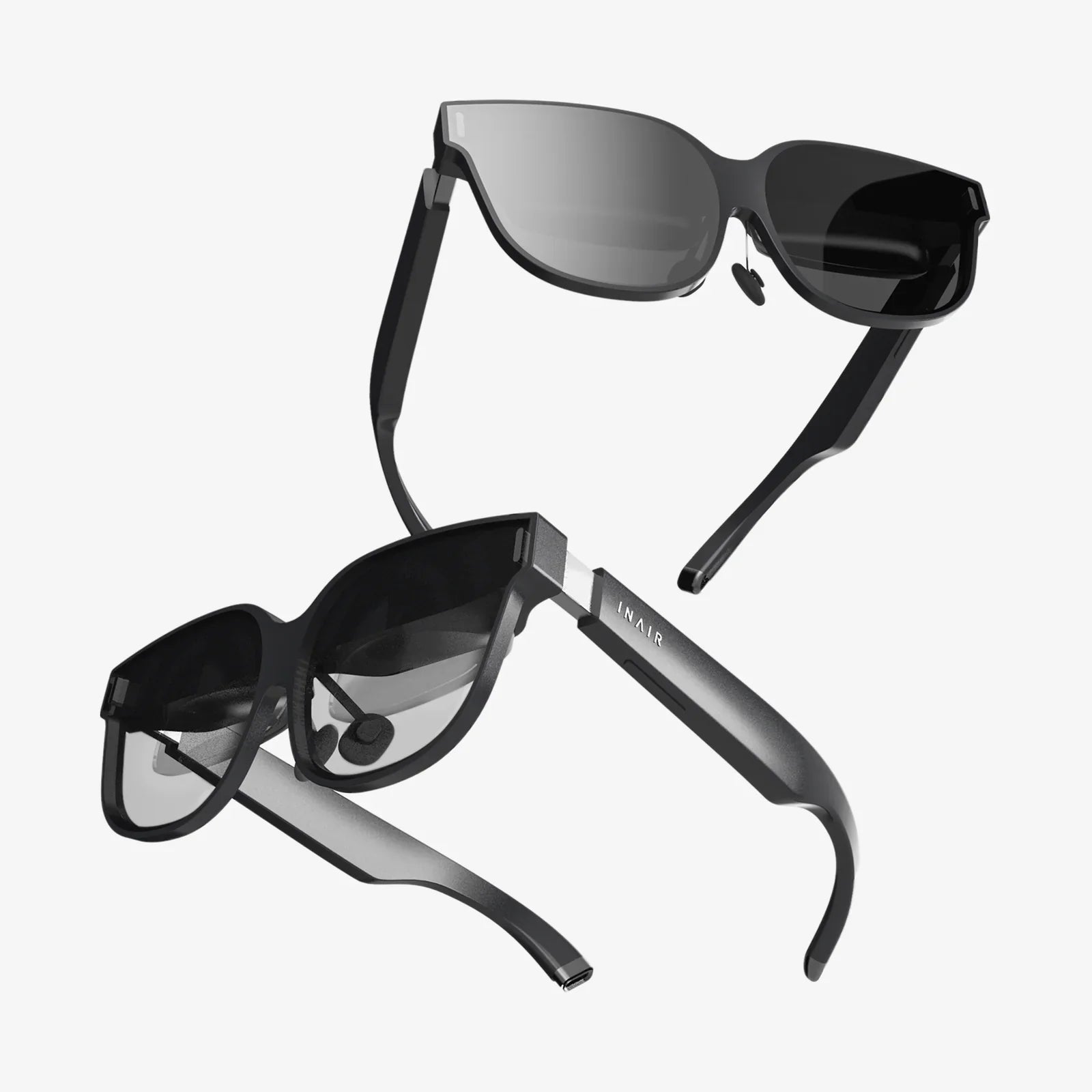
Imagine stepping into a world limited only by the imagination, where the boundaries of the physical dissolve and digital landscapes become your reality. This is the promise of Virtual Reality (VR), a technology that has captured the global zeitgeist. Yet, for all its hype, a fundamental question often goes unanswered for those beginning their journey: what are the two main types of virtual reality? Understanding this distinction is the key to unlocking the potential of this transformative technology, revealing not just how we experience digital worlds, but why different forms exist for radically different purposes. From the deep, solitary immersion of a head-mounted display to the collaborative, shared space of a CAVE system, the division between fully immersive and semi-immersive VR defines the very fabric of our virtual interactions.
The Foundation: Defining Virtual Reality
Before we dissect its primary forms, we must first establish what constitutes Virtual Reality. At its core, VR is a computer-generated simulation of a three-dimensional environment that can be interacted with in a seemingly real or physical way by a person using special electronic equipment. The ultimate goal of any VR system is to create a convincing illusion of presence—the subjective experience of being in one place or environment, even when one is physically situated in another. This is achieved by engaging our primary senses, primarily sight and sound, and often touch, to trick the brain into accepting the digital realm as authentic.
The concept is far from new. The seeds of VR were sown in the mid-20th century with Morton Heilig's Sensorama machine, a mechanical device that offered multisensory cinematic experiences. The term "virtual reality" itself was popularized in the late 1980s by Jaron Lanier, whose company developed some of the first commercial goggles and gloves. Today, the technology has evolved into a sophisticated field with applications stretching far beyond gaming, into medicine, architecture, education, and remote work. This evolution has naturally led to specialization, resulting in the two dominant paradigms we see today.
The First Type: Fully Immersive Virtual Reality
When most people picture VR, they envision fully immersive systems. This type represents the most complete attempt to isolate the user from the physical world and fully transport them into a digital one. It is the gold standard for achieving a strong sense of presence and is characterized by its use of a head-mounted display (HMD) as the primary interface.
Core Components and Technology
A fully immersive VR setup is built on several key technological pillars that work in concert:
- Head-Mounted Display (HMD): This is the centerpiece. The HMD is a wearable device that houses one or two high-resolution screens directly in front of the user's eyes. Lenses are placed between the eyes and the screens to focus and reshape the picture for each eye, creating a stereoscopic 3D image with a wide field of view, typically exceeding 100 degrees. The HMD completely blocks out the external environment, replacing the user's entire field of vision with the virtual world.
- Advanced Tracking Systems: For the illusion to hold, the virtual world must respond seamlessly to the user's head and body movements. This is accomplished through precise tracking, often using a combination of internal and external technologies. Inside-out tracking uses cameras and sensors mounted on the HMD itself to map the physical room. Outside-in tracking uses external sensors or base stations placed around the room to precisely monitor the position of the HMD and controllers. This tracking updates the user's viewpoint in the virtual world in real-time, with minimal latency, to prevent disorientation and motion sickness.
- Audio Solutions: Immersive 3D spatial audio is non-negotiable. Sounds must come from the correct direction and distance in the 3D space, changing dynamically as the user moves their head. This auditory feedback is critical for selling the reality of the experience. High-quality headphones integrated into the HMD are standard, using advanced audio algorithms to simulate how sound waves interact with the human head and ears.
- Input Devices: Interaction is key. Users need ways to manipulate the virtual environment. This is most commonly done through handheld motion controllers, which are also tracked by the system. These controllers allow users to reach out, grab, throw, and push virtual objects. More advanced systems incorporate hand-tracking technology, using cameras to directly interpret the user's hand gestures and finger movements without the need for a physical controller, or even haptic feedback gloves that provide a sense of touch.
Strengths and Applications
The primary strength of fully immersive VR is the unparalleled level of presence and engagement it offers. By dominating the user's sensory inputs, it creates powerful, memorable experiences that feel authentic.
Its applications are vast and growing:
- Gaming and Entertainment: This is the most well-known application, placing players directly inside game worlds for a level of engagement flat screens cannot match.
- Training and Simulation: From training surgeons for complex procedures without risk to preparing soldiers for combat scenarios or pilots for flight, fully immersive VR provides a safe, controlled, and highly realistic training environment.
- Therapy and Rehabilitation: Therapists use it for exposure therapy to treat phobias and PTSD, allowing patients to confront triggers in a safe space. It's also used for physical rehabilitation, turning exercises into engaging virtual games.
- Social Connection: Virtual social platforms allow people to meet, interact, and share experiences as personalized avatars in shared digital spaces, offering a new form of remote connection.
Limitations and Challenges
Despite its power, fully immersive VR has significant hurdles. The cost of high-end equipment can be prohibitive. The required space for room-scale experiences is not available to everyone. Perhaps the most persistent challenge is VR-induced motion sickness, or cybersickness, which occurs when there's a disconnect between what the eyes see and what the vestibular system in the inner ear feels. Furthermore, the experience is inherently isolating, cutting the user off from their immediate physical surroundings and the people in them.
The Second Type: Semi-Immersive Virtual Reality
Semi-immersive virtual reality offers a different compromise, blending high-fidelity digital content with the user's awareness of their physical surroundings. It provides a partially immersive experience, often through a large screen or projection system, without fully enclosing the user. The experience is more graphical than physical, focusing on visual immersion rather than complete sensory isolation.
Core Components and Technology
Semi-immersive systems take a less intrusive but often more powerful approach:
- Large Display Systems: Instead of an HMD, the primary display is often a large high-resolution monitor, a panoramic curved screen, or a full projection-based system. A common example is a Cave Automatic Virtual Environment (CAVE), where images are projected onto the walls, floor, and ceiling of a room-sized cube. Users inside the CAVE wear lightweight stereo glasses to see the 3D imagery surrounding them.
- High-Performance Computing: Driving these massive, detailed visual displays requires immense graphical processing power, often from a powerful desktop or even a server-grade computer cluster.
- Tracking and Interaction: Tracking is still used, but it may be more limited, often focusing on head position for a correct stereoscopic perspective rather than full-body movement. Interaction can vary from standard mouse and keyboard to specialized wands and joysticks, or even physical control panels that mimic real-world equipment (like a flight yoke in a simulator).
Strengths and Applications
The genius of semi-immersive VR lies in its balance. It allows for collaboration, as multiple users can view the same screen and interact with the simulation and each other simultaneously. It avoids the isolation and potential discomfort of an HMD. It is also excellent for visualizing large, complex data sets and models in detail.
Its applications are typically found in professional and industrial settings:
- Engineering and Design (CAD): Architects and engineers use semi-immersive systems to walk through life-sized 3D models of buildings, cars, or products before they are built, identifying design flaws and making collaborative decisions.
- Scientific Visualization: Researchers can explore complex molecular structures, astronomical data, or geological formations in a large, shared 3D space.
- Advanced Training Simulators: This is the technology behind high-fidelity flight simulators and ship bridge simulators used for training pilots and captains. Users sit in a physical mock-up of a cockpit or bridge, and the semi-immersive display provides the out-the-window view, creating a highly effective and realistic training tool.
Limitations and Challenges
The main trade-off is a lower sense of presence compared to a fully immersive HMD. The user is always aware of the physical room they are in. Furthermore, the hardware is often not consumer-grade; CAVE systems and large curved displays are expensive, bulky, and require dedicated space and technical expertise to set up and maintain, placing them firmly in the domain of enterprises and institutions.
Beyond the Binary: Other VR Considerations and The Future
While fully immersive and semi-immersive represent the two main types, the VR landscape is more of a spectrum. Other concepts exist that further expand our understanding of virtual experiences.
Non-Immersive VR is often overlooked but is arguably the most common form. This refers to experiences on a standard desktop computer screen where the user interacts with a 3D virtual world through a window, using a mouse, keyboard, or gamepad. While the sense of presence is minimal, it is highly accessible and has been the foundation of 3D gaming and software for decades.
Augmented Reality (AR) and Mixed Reality (MR) are cousins to VR. Instead of replacing reality, they overlay digital information onto the user's view of the real world through glasses or a smartphone camera. MR goes further, allowing digital objects to interact with and be occluded by the physical environment. While distinct, the lines are blurring with the advent of passthrough VR, where HMDs use cameras to show the real world and then augment it with digital objects, effectively merging fully immersive VR with AR capabilities.
The future of these two main types is one of convergence and refinement. Fully immersive systems are becoming more comfortable, wireless, and capable of high-fidelity passthrough AR. Semi-immersive technology is becoming more compact and affordable. The core division will remain, but the choice between them will be less about raw capability and more about selecting the right tool for the right task: full sensory immersion for individual training and experiences, or collaborative semi-immersion for design, visualization, and shared simulation.
Whether you're a developer crafting the next virtual world, an enterprise leader seeking a training edge, or a curious consumer ready to take the plunge, your journey begins with this single, crucial distinction. The path you choose—into the complete digital embrace of a headset or the collaborative visual power of a simulation wall—will define your reality. The door between worlds is open; understanding what lies on either side is the first step through.
Share:
Virtual Reality Hybrid Working The Next Frontier in Remote Collaboration
Is Virtual Reality a Trend? The Immersive Future of Human Experience