


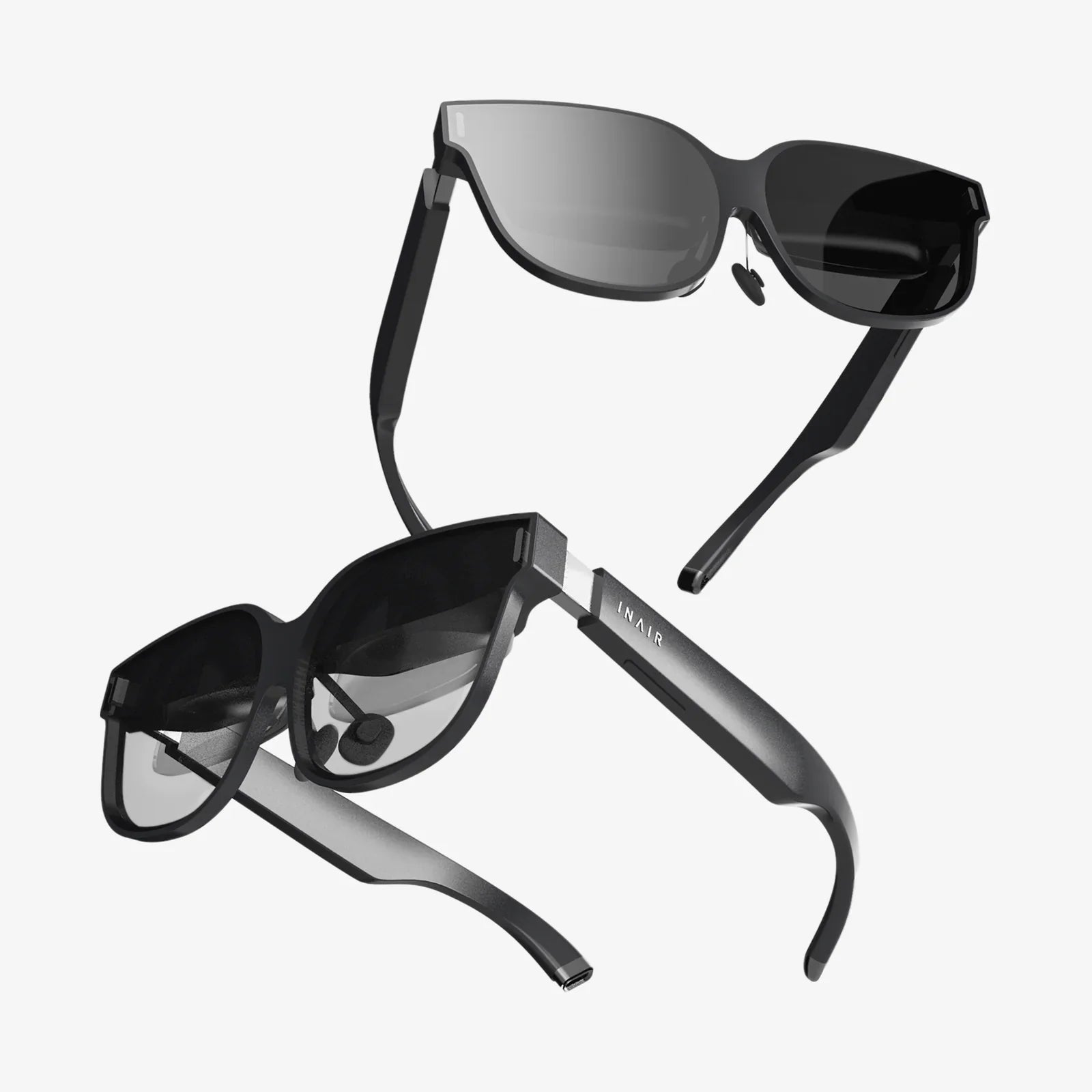
- by wangfred
What Are Virtual Reality Goggles Used For: Beyond Gaming Into a New Dimension
- by wangfred
Imagine slipping on a pair of sleek, futuristic goggles and instantly being transported. One moment you're in your living room, and the next you're walking on the surface of Mars, performing a complex surgical procedure, or standing inside a building that hasn't been constructed yet. This is the promise and the power of virtual reality goggles, a technology that has burst from the pages of speculative fiction into a tool with profound, real-world implications across nearly every facet of modern life. While often associated with high-octane gaming, the true answer to 'what are virtual reality goggles used for' is a fascinating journey into a future being built today.
Before diving into the multitude of applications, it's crucial to understand what these devices fundamentally do. Virtual reality goggles, also known as VR headsets, are wearable devices that block out the user's physical surroundings and replace them with a computer-generated, three-dimensional environment. This is achieved through a combination of high-resolution displays placed mere centimeters from the eyes, advanced motion tracking sensors, and sophisticated software that renders the virtual world in real-time, responding to the user's every movement. The result is a powerful sensation known as 'presence'—the convincing feeling of being somewhere else. This immersive quality is the key that unlocks all the diverse uses of the technology, transforming it from a simple screen into an experiential portal.
It is impossible to discuss VR without acknowledging its most famous application: gaming. This is the arena where the technology first captured the public's imagination, and it remains a massive driver of innovation and adoption. VR goggles elevate gaming from a passive observation on a screen to an active, embodied experience. Instead of pushing buttons to make a character swing a sword, you physically perform the motion. Instead of using a joystick to steer a race car, you turn your head to look into a apex and feel the visceral thrill of speed. This genre has expanded to include incredibly social experiences, where friends can meet up in virtual spaces, play games, watch movies on a giant simulated screen, or simply hang out as personalized avatars, irrespective of their physical locations across the globe.
Perhaps one of the most impactful uses of VR goggles lies in education and training. The technology offers an unparalleled method for experiential learning, allowing students to explore subjects in a deeply engaging way. History classes are no longer confined to textbooks; students can take a guided tour of ancient Rome, witnessing the grandeur of the Colosseum firsthand. Medical students can practice intricate surgical procedures on virtual patients, making critical mistakes without any risk to human life. Aspiring mechanics can disassemble and reassemble complex engines, and astronauts can simulate spacewalks long before they leave Earth's atmosphere. This 'learning by doing' in a safe, repeatable, and controlled virtual environment accelerates skill acquisition and improves knowledge retention dramatically.
The healthcare industry has embraced VR goggles as a powerful tool for both treatment and therapy. Surgeons now use them to plan complex operations, visualizing a patient's unique anatomy in 3D space before making a single incision. For patients, VR serves as a potent form of distraction therapy, helping to manage pain and anxiety during painful procedures or long hospital stays by immersing them in calming, engaging environments. Furthermore, VR exposure therapy has proven highly effective in treating phobias (like fear of heights or flying) and post-traumatic stress disorder (PTSD), allowing therapists to gradually and safely expose patients to their triggers within a controllable virtual setting. It is also used for motor rehabilitation, helping stroke victims re-learn movements through gamified exercises.
In the fields of architecture, engineering, and design, VR goggles have become an indispensable part of the workflow. Architects and their clients no longer have to struggle to interpret two-dimensional blueprints or even static 3D models on a screen. Instead, they can don a headset and take a full-scale walkthrough of a building design before a single foundation is poured. They can assess sightlines, check spatial relationships, experiment with lighting and materials, and identify potential design flaws that would have been costly to fix during construction. Car designers can sit inside the virtual prototype of a new vehicle, and urban planners can simulate traffic flow and city layouts, making data-driven decisions about future infrastructure.
The corporate world is leveraging VR for training, collaboration, and visualization. From training retail employees how to handle busy holiday rushes to simulating dangerous scenarios for oil rig workers or firefighters, VR provides a safe and scalable training solution. Perhaps even more relevant in the modern era of remote work is the concept of virtual collaboration. VR meeting spaces allow distributed teams to come together as if they were in the same room. They can interact with 3D models, share ideas on virtual whiteboards, and communicate with a sense of shared presence that video conferencing cannot match. This application is revolutionizing how global companies design, problem-solve, and innovate together.
VR goggles are democratizing access to experiences that were once limited by physical or financial constraints. Potential tourists can take preview tours of hotel resorts, cruise ships, or national parks to aid in their vacation planning. Museums and historical sites offer virtual visits, making culture accessible to those who cannot travel. The real estate market has been utterly transformed; prospective buyers can take immersive, self-guided virtual tours of properties from anywhere in the world, saving time and resources for both agents and clients. This allows for a much more efficient filtering process and has become a standard marketing tool for new developments and existing homes alike.
The potential applications for VR continue to expand into more niche areas. Fitness is a growing sector, with apps that turn workouts into engaging games, boxing against virtual opponents or dancing through rhythm-based courses. Art and storytelling are being redefined, allowing creators to build immersive worlds and audiences to step inside the narrative. Some even use VR for meditation, finding deep relaxation in guided journeys through serene natural landscapes. As the technology becomes more advanced, affordable, and comfortable, its integration into our daily professional and personal lives will only deepen, continually answering the question of 'what are they used for' with new and unexpected innovations.
The journey through the virtual lens reveals a technology not of isolation, but of profound connection and capability. Virtual reality goggles are far more than a gaming peripheral; they are a foundational shift in how we learn, heal, create, and connect. They offer a bridge to impossible places, a safe space for critical practice, and a new canvas for human imagination. As the line between our physical and digital realities continues to blur, these devices are poised to become as ubiquitous and transformative as the smartphone, offering a glimpse into a world limited only by what we can dream up next.