


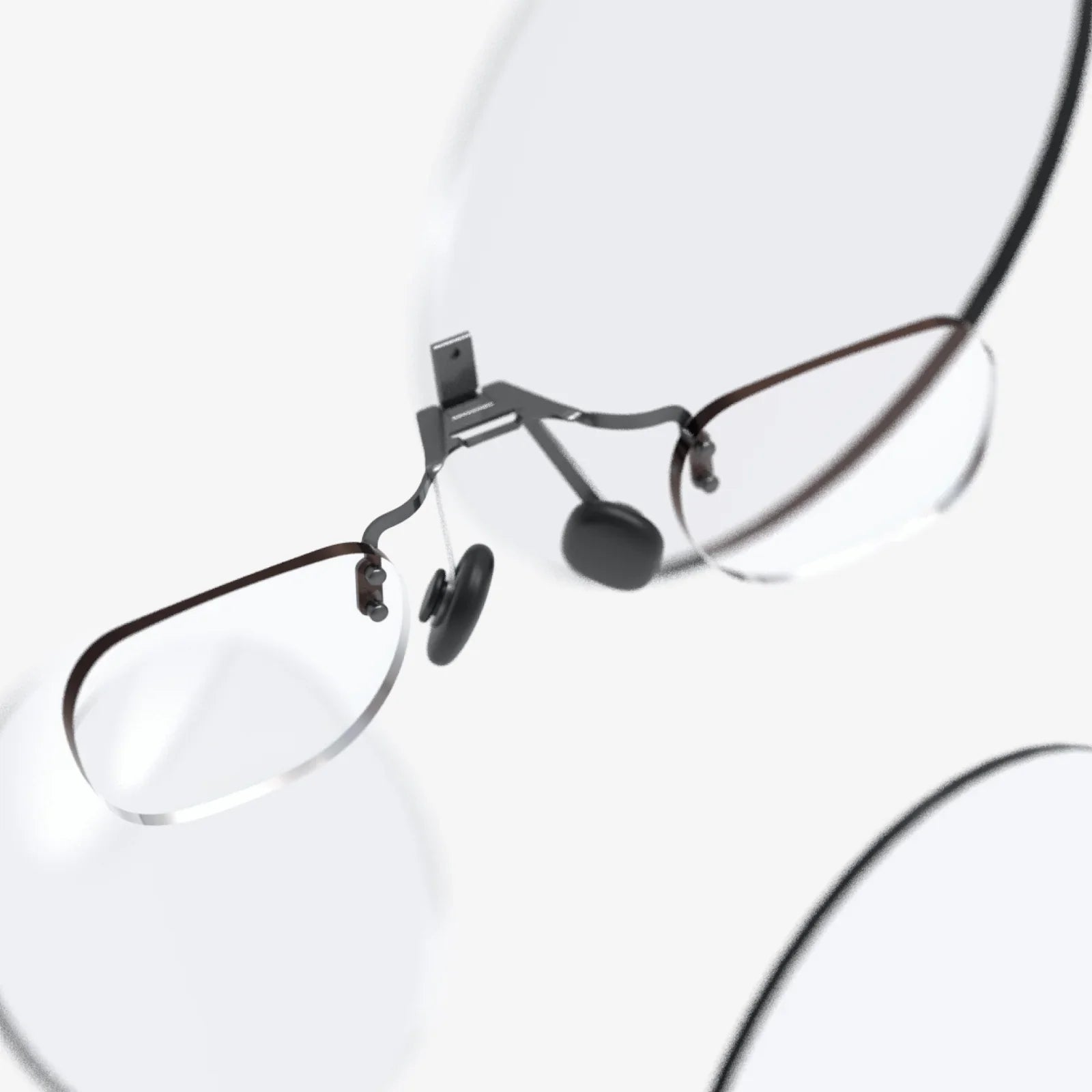
Imagine a world where your watch not only tells time but also whispers warnings about an irregular heartbeat, where your glasses overlay digital schematics onto the physical machinery you're repairing, and where your shirt analyzes your sweat to optimize your workout in real-time. This isn't a distant sci-fi fantasy; it's the burgeoning reality of wearables, a technological revolution that is quietly weaving computation into the very fabric of our daily existence. The question on everyone's mind is no longer if we will adopt this technology, but how it will fundamentally reshape our lives, our health, and our connection to the world around us.
Beyond the Wrist: Defining the Wearable Ecosystem
At its core, a wearable is any electronic device equipped with micro-processing power and internet connectivity that is designed to be worn on, attached to, or even embedded in the user's body. While smartwatches and fitness trackers are the most ubiquitous examples, the category is vast and rapidly expanding. The defining characteristic is the seamless integration of technology into the user's personal space, creating an intimate human-computer interface that is always on and always accessible.
This intimate proximity is what sets wearables apart from other mobile technology like smartphones. A phone resides in a pocket or bag; a wearable becomes a part of you. It can gather biometric data a phone never could, provide notifications with a subtlety a phone can't match (like a gentle vibration on the wrist), and offer context-aware information based on your immediate physical state and surroundings. This shift from portable to wearable represents a fundamental leap in how we interact with data, moving from a tool we consciously use to a persistent, ambient layer of intelligence integrated into our lives.
A Brief History: From Abacus Rings to AI Companions
The human desire to augment ourselves with technology is not new. We can trace the conceptual lineage of wearables back centuries. In the 16th century, Chinese inventors created the abacus ring, a miniature calculation tool worn on the finger. In the 1960s, mathematicians Edward Thorp and Claude Shannon developed a wearable computer the size of a pack of cigarettes to predict roulette wheels. However, the modern era of wearables truly began in the late 20th and early 21st centuries.
The rise of miniaturized sensors, low-power microprocessors, and ubiquitous wireless connectivity provided the essential ingredients. The first wave was dominated by fitness trackers that counted steps and monitored sleep, democratizing access to personal health data. This was quickly followed by the evolution of the smartwatch, which transformed the wrist from a passive timekeeping surface into a dynamic command center for digital life. Today, we stand at the precipice of the next wave: hearables with advanced audio computing, smart clothing with woven-in sensors, and advanced augmented reality glasses that promise to merge the digital and physical worlds.
How They Work: The Magic Behind the Metrics
The seemingly simple act of a watch counting your steps is a marvel of modern engineering, orchestrated by a sophisticated symphony of hardware and software components working in concert.
Core Hardware Components
- Sensors: These are the eyes and ears of the device. An accelerometer and gyroscope track movement and orientation. An optical heart rate sensor uses photoplethysmography (PPG)—flashing green LED light onto the skin and measuring blood flow changes—to gauge pulse. A GPS receiver pinpoints location. Advanced devices may include blood oxygen sensors (SpO2), electrodermal activity (EDA) sensors to measure stress, skin temperature sensors, and microphones.
- Microprocessor: This is the brain, a tiny chip that processes the raw data streams from the sensors, running complex algorithms to turn motion into step counts, light fluctuations into heartbeats, and location data into pace and elevation.
- Connectivity Modules: Chips for Bluetooth and Wi-Fi allow the device to communicate with a smartphone or directly with the cloud, syncing data and receiving updates. Many also include NFC for contactless payments.
- Battery: The lifeblood of the device. Battery technology is a key constraint, driving innovation in low-power displays and efficient processors. Charging methods are also evolving, from inductive charging to solar cells and even kinetic energy harvesting.
- Haptics Engine: A small vibrating motor that provides tactile feedback, a crucial feature for silent, discreet notifications.
- Display: Often an always-on, low-power OLED or LCD screen that shows information at a glance.
The Software That Gives It Life
Hardware is useless without software. A lightweight operating system manages all the components. Machine learning algorithms are the true heroes, sifting through massive amounts of sensor data to identify patterns, filter out noise, and provide meaningful insights. For instance, an algorithm learns the unique signature of your running gait to accurately distinguish between a run and a brisk walk, or it analyzes heart rate variability during sleep to determine sleep stages.
A Universe of Devices: More Than Just Watches
The wearable landscape is incredibly diverse, with form factors designed for specific purposes and parts of the body.
Wrist-Worn Devices
This remains the most popular category, dominated by smartwatches and fitness trackers. They offer a perfect balance of convenience, display real estate, and access to a rich vascular area for biometric sensing.
Hearables
These are intelligent earpieces that go far beyond playing music. They incorporate accelerometers for tap controls, beamforming microphones for crystal-clear calls and voice assistant interaction, and even integrated heart rate sensors. Some are exploring advanced features like real-time language translation and augmented audio that enhances or filters environmental sounds.
Smart Apparel and Footwear
Here, technology is woven directly into the fabric of clothing or embedded in shoes. Shirts can monitor respiration and muscle activity. Shoes can analyze running form, count steps with extreme accuracy, and even auto-lace. This category offers the most unobtrusive form of monitoring, as the technology disappears into what you're already wearing.
Smart Glasses and Augmented Reality (AR) Headsets
This is perhaps the most transformative category. These devices project digital images and information onto lenses, overlaying it onto the user's view of the real world. This enables hands-free access to instructions, navigation prompts, communication, and entertainment, with applications ranging from complex industrial repair and medical surgery to everyday consumer tasks.
Specialized Medical and Industrial Devices
This includes continuous glucose monitors (CGMs) for diabetics, wearable ECG patches for cardiac patients, smart helmets for construction workers that monitor for impacts and fatigue, and exoskeletons that augment strength for warehouse laborers or aid in rehabilitation.
The Transformative Impact: From Fitness to the Future of Work
The applications of wearable technology are revolutionizing numerous fields.
Health and Wellness
This is the killer app for wearables. They have empowered individuals to take a proactive role in their health by providing unprecedented access to personal data. People can track activity levels, monitor sleep quality, manage stress, and even receive early warnings of potential atrial fibrillation. This data is also invaluable for healthcare providers, enabling remote patient monitoring, more personalized treatment plans, and a shift from reactive sickcare to proactive healthcare.
Sports and Fitness
For amateur and professional athletes alike, wearables provide granular feedback on performance. Runners can track pace, cadence, and vertical oscillation. Swimmers can monitor stroke count and efficiency. The data-driven approach allows for optimized training loads, reduced injury risk, and a deeper understanding of one's physical capabilities.
Enterprise and Industry
In warehouses, AR smart glasses can show workers picking paths and inventory information, dramatically increasing efficiency and reducing errors. On construction sites, wearables can monitor worker vitals to prevent heat stress and detect falls. In field service, technicians can use AR to access schematics and receive remote expert guidance while keeping their hands free to work.
Accessibility
Wearables are creating powerful new tools for people with disabilities. Smart glasses can read text aloud for the visually impaired. Wearables can translate sign language into speech or detect sound alerts for the hearing impaired and provide haptic notifications. They are opening up new avenues for independence and communication.
Navigating the Challenges: Privacy, Security, and the Human Element
The rise of wearables is not without significant challenges that society must confront.
Data Privacy and Security
Wearables collect the most intimate data possible: your location, your bodily functions, your daily habits. Who owns this data? How is it being used, aggregated, and sold? Robust cybersecurity is also paramount, as a hacked device could lead to the manipulation of medical data or the tracking of a user's precise movements. The industry and regulators are grappling with establishing frameworks that protect individual privacy without stifling innovation.
Accuracy and Reliability
While excellent for general wellness, most consumer wearables are not certified as medical devices. Misreadings or over-reliance on their data could lead to unnecessary anxiety or, conversely, a false sense of security that causes someone to ignore real symptoms. Users must understand the limitations of the technology.
The Constant Connection
The always-on, always-connected nature of wearables raises concerns about digital burnout and the erosion of personal boundaries. The constant stream of notifications can increase stress and reduce the ability to be present in the moment. Managing this digital intimacy is a key skill for the wearable age.
Gazing into the Crystal Ball: The Future on Our Skin
The trajectory of wearable technology points toward even deeper integration. We are moving toward unobtrusive, invisible technology. The next generation may include:
- Advanced Biometric Sensing: Non-invasive blood glucose monitoring, continuous blood pressure tracking, and early detection of biomarkers for diseases like COVID-19 or the flu.
- Brain-Computer Interfaces (BCIs): Devices that read neural signals to control computers or prosthetic limbs directly with thought, initially for medical therapeutics but potentially for broader consumer use.
- Epidermal Electronics: Ultra-thin, flexible electronic patches that stick to the skin like a temporary tattoo, containing all the sensors of a current smartwatch in a nearly invisible form factor.
- Contextual and Ambient Computing: Devices will become less about apps and more about context, automatically providing the right information at the right time based on your location, calendar, and physiological state without you ever needing to ask.
The line between human and machine, between biology and technology, will continue to blur. The devices that started by counting our steps are evolving into partners in health, guides in our work, and windows into a digitally augmented world. The true potential of wearables lies not in the data they collect, but in the human potential they unlock—empowering us to live healthier, safer, more efficient, and more connected lives than ever before. The future isn't in your pocket; it's on your wrist, in your ears, and woven into your world, waiting for you to take the next step.
Share:
Series X VR Headset: The Ultimate Guide to Next-Gen Immersive Gaming
Bluetooth Eyewear: The Ultimate Guide to Hearing and Seeing the Future