


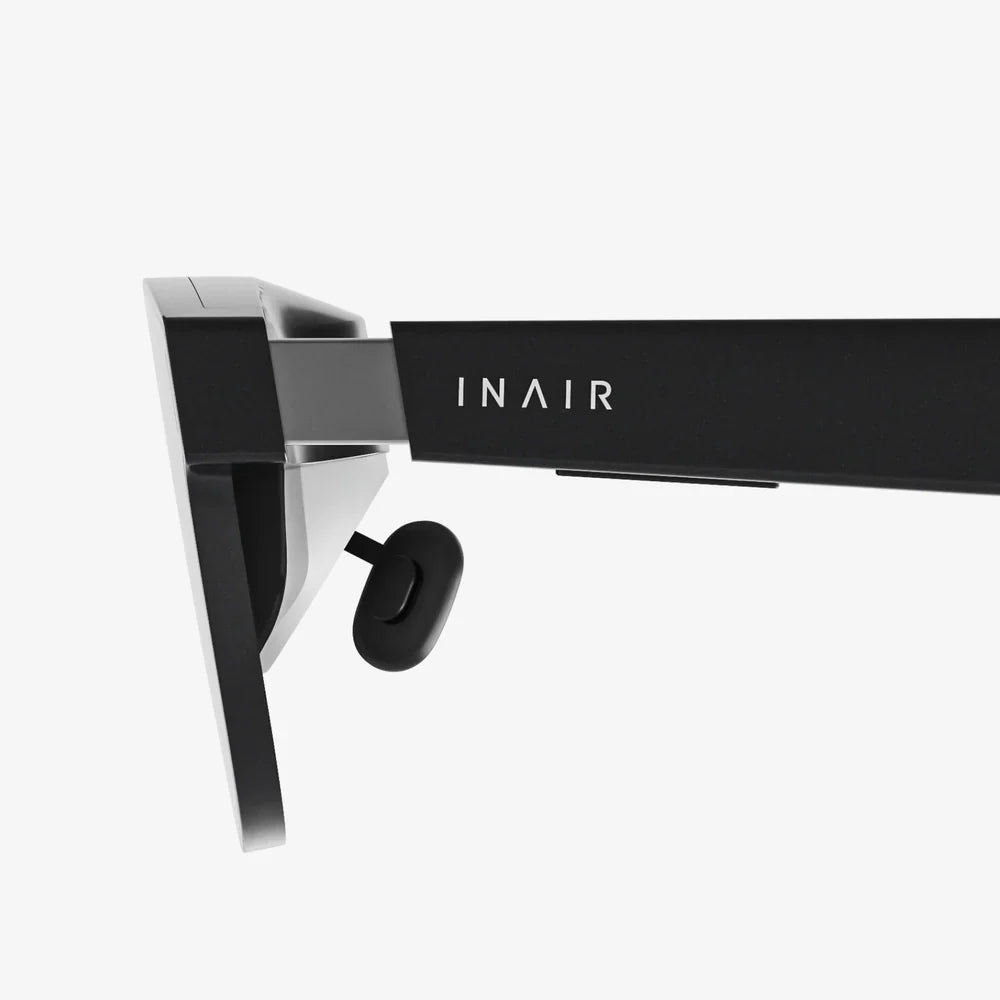
Imagine a world where information doesn't live on a screen in your hand but is seamlessly painted onto the canvas of your reality, where language barriers dissolve before your eyes, and where a digital assistant doesn't just hear you but sees what you see. This is the promise, the potential, and the rapidly approaching future of artificial intelligence eyewear. The question is no longer if this technology will become integral to our daily lives, but how soon we will adapt to its incredible capabilities.
The Evolution of Seeing: From Vision Correction to Vision Enhancement
The fundamental purpose of glasses has remained unchanged for centuries: to correct human vision. Then came sunglasses, designed to protect. Now, we stand at the precipice of a third era, where the primary function shifts from correction and protection to enhancement. This new generation of smart eyewear is not merely a display; it is a sophisticated hub of sensors, processors, and connectivity, all orchestrated by powerful onboard or cloud-based artificial intelligence. This AI acts as the brain, interpreting a constant stream of visual and auditory data to provide contextually relevant, real-time assistance.
A Window to an Augmented World
At the core of most AI glasses functionality is augmented reality (AR). Unlike virtual reality, which replaces your world, AR overlays digital information onto your physical environment.
- Contextual Information Overlay: Look at a restaurant, and its reviews and menu highlights might pop up. Glance at a landmark, and its history unfolds in text beside it. This layer of digital data turns every city street into an interactive Wikipedia page.
- Interactive Workspaces: Imagine having multiple large, virtual monitors available to you anywhere you go. Professionals could manipulate 3D models, review complex data sheets, or conduct video calls with presentations hovering in their field of view, all while keeping their hands free.
- Gamification of Reality: The success of games that use smartphone cameras for AR hints at the immersive potential of glasses. With dedicated eyewear, digital creatures and objects can appear truly anchored in the real world, creating deeply engaging mixed-reality experiences.
Shattering the Language Barrier in Real-Time
One of the most immediately impactful applications is real-time translation. This feature alone has the power to revolutionize travel, international business, and global communication.
Advanced AI glasses equipped with cameras and microphones can:
- Translate Text Instantly: Look at a foreign street sign, menu, or document, and the translated text is superimposed in your native language, perfectly aligned over the original. This is like having a personal, instant translator for every piece of text you encounter.
- Facilitate Spoken Conversation: Through sophisticated speech-to-text and text-to-speech AI, these devices can transcribe what a person is saying in another language and display the translation as subtitles in your vision. Conversely, it can translate your speech and play it aloud for the other person, creating a fluid, near-natural conversation between two people who speak different languages.
The Ultimate Personal Guide and Assistant
Navigation is transformed from a task that requires looking down at a phone to a continuous, heads-up experience. AI glasses can project directional arrows onto the sidewalk, highlight your destination on the building ahead, and provide information about the shops you pass. This is not just convenient; it's a significant safety improvement for pedestrians and cyclists.
Beyond navigation, the AI assistant evolves into something far more powerful. Instead of asking a smart speaker a generic question, you can ask your glasses about what you're specifically looking at.
- "How do I assemble this piece of furniture?" while looking at the parts.
- "What type of tree is that?" during a walk in the park.
- "Do I have all the ingredients for this recipe?" while looking inside your refrigerator.
The AI processes the visual context to provide a precise, helpful answer, effectively merging visual search with voice assistance.
Revolutionizing Accessibility and Inclusion
The potential of AI glasses to assist individuals with disabilities is arguably its most profound application. They can act as a powerful sensory prosthesis, providing auditory descriptions of visual information.
- For the Visually Impaired: AI can identify and announce obstacles, read text aloud from any surface, recognize faces and describe people's expressions, identify currency denominations, and even describe scenes—"you're in a park, there's a empty bench to your left, a dog is playing fetch ahead."
- For the Hearing Impaired: Glasses could provide real-time captions for every conversation, transcribe lectures and meetings, and identify important ambient sounds like sirens or alarms and provide a visual alert.
A Guardian for Your Health and Safety
With integrated biometric sensors, AI glasses can move beyond environmental awareness to self-awareness, monitoring the wearer's health and well-being.
- Health Monitoring: Tiny sensors could track vital signs like heart rate, respiratory rate, and even blood oxygen levels simply by looking at the wearer's face. This allows for continuous, passive health tracking without the need for a separate wearable like a smartwatch.
- Safety Alerts: Drowsiness detection algorithms, already used in some vehicles, could analyze your eye movement and blink rate to warn you if you're too tired to drive. Similarly, the system could detect signs of a fall or a medical event and automatically alert emergency services.
- Environmental Analysis: Future iterations could include sensors to analyze air quality, detect allergens, or even identify harmful substances, providing a layer of environmental health awareness.
The Flip Side: Privacy, Security, and the Always-On Dilemma
The capabilities of AI glasses are undeniably powerful, but they come with a significant and complex set of ethical and societal challenges. The primary concern is privacy. A device that is always watching and listening raises alarming questions.
- Constant Recording: The potential for surreptitious recording of conversations and environments is a major concern for those not wearing the glasses. This could lead to a chilling effect in public and private spaces.
- Data Security: The immense amount of personal, visual, and biometric data collected by these devices makes them a prime target for hackers. A breach would be catastrophic, exposing the most intimate details of a user's life.
- Social Acceptance: The failure of earlier attempts at smart glasses was partly due to the social awkwardness of wearing a camera on your face. Widespread adoption will require new social norms and likely clear visual indicators when recording is active to build trust.
The Road Ahead: From Niche to Normal
Currently, the technology is still in its relative infancy. Early models often face trade-offs between battery life, processing power, display brightness, and form factor. The challenge is to pack immense computational power into a package that is stylish, comfortable, and affordable enough for all-day wear.
However, the trajectory is clear. As battery technology improves, processors become more efficient, and AI models become more powerful and less reliant on cloud connectivity, these devices will become more capable and less obtrusive. We will likely see a gradual integration, starting in industrial and professional settings where the hands-free benefits are most acute, before filtering down into mainstream consumer use.
The true potential of AI glasses will be unlocked not just by better hardware, but by a thriving ecosystem of developers creating applications we haven't even imagined yet. The combination of AI, AR, and ubiquitous wearable computing represents a new platform, one that could eventually be as transformative as the smartphone.
The journey into this augmented future is already beginning. The devices on the market today are just the faint, early echoes of what's to come—a glimpse of a world where our reality is not just perceived, but actively computed and enhanced. The glasses on your face will cease to be a simple tool and become a gateway, an intelligent lens through which you will choose to experience, interact with, and understand the world around you in ways previously confined to science fiction.
Share:
AR(VR) Tech: Redefining Reality and Reshaping Our World
Augmented Reality Content in Corporate Events: The Ultimate Guide to Immersive Engagement