


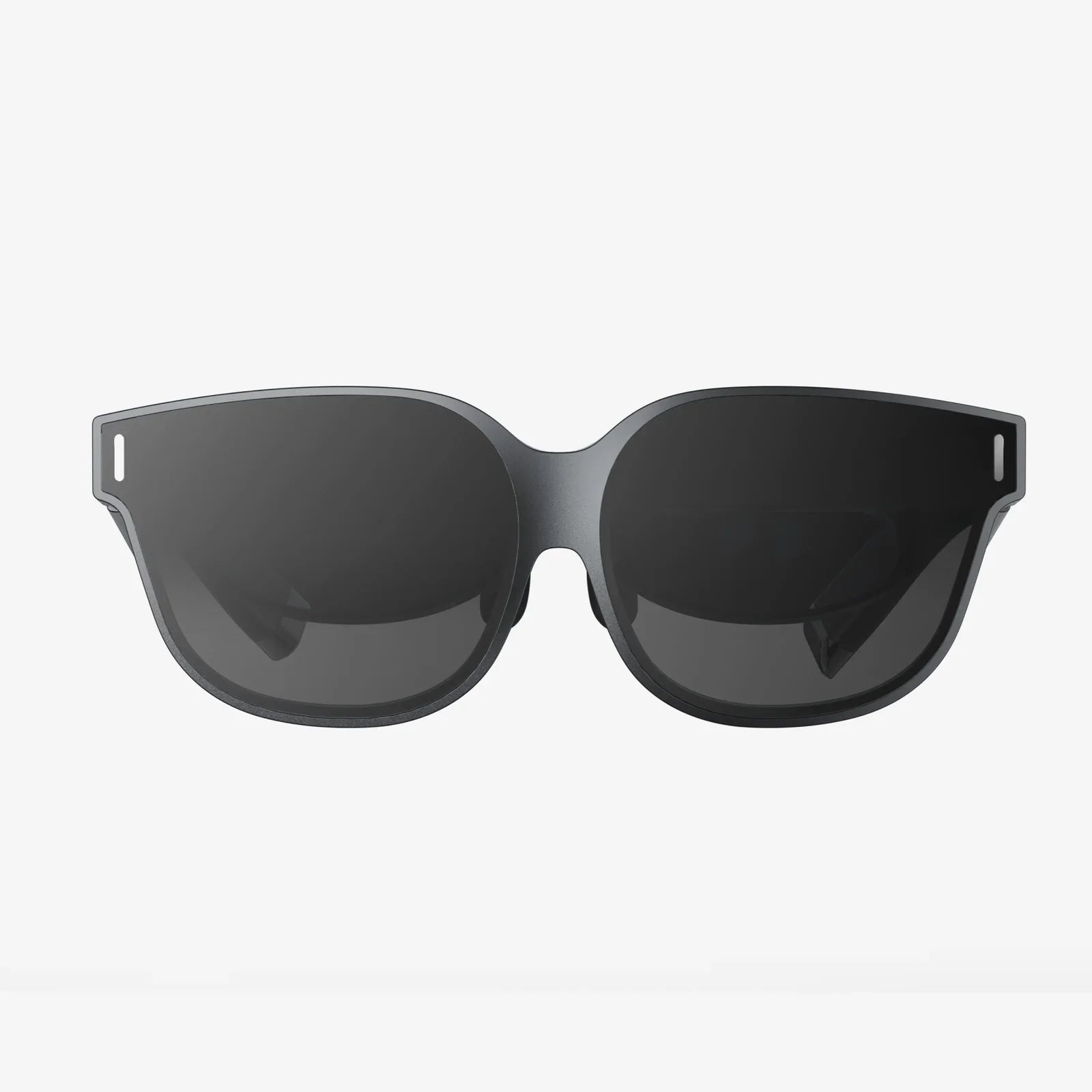
Imagine a world where digital information doesn’t live on a screen in your hand but is seamlessly painted onto the canvas of your reality, accessible with a simple glance. This isn’t a distant sci-fi fantasy; it’s the burgeoning promise of augmented reality glasses, a technology poised to fundamentally alter our relationship with computing, information, and each other. The question on everyone’s mind is no longer if this will happen, but what can AR glasses do to revolutionize our daily lives, from the mundane to the extraordinary?
Beyond the Hype: Defining the Core Functionality
At their essence, AR glasses are wearable computers that project digital imagery and data into the user's field of view, effectively overlaying a layer of synthetic information onto the physical world. Unlike virtual reality, which seeks to replace your reality with a digital one, AR aims to augment and enhance it. This core functionality unlocks a staggering array of applications across every sector imaginable.
The magic is enabled by a sophisticated combination of hardware. miniature displays project images directly onto special lenses, while a suite of sensors—including cameras, depth sensors, accelerometers, and gyroscopes—constantly scans the environment. This sensor data is processed by onboard chips to understand the world in real-time: tracking surfaces, recognizing objects and faces, and precisely anchoring digital content so it appears to coexist with physical objects. This allows the glasses to answer contextual questions like "Where did I leave my keys?" or "What is the model of this machine?" simply by seeing what you see.
Transforming the Modern Workplace
One of the most immediate and impactful arenas for AR glasses is the professional world. They are moving beyond novelty to become powerful tools for efficiency, accuracy, and safety.
Remote Assistance and Expert Guidance
Imagine a field technician facing a complex repair on a piece of machinery they’ve never encountered. Instead of pouring over a physical manual or trying to describe the issue over a choppy video call, they don their AR glasses. A remote expert, seeing exactly what the technician sees through a live feed, can then draw digital arrows, highlight specific components, and pull up 3D schematic diagrams that appear to hover right on the equipment itself. This "see-what-I-see" guidance drastically reduces errors, slashes resolution times, and allows a single expert to support field teams across the globe, all without leaving their desk.
Hands-Free Information and Workflow Integration
In warehouses, logistics centers, and manufacturing floors, workers are constantly on the move. AR glasses liberate them from clipboards, handheld scanners, and stationary monitors. Pickers can receive order information and optimal navigation paths directly in their line of sight, with digital arrows guiding them to the correct bin. Their hands remain free to lift and move packages, while items can be confirmed and logged simply by looking at them. Assembly line workers can have step-by-step instructions, torque specifications, and quality control checklists overlaid directly on the product they are building, ensuring precision and reducing training time for complex tasks.
Design and Prototyping in Three Dimensions
For architects, engineers, and designers, AR glasses are revolutionizing the creative process. Instead of viewing a new building design on a flat screen, they can don glasses and walk through a full-scale, holographic model of the structure before a single brick is laid. They can visualize how natural light will fill a room at different times of day, identify potential design clashes with plumbing or electrical systems, and make real-time adjustments in a immersive 3D space. This ability to prototype and iterate in the real world saves immense amounts of time and resources.
Revolutionizing Everyday Life and Consumer Experiences
While enterprise leads the charge, the potential for AR glasses to enhance daily life is equally profound, promising to make us more informed, connected, and entertained.
Navigation and Contextual Awareness
GPS navigation transformed how we travel, but it still requires us to look down at a phone. AR navigation paints directions onto the world itself. A path to your gate in an airport can appear as a glowing line on the floor, arrows can point out turns on the road ahead (visible only to you on the windshield if integrated with smart cars), and points of interest can be highlighted as you walk through a new city. Look at a restaurant, and its ratings and today’s specials pop up. Look at a landmark, and a brief history materializes beside it. The world becomes an interactive, informative map.
A New Paradigm for Social Connection and Communication
AR glasses promise to make digital communication more human and spatially aware. Instead of flat video calls, you could share your perspective with a friend, watching a holographic version of them appear in your living room to help you assemble furniture. They could draw a circle around the exact screw you need to tighten. Social media could evolve from a feed on a phone to a shared layer of experience. Friends could leave digital notes or drawings at specific locations for you to find, creating a new form of location-based storytelling and connection.
Immersive Entertainment and Gaming
The gaming world will be utterly transformed. Instead of playing a game on a TV, you could turn your entire living room into a virtual battlefield, with characters ducking behind your real sofa. Board games could come to life with animated pieces and effects. Watching sports could allow you to see player stats floating next to them or choose different camera angles that appear as holographic windows in your room. The line between the digital playground and the physical world will blur into irrelevance.
Specialized Applications in Critical Fields
The utility of AR extends deep into specialized fields where the stakes are high and the need for accurate, instantaneous information is critical.
Healthcare: Enhancing Vision for Surgeons and Practitioners
In healthcare, AR glasses are becoming a lifeline. Surgeons can overlay critical patient information like heart rate and blood pressure directly in their field of view during procedures without looking away from the operating table. More powerfully, they can fuse pre-operative scans like CT or MRI data with the patient’s body, effectively granting them "X-ray vision" to see exactly where a tumor is located or where to make an incision, minimizing risk and improving outcomes. Medical students can learn anatomy by studying interactive, life-sized 3D models of the human body.
Education and Training: Interactive Learning
Education can shift from passive learning to active exploration. History students can witness historical events unfold around them in their classroom. Biology students can walk around and dissect a virtual frog. Mechanics-in-training can practice complex repairs on holographic engines, making mistakes without cost. AR creates safe, scalable, and deeply engaging learning environments that cater to different learning styles.
Accessibility: Empowering Users with New Capabilities
Perhaps one of the most noble applications is in accessibility. AR glasses can be programmed to recognize faces and discreetly display a person’s name to someone who has difficulty with facial recognition. They can provide real-time captioning of conversations for the hearing impaired, displaying subtitles under the speaker. They can identify obstacles and read out text for the visually impaired, describing scenes and reading signs aloud. In this capacity, AR glasses act as a powerful assistive technology, bridging gaps and providing greater independence.
The Challenges on the Horizon
For all their potential, the path to ubiquitous AR glasses is fraught with significant hurdles that must be overcome. The technology itself needs to advance. For mass adoption, glasses need to be socially acceptable—meaning they must be as lightweight, stylish, and unobtrusive as regular eyewear, a serious challenge given the computational power and battery life required. The "perceptual bottleneck" of blending digital light with natural light perfectly remains a formidable optical engineering problem.
Beyond hardware, the software and ecosystem need to mature. A robust "AR cloud," a persistent, shared digital copy of the world that all devices can access and contribute to, is essential for consistent experiences. Most critically, a minefield of privacy and ethical concerns must be navigated. Always-on cameras and microphones raise obvious surveillance issues. The potential for constant digital distraction and information overload is real. Who owns the data collected about the world and our interactions with it? Establishing clear ethical guidelines and robust security will be paramount to earning public trust.
We are standing at the precipice of a new computing revolution, one that will weave the digital and the physical together into an inseparable tapestry. The journey to perfect, ubiquitous AR glasses is a marathon, not a sprint, but each step forward reveals new and incredible possibilities. The true answer to what AR glasses can do is limited only by our imagination, and they are waiting to unlock a new way of seeing, working, and living that we are only just beginning to conceive.
Share:
Important Benefits of Using Virtual Reality in Business Training: A New Paradigm for Workforce Development
AR Glasses for Multiple Monitors: The Ultimate Guide to Your Portable Workspace