


- by wangfred
What Can You Do With Augmented Reality: A Deep Dive Into the Digital Overlay Revolution
- by wangfred
Imagine a world where digital information doesn't just live on your screen but bleeds into your living room, where historical figures can give a speech from your coffee table, and where complex machinery reveals its inner workings with a simple glance. This is no longer the realm of science fiction; it's the burgeoning reality of today, powered by a technology that is quietly reshaping our perception of the world around us. The question is no longer if augmented reality will become a part of our daily lives, but how profoundly it will change them.
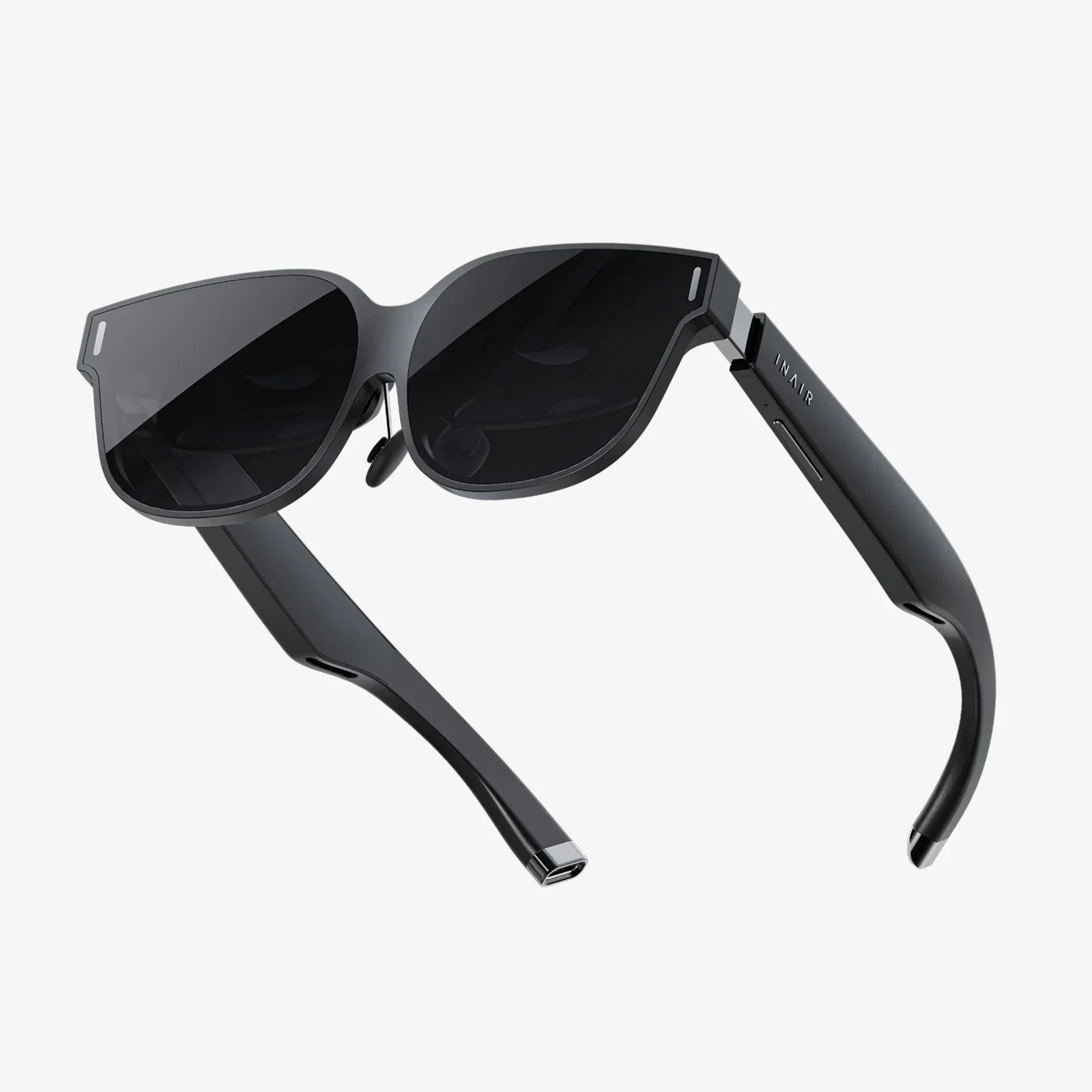
At its essence, augmented reality is a technology that superimposes a computer-generated image, video, or 3D model onto a user's view of the real world. Unlike Virtual Reality (VR), which creates a completely artificial environment, AR enhances the real world by adding digital elements to it, creating a composite view that bridges the physical and digital realms. This is typically achieved through devices like smartphones, tablets, smart glasses, and heads-up displays.
The magic of AR lies in its three core capabilities:
One of the most immediate and impactful applications of AR is in the world of commerce. It is solving a fundamental problem of online shopping: the inability to try before you buy.
With AR, you can project life-sized, photorealistic 3D models of furniture into your living room. You can see how that new sofa fits with your existing décor, walk around it, and even check if it blocks a hallway—all before clicking "purchase." This drastically reduces purchase anxiety and the high return rates associated with online furniture shopping.
The fashion and beauty industries have been similarly revolutionized. Virtual try-on apps allow users to see how glasses, makeup, watches, and even clothes will look on their own face and body. By using the front-facing camera, these applications can accurately map facial features or body shape, overlaying products with stunning realism. This not only enhances customer confidence but also creates an engaging, interactive shopping experience that is far more compelling than static images.
AR has the power to turn any classroom, textbook, or training manual into an interactive, immersive learning hub. It moves education from abstract description to tangible experience.
Imagine a student pointing a tablet at a textbook diagram of the human heart. Suddenly, a detailed, beating 3D heart model appears, floating above the page. The student can rotate it, zoom in to see the ventricles, and even watch an animation of blood flow. This kind of interactive learning caters to visual and kinesthetic learners and makes complex subjects incredibly intuitive.
In vocational and industrial training, the implications are even more profound. Mechanics can use AR glasses to see repair instructions and diagnostic data overlaid directly on the engine they are fixing. Medical students can practice complex surgical procedures on virtual patients superimposed on a physical mannequin. This "see-what-I-see" guidance reduces errors, accelerates the learning curve, and allows for safe practice in high-stakes environments without any real-world risk.
In the fields of architecture, engineering, and construction (AEC), AR is becoming an indispensable tool. Architects and clients can walk through a full-scale, holographic model of a building long before the foundation is poured. They can experience the space, test sightlines, and make design changes in real-time, saving enormous costs associated with physical models and post-construction modifications.
On the factory floor, assembly line workers can receive visual instructions overlaid on their workstations, highlighting the exact parts to install and the tools to use. This improves accuracy and efficiency, especially for complex assemblies. Technicians performing maintenance can look at a machine and instantly see performance metrics, historical service data, and step-by-step repair procedures, all hands-free. This digital overlay acts as a superpower, granting X-ray vision and encyclopedic knowledge to the workforce.
AR is poised to make the traditional map obsolete. Instead of looking down at a phone screen, users can simply hold up their device and see digital arrows and directions painted onto the real streets in front of them through the camera view. This makes navigating complex intersections, large airports, or sprawling university campuses incredibly intuitive.
The next evolution of this is in-car heads-up displays (HUDs) that project navigation cues, speed, and safety warnings directly onto the windshield, allowing drivers to keep their eyes on the road. Future applications could highlight available parking spaces or warn of hazards hidden from the driver's direct view, creating a safer and more informed driving experience.
The arts and entertainment world is a fertile ground for AR experimentation. Museums and art galleries are using it to bring static exhibits to life. Pointing a device at a painting might show the artist at work, reveal hidden sketches, or tell the story behind the masterpiece. Historical sites can be rebuilt virtually, allowing visitors to see ancient ruins restored to their former glory right on the spot.
For creators, AR offers a new canvas. Artists can design sculptures and installations that exist only in augmented space, accessible to anyone with a device. Authors can create immersive books where characters leap off the page. This technology democratizes creative expression, allowing for the creation of context-aware art that interacts with its specific physical location.
The applications in medicine are both life-changing and life-saving. Surgeons are using AR for pre-operative planning, overlaying 3D scans from CT or MRI onto a patient's body to precisely guide their incisions and navigate around critical structures. This enhances precision and can lead to less invasive procedures and faster recovery times.
For patients, AR can provide powerful therapeutic and educational tools. It can help phobia sufferers confront their fears through controlled, virtual exposure therapy. It can guide physical therapy patients through exercises with perfect form by demonstrating movements overlaid on their own body. For medical students, it provides an unparalleled way to learn anatomy and practice procedures without the need for cadavers.
We are standing on the precipice of the next major computing shift, often referred to as the "spatial web." As AR hardware evolves toward lighter, more powerful, and socially acceptable glasses, the technology will move from being a purposeful app on a phone to a constant, ambient layer of information and interaction with our reality.
Future advancements will include:
Of course, this future also brings challenges. Issues of data privacy, digital addiction, information overload, and the potential for a new digital divide must be addressed thoughtfully. The line between the digital and physical will blur, raising profound questions about how we interact with our environment and each other.
The true potential of augmented reality lies not in replacing our world, but in enhancing it. It's a tool for unlocking human potential, amplifying our abilities, and connecting information to context in a way that feels natural and intuitive. From the way we learn and work to how we shop and heal, AR is providing a new lens through which to see and interact with the universe. The digital overlay is here to stay, and it's inviting us to reimagine everything.
Share:
Is Augmented Reality a Computing Innovation? Exploring the Digital Revolution Blending Worlds
AI Smart Glasses Connectivity on the Go: The Future of Wearable Tech Is Here