


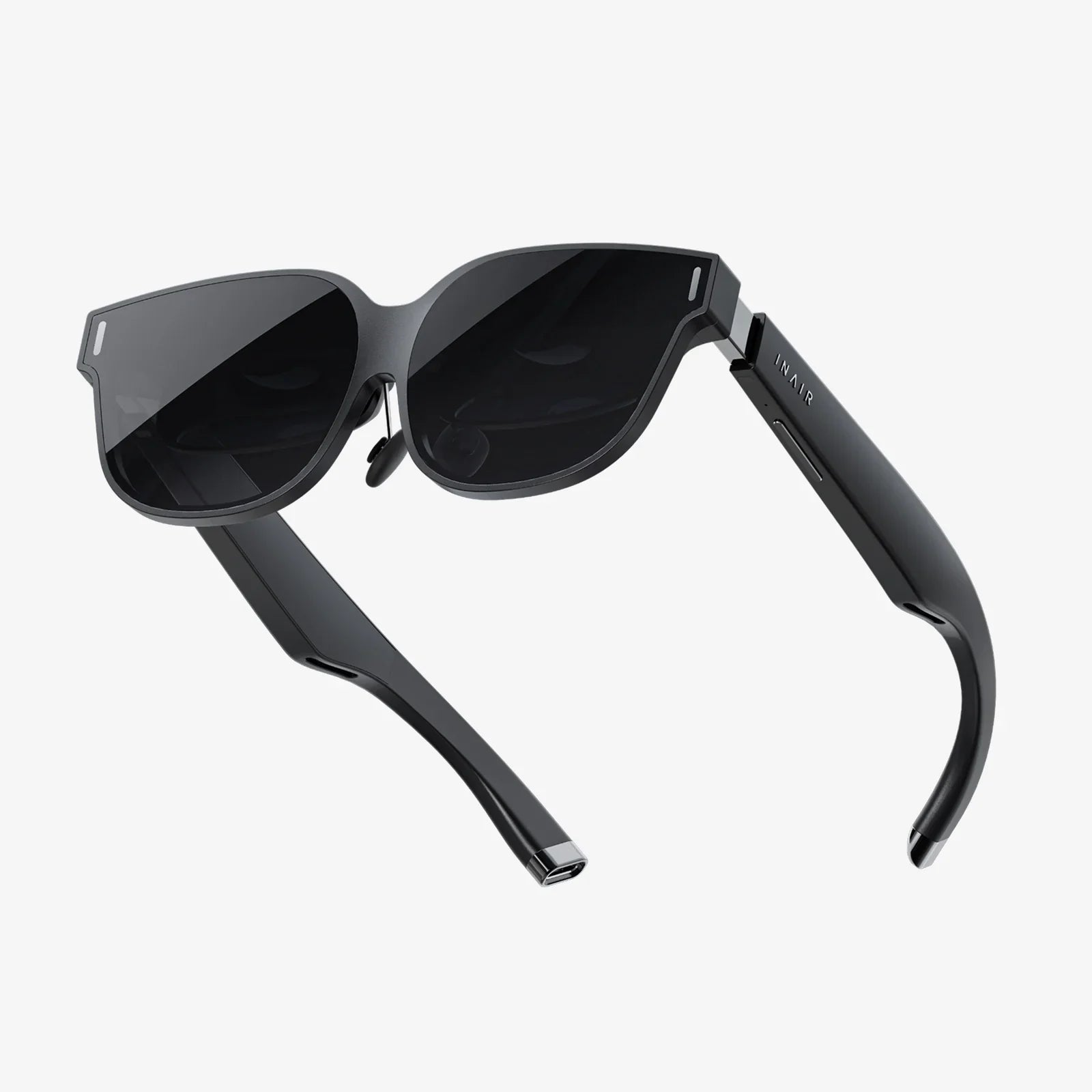
You slip the device over your head, and the real world vanishes. One moment you're in your living room; the next, you're standing on the surface of Mars, dodging asteroids in deep space, or examining a human heart from the inside. This is the magic promised by virtual reality, a technology that has captivated our imagination for decades. But what is the single, most defining thread that weaves this illusion together? Is it the sleek design, the powerful processors, or the intricate lenses? The quest to answer 'what characteristic best describes a VR headset?' leads us down a fascinating path to the very heart of this transformative technology. The answer is more profound and more critical to the experience than you might think, and understanding it is the key to unlocking the true potential of the digital realm.
Beyond the Hype: Defining the Core of VR
At its most basic, a VR headset is a head-mounted display (HMD). But to describe it as merely a screen you wear is like describing the internet as a series of tubes—technically somewhat accurate but utterly missing the point. The true characteristic that elevates a VR headset from a novel display into a portal to another reality is its ability to create a convincing and responsive simulation of a three-dimensional world. This is a holistic quality, a symphony of individual components working in perfect harmony. To isolate one is to misunderstand the entire instrument. However, if we must pinpoint the central pillar upon which this illusion rests, we must look beyond resolution and processing power to the fundamental principle that tricks the human brain into accepting the digital as real.
The Contenders: Key Characteristics That Power the Illusion
Before we crown a champion, it's essential to acknowledge the vital supporting cast. A VR headset is a complex fusion of hardware and software, and several characteristics are non-negotiable for a quality experience.
Visual Fidelity: The Window to Another World
The most immediate characteristic users notice is the visual presentation. This encompasses several critical factors:
- Resolution and Pixel Density (PPI): Early headsets were plagued by the "screen door effect," where users could see the distinct gaps between pixels, shattering immersion. Modern high-resolution displays have largely solved this, creating a much smoother and more believable image.
- Field of View (FoV): A human's natural field of view is approximately 210 degrees. Most headsets offer less, creating a binocular-like effect. A wider FoV is more immersive, making the digital world feel vast and all-encompassing rather than like looking through a pair of goggles.
- Refresh Rate: Measured in Hertz (Hz), this is how many times per second the image on the screen refreshes. A low refresh rate can lead to lag, stuttering, and for some, motion sickness. A high refresh rate (90Hz and above) is crucial for smooth, comfortable movement within the virtual space.
- Lenses: Positioned between the screens and your eyes, the lenses are the unsung heroes of VR. They focus and reshape the image, allowing your eyes to comfortably perceive the stereoscopic 3D imagery. The quality of these lenses directly impacts visual clarity, edge distortion, and the "sweet spot"—the area where the image is perfectly clear.
Tracking and Responsiveness: Bridging the Physical and Digital Divide
What good is a beautiful world if you can't interact with it? Tracking is the characteristic that translates your real-world movements into the virtual one.
- Head Tracking: Using a combination of gyroscopes, accelerometers, and external or internal cameras (inside-out tracking), the headset constantly monitors the orientation and position of your head. This allows you to look around, duck, lean, and move through the virtual environment naturally.
- Controller Tracking: Hand-held controllers are your virtual hands. Precise tracking of their position and rotation is essential for picking up objects, aiming weapons, gesturing, and manipulating the world. This is often achieved through sensors, cameras, or infrared lights on the controllers themselves.
- Low Latency: This is the delay between your action and the system's response. High latency is the ultimate immersion-breaker, causing a disorienting disconnect between your movement and what you see. For presence to be maintained, latency must be imperceptibly low.
Audio: The Unseen Anchor of Reality
Often overlooked, spatial audio is a powerhouse of immersion. True VR audio goes beyond stereo; it's 3D. It mimics how sound behaves in the real world, allowing you to hear an enemy creeping up behind you or pinpoint the location of a buzzing bee based on sound alone. This auditory feedback is a critical layer that convinces your brain the world around you is coherent and real.
The Crown Jewel: The Ultimate Characteristic of a VR Headset
So, with all these incredible technologies at play, which one reigns supreme? Is it the crystal-clear display? The flawless tracking? The encompassing audio? The answer is that while all are necessary, none are sufficient on their own. The single characteristic that best describes a VR headset is its ability to generate and maintain a state of Presence.
Presence, often called the "holy grail" of VR, is the unequivocal sensation of being in another place. It's the subconscious suspension of disbelief where your mind accepts the virtual environment as your actual reality. You don't think about the headset on your face; you think about the virtual ground beneath your feet. This is not a single feature but the sublime product of every other characteristic working in perfect unison.
How Presence is Forged
Presence is a fragile state, easily broken by technical shortcomings. It is built upon three key pillars:
- Immersion (The Objective Input): This is the technological foundation. High resolution, wide FoV, high refresh rates, precise tracking, and spatial audio all feed raw data to your senses. The better and more convincing this data is, the deeper the potential for immersion. This is what the hardware provides.
- Interactivity (The Feedback Loop): A world you cannot touch is merely a panorama. The ability to reach out and have the world respond to your actions—pushing a button, throwing a ball, feeling a haptic vibration in your controller—creates a powerful feedback loop. It confirms that you are an agent within this world, not just a spectator. This agency is fundamental to believing you are there.
- Consistency (The Unbreakable Rules): Your brain is a sophisticated reality-checker. If you drop a virtual ball, it must fall according to expectations of gravity. If you walk towards a wall, you must not be able to phase through it (unless it's that kind of experience). The virtual world must operate under a consistent, predictable set of physics and rules. Any glitch, lag, or broken law shatters the illusion instantly, ejecting you from the state of presence back into your living room.
Therefore, a VR headset is not defined by any one spec sheet item. It is defined by its holistic capacity to create Presence. Every design choice, from the weight distribution on your head to the algorithm that predicts your motion, is ultimately in service of achieving and protecting this magical, transformative state.
The Future of Presence: Where Do We Go From Here?
The pursuit of perfect presence is the driving force behind all VR innovation. We are moving towards even higher-resolution micro-OLED displays, varifocal lenses that dynamically adjust to where your eyes are looking, and advanced inside-out tracking that requires no external sensors. Haptic technology is evolving from simple controller vibrations to full-body suits and gloves that provide realistic touch feedback. Eye and face tracking will allow avatars to convey subtle, lifelike emotions, deepening social presence in shared virtual spaces.
Each of these advancements is not a goal in itself but a stepping stone towards a more perfect, unbreakable sense of being there. The ultimate VR headset will be one that disappears entirely—not just physically, by becoming lighter and wireless, but perceptually, by creating a world so consistent, interactive, and believable that the brain has no choice but to accept it.
So, the next time you see a VR headset, don't just see a piece of hardware. See a carefully engineered portal, a machine designed for one primary purpose: to convince you, utterly and completely, that you are somewhere else. It’s a promise of endless travel, boundless exploration, and experiences limited only by imagination. And that characteristic—the profound ability to transport not just your eyes and ears, but your very sense of self—is what truly makes a VR headset one of the most fascinating and human-centric technologies of our time. The journey beyond the screen has only just begun, and the destination is any reality we can dream of.
Share:
How to Use a VR Headset Without Button: A Guide to Controller-Free Immersion
VR Headset Walking Around: The Ultimate Guide to Unlocking True Immersive Freedom